
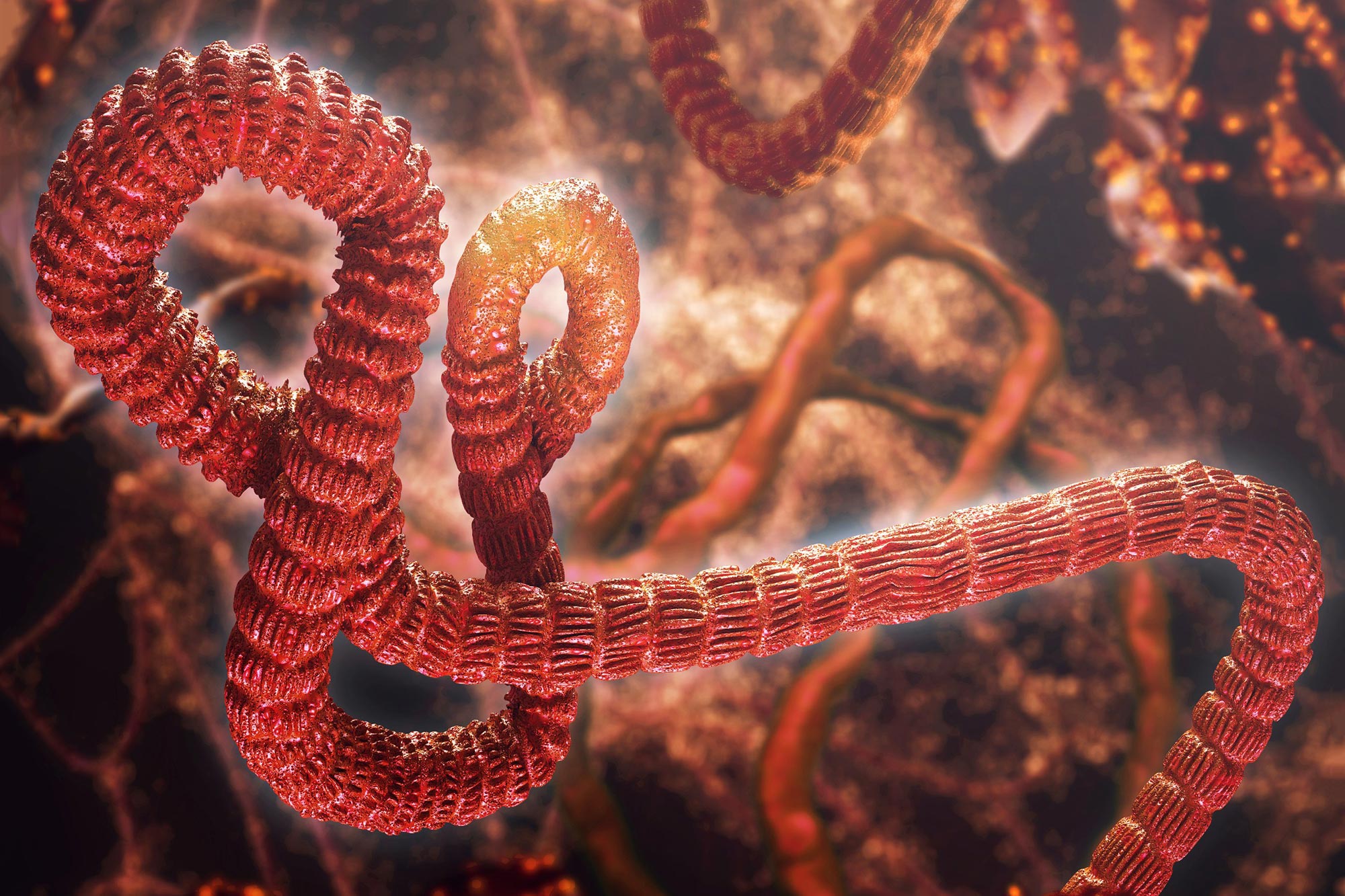
A groundbreaking study has unveiled how the Ebola virus can traverse through layers of human skin, potentially facilitating direct transmission through touch.
This highlights critical cellular targets within the skin that could help in developing focused antiviral treatments.
Understanding Ebola’s Transmission Through Skin Contact
Ebola is a deadly hemorrhagic disease caused by a virus found in parts of East-Central and West Africa. While it is widely known that the virus spreads primarily through contact with an infected person’s bodily fluids, recent outbreaks, including the 2013-2016 epidemic in West Africa, have revealed another potential route. Researchers have found infectious Ebola virus (EBOV) present on the skin’s surface, especially in individuals in the later stages of the disease or after death. Despite this discovery, the process by which the virus travels from inside the body to the skin’s surface remains poorly understood.
A new study conducted by researchers at the University of Iowa Health Care, in collaboration with the Texas Biomedical Research Institute and Boston University, has traced the cellular pathway that EBOV uses to move through the layers of skin and reach its surface. The study identified specific skin cell types targeted by the virus and demonstrated that human skin actively supports EBOV infection. Published in Science Advances today (January 1), the findings suggest that the skin’s surface could serve as an important pathway for person-to-person transmission of the virus.
Role of Skin Cells in Ebola Transmission
“The skin is the largest organ in the human body yet is woefully understudied compared to most other organs. Interactions of EBOV with skin cells have not previously been extensively examined,” says Wendy Maury, PhD, UI professor of microbiology and immunology, and senior author of the study. “Our work provides evidence for one mechanistic avenue that EBOV uses to exit from the human body. A comprehensive understanding of which cells are targeted during virus infection is critical for rational development of antiviral approaches.”
Advanced Techniques Reveal EBOV Pathways
The research team, led by Maury and Kelly Messingham, PhD, UI research professor of dermatology, developed a new approach to examine which cells within the skin are infected by Ebola virus. They created a human skin explant system using full-thickness skin biopsies from healthy individuals, which contained both deeper (dermal), and surface (epidermal) layers of skin.
To study how Ebola virus moves through skin, the explants were placed dermal side down in culture media and virus particles were added to the media so that they entered the skin from the underside, modeling virus egress from the blood to the surface of the skin. The researchers used virus-tracing and cell-tagging techniques to follow the journey of the virus through the skin layers to the upper surface of the skin, identifying which cells were infected over time.
Identifying Key Cells in Ebola Infection
Previous clinical and animal studies had reported that cells within the skin become infected with EBOV, but the specific cells targeted by the virus had not been identified.
In the new study, the team showed that EBOV infected several different cell types in the skin explant, including macrophages, endothelial cells, fibroblasts, and keratinocytes. While some of these cell types are also found to be infected by EBOV in other organs, keratinocytes, which are unique to the skin, had not been previously appreciated to support EBOV infection.
Implications for Future Research and Therapy
Interestingly, virus replication was more robust in the epidermal layer than in the dermal layers on a per-gram basis. Additionally, the infectious virus was detected on the epidermal surface within three days, indicating that the virus rapidly spreads and moves through the explants to the skin’s surface.
The researchers also showed that human skin explants can serve as complex, three-dimensional organ models for studying the efficacy of antivirals against EBOV, providing a new, highly useful, and inexpensive model system for therapeutic testing.
Concluding Remarks on EBOV and Skin Cell Interactions
Finally, the team also focused on the interactions of EBOV with two specific skin cell types, fibroblasts, and keratinocytes, and identified specific receptors on these cells that allow uptake of Ebola virus.
“This study explores the role of the skin as a potential route of Ebola virus infection and identifies, for the first time, several cell types in the skin that are permissive to infection,” says Messingham. “In total, these findings elucidate a mechanism by which EBOV traffics to the skin’s surface and may explain person-to-person transmission via skin contact.”
Reference: “Multiple cell types support productive infection and dynamic translocation of infectious Ebola virus to the surface of human skin” by Kelly N. Messingham, Paige T. Richards, Anthony Fleck, Radhika A. Patel, Marija Djurkovic, Jonah Elliff, Samuel Connell, Tyler P. Crowe, Juan Munoz Gonzalez, Francoise Gourronc, Jacob A. Dillard, Robert A. Davey, Aloysius Klingelhutz, Olena Shtanko and Wendy Maury, 1 January 2025, Science Advances.
DOI: 10.1126/sciadv.adr6140
In addition to Messingham and Maury, the study team included UI researcher Paige Richards, Anthony Fleck, Radhika Patel, Jonah Elliff, Samuel Connell, Tyler Crowe, Juan Munoz Gonzalez, Francoise Gourronc, Jacob Dillard, and Aloysius Klingelhutz. MarijaDjurkovic and Olena Shtanko at Texas Biomedical Research Institute, and Robert Davey at Boston University were also part of the team.
The research was funded in part by grants from the National Institute of Allergy and Infectious Diseases.
Never miss a breakthrough: Join the SciTechDaily newsletter.
Follow us on Google and Google News.