

University of Chicago study could guide social distancing, PPE guidelines.
The CDC updated its guidance for avoiding COVID-19, saying that infection from touching surfaces is not the major way the virus spreads. The bigger risk is spending time with infected people.
But although it’s clear that some virus particles move through air, how far and how widely they travel is still not understood.
University of Chicago researchers are trying to change that. A new study is underway to monitor the air in the hospital rooms of patients at University of Chicago Medicine, which could help scientists uncover how airborne virus particles travel around infected people.

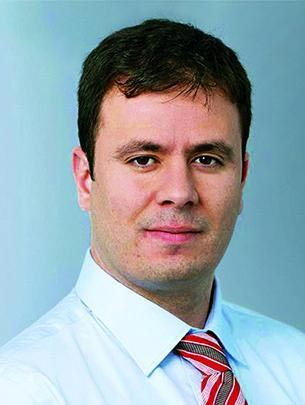
“This is such a big question for the hospital, but also in people’s homes and workplaces and stores,” said Prof. Jayant Pinto, an ear, nose and throat specialist who is one of the investigators on the study. “For the most part, this virus causes its chaos starting from the airway. We really want to understand how it gets there, who is most likely to be at risk, how to best protect health care workers, and how the disease moves through the airway.”
In a partnership with Assoc. Prof. Savas Tay of the Pritzker School of Molecular Engineering, the team set up small monitors to collect air samples in the rooms of patients at the hospital. The participants range from those in the ICU, to those with less severe conditions, to those who don’t have COVID-19.
The monitors range in placement from close to the patient’s head, to the doorway, to about 10 feet away. Once the material in the air is collected, Tay’s lab measures the amount of virus in the samples and how far it traveled from the patient.
“Within any given room, we want to know where the hotspots are where patients are breathing out virus,” Tay said. “We hope to learn which patients are very infectious and spewing out lots of virus; how that viral load changes in air over time with treatment; and which treatments increase or decrease the viral load in the air.”
For example, UChicago Medicine has been exploring alternatives to ventilators in their COVID-19 treatment plan—instead, they blow a large amount of humidified air into the lungs through the nose via a method called high-flow nasal cannula oxygenation. The treatment has yielded “remarkable success” so far, but it presents additional risk because it may increase the amount of COVID-19 particles in the air (to protect themselves from the virus, staff are required to have proper PPE, negative pressure patient rooms, and anterooms where they can change in and out of their safety gear.) Tay and Pinto want to quantify that amount compared with other treatments.
The scientists hope in the next step of the study to test how infectious that air actually is. The current study simply detects the presence of the virus’s genetic material, but coronaviruses are relatively fragile; by the time it circulates at distance, it may or may not still be able to cause infection.
“From a health care perspective, we would really like to know how infectious a person is, and how it changes as they undergo treatment—how is it different on day 1 versus day 5 or 10?” Pinto said. “That can help set standards for PPE for health care workers.”
They would also like to use the opportunity to track the genes of the virus specifically in Chicago; small genetic differences can help track where the virus came from and how it’s moving across the city. Preliminary work by Prof. Tao Pan with the Department of Biochemistry and Molecular Biology shows this may be possible using this approach.
The team is still collecting samples and running analysis, but the preliminary results are looking good. So far, they have proven that the technique can detect and quantify viral RNA.
“I’m very glad we could partner with Savas’s lab on this,” Pinto said, noting that the effort involves working with colleagues and front-line providers in the ICU from the departments of medicine and anesthesia/critical care. “This is exactly what we want to be doing: collaborating across disciplines to solve big problems.”
Never miss a breakthrough: Join the SciTechDaily newsletter.
Follow us on Google and Google News.