
A look at enzyme evolution suggests life figured out how to use oxygen long before the main event.
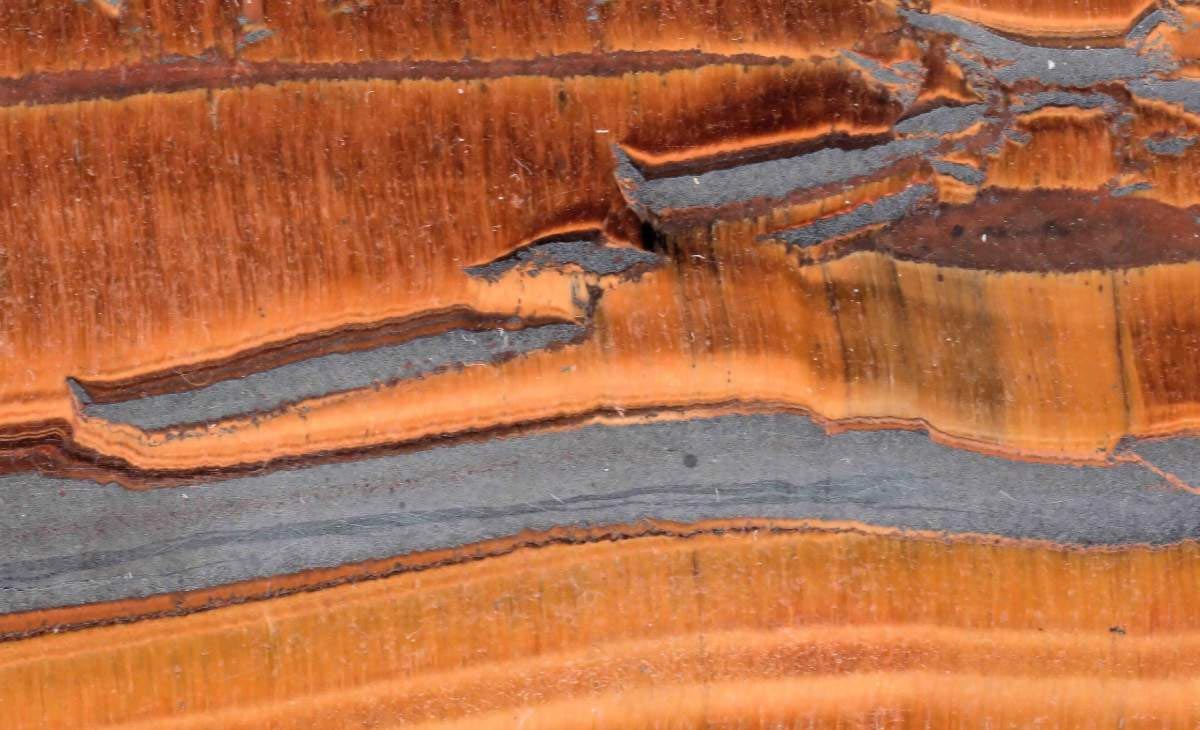
Around 2.5 billion years ago, our planet experienced what was possibly the greatest change in its history: According to the geological record, molecular oxygen suddenly went from nonexistent to becoming freely available everywhere. Evidence for the “great oxygenation event” (GOE) is clearly visible, for example, in banded iron formations containing oxidized iron. The GOE, of course, is what allowed oxygen-using organisms – respirators – and ultimately ourselves, to evolve. But was it indeed a “great event” in the sense that the change was radical and sudden, or were the organisms alive at the time already using free oxygen, just at lower levels?
Prof. Dan Tawfik of the Weizmann Institute of Science’s Biomolecular Sciences Department explains that the dating of the GOE is indisputable, as is the fact that the molecular oxygen was produced by photosynthetic microorganisms. Chemically speaking, energy taken from light split water into protons (hydrogen ions) and oxygen. The electrons produced in this process were used to form energy-storing compounds (sugars), and the oxygen, a by-product, was initially released into the surroundings.

The question that has not been resolved, however, is: Did the production of oxygen coincide with the GOE, or did living organisms have access to oxygen even before that event? One side of this debate states that molecular oxygen would not have been available before the GOE, as the chemistry of the atmosphere and oceans prior to that time would have ensured that any oxygen released by photosynthesis would have immediately reacted chemically. A second side of the debate, however, suggests that some of the oxygen produced by the photosynthetic microorganisms may have remained free long enough for non-photosynthetic organisms to snap it up for their own use, even before the GOE. Several conjectures in between these two have proposed “oases,” or short-lived “waves,” of atmospheric oxygenation.
Tracing Protein Evolution to Reveal Ancient Oxygen Use
Research student Jagoda Jabłońska in Tawfik’s group thought that the group’s focus – protein evolution – could help resolve the issue. That is, using methods of tracing how and when various proteins have evolved, she and Tawfik might find out when living organisms began to process oxygen. Such phylogenetic trees are widely used to unravel the history of species, or human families, but also of protein families, and Jabłońska decided to use a similar approach to unearth the evolution of oxygen-based enzymes.

To begin the study, Jabłońska sorted through around 130 known families of enzymes that either make or use oxygen in bacteria and archaea – the sorts of life forms that would have been around in the Archean Eon (the period between the emergence of life, ca. 4 billion years ago, and the GOE). From these she selected around half, in which oxygen-using or -emitting activity was found in most or all of the family members and seemed to be the founding function. That is, the very first family member would have emerged as an oxygen enzyme. From these, she selected 36 whose evolutionary history could be traced conclusively. “Of course, it was far from simple,” says Tawfik. “Genes can be lost in some organisms, giving the impression they evolved later in members in which they held on. And microorganisms share genes horizontally, messing up the phylogenetic trees and leading to an overestimation of the enzyme’s age. We had to correct for the latter, especially.”
Early Oxygen as Both a Toxin and a Resource
The phylogenetic trees the researchers ultimately obtained showed a burst of oxygen-based enzyme evolution about 3 billion years ago – something like half a billion years before the GOE. Examining this time frame further, the scientists found that rather than coinciding with the takeover of atmospheric oxygen, this burst dated to the time that bacteria left the oceans and began to colonize the land. A few oxygen-using enzymes could be traced back even further. If oxygen use had coincided with the GOE, the enzymes that use it would have evolved later, so the findings supported the scenario in which oxygen was already known to many life forms by the time the GOE took place.
One microorganism’s waste is another’s potential source of life.
The scenario that Jabłońska and Tawfik propose looks something like this: Oxygen is one of the most chemically reactive elements around. Like one end of a battery, it readily accepts electrons, thus providing extra metabolic power. That makes it extremely useful to many life forms, but also potentially damaging. So photosynthetic organisms as well as other organisms living in their vicinity had to quickly develop ways to efficiently dispose of oxygen. This would account for the emergence of oxygen-utilizing enzymes that would remove molecular oxygen from cells. One microorganism’s waste, however, is another’s potential source of life. Oxygen’s unique reactivity enabled organisms to break down and use “resilient” molecules such as aromatics and lipids, so enzymes that take up and use oxygen likely began evolving soon after.
Tawfik: “This confirms the hypothesis that oxygen appeared and persisted in the biosphere well before the GOE. It took time to achieve the higher GOE level, but by then oxygen was widely known in the biosphere.”
Jabłońska: “Our research presents a completely new means of dating oxygen emergence, and one that helps us understand how life as we know it now evolved.”
Reference: “The evolution of oxygen-utilizing enzymes suggests early biosphere oxygenation” by Jagoda Jabłońska and Dan S. Tawfik, 25 February 2021, Nature Ecology & Evolution.
DOI: 10.1038/s41559-020-01386-9
Prof. Dan Tawfik’s research is supported by the Zuckerman STEM Leadership Program. Prof. Tawfik is the incumbent of the Nella and Leon Benoziyo Professorial Chair.
Never miss a breakthrough: Join the SciTechDaily newsletter.
Follow us on Google and Google News.
6 Comments
Oxygen was being produced by Cyanobacterial algae more than 3.5 Byr-ago. That oxygen cannot be used twice. Once to oxidize the iron in the banded-iron formations and again to oxidize the organic matter that created the oxygen…aerobic respiration. Stromatolites and iron oxide deposits are lacking in this organic carbon. The GOE is a mythical event conjured up to support the anoxic early-Earth theory.
Is this event related to the mass extinction of the anaerobic bacteria?
The apparent fallacy on Dr Towed comment lies in volcanology and chemistry. Volcanoes give off gases such as sulfur dioxide, carbon mono-and di-oxide which form acids whose chemical reactions result in the release of oxygen as a reaction bi-product of iron and other elements. The earth is not nor ever was solely formed of just iron. Iron is formed from the decay of higher elements. So before Iron existed they were higher elements that it decayed from and you can trace the formation of Iron and any other elements on the chart of elements. However, that leaves what seems to be an unanswerable mystery about the natural higher formtion of elements beyond Uranium and Radium most of which have been made by humans and may have never existed in nature in the beginning and formation of the Cosmos
Dr. Rose’s comments are too focused and one-sided without seeing things holistically.That said, within the very narrow bounds of his comment he is right. As for the extinction of anaerobic bacteria—this type of bacteria do not exist well in an oxygenized atmosphere and the mystery is what survival adaptation did they adapt to still be present among us today— could it be surviving in pockets of carbon dioxide and not breaking down CO2 as most other life forms do? I use CO2 hypothesis bY
ecause in California, people and other life forms including plants have died after walking into pools of both CO2+CO in the Mammoth Lakes area with lies on a hidden volcano field below and is the source of earthquakes in the are You can read more abouth this area in both the, Smithsonian publications and Natural Geographic.For more extensive info contact ngsgs.
Incredible! Something being created instantaneously! You might say ‘super’-naturally. Defying the laws of science as we know them. Big bang like. Suggests intelligent design. Kind of a roadblock though with the assumption there is no God who could have done this.
Could some heroic ecologist explain to the benighted (me) how oxygen facilitated the emergence of higher organisms? Does the manufacture of oxygen and carbon in stellar nucleosynthesis enable this key evolutionary process; i.e.,is a non-selection phenomena the necessary basis of selection? Is biological evolution, then, in a sense,”predetermined”;i.e, both Aristotelian and Darwinian simultaneously?