
Close Menu
    Facebook X (Twitter) Instagram
    SciTechDaily
    • Biology
    • Chemistry
    • Earth
    • Health
    • Physics
    • Science
    • Space
    • Technology
    Facebook X (Twitter) Pinterest YouTube RSS
    SciTechDaily
    Home»Biology»Biologists Discover That Flower Shapes Evolve to Adapt to Their Pollinators
    Biology

    Biologists Discover That Flower Shapes Evolve to Adapt to Their Pollinators

    By University of ViennaDecember 8, 20191 Comment3 Mins Read
    Facebook Twitter Pinterest Telegram LinkedIn WhatsApp Email Reddit
    Share
    Facebook Twitter LinkedIn Pinterest Telegram Email Reddit
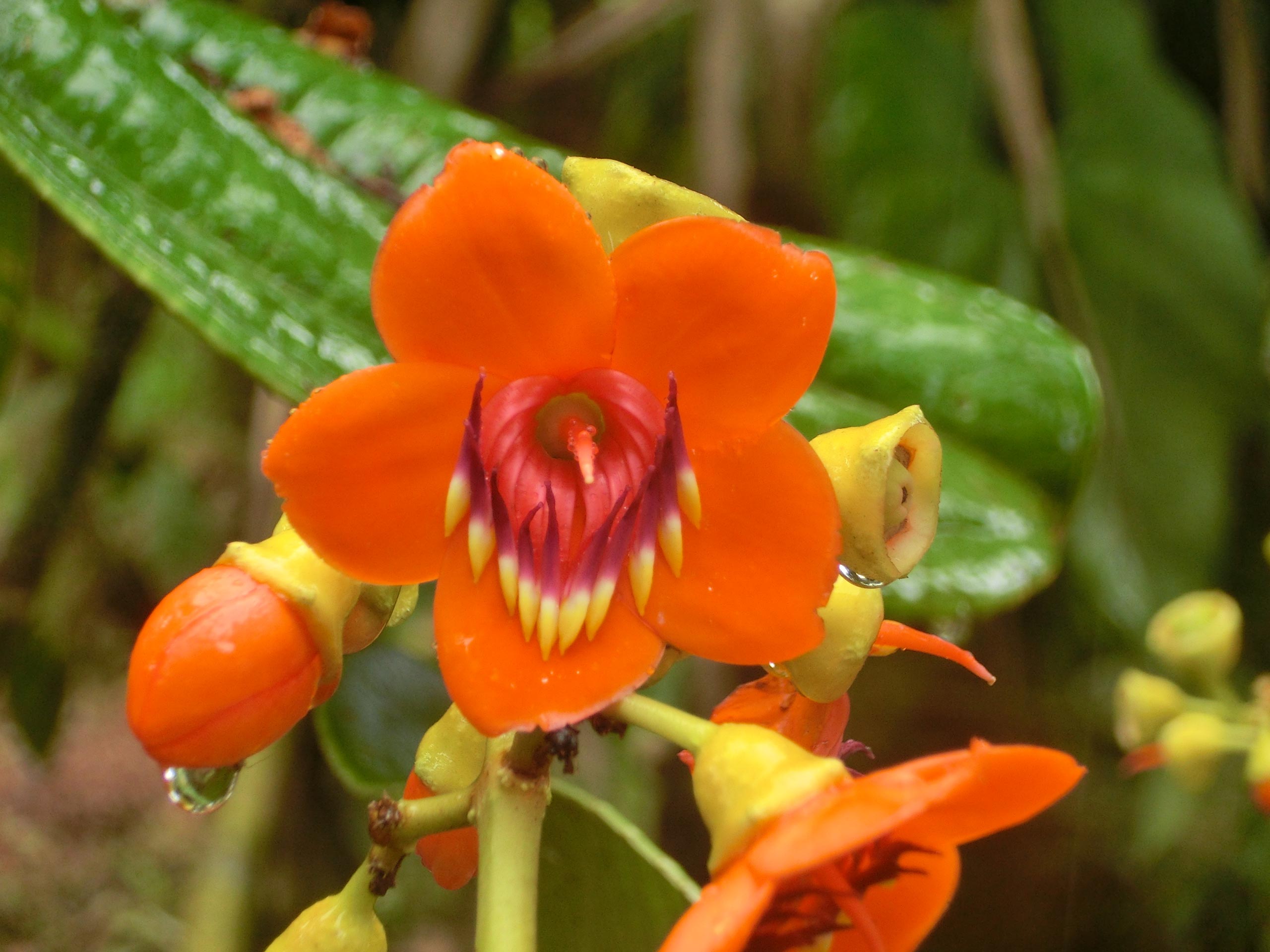
    Meriania hernandoi
    Flower of the bee-pollinated species Meriania hernandoi from the Ecuadorian cloud forest. Credit: Agnes Dellinger

    Modularity Facilitates Rapid Adaptation of Single Floral Organs to Different Pollinators

    The first flowering plants originated more than 140 million years ago in the early Cretaceous. They are the most diverse plant group on Earth with more than 300,000 species. In a new study published in Communications Biology on December 5, 2019, evolutionary biologists around Agnes Dellinger and Jürg Schönenberger from the University of Vienna have analyzed 3-dimensional models of flowers and found that flower shapes can evolve in a modular manner in adaptation to distinct pollinators.
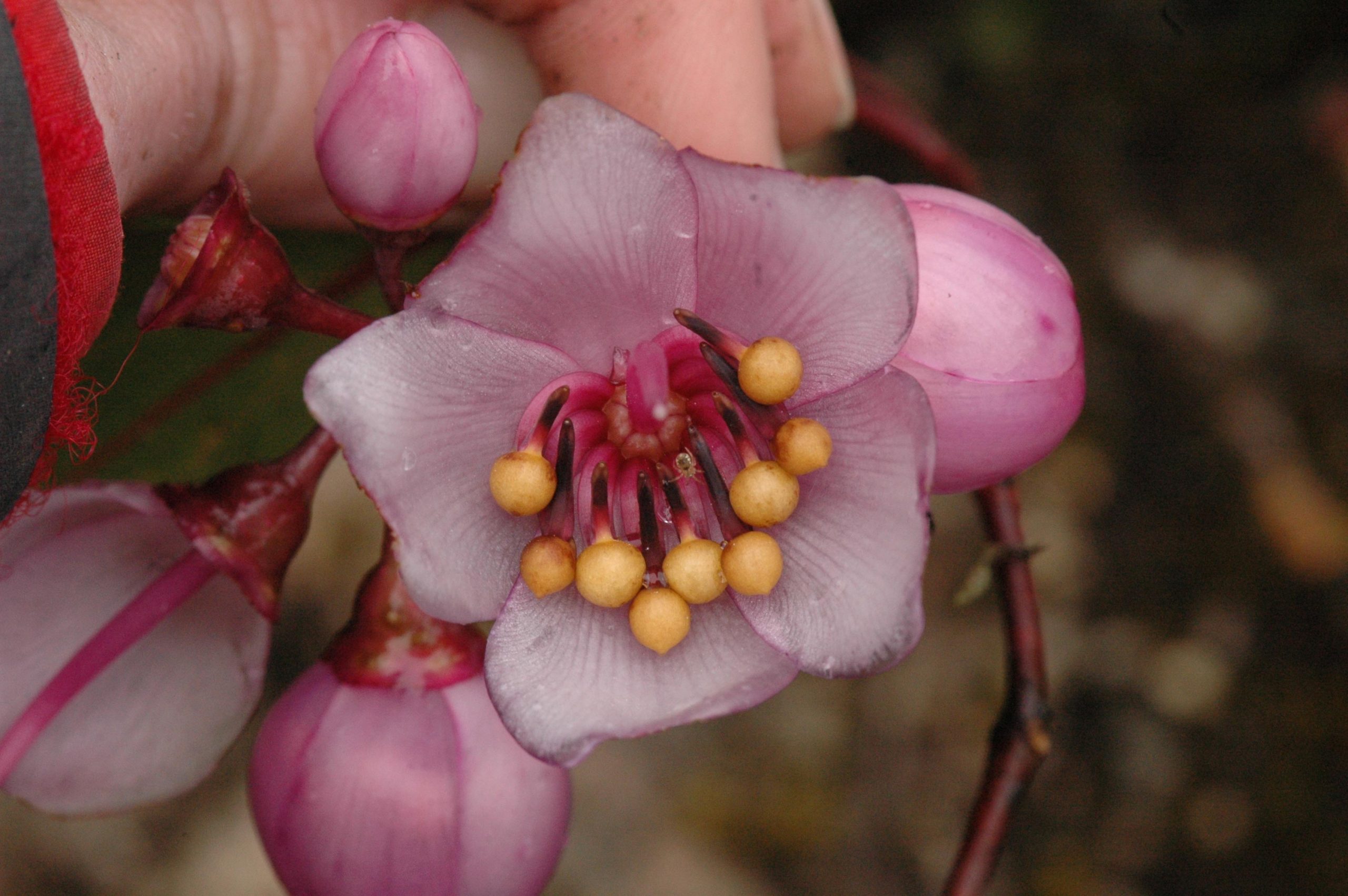
    Axinaea
    Flower of a passerine-pollinated species of the genus Axinaea. Credit: Agnes Dellinger

    Flowering plants are characterized by an astonishing diversity of flowers of different shapes and sizes. This diversity has arisen in adaptation to selection imposed by different pollinators including among others bees, flies, butterflies, hummingbirds, bats or rodents. Although several studies have documented that pollinators can impose strong selection pressures on flowers, our understanding of how flowers diversify remains fragmentary. For example, does the entire flower adapt to a pollinator, or do only some flower parts evolve to fit a pollinator while other flower parts may remain unchanged?
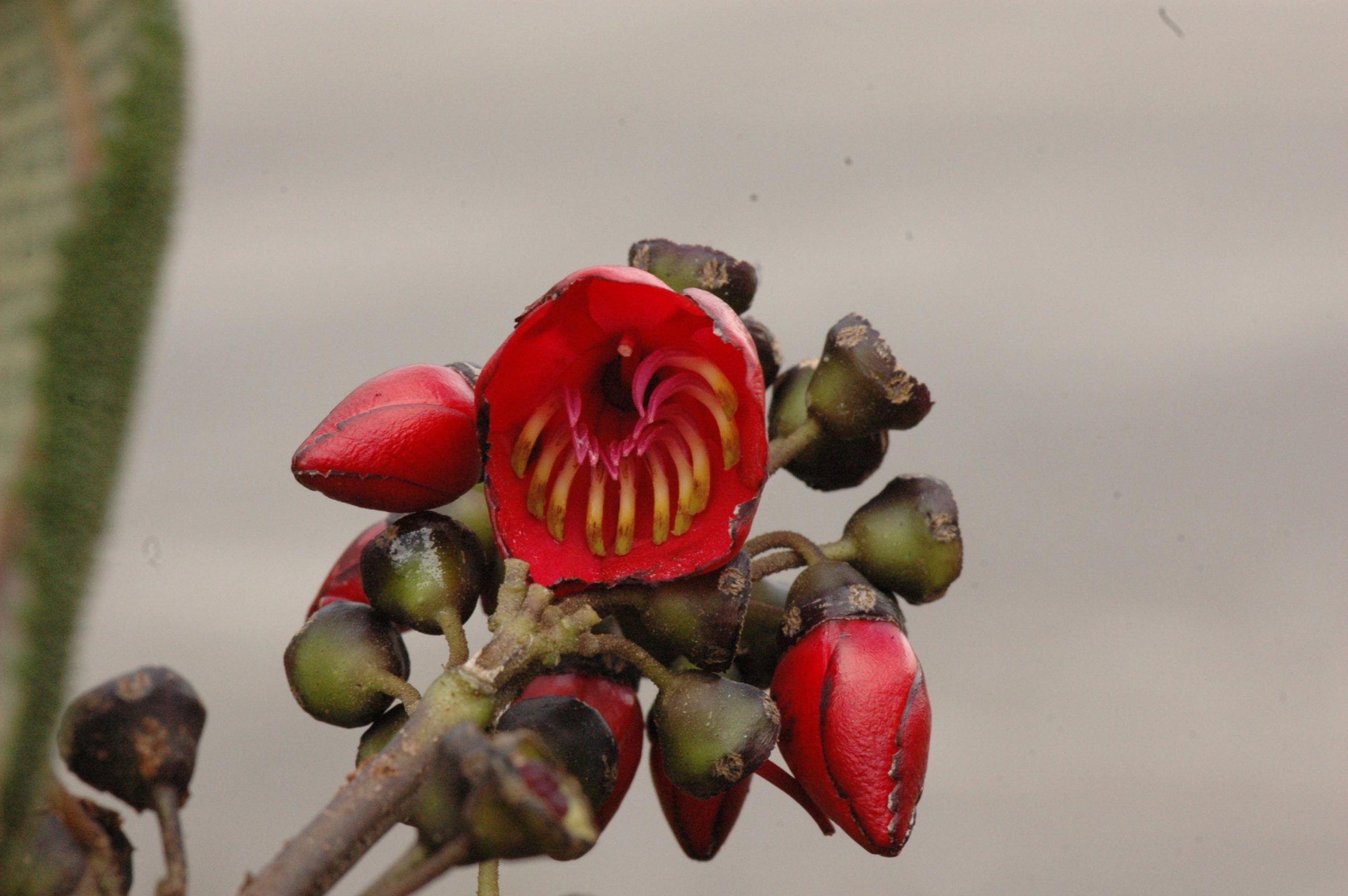
    Meriania radula
    Flower of the hummingbird- and bat-pollinated species Meriania radula from the Ecuadorian páramo. Credit: Agnes Dellinger

    In a recent study, scientists around Agnes Dellinger from the Department of Botany and Biodiversity Research from the University of Vienna investigated flowers of 30 species of a tropical plant group (Merianieae) from the Andes. “Each of these plant species has adapted to pollination by either bees, birds, bats, or rodents,” says Dellinger. Using High-Resolution X-ray computed tomography, the research team produced 3D models of these flowers and used geometric-morphometric methods to analyze differences in flower shape among species with different pollinators.
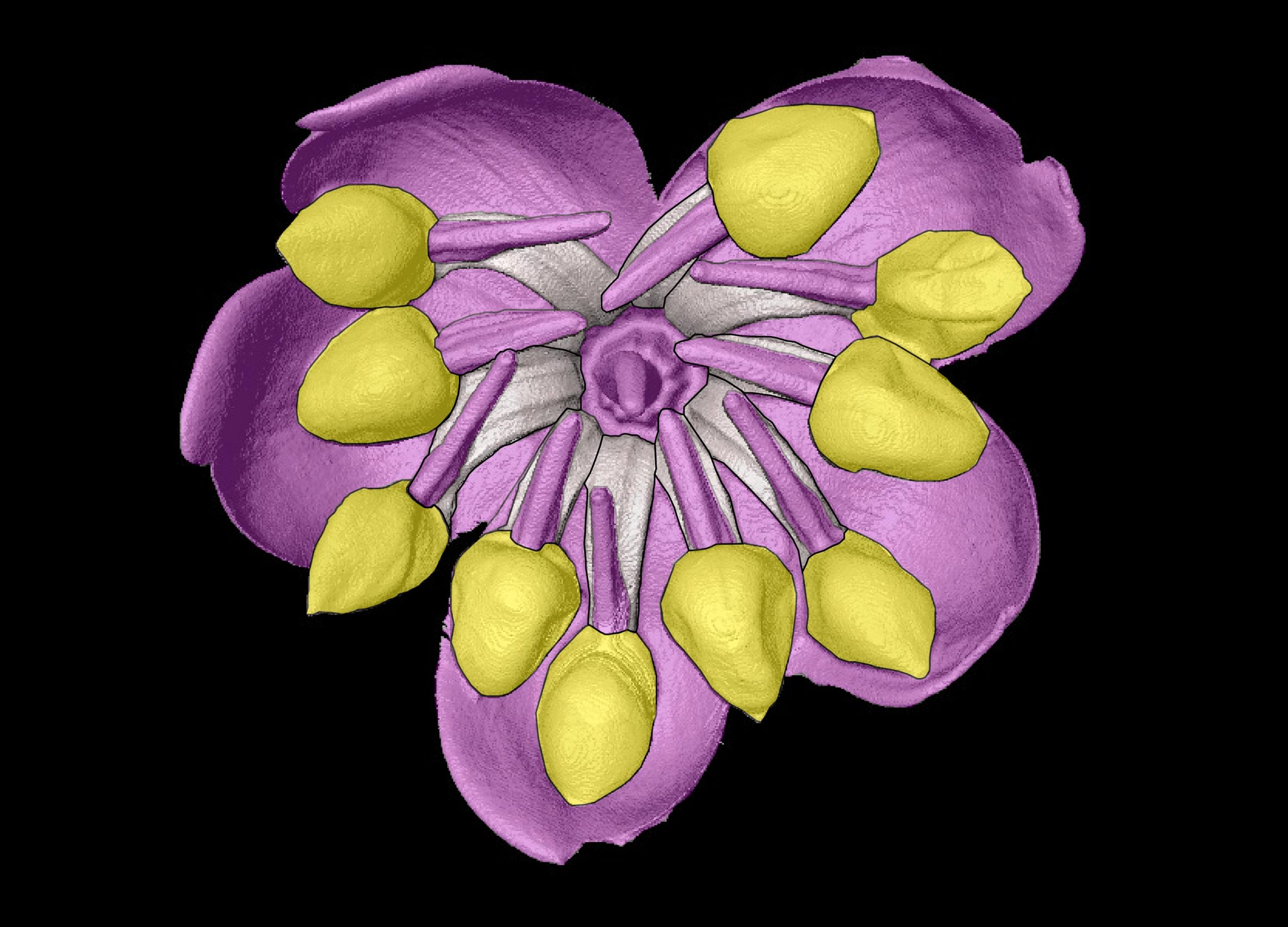
    3D Model Flower
    3D-model of a flower of the passerine-pollinated species Axinaea costaricensis from the Costa Rican montane rain forests. Credit: Agnes Dellinger

    The researchers could show that flower shapes have evolved in adaptation to the distinct pollinators, but that flower shape evolution was not homogeneous across the flower. In particular, the showy sterile organs of flowers (petals) adapted to the different pollinators more quickly than the rest of the flower: the reproductive organs have evolved more slowly. “This study is among the first to analyze the entire 3-dimensional flower shape, and it will be exciting to see whether similar evolutionary floral modularity exists in other plant groups,” concludes Dellinger.

    Reference: “Modularity increases rate of floral evolution and adaptive success for functionally specialized pollination systems” by Agnes S. Dellinger, Silvia Artuso, Susanne Pamperl, Fabián A. Michelangeli, Darin S. Penneys, Diana M. Fernández-Fernández, Marcela Alvear, Frank Almeda, W. Scott Armbruster, Yannick Staeder and Jürg Schönenberger, 5 December 2019, Communications Biology.
    DOI: 10.1038/s42003-019-0697-7

    Never miss a breakthrough: Join the SciTechDaily newsletter.
    Follow us on Google and Google News.

    Evolution Plant Science University of Vienna
    Share. Facebook Twitter Pinterest LinkedIn Email Reddit

    Related Articles

    “Missing Link” Discovered in the Evolutionary History of Carbon-Fixing Protein Rubisco

    Yale Scientists Solve a Thorny Problem: Where Do Thorns Come From?

    DNA Shows Plants Are Extraordinary Chemists – Making Love and War

    Intriguing Genetics That Flipped the Food Chain to Allow Carnivorous Plants to Hunt Animals

    Snapshot of Evolution Captured by Newly Discovered 400 Million-Year-Old Plant

    De-Domesticated Weedy Rice Is Unintended Legacy of Green Revolution

    71 New Species From 2019 Described by Scientists: From Geckos to Goblin Spiders

    Recently Discovered Parasitic Wasp Is Enemy of Serious Alien Pest in North America

    1 Billion Years of Evolution Illuminated by Genetic Sequencing of 1,100 Plants

    1 Comment

    1. Bradford Hatcher on December 11, 2019 11:32 am

      The teleological words “to” and “for” need to begone from evolutionary reporting. How about “evolve as adaptations to”?

      Reply
    Leave A Reply Cancel Reply

    • Facebook
    • Twitter
    • Pinterest
    • YouTube

    Don't Miss a Discovery

    Subscribe for the Latest in Science & Tech!

    Trending News

    The Universe Is Expanding Too Fast and Scientists Can’t Explain Why

    “Like Liquid Metal”: Scientists Create Strange Shape-Shifting Material

    Early Warning Signals of Esophageal Cancer May Be Hiding in Plain Sight

    Common Blood Pressure Drug Shows Surprising Power Against Deadly Antibiotic-Resistant Superbug

    Scientists Uncover Dangerous Connection Between Serotonin and Heart Valve Disease

    Scientists Discover a “Protector” Protein That Could Help Reverse Hair Loss

    Bone-Strengthening Discovery Could Reverse Osteoporosis

    Scientists Uncover Hidden Trigger Behind Stem Cell Aging

    Follow SciTechDaily
    • Facebook
    • Twitter
    • YouTube
    • Pinterest
    • Newsletter
    • RSS
    SciTech News
    • Biology News
    • Chemistry News
    • Earth News
    • Health News
    • Physics News
    • Science News
    • Space News
    • Technology News
    Recent Posts
    • Scientists Overcome Major Quantum Bottleneck, Potentially Transforming Teleportation and Computing
    • Quantum Physics’ Strangest Problem May Hold the Key to Time Itself
    • Scientists Create “Liquid Gears” That Spin Without Touching
    • The Simple Habit That Could Help Prevent Cancer
    • Forgotten Medicinal Plant Shows Promise in Fighting Dangerous Superbugs
    Copyright © 1998 - 2026 SciTechDaily. All Rights Reserved.
    • Science News
    • About
    • Contact
    • Editorial Board
    • Privacy Policy
    • Terms of Use

    Type above and press Enter to search. Press Esc to cancel.