
Close Menu
    Facebook X (Twitter) Instagram
    SciTechDaily
    • Biology
    • Chemistry
    • Earth
    • Health
    • Physics
    • Science
    • Space
    • Technology
    Facebook X (Twitter) Pinterest YouTube RSS
    SciTechDaily
    Home»Science»How Math Can Help Control Spread of Aquatic Invasive Species and Protect Native Wildlife
    Science

    How Math Can Help Control Spread of Aquatic Invasive Species and Protect Native Wildlife

    By University of Tennessee at KnoxvilleNovember 21, 2019No Comments2 Mins Read
    Facebook Twitter Pinterest Telegram LinkedIn WhatsApp Email Reddit
    Share
    Facebook Twitter LinkedIn Pinterest Telegram Email Reddit
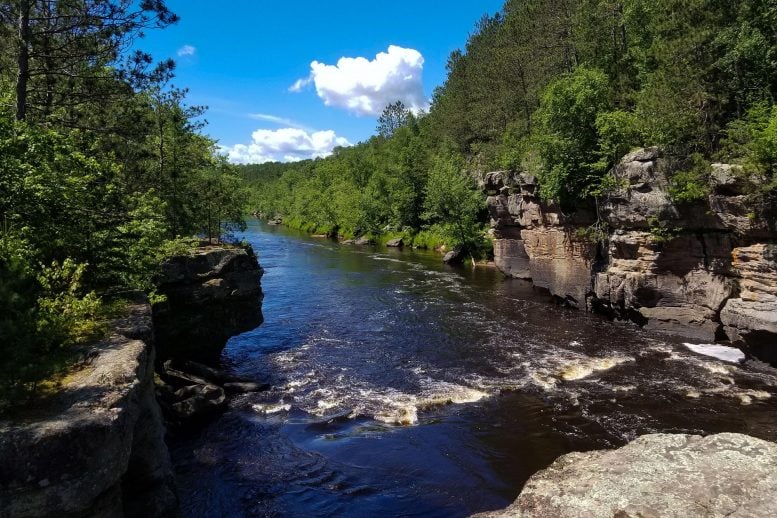
    River Through Forest
    Water discharge rates, controlled by water release mechanisms like dams, can force the invasive populations downstream while minimizing the cost of management. UT applied mathematician has developed a partial differential equation (PDE) model to find the desired flow rate to reduce invasive populations.

    Adjusting the water flow rate in a river can prevent invasive species from moving upstream and expanding their range. An applied mathematician at UT has developed a partial differential equation (PDE) model to find the desired flow rate to reduce invasive populations.

    The model is detailed in a new paper by Suzanne Lenhart, Chancellor’s Professor, and James R. Cox Professor of Mathematics, published in Mathematics.

    “Invasives pose a serious threat to native habitats and species, especially in aquatic environments,” said Lenhart. “Using optimal control techniques in a model with realistic hydrology features, we illustrated how to adjust the flow rate in a river to keep an invasive species from moving upstream.”

    Mathematical models like the PDE model in this study, which represents an invasive population in a river, can give insight into new management strategies. Current strategies to prevent the upstream expansion of invasive species include electric fences or nets in the river, but these are not the only management actions that can be taken.

    River flow affects species’ survival success in habitats. Lower flow rates increase the chance of a species persisting, and higher flow rates inhibit success by limiting the species’ range and the chance of survival. This study investigates how water discharge rates, controlled by water release mechanisms like dams, can force the invasive populations downstream while minimizing the cost of management.

    “With our model, we show how far the invasive population moves upstream with no control, constant control, and optimal control of water discharge,” said Lenhart. “As expected, the populations with no control are able to move further upstream, and we can manipulate the control levels to find the desired flow rate.”

    “In the future, we hope to apply these results with new data to a particularly invasive species like Asian carp,” said Lenhart.

    Reference: “Optimal Control of a PDE Model of an Invasive Species in a River” by Rebecca Pettit and Suzanne Lenhart, 15 October 2019, Mathematics.
    DOI: 10.3390/math7100975

    Never miss a breakthrough: Join the SciTechDaily newsletter.
    Follow us on Google and Google News.

    Environment Marine Biology University of Tennessee at Knoxville
    Share. Facebook Twitter Pinterest LinkedIn Email Reddit

    Related Articles

    Life Finds a Way: Thriving Ecosystems Discovered on WWII Warheads

    Noise Affects More Than Just Your Ears

    Traces of Oil from Deepwater Horizon May Work Their Way up the Food Chain

    Groundwater Susceptible to Radium Contamination

    Russians Celebrate Drilling into Lake Vostok, Biggest Antarctic Subglacial Lake

    Coal-Tar-Based Sealants Emitting PAHs at Rates Possibly Greater Than Auto Emissions

    Baleen Whales Disturbed by Underwater Noises From 120 Miles Away

    Globe-Trekking Sea Turtle Comes Home

    Da Vinci’s Last Supper Threatened By Air Pollution

    Leave A Reply Cancel Reply

    • Facebook
    • Twitter
    • Pinterest
    • YouTube

    Don't Miss a Discovery

    Subscribe for the Latest in Science & Tech!

    Trending News

    Monster Storms on Jupiter Unleash Lightning Beyond Anything on Earth

    Scientists Create “Liquid Gears” That Spin Without Touching

    The Simple Habit That Could Help Prevent Cancer

    Millions Take These IBS Drugs, But a New Study Finds Serious Risks

    Scientists Unlock Hidden Secrets of 2,300-Year-Old Mummies Using Cutting-Edge CT Scanner

    Bread Might Be Making You Gain Weight Even Without Eating More Calories

    Scientists Discover Massive Magma Reservoir Beneath Tuscany

    Europe’s Most Active Volcano Just Got Stranger – Here’s Why Scientists Are Rethinking It

    Follow SciTechDaily
    • Facebook
    • Twitter
    • YouTube
    • Pinterest
    • Newsletter
    • RSS
    SciTech News
    • Biology News
    • Chemistry News
    • Earth News
    • Health News
    • Physics News
    • Science News
    • Space News
    • Technology News
    Recent Posts
    • Simple Blood Test May Predict Alzheimer’s Years Before Brain Scans Show Signs
    • Scientists Say Adding This Unusual Seafood to Your Diet Could Reverse Signs of Aging
    • U.S. Waste Holds $5.7 Billion Worth of Crop Nutrients
    • Scientists Say a Hidden Structure May Exist Inside Earth’s Core
    • Doctors Surprised by the Power of a Simple Drug Against Colon Cancer
    Copyright © 1998 - 2026 SciTechDaily. All Rights Reserved.
    • Science News
    • About
    • Contact
    • Editorial Board
    • Privacy Policy
    • Terms of Use

    Type above and press Enter to search. Press Esc to cancel.