
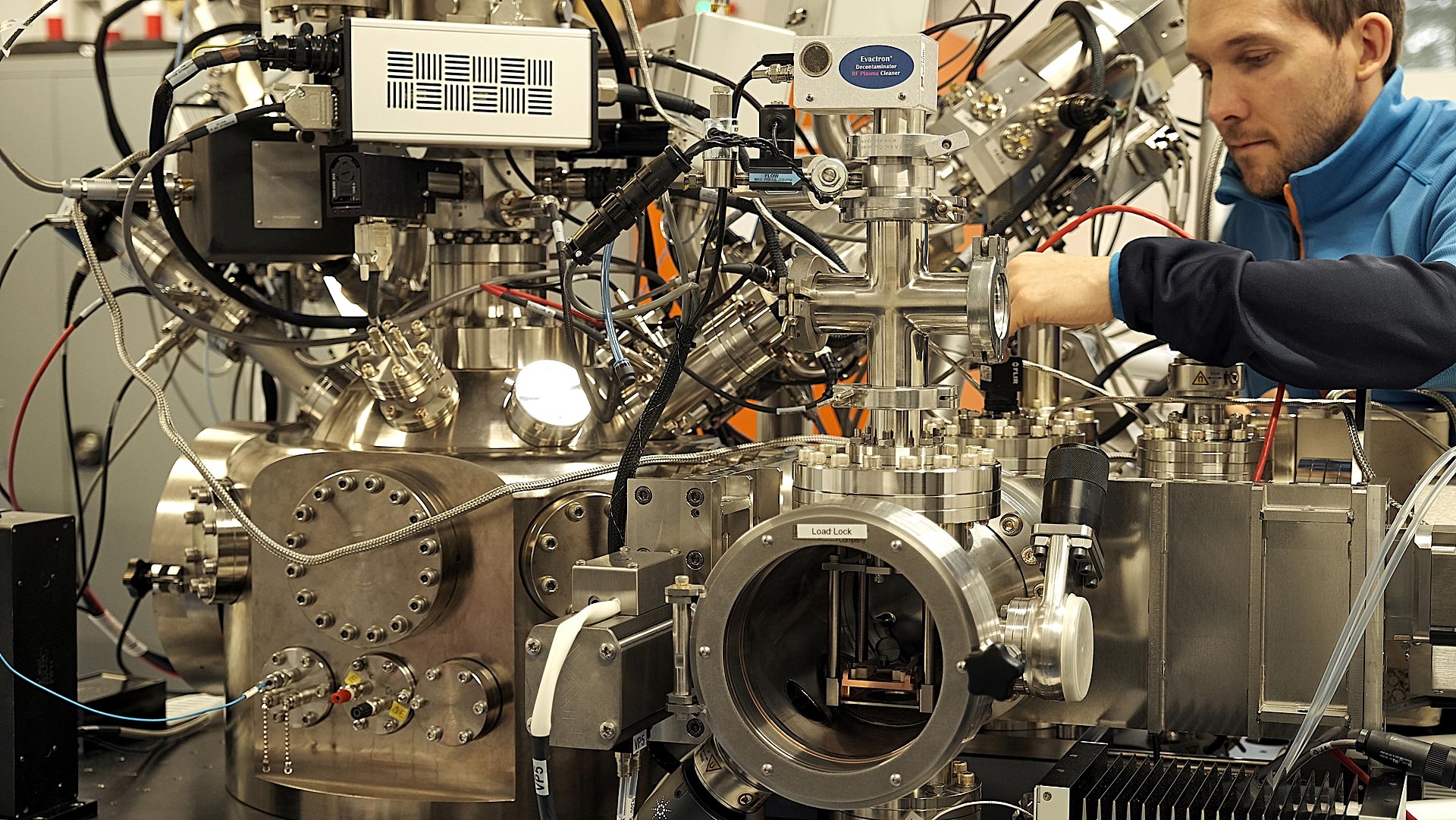
Researchers are leveraging the established silicon infrastructure to pioneer donor spin qubits for quantum computing.
The EQUSPACE consortium, short for Enabling New Quantum Frontiers with Spin Acoustics in Silicon, has secured €3.2 million in funding from the European Innovation Council’s (EIC) Pathfinder Open program. This support aims to accelerate the development of cutting-edge silicon-based quantum technologies. The project brings together five partners, including the Helmholtz-Zentrum Dresden-Rossendorf (HZDR), from three EU countries. It unites experts specializing in spin qubits, optomechanics, and atomic silicon modifications to create a groundbreaking silicon-based quantum platform.
Silicon in Quantum Computing
Silicon has long been the cornerstone of traditional computers, but it currently plays a limited role in most popular quantum computing designs. Despite this, leveraging the extensive, multi-billion-euro silicon infrastructure already established for semiconductor technology could be a game-changer for processing qubits—the fundamental units of quantum information.
Researchers have identified donor spin qubits as a promising candidate for this purpose. These qubits rely on the spin of impurity atoms to encode and process information. Unlike other quantum systems, donor spin qubits offer remarkable stability, maintaining their quantum states for extended periods — an essential trait for quantum computing operations.
However, donor spin qubits have yet to become the backbone of commercial quantum computers. The challenge lies in the lack of effective coupling and readout mechanisms, which are necessary to scale these systems for practical applications.
EQUSPACE: Innovating Quantum Connectivity
EQUSPACE now aims to create a long-term future for silicon-based donor spin qubits in Europe. The platform makes an effort to connect the qubits, which are based on tiny atomic spins, via sound waves in vibrating structures. Lasers and single-electron transistors will also be used to electrically read out the result at the end of the quantum mechanical calculation.
The project seeks to provide a scalable solution for all important aspects of a quantum platform: the control and readout of the result, the spin-spin coupling between qubits, and the transmission of quantum information between computing units on the chip. The final outcome could be a complete quantum information platform that includes qubits, interconnects, and scalable control and readout electronics.
Advanced Materials and Techniques at HZDR
A team from the Institute of Ion Beam Physics and Materials Research at HZDR will contribute its expertise in the atomic modification of silicon for quantum applications and further develop the materials science methods required as a basis for the project. The team will use a focused ion beam to locally enrich ultra-pure silicon with the isotope silicon-28. Compared to many other materials, silicon-28 has the advantage that its atomic nuclei have no spin that could interact with magnetic fields or the spin of other particles and thus interfere with the calculations.
“Through the targeted enrichment with special isotopes, the quantum state remains stable for longer timespans. This allows more complex quantum operations, and the platform could thus outperform classical computers and other quantum computer systems in the future,” says HZDR project manager Dr. Nico Klingner.
In addition to isotope purification, the team is developing the single-ion implantation of donor atoms. The aim is to implant individual bismuth atoms whose spin forms a two-state system that can point either “up” or “down.” The special feature of qubits is that at very low temperatures, both states can exist simultaneously in superpositions: the spin can be in a combination of the “up” and “down” states at the same time. This allows quantum computers to perform many calculations in parallel, which can drastically increase their computing power.
One of the main advantages of donor spin qubits is their relative stability compared to other types of qubits, for example, those based on superconducting circuits. The spin in a donor atom is less susceptible to perturbations from the environment, so the quantum state can be maintained over longer periods of time. This stability is essential for scaling quantum computers to a larger number of qubits without losing coherence or precision of computations. “These contributions from HZDR, especially in the areas of isotope purification, implantation and strain engineering in semiconductors, are fundamental to the success of the EQUSPACE project,” states Professor Juha Muhonen, the coordinator of the project.
Global Quantum Ambitions in Europe
The EQUSPACE consortium includes researchers from the University of Jyväskylä, the VTT Technical Research Center of Finland, the HZDR, the NWO Institute AMOLF in the Netherlands and the Finnish start-up SemiQon Oy. The collaboration reflects Europe’s growing commitment to the global quantum race. As global competition intensifies, the European quantum industry is facing major challenges from competition from leading countries such as the USA, China, Canada, and Australia.
“EQUSPACE’s approach is crucial to ensure that Europe remains competitive in the rapidly advancing field of quantum technologies. With this funding, EQUSPACE is building a strong research network in Europe based on donor spin qubits – a development that will strengthen the European quantum industry in the long term,” explains Muhonen. The funding is part of the Horizon Europe funding program. The project, led by the University of Jyväskylä, will begin on February 1, 2025.
Never miss a breakthrough: Join the SciTechDaily newsletter.
Follow us on Google and Google News.
1 Comment
Better use this in accelerator detectors. See what we see…