
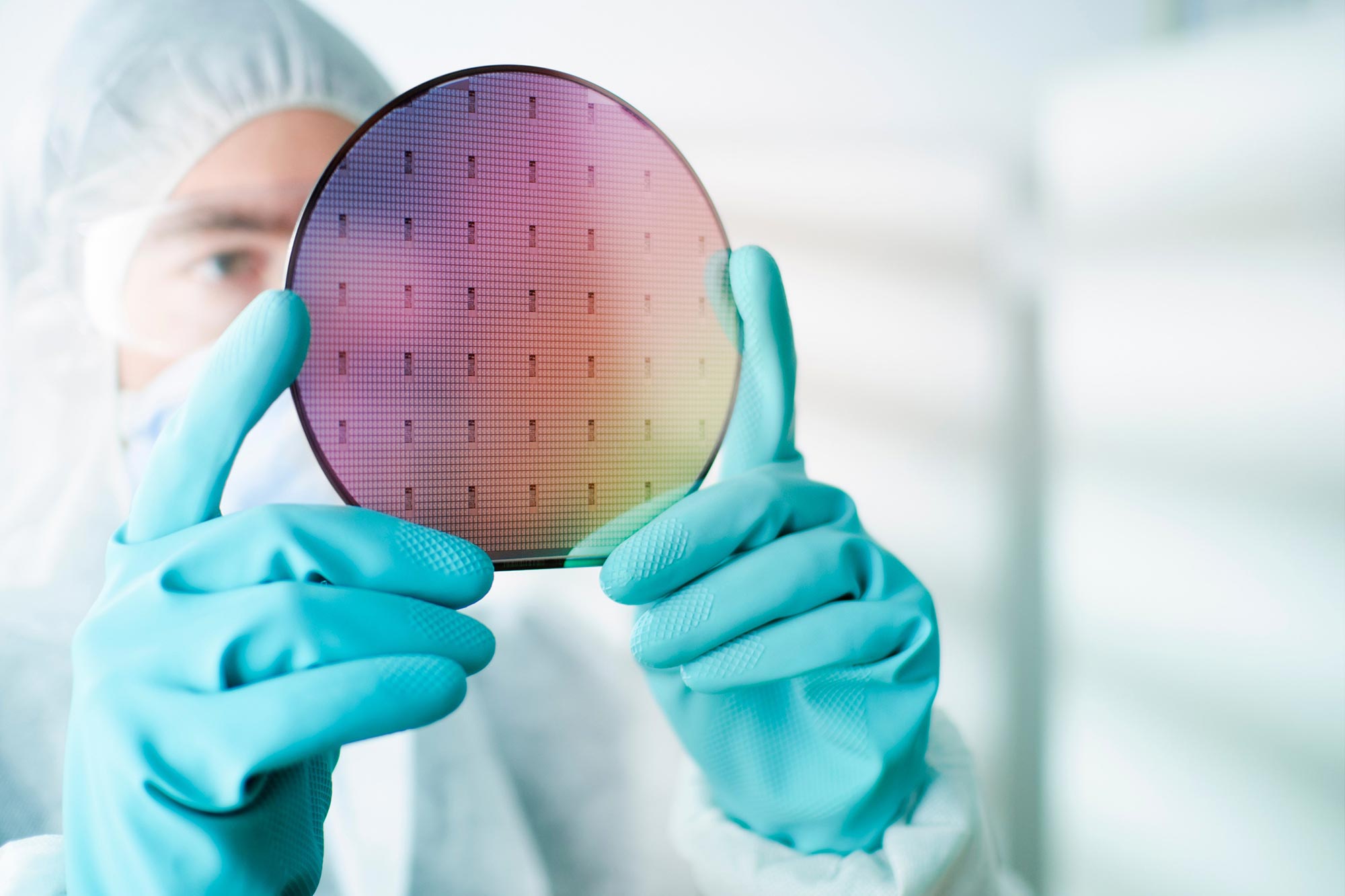
A major breakthrough in quantum computing has been achieved with the development of ultra-pure silicon, setting the stage for the creation of powerful, scalable quantum computers.
More than 100 years ago, scientists at The University of Manchester changed the world when they discovered the nucleus in atoms, marking the birth of nuclear physics.
Fast forward to today, and history repeats itself, this time in quantum computing.
Building on the same pioneering method forged by Ernest Rutherford – “the founder of nuclear physics” – scientists at the University, in collaboration with the University of Melbourne in Australia, have produced an enhanced, ultra-pure form of silicon that allows construction of high-performance qubit devices – a fundamental component required to pave the way towards scalable quantum computers.
The finding, published in the journal Communications Materials, could define and push forward the future of quantum computing.
Quantum Computing Advances
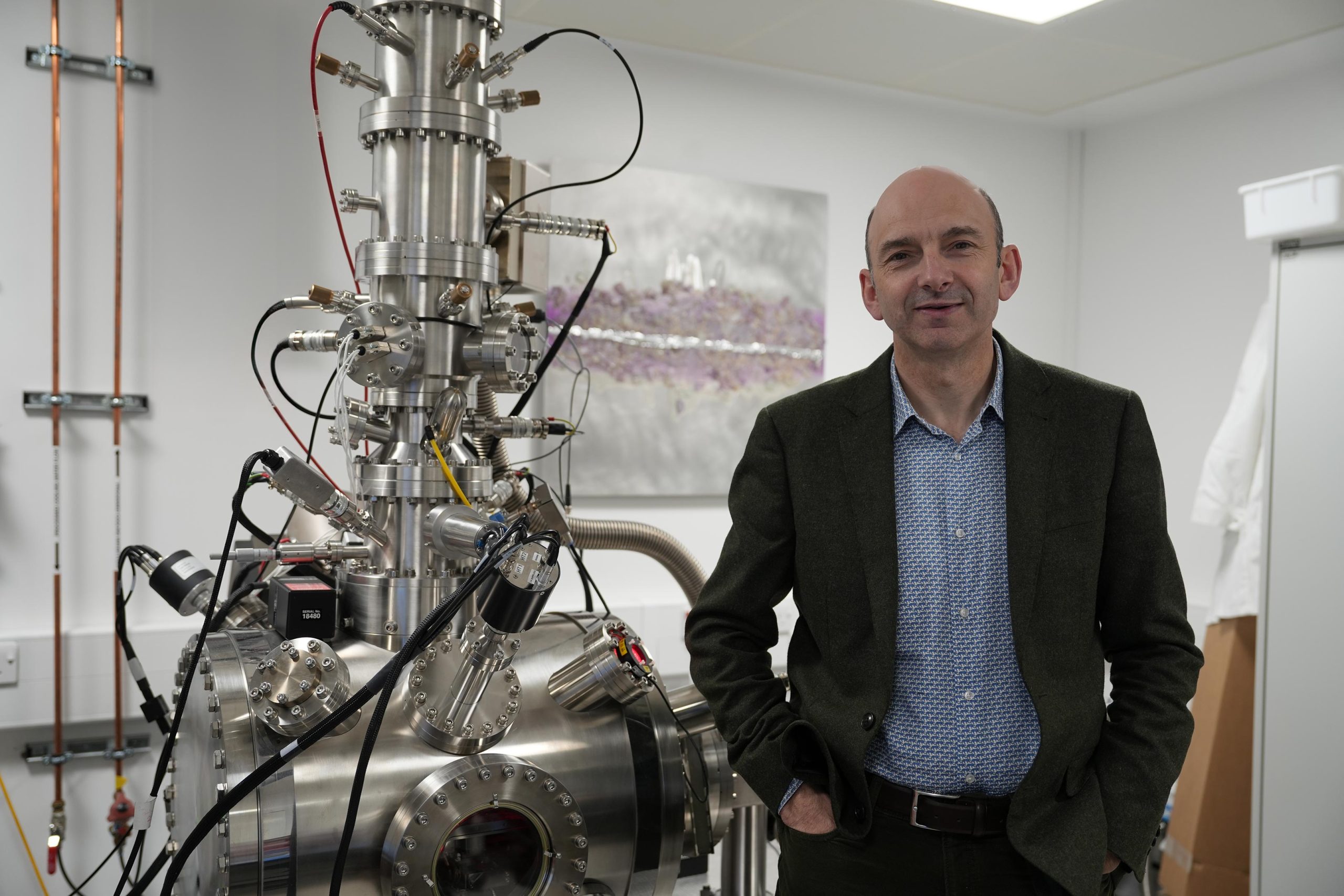
Richard Curry, Professor of Advanced Electronic Materials at The University of Manchester, said:
“What we’ve been able to do is effectively create a critical ‘brick’ needed to construct a silicon-based quantum computer. It’s a crucial step to making a technology that has the potential to be transformative for humankind – feasible; a technology that could give us the capability to process data at such as scale, that we will be able to find solutions to complex issues such as addressing the impact of climate change and tackling healthcare challenges.
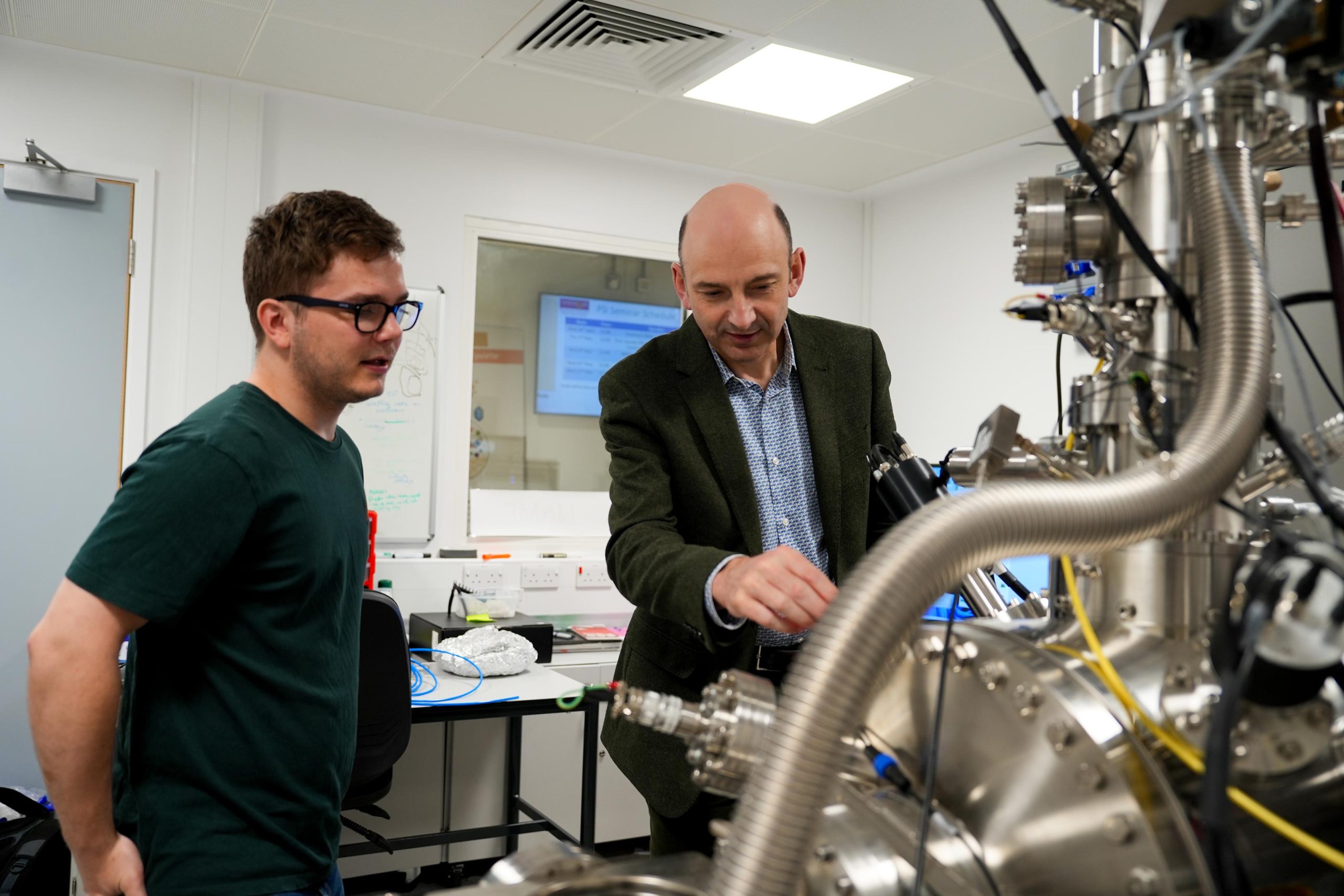
“It is fitting that this achievement aligns with the 200th anniversary of our University, where Manchester has been at the forefront of science innovation throughout this time, including Rutherford’s ‘splitting the atom’ discovery in 1917, then in 1948 with ‘The Baby’ – the first ever real-life demonstration of electronic stored-program computing, now with this step towards quantum computing.”
Overcoming Quantum Challenges
One of the biggest challenges in the development of quantum computers is that qubits – the building blocks of quantum computing – are highly sensitive and require a stable environment to maintain the information they hold. Even tiny changes in their environment, including temperature fluctuations can cause computer errors.
Another issue is their scale, both their physical size and processing power. Ten qubits have the same processing power as 1,024 bits in a normal computer and can potentially occupy much smaller volume. Scientists believe a fully performing quantum computer needs around one million qubits, which provides the capability unfeasible by any classical computer.
Silicon’s Role in Quantum Computing
Silicon is the underpinning material in classical computing due to its semiconductor properties and the researchers believe it could be the answer to scalable quantum computers. Scientists have spent the last 60 years learning how to engineer silicon to make it perform to the best of its ability, but in quantum computing, it has its challenges.
Natural silicon is made up of three atoms of different mass (called isotopes) – silicon 28, 29, and 30. However the Si-29, making up around 5% of silicon, causes a ‘nuclear flip flopping’ effect causing the qubit to lose information.
In a breakthrough at The University of Manchester, scientists have come up with a way to engineer silicon to remove the silicon 29 and 30 atoms, making it the perfect material to make quantum computers at scale, and with high accuracy.
The result – the world’s purest silicon – provides a pathway to the creation of one million qubits, which may be fabricated to the size of pin head.
Ravi Acharya, a PhD researcher who performed experimental work in the project, explained: “The great advantage of silicon quantum computing is that the same techniques that are used to manufacture the electronic chips — currently within an everyday computer that consist of billions of transistors — can be used to create qubits for silicon-based quantum devices. The ability to create high quality Silicon qubits has in part been limited to date by the purity of the silicon starting material used. The breakthrough purity we show here solves this problem.”
The new capability offers a roadmap towards scalable quantum devices with unparalleled performance and capabilities and holds promise of transforming technologies in ways hard to imagine.
Project co-supervisor, Professor David Jamieson, from the University of Melbourne, said: “Our technique opens the path to reliable quantum computers that promise step changes across society, including in artificial intelligence, secure data and communications, vaccine and drug design, and energy use, logistics and manufacturing.
“Now that we can produce extremely pure silicon-28, our next step will be to demonstrate that we can sustain quantum coherence for many qubits simultaneously. A reliable quantum computer with just 30 qubits would exceed the power of today’s supercomputers for some applications,”
Understanding Quantum Computing
All computers operate using electrons. As well as having a negative charge, electrons have another property known as ‘spin’, which is often compared to a spinning top.
The combined spin of the electrons inside a computer’s memory can create a magnetic field. The direction of this magnetic field can be used to create a code where one direction is called ‘0’ and the other direction is called ‘1’. This then allows us to use a number system that only uses 0 and 1 to give instructions to the computer. Each 0 or 1 is called a bit.
In a quantum computer, rather than the combined effect of the spin of many millions of electrons, we can use the spin of single electrons, moving from working in the ‘classical’ world to the ‘quantum’ world; from using ‘bits’ to ‘qubits’.
While classical computers do one calculation after another, quantum computers can do all the calculations at the same time allowing them to process vast amounts of information and perform very complex calculations at an unrivalled speed.
While still in early stages of quantum computing, once fully developed, quantum computers will be used to solve real-world complex problems, such as drug design, and provide more accurate weather forecasts – calculations too difficult for today’s supercomputers.
Reference: “Highly 28Si enriched silicon by localised focused ion beam implantation” by Ravi Acharya, Maddison Coke, Mason Adshead, Kexue Li, Barat Achinuq, Rongsheng Cai, A. Baset Gholizadeh, Janet Jacobs, Jessica L. Boland, Sarah J. Haigh, Katie L. Moore, David N. Jamieson and Richard J. Curry, 7 May 2024, Communications Materials.
DOI: 10.1038/s43246-024-00498-0
This work was supprted by the UK Engineering and Physical Science Research Council (EPSRC), specifically the Programme Grant ‘Nanoscale Advanced Materials Engineering led by Prof. Curry. Professor Jamieson’s collaboration with the University of Manchester is supported by a Royal Society Wolfson Visiting Fellowship and the Australian Research Council. Ravi Acharya is a joint University of Manchester and University of Melbourne PhD student supported by a Cookson Scholarship.
Never miss a breakthrough: Join the SciTechDaily newsletter.
Follow us on Google and Google News.
2 Comments
I want my Commodore 64 back
It’s worth to mention Jan Chochralski here: a Polish chemist, who purified silicon fist (right after WW2). The communists came close to deleting his name from history, but nevertheless his rememberance pravailed.