

Biosolids are the driving force behind a sustainable new method for producing hydrogen from wastewater.
Researchers have used biosolids to produce hydrogen from wastewater, in new technology that supports the comprehensive recycling of one of humanity’s unlimited resources — sewage.
The innovation focuses on the advanced upcycling of biosolids and biogas, by-products of the wastewater treatment process.
Developed by researchers at RMIT University in Melbourne, Australia, the patented technology uses a special material derived from biosolids to spark chemical reactions for producing hydrogen from biogas. The approach means all the materials needed for hydrogen production could be sourced on-site at a wastewater treatment plant, without the need for expensive catalysts.
The method also traps the carbon found in biosolids and biogas, which could in future enable a near zero-emission wastewater sector.
Lead researcher Associate Professor Kalpit Shah said existing commercial methods for producing hydrogen were emission and capital-intensive, and relied heavily on natural gas.
“Our alternative technology offers a sustainable, cost-effective, renewable and efficient approach to hydrogen production,” said Shah, Deputy Director (Academic) of the ARC Training Centre for Transformation of Australia’s Biosolids Resource at RMIT.
“To enable the transition to a circular economy, we need technology that enables us to squeeze the full value from resources that would ordinarily go to waste. Our new technology for making hydrogen relies on waste materials that are essentially in unlimited supply.
“By harnessing the power of biosolids to produce a fully clean fuel from biogas — while simultaneously preventing greenhouse gas emissions — we can deliver a true environmental and economic win.”
Biosolids are commonly used as fertilizer and soil amendment in agriculture, but around 30% of the world’s biosolids resource is stockpiled or sent to landfill, creating an environmental challenge.
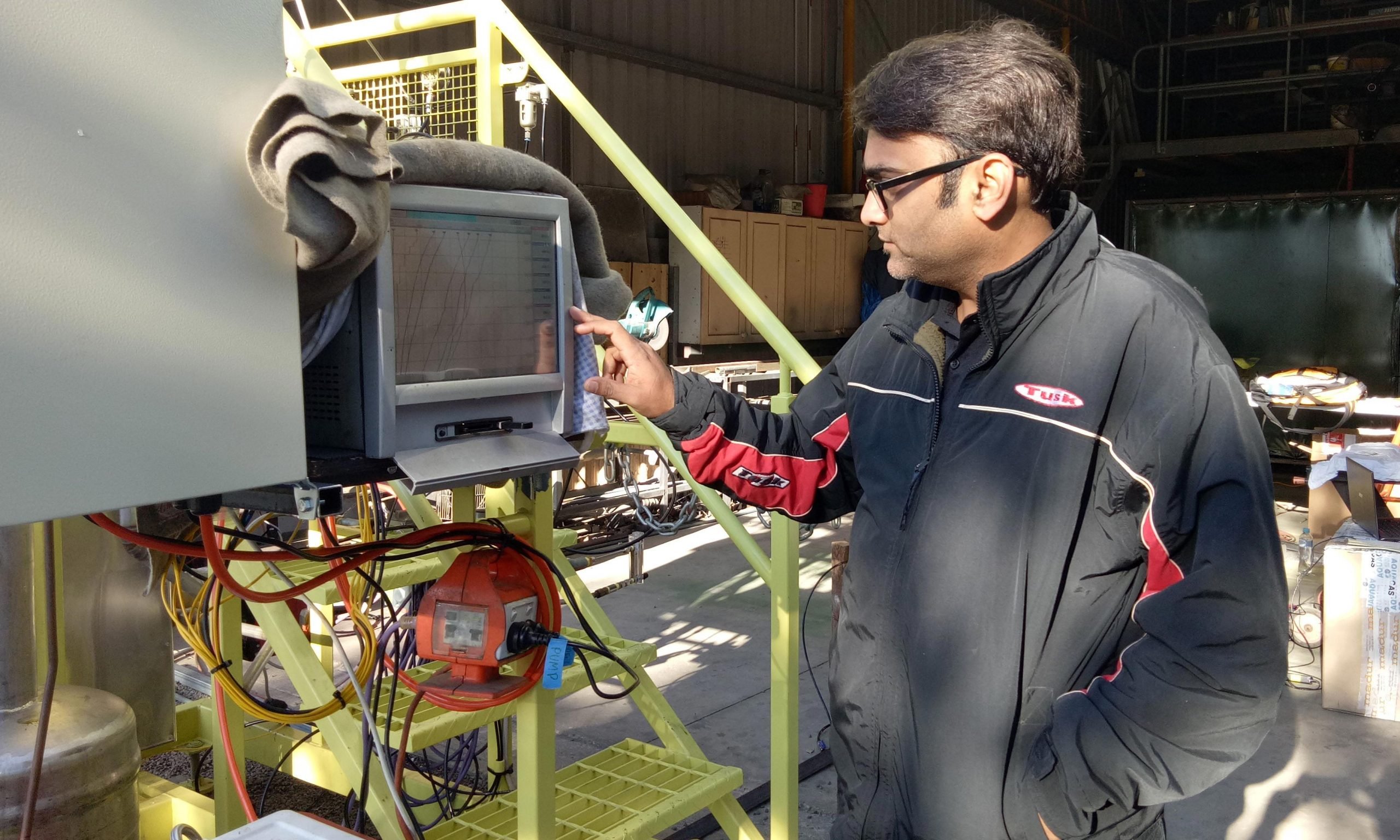
Dr. Aravind Surapaneni, Senior Research and Planning Scientist at South East Water and Deputy Director (Industry) of the ARC Training Centre for Transformation of Australia’s Biosolids Resource, said research into new and valuable uses for biosolids was vital.
“The wastewater sector is constantly looking to develop new ways to transform biosolids into high-value products, in environmentally sustainable and responsible ways,” Surapaneni said.
How the tech works
In the new method, published in the International Journal of Hydrogen Energy, biosolids are first converted to biochar — a carbon-rich form of charcoal used to improve soil health. The biosolids-derived biochar contains some heavy metals, which makes it an ideal catalyst for producing hydrogen out of biogas.
As part of the experimental bench-scale study, researchers tested the process with a methane-rich gas that resembles biogas. They showed the biochar made from biosolids is highly effective for decomposing the gas into its component elements — hydrogen and carbon.
The decomposition process can also be conducted in a specially designed and hyper-efficient reactor developed and patented by RMIT, which can produce both hydrogen and a high-value biochar that is coated with carbon nanomaterials.
By converting the carbon found in biogas and biosolids into advanced carbon nanomaterials, their method can also capture and sequester the greenhouse gas to prevent its release into the atmosphere.
The carbon nanomaterial-coated biochar produced through the novel technique has a range of potential applications including environmental remediation, boosting agricultural soils, and energy storage.
Patented reactor technology
Shah said the unique reactor developed by the RMIT School of Engineering team was at the heart of this innovative recycling approach.
“We’ve radically optimized heat and mass transfer in our reactor, while shrinking the technology to make it highly mobile,” he said. “There are no reactors available that can achieve such phenomenal heat and mass integration, in such a small and cost-effective package.
“And while it’s already energy-efficient, with further integration, this reactor could turn biosolids and biogas conversion into a process that actually produces energy instead of consuming it.”
As well as being used in wastewater treatment, the novel reactor has potential applications in the biomass, plastics, and coating industries.
The research was supported by South East Water, which will be trialing the biosolids and biogas conversion technology in a pilot plant currently under fabrication.
Dr. David Bergmann, Research and Development Manager at South East Water, said the technology had potential for adoption by the industry.
“Supporting these kinds of innovative emerging technologies is an important part of our commitment towards reduced emissions and a circular economy approach involving wastewater,” Bergmann said.
Reference: “Production of hydrogen by catalytic methane decomposition using biochar and activated char produced from biosolids pyrolysis” by Savankumar Patel, Sazal Kundu, Pobitra Halder, Mojtaba Hedayati Marzbali, Ken Chiang, Aravind Surapaneni and Kalpit Shah, 3 September 2020, International Journal of Hydrogen Energy.
DOI: 10.1016/j.ijhydene.2020.08.036
The Australian Research Council Training Centre for Transformation of Australia’s Biosolids Resource based at RMIT brings together expertise from 20 national and international partners from Australia, the UK and US including universities, wastewater sector and allied industry partners.
Never miss a breakthrough: Join the SciTechDaily newsletter.
Follow us on Google and Google News.
1 Comment
Our team of experts controls the last best underground storage for hydrogen in a depleted gas field near a power plant located in Northern California near Lodi which is converting to hydrogen to some degree we also have a plethora of crop waste that could be converted to hydrogen via promises and we have a wastewater treatment plant that could implement electrolysis to hydrogen to subsequently store in our underground storage which has been thoroughly vetted to be an ideal container for any type of gas the field under went a 50 million dollar study by PG&E and passed integrity test the depleted gas field has high porosity and / me ability such that it will hold 23 million kilograms of hydrogen if you would like more information on this opportunity please contact Patrick Ross at [email protected] 307-920-1095