
Close Menu
    Facebook X (Twitter) Instagram
    SciTechDaily
    • Biology
    • Chemistry
    • Earth
    • Health
    • Physics
    • Science
    • Space
    • Technology
    Facebook X (Twitter) Pinterest YouTube RSS
    SciTechDaily
    Home»Space»Hubble Space Telescope’s Payload Computer Halts – NASA Operations Underway To Restore
    Space

    Hubble Space Telescope’s Payload Computer Halts – NASA Operations Underway To Restore

    By NASAJune 17, 20211 Comment2 Mins Read
    Facebook Twitter Pinterest Telegram LinkedIn WhatsApp Email Reddit
    Share
    Facebook Twitter LinkedIn Pinterest Telegram Email Reddit
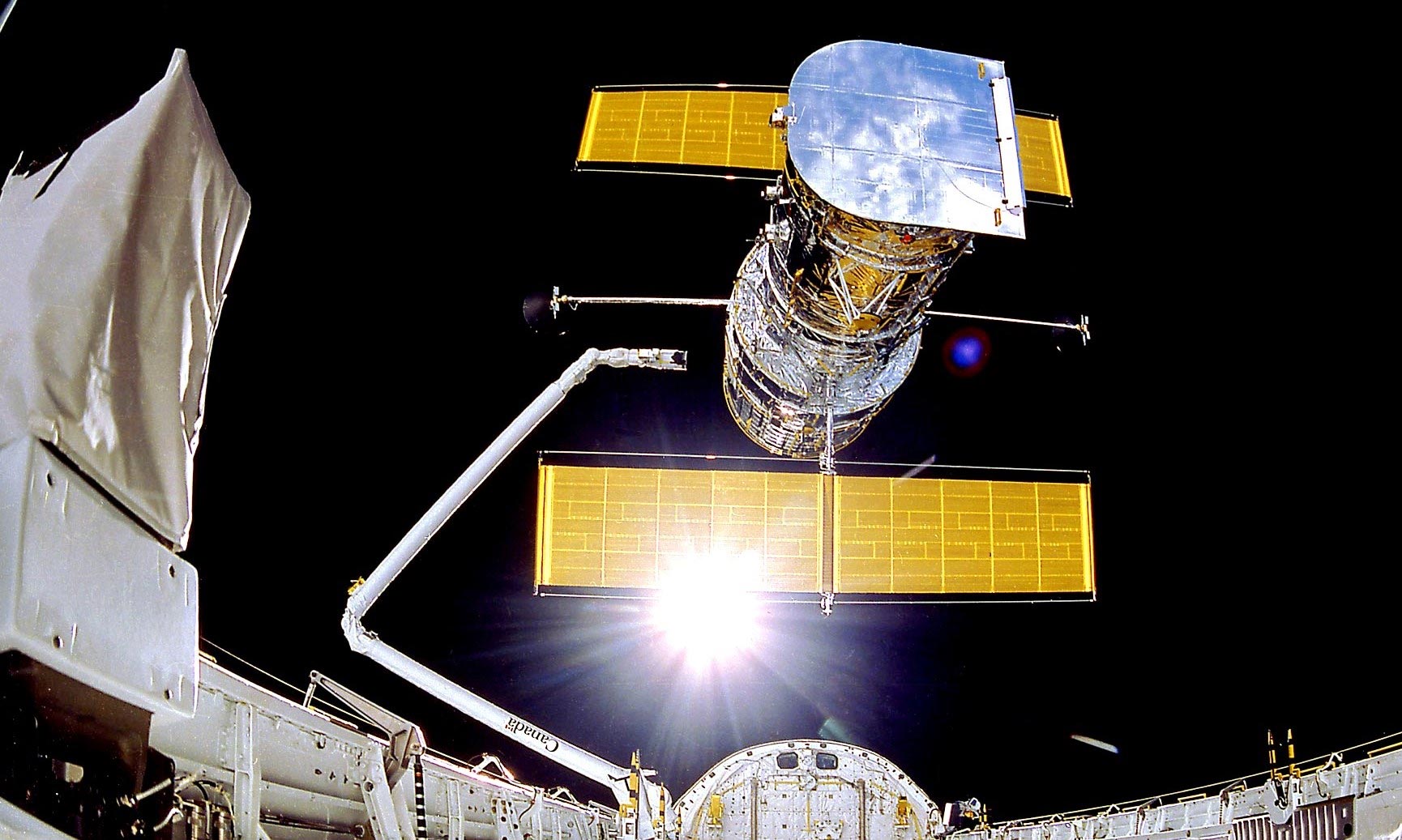
    Hubble Space Telescope Is Deployed
    The Hubble Space Telescope is deployed on April 25, 1990 from the space shuttle Discovery. Avoiding distortions of the atmosphere, Hubble has an unobstructed view peering to planets, stars and galaxies, some more than 13.4 billion light years away. Credit: NASA/Smithsonian Institution/Lockheed Corporation

    NASA is working to resolve an issue with the payload computer on the Hubble Space Telescope. The computer halted on Sunday, June 13, shortly after 4 p.m. EDT. After analyzing the data, the Hubble operations team is investigating whether a degrading memory module led to the computer halt. The team is preparing to switch to one of several backup modules on Wednesday, June 16. The computer will then be allowed to run for approximately one day to verify that the problem has been solved. The team would then restart all science instruments and return the telescope to normal science operations.
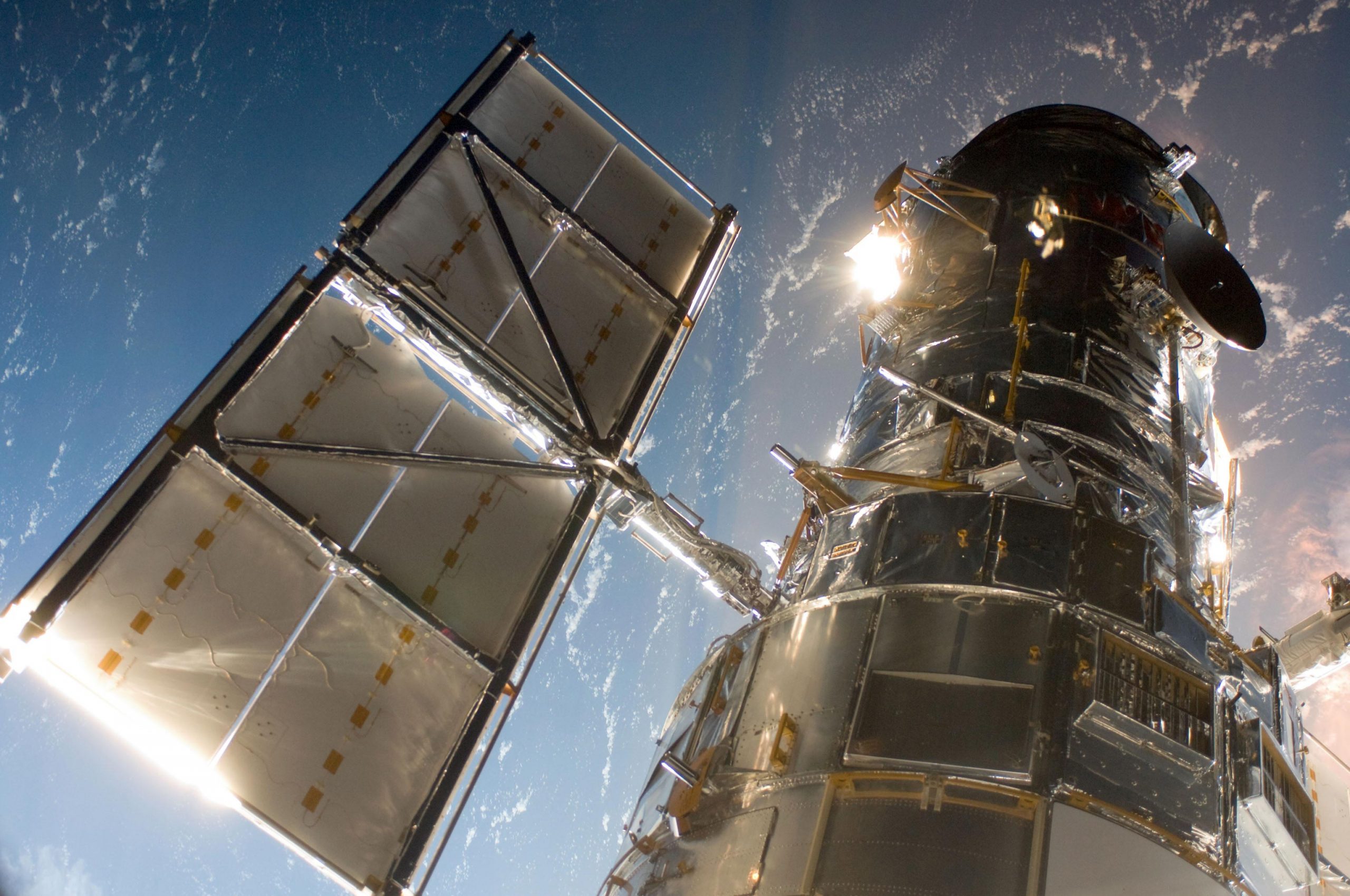
    Hubble Space Telescope in Orbit
    The Hubble Space Telescope was launched by the space shuttle Discovery on April 24, 1990. Avoiding distortions of the atmosphere, Hubble has an unobstructed view peering to planets, stars, and galaxies, some more than 13.4 billion light-years away. Credit: NASA

    The purpose of the payload computer is to control and coordinate the science instruments onboard the spacecraft. After the halt occurred on Sunday, the main computer stopped receiving a “keep-alive” signal, which is a standard handshake between the payload and main spacecraft computers to indicate all is well. The main computer then automatically placed all science instruments in a safe mode configuration. Control center personnel at NASA’s Goddard Space Flight Center in Greenbelt, Maryland restarted the computer on Monday, June 14, but it soon experienced the same problem.

    The payload computer is a NASA Standard Spacecraft Computer-1 (NSSC-1) system built in the 1980s. It is part of the Science Instrument Command and Data Handling module, which was replaced during the last astronaut servicing mission in 2009. The module has various levels of redundancy which can be switched on to serve as the primary system when necessary.

    Never miss a breakthrough: Join the SciTechDaily newsletter.
    Follow us on Google and Google News.

    Hubble Space Telescope NASA Space Telescope Science Institute
    Share. Facebook Twitter Pinterest LinkedIn Email Reddit

    Related Articles

    Jupiter’s Great Red Spot Enigma: Unexplained Oscillations Baffle Astronomers

    Unlocking Uranus: NASA’s Dual Observations Pave the Way to Discovering New Worlds

    Astronomers Baffled by Black Hole Jets Igniting Star Explosions

    The Big Bang’s Dark Legacy Revealed by Hubble: Unexpected Black Holes

    Historic Discovery: Twin Titans Clash As NASA Unveils Closest Supermassive Black Hole Duo

    The Great Escape: NASA’s Hubble and MAVEN Help Solve Mystery of Mars’ Vanishing Water

    Webb and Hubble Unite: A Breathtaking 3D Journey Through the Pillars of Creation

    Stellar Sleuths: Citizen Scientists and AI Uncover Hidden Asteroids With Hubble

    Hubble Celebrates 34th Anniversary With a Spectacular View of the Little Dumbbell Nebula

    1 Comment

    1. William Adama on June 18, 2021 12:19 am

      The best way to make a short article longer? Put the same paragraph in twice.

      Reply
    Leave A Reply Cancel Reply

    • Facebook
    • Twitter
    • Pinterest
    • YouTube

    Don't Miss a Discovery

    Subscribe for the Latest in Science & Tech!

    Trending News

    Mezcal “Worm” in a Bottle Mystery: DNA Testing Reveals a Surprise

    New Research Reveals That Your Morning Coffee Activates an Ancient Longevity Switch

    This Is What Makes You Irresistible to Mosquitoes

    Shockingly Powerful Giant Octopuses Ruled the Seas 100 Million Years Ago

    Scientists Stunned by New Organic Molecules Found on Mars

    Rewriting Dinosaur Evolution: Scientists Unearth Remarkable 150-Million-Year-Old Stegosaur Skull

    Omega-3 Supplements Linked to Cognitive Decline in Surprising New Study

    First-of-Its-Kind Discovery: Homer’s Iliad Found Embedded in a 1,600-Year-Old Egyptian Mummy

    Follow SciTechDaily
    • Facebook
    • Twitter
    • YouTube
    • Pinterest
    • Newsletter
    • RSS
    SciTech News
    • Biology News
    • Chemistry News
    • Earth News
    • Health News
    • Physics News
    • Science News
    • Space News
    • Technology News
    Recent Posts
    • This Gene Tweak Turns Strawberries Into Healthier, Tastier Superfruit
    • This New Chip Could Make GPUs Far More Efficient
    • This Tiny World in the Outer Solar System Should Be Airless, but It Has an Atmosphere
    • NASA’s Webb Space Telescope Reveals a Dark Airless Super-Earth That Looks Like Mercury
    • These Simple Daily Habits Can Quickly Improve Blood Pressure and Heart Risk Factors
    Copyright © 1998 - 2026 SciTechDaily. All Rights Reserved.
    • Science News
    • About
    • Contact
    • Editorial Board
    • Privacy Policy
    • Terms of Use

    Type above and press Enter to search. Press Esc to cancel.