
Close Menu
    Facebook X (Twitter) Instagram
    SciTechDaily
    • Biology
    • Chemistry
    • Earth
    • Health
    • Physics
    • Science
    • Space
    • Technology
    Facebook X (Twitter) Pinterest YouTube RSS
    SciTechDaily
    Home»Space»Hubble Telescope Image of the Week – Galaxy ESO 376-16
    Space

    Hubble Telescope Image of the Week – Galaxy ESO 376-16

    By SciTechDailySeptember 25, 2017No Comments2 Mins Read
    Facebook Twitter Pinterest Telegram LinkedIn WhatsApp Email Reddit
    Share
    Facebook Twitter LinkedIn Pinterest Telegram Email Reddit
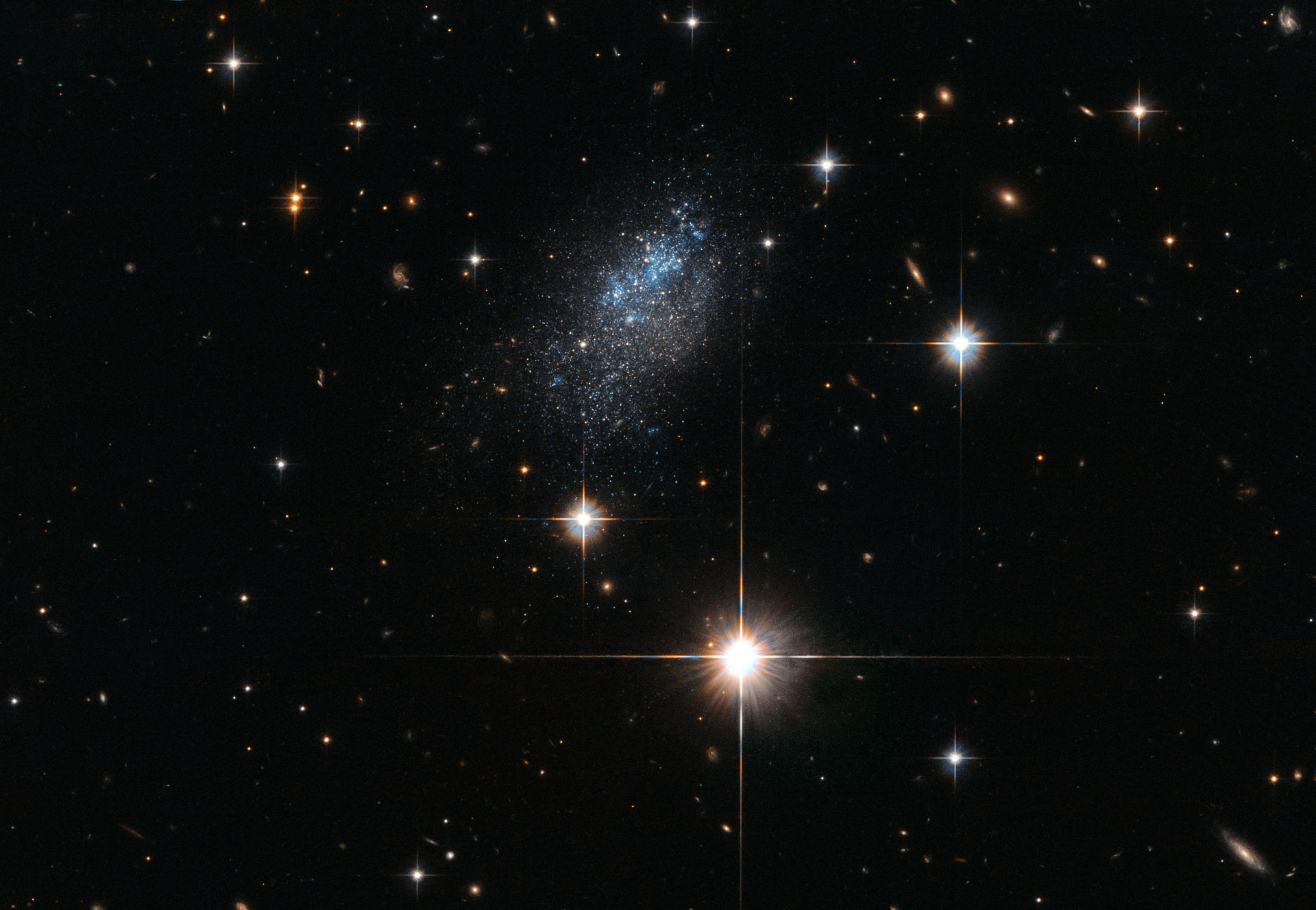
    ESO Image of Galaxy ESO 376-16
    The galaxy ESO 376-16 is located approximately 23 million light-years away from Earth. Credit: ESA/Hubble & NASA

    This Hubble Space Telescope image of the week shows galaxy ESO 376-16, which is located roughly 23 million light-years from Earth.

    The distances to objects in the Universe can differ enormously. The nearest star to us — Proxima Centauri — lies some 4.2 light-years from us, while some incredibly distant galaxies are so far away — 13 billion light-years or more — that they are only visible to us as a result of cosmic tricks of magnification.

    The subject of this image, a galaxy called ESO 376-16, sits nearly 23 million light-years from Earth — not that great a distance on a cosmic scale. However, given the galaxy’s relative proximity to us, we know surprisingly little about it. Astronomers are still debating about many of the properties of ESO 376-16, including its morphology. Galaxies are divided into types based on their visual appearance and characteristics; spiral galaxies, like the Milky Way, are flattened discs with curved arms sweeping out from a central nucleus, while irregular galaxies lack a distinct structure and look far more chaotic. On the basis of its rather ill-defined morphology, ESO 376-16 is thought to be either a late-type spiral or a dwarf irregular galaxy.

    Despite its mystique, observations of ESO 376-16 have been useful in several studies, including one made with the NASA/ESA Hubble Space Telescope that aimed to create a 3D map of galaxies lying in the vicinity of Earth. Researchers used Hubble to gauge the distance to galaxies including ESO 376-16 by measuring the luminosities of especially bright red-giant-branch stars sitting within the galaxies. They then used their data to generate and calibrate 3D maps of the distribution of galaxies throughout the nearby cosmos.


    Never miss a breakthrough: Join the SciTechDaily newsletter.
    Follow us on Google and Google News.

    Astronomy Hubble Space Telescope
    Share. Facebook Twitter Pinterest LinkedIn Email Reddit

    Related Articles

    A Morphing Spiral Galaxy Amongst Friends

    Hubble Views Magnificent Lopsided Galaxy NGC 2276

    Hubble Captures Fantastic Detail of Eponymous Spiral Galaxy NGC 691

    Spectacular Image Captured by Hubble Shows a Strangely Contorted Spiral Galaxy

    A Distant Spiral in Virgo: Extraordinary Detail Seen in a Galaxy 150 Million Light-Years Away From Earth

    Magnetic Monsters: Hubble Tracks Down Location of Mysterious Radio Signals From Intergalactic Space

    A Menagerie of Galaxies: Hubble Captures a Cluster With Galaxies of All Shapes and Sizes

    How Habitable Are Planets That Orbit Red Dwarfs – The Most Common Type of Stars in the Galaxy?

    Cosmic Silver Lining: Hubble Spots V565 Surrounded by Four Prominent Diffraction Spikes

    Leave A Reply Cancel Reply

    • Facebook
    • Twitter
    • Pinterest
    • YouTube

    Don't Miss a Discovery

    Subscribe for the Latest in Science & Tech!

    Trending News

    This Alien Planet Has Rock Clouds That Vaporize Before Sunset

    The Simple Habit That Could Lower Your Cancer Risk

    146,000-Year-Old Discovery Rewrites the Story of Human Creativity

    The Type of Alcohol You Drink Could Affect How Long You Live

    This Common Vitamin May Help Stop Prediabetes From Turning Into Diabetes

    Scientists Finally Solve the Mystery of “Clockwork” Earthquakes

    Breakthrough Parkinson’s Drug Targets Disease at Its Genetic Roots

    Just 4 Weeks of Simple Diet Changes Reversed Signs of Aging in Older Adults

    Follow SciTechDaily
    • Facebook
    • Twitter
    • YouTube
    • Pinterest
    • Newsletter
    • RSS
    SciTech News
    • Biology News
    • Chemistry News
    • Earth News
    • Health News
    • Physics News
    • Science News
    • Space News
    • Technology News
    Recent Posts
    • Researchers Reveal the Surprisingly Easy Habit Linked to Longer Healthier Lives
    • Scientists Discover Grapes Can “Reprogram” Your Skin Against Sun Damage
    • Scientists Create “Trojan Horse” Weight Loss Drug That Supercharges Results
    • Cats Have a Unique Kidney Chemistry That Could Be Harming Their Health
    • Scientists Warn Himalayan Rivers Are Becoming Increasingly Unstable
    Copyright © 1998 - 2026 SciTechDaily. All Rights Reserved.
    • Science News
    • About
    • Contact
    • Editorial Board
    • Privacy Policy
    • Terms of Use

    Type above and press Enter to search. Press Esc to cancel.