
Close Menu
    Facebook X (Twitter) Instagram
    SciTechDaily
    • Biology
    • Chemistry
    • Earth
    • Health
    • Physics
    • Science
    • Space
    • Technology
    Facebook X (Twitter) Pinterest YouTube RSS
    SciTechDaily
    Home»Space»Parker Solar Probe Will Fly Directly Through the Sun’s Atmosphere
    Space

    Parker Solar Probe Will Fly Directly Through the Sun’s Atmosphere

    By NASASeptember 25, 2017No Comments3 Mins Read
    Facebook Twitter Pinterest Telegram LinkedIn WhatsApp Email Reddit
    Share
    Facebook Twitter LinkedIn Pinterest Telegram Email Reddit

    The Daredevil Spacecraft That Will Touch the Sun

    Next Summer NASA will launch the Parker Solar Probe, a spacecraft that will get closer to the Sun than any other in human history.

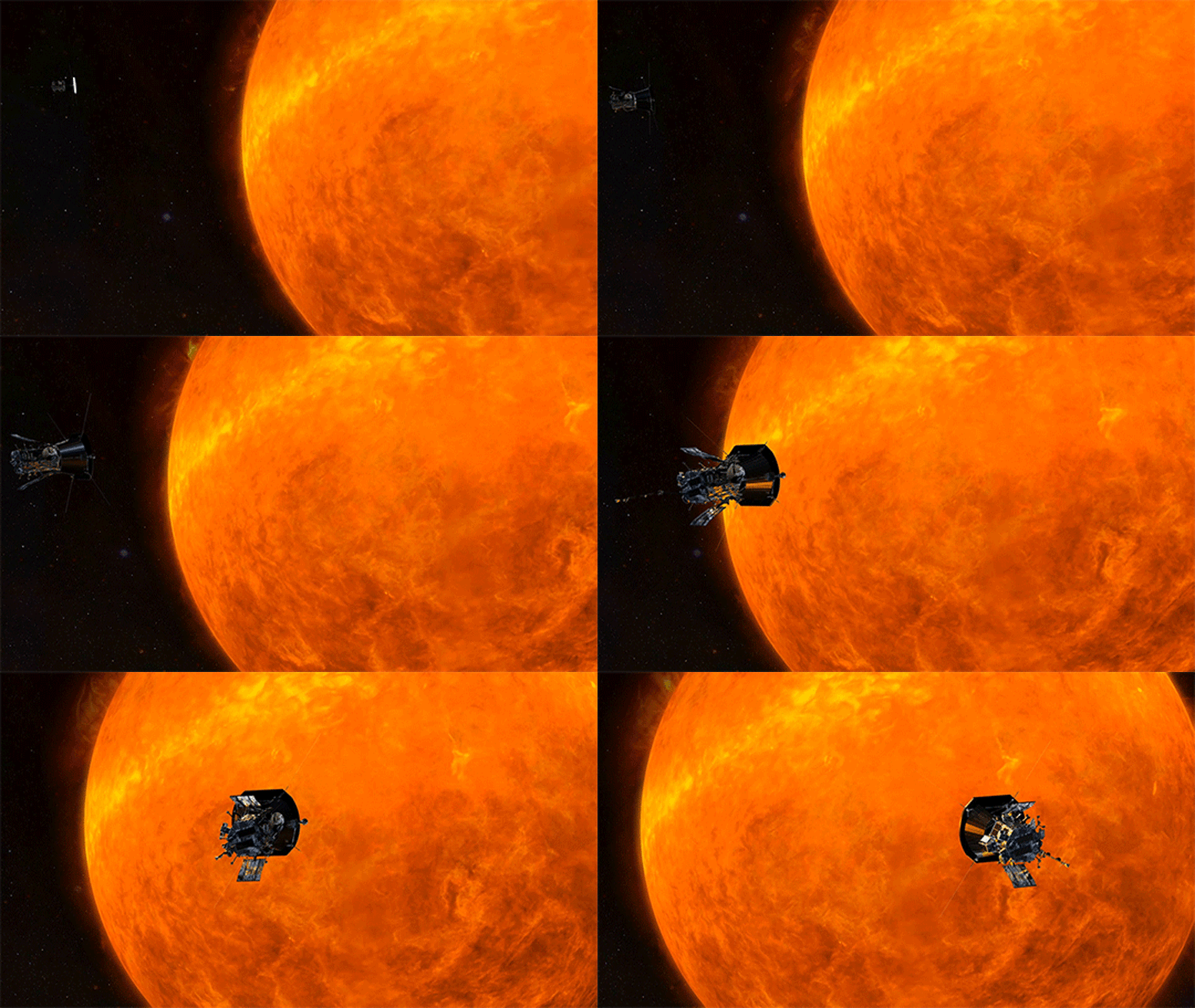
    Parker Solar Probe will fly directly through the Sun’s atmosphere, called the corona. Getting better measurements of this region is key to understanding our Sun. For instance, the Sun releases a constant outflow of solar material, called the solar wind. We think the corona is where this solar wind is accelerated out into the solar system, and Parker Solar Probe’s measurements should help us pinpoint how that happens.
    Parker Solar Probe

    The solar wind, along with other changing conditions on the Sun and in space, can affect Earth and are collectively known as space weather. Space weather can trigger auroras, create problems with satellites, cause power outages (in extreme cases), and disrupt our communications signals. That’s because space weather interacts with Earth’s upper atmosphere, where signals like radio and GPS travel from place to place.
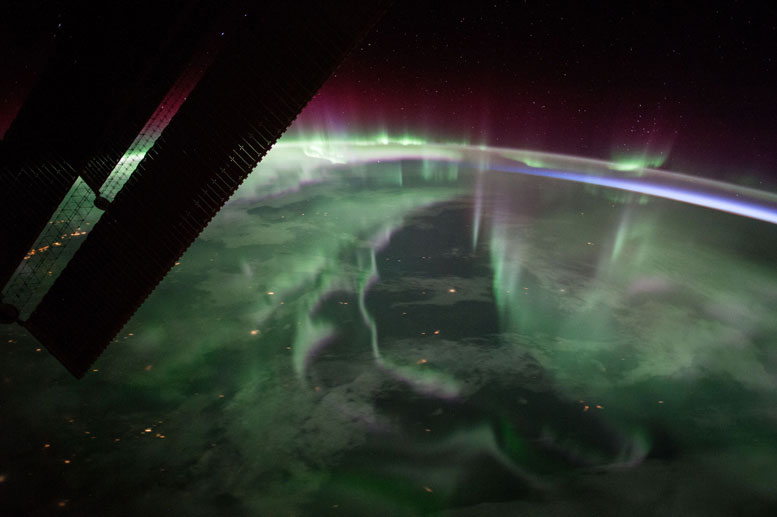
    ISS Views Northern Lights Over Canada
    Parker Solar Probe is named after pioneering physicist Gene Parker.

    In the 1950s, Parker proposed a number of concepts about how stars — including our Sun — give off energy. He called this cascade of energy the solar wind. Parker also theorized an explanation for the superheated solar atmosphere, the corona, which is hotter than the surface of the Sun itself.
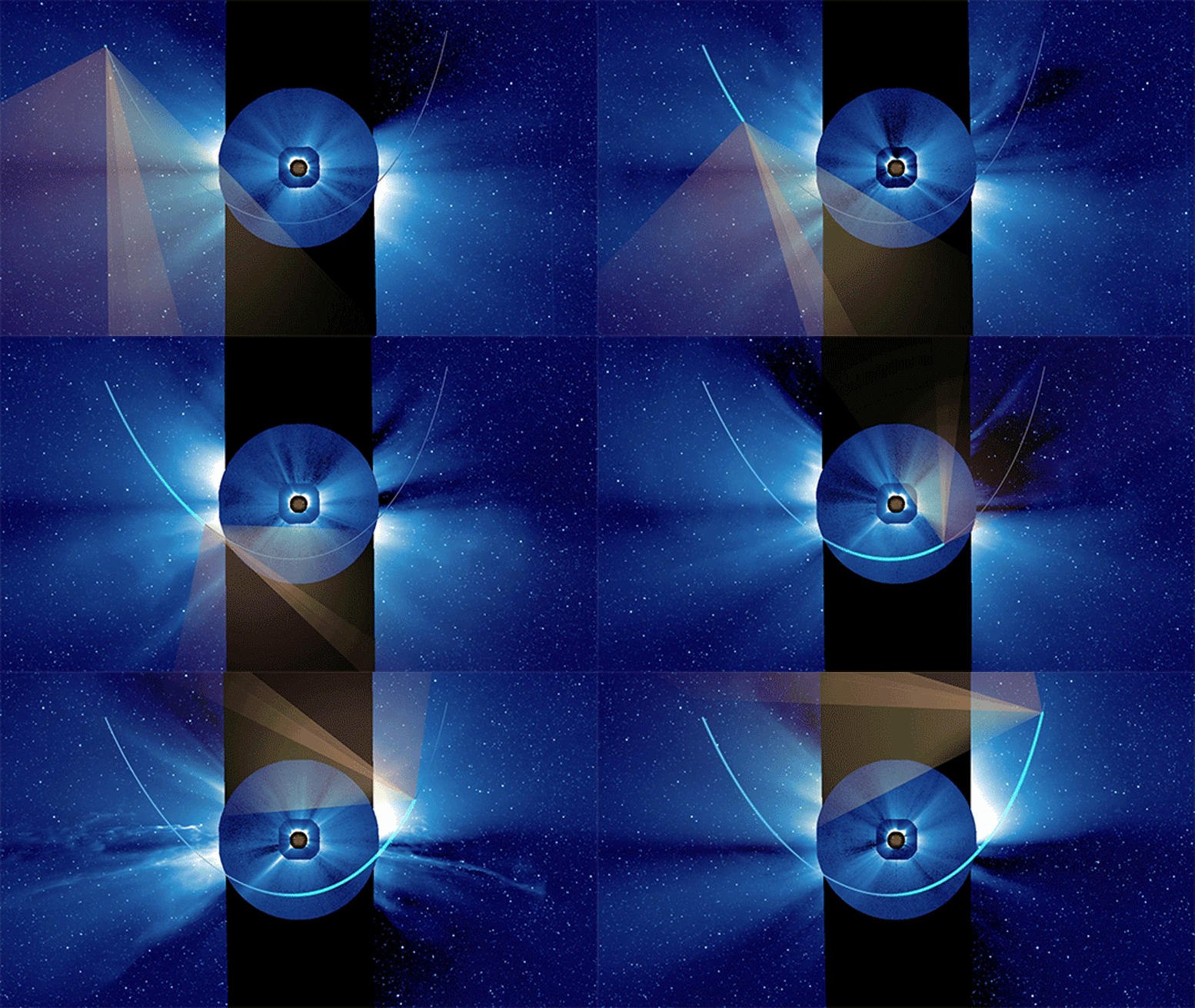
    Parker Solar Probe Data

    Getting the answers to our questions about the solar wind and the Sun’s energetic particles is only possible by sending a probe right into the furnace of the Sun’s corona, where the spacecraft can reach 2,500 degrees Fahrenheit. Parker Solar Probe and its four suites of instruments – studying magnetic and electric fields, energetic particles, and the solar wind – will be protected from the Sun’s enormous heat by a 4.5-inch-thick carbon-composite heat shield.

    Over the course of its seven-year mission, Parker Solar Probe will make two dozen close approaches to the Sun, continuously breaking its own records and sending back unprecedented science data.
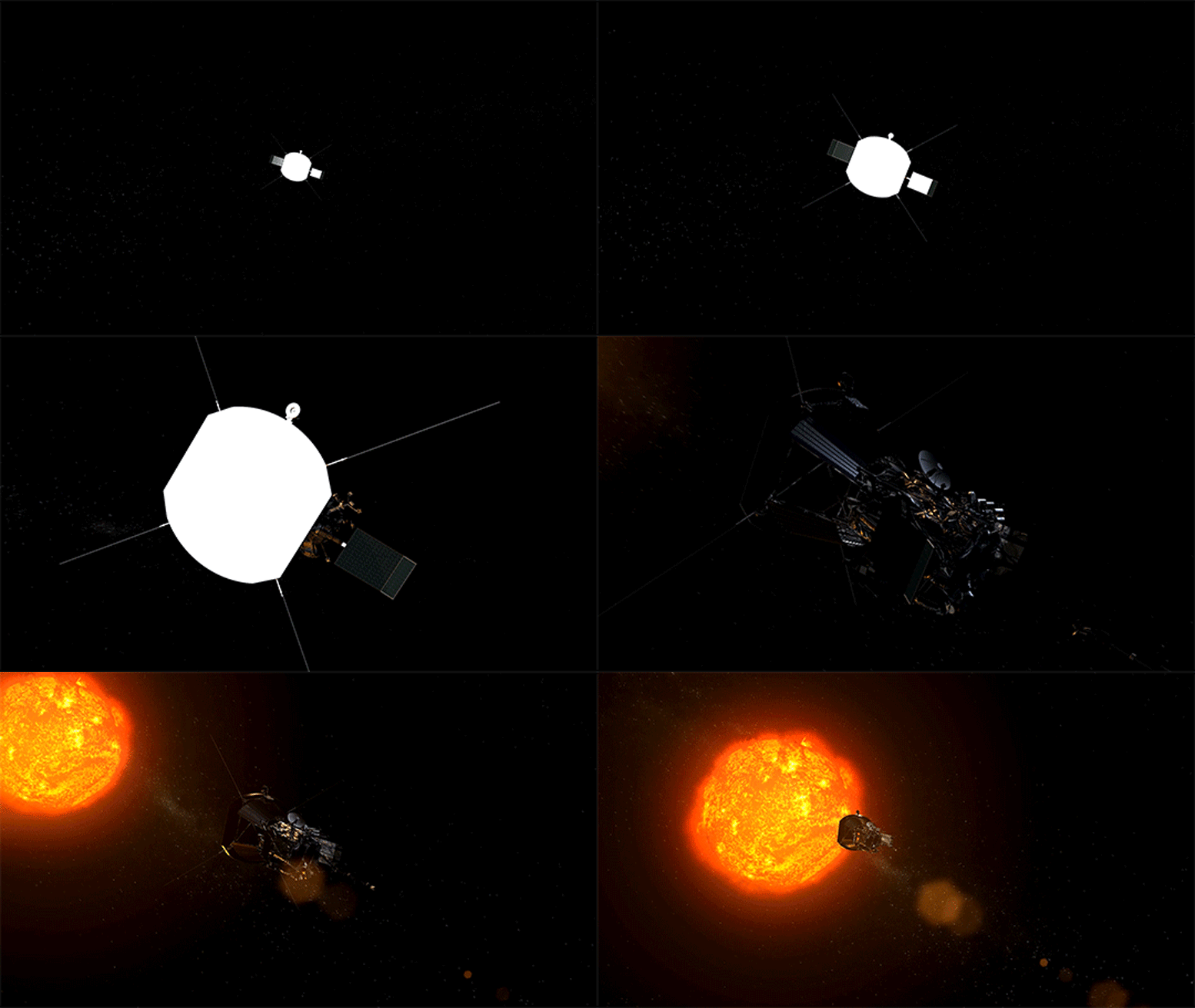
    Parker Solar Probe Spacecraft

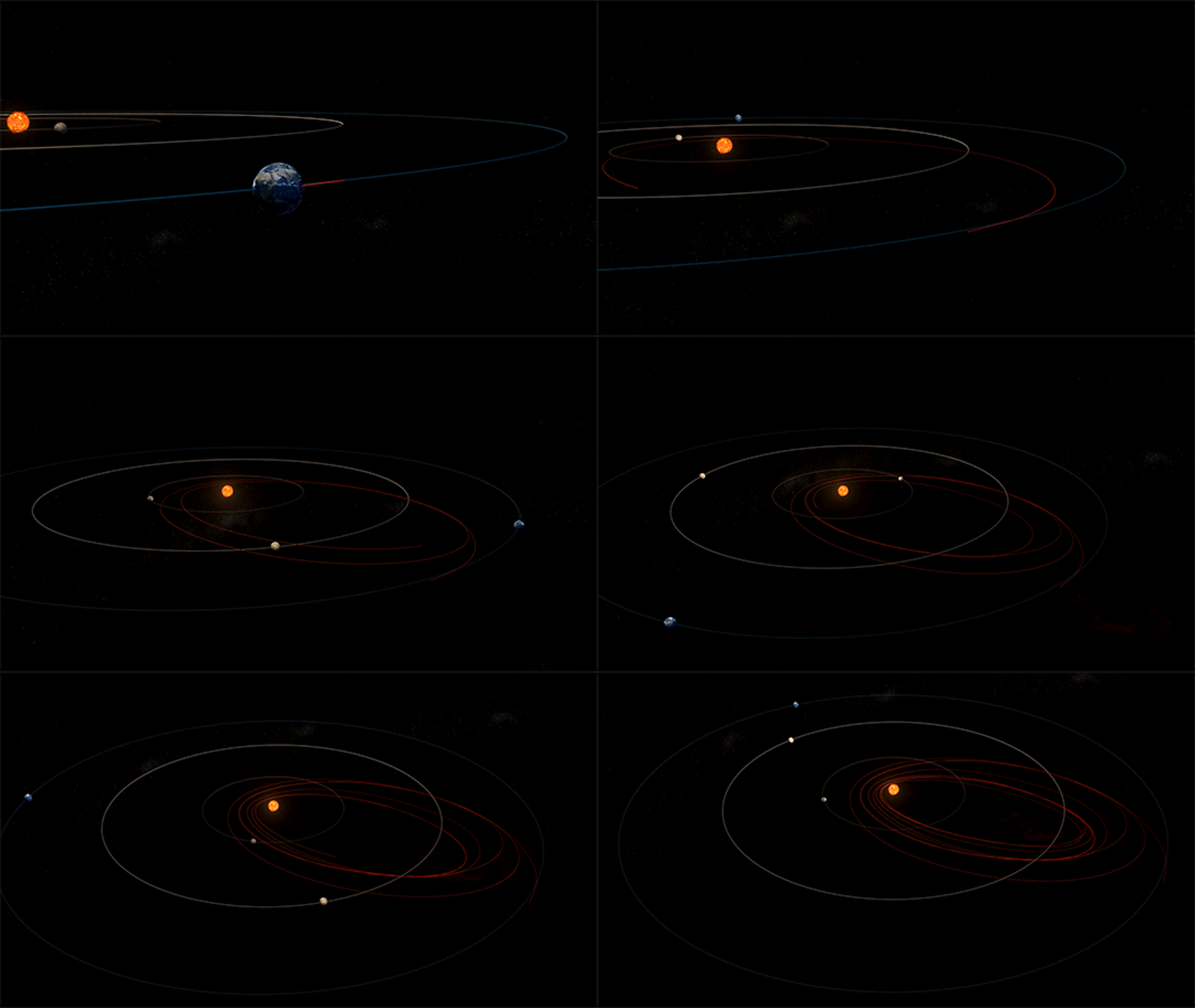
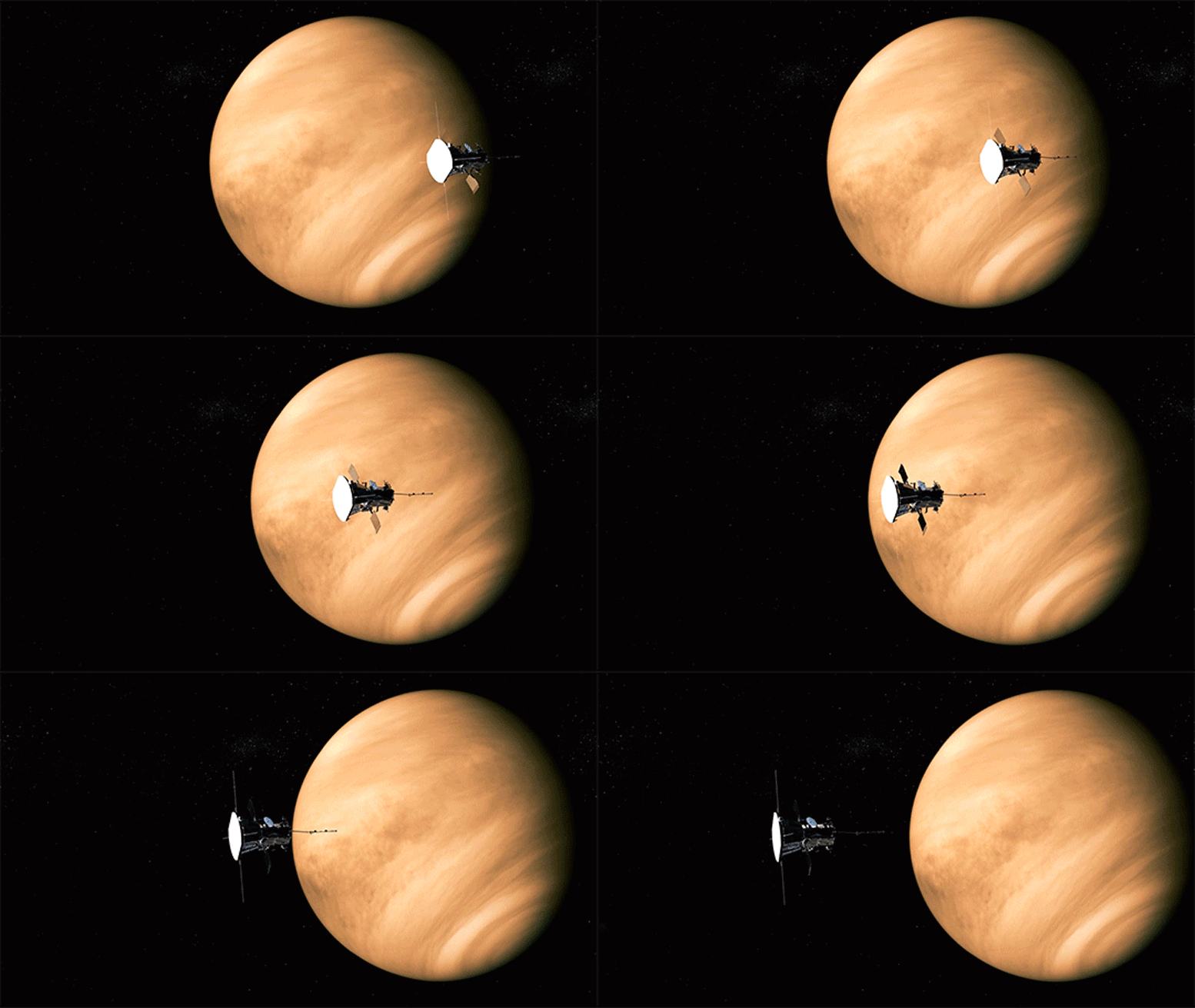
    Getting close to the Sun is harder than you might think, since the inertia of a spacecraft launched from Earth will naturally carry it in repeated orbits on roughly the same path. To nudge the orbit closer to the Sun on successive trips, Parker Solar Probe will use Venus’ gravity.

    This is a technique called a gravity assist, and it’s been used by Voyager, Cassini, and OSIRIS-REx, among other missions. Though most missions use gravity assists to speed up, Parker Solar Probe is using Venus’ gravity to slow down. This will let the spacecraft fall deeper into the Sun’s gravity and get closer to our star than any other spacecraft in human history.
    Parker Solar Probe Spacecraft Info

    You can get a behind-the-scenes at Parker Solar Probe under construction in a clean room at facebook.com/NASASunScience today (Sept. 25) at 1:45 PM EDT.
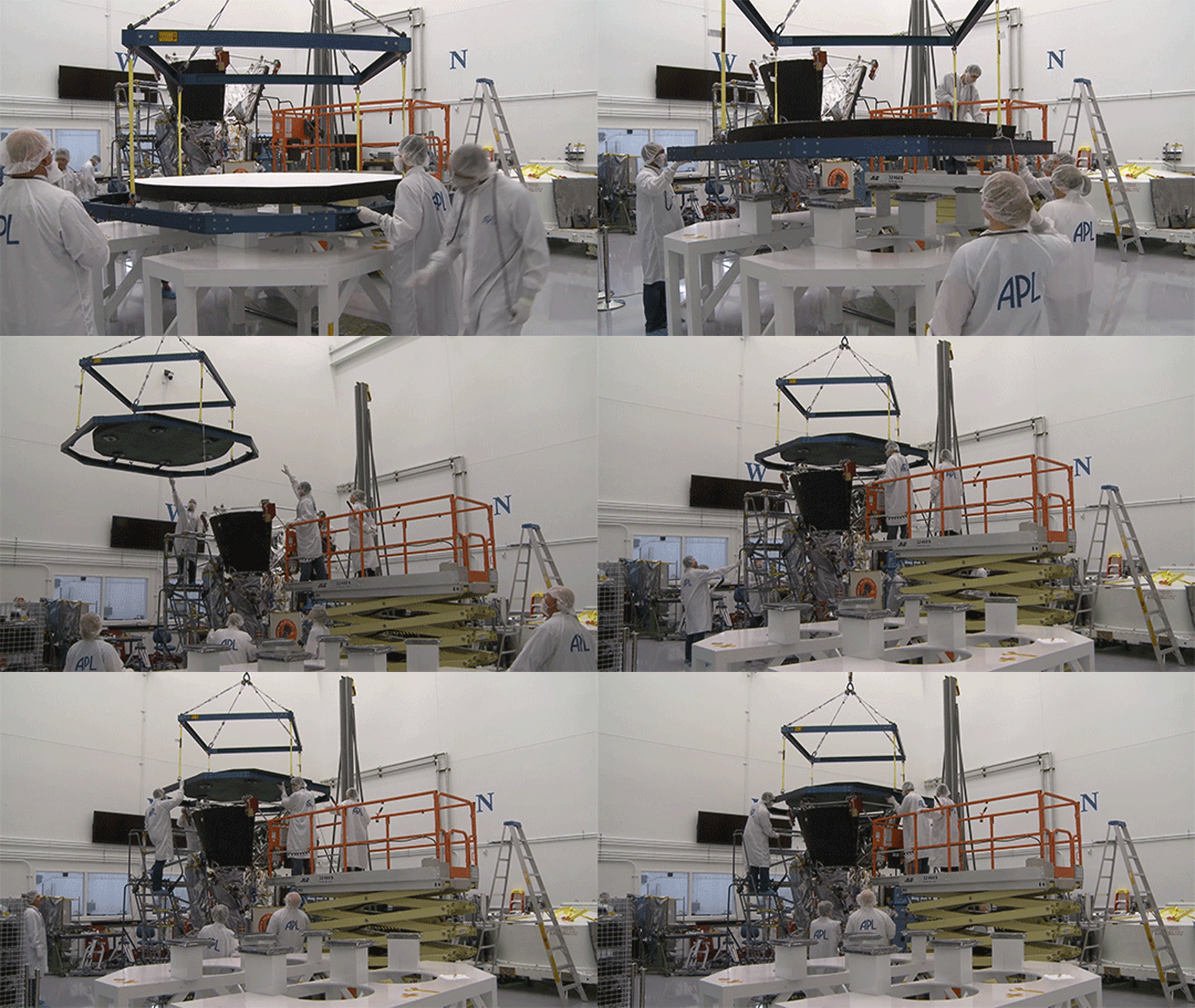
    Parker Solar Probe Under Construction

    Keep up with all the latest on Parker Solar Probe at nasa.gov/solarprobe or on Twitter @NASASun.

    Never miss a breakthrough: Join the SciTechDaily newsletter.
    Follow us on Google and Google News.

    Astronomy NASA Satellites Sun
    Share. Facebook Twitter Pinterest LinkedIn Email Reddit

    Related Articles

    Solar Fury Erupts: Sun Rings In the New Year With X1.8 Flare

    X1.8 Flare Unleashed: NASA Captures Powerful Solar Eruption

    Sun Unleashes Monumental X9.0 Solar Flare – Most Intense in 7 Years – Captured by NASA Observatory

    Monster X7.1 Solar Flare Unleashed: Intense Blast Captured by NASA’s Solar Dynamics Observatory

    Sun Ignites: Unleashing a Powerful X4.5 Solar Flare

    Ultrafine Loops of Solar Material Scattered on the Sun’s Surface

    NuSTAR Set to Study Some of the Most Energetic Phenomena in the Universe

    Ultra-Fast Outflows are Common Features of Black-Hole-Powered Galaxies

    NASA’s NuSTAR is One Step Closer to Launching

    Leave A Reply Cancel Reply

    • Facebook
    • Twitter
    • Pinterest
    • YouTube

    Don't Miss a Discovery

    Subscribe for the Latest in Science & Tech!

    Trending News

    AI Could Detect Early Signs of Alzheimer’s in Under a Minute – Far Before Traditional Tests

    What if Dark Matter Has Two Forms? Bold New Hypothesis Could Explain a Cosmic Mystery

    This Metal Melts in Your Hand – and Scientists Just Discovered Something Strange

    Beef vs. Chicken: Surprising Results From New Prediabetes Study

    Alzheimer’s Breakthrough: Scientists Discover Key Protein May Prevent Toxic Protein Clumps in the Brain

    Quantum Reality Gets Stranger: Physicists Put a Lump of Metal in Two Places at Once

    Scientists May Have Found the Key to Jupiter and Saturn’s Moon Mystery

    Scientists Uncover Brain Changes That Link Pain to Depression

    Follow SciTechDaily
    • Facebook
    • Twitter
    • YouTube
    • Pinterest
    • Newsletter
    • RSS
    SciTech News
    • Biology News
    • Chemistry News
    • Earth News
    • Health News
    • Physics News
    • Science News
    • Space News
    • Technology News
    Recent Posts
    • What if Your Memories Never Happened? Physicists Take a New Look at the Boltzmann Brain Paradox
    • Students Found an Ancient Star That Shouldn’t Be in the Milky Way
    • Astronomers Solve 50-Year Mystery and Reveal Hidden Culprit Behind Strange X-Ray Emissions
    • One of the Universe’s Largest Stars May Be Getting Ready To Explode
    • Scientists Discover Enzyme That Could Supercharge Ozempic-Like Weight Loss Drugs
    Copyright © 1998 - 2026 SciTechDaily. All Rights Reserved.
    • Science News
    • About
    • Contact
    • Editorial Board
    • Privacy Policy
    • Terms of Use

    Type above and press Enter to search. Press Esc to cancel.