
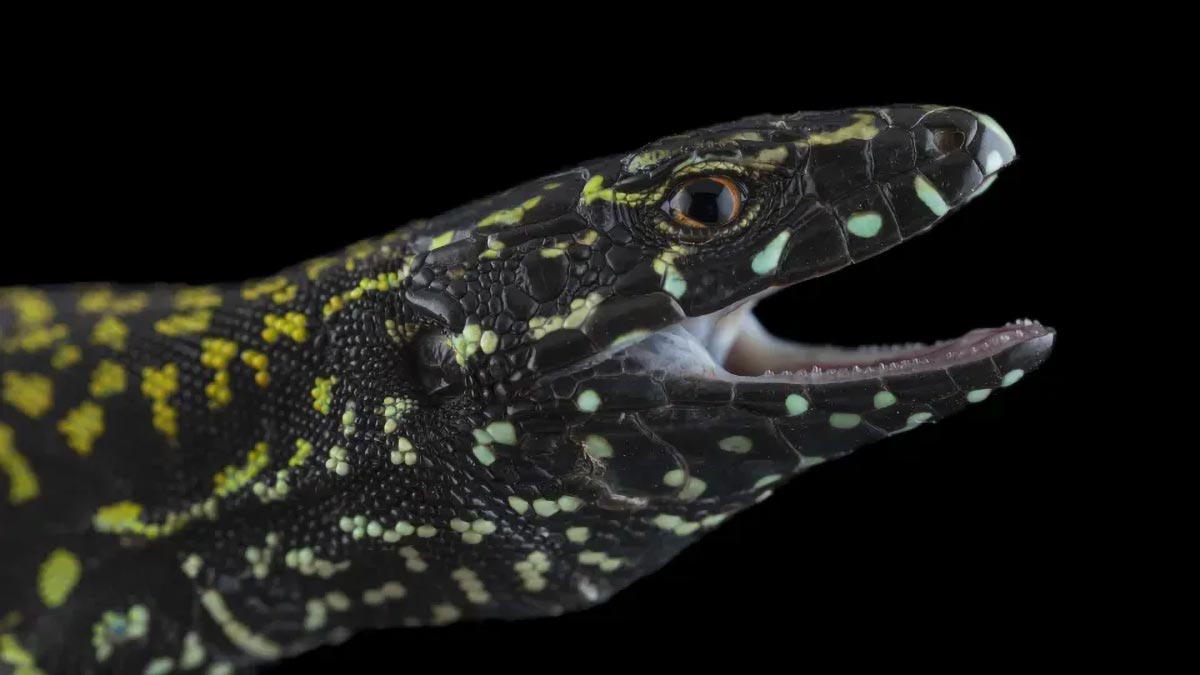
A dominant “Hulk” lizard morph is wiping out other color variants, demonstrating how fast evolutionary balance can collapse.
A wide range of colors that endured for millions of years has vanished in a relatively short time. The culprit? A bright-green wall lizard that is highly aggressive and sexually dominant, and it has eliminated several color variants within its own species.
Many animals show distinct color variations, known as morphs. These differences are not just visual. They often reflect alternative strategies for gaining access to territory, mates, or other advantages.
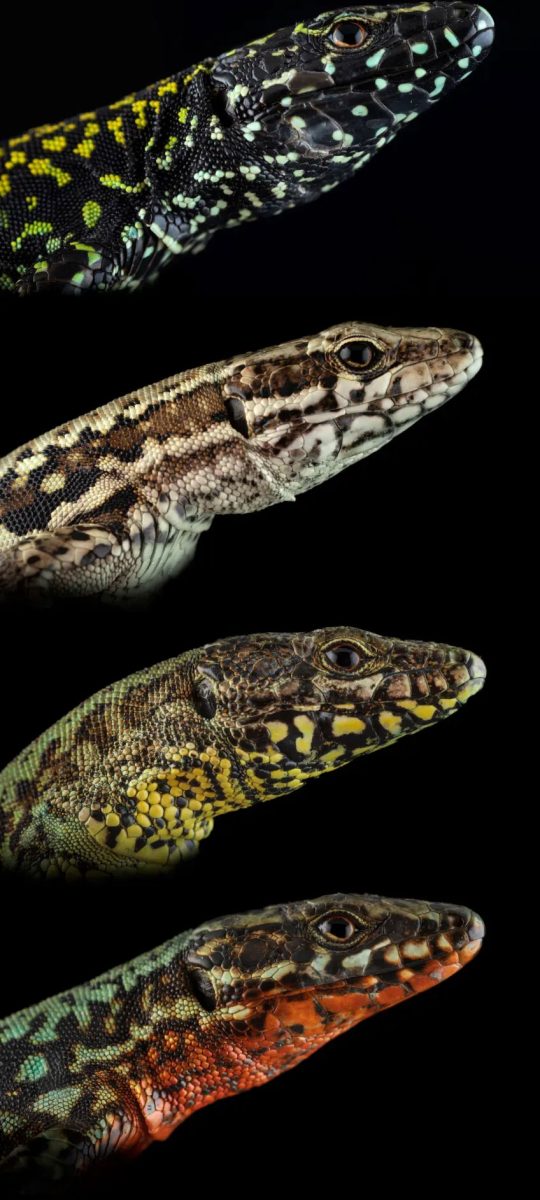
The common wall lizard (Podarcis muralis) is found across the Mediterranean and appears in three throat colors: white, yellow, and orange. For millions of years, these forms coexisted within the same populations and were considered a classic example of evolutionary balance. A new study published in Science, led by researchers at Lund University, shows that this balance has now been disrupted.
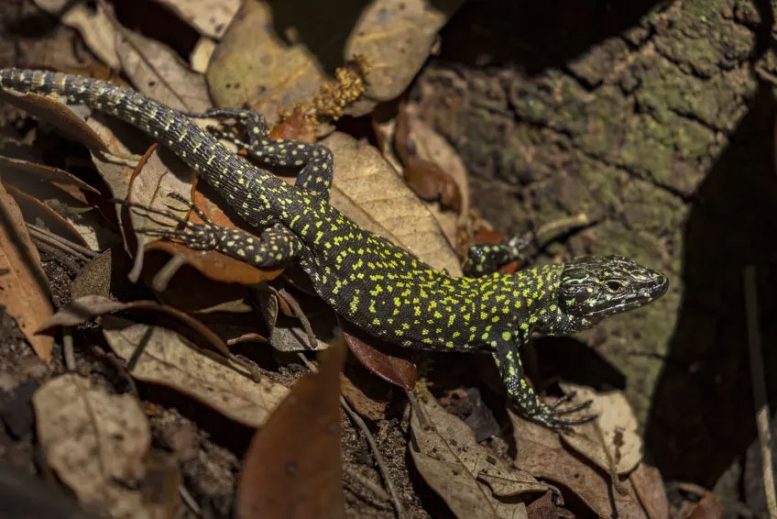
“We are seeing how the coexistence of several different color morphs, something that has been stable for millions of years, is being lost over a very short evolutionary time scale,” says Tobias Uller, professor of evolutionary biology at Lund University.
Wall Lizards and the Collapse of a Stable Evolutionary System
The researchers examined color data from about 240 wall lizard populations, covering more than 10,000 individuals. The findings are clear. The so-called Hulk lizards, which are large, aggressive, and visually distinctive, have shifted the balance within the species.
As these Hulk-like lizards spread, the yellow and orange throat morphs disappear. Only the white morph remains.
“The aggressive behavior disrupts the finely tuned social systems that previously enabled several color strategies to coexist,” says Tobias Uller.
Aggressive “Hulk” Lizards Reshape Competition
This study highlights how vulnerable long-standing color systems within a species can be. Evolution is not always gradual or stable. In some cases, a single dominant trait can quickly change the outcome.
“By showing how color variants that have coexisted for millions of years are wiped out, we now better understand how the emergence of new traits changes competition in nature,” concludes Tobias Uller.
Reference: “Adaptive spread of a sexually selected syndrome eliminates an ancient color polymorphism in wall lizards” by Tobias Uller, Nathalie Feiner, Roberto Sacchi, Marco Zuffi, Stefano Scali, Panayiotis Pafilis, Konstantinos Plavos, Javier Abalos, Pedro Andrade, Prem Aguilar, Daniele Salvi and Geoffrey M. While, 1 January 2026, Science.
DOI: 10.1126/science.adx3708
Never miss a breakthrough: Join the SciTechDaily newsletter.
Follow us on Google and Google News.
1 Comment
That is the most disappointing use of the word Hulk I can imagine.