
Close Menu
    Facebook X (Twitter) Instagram
    SciTechDaily
    • Biology
    • Chemistry
    • Earth
    • Health
    • Physics
    • Science
    • Space
    • Technology
    Facebook X (Twitter) Pinterest YouTube RSS
    SciTechDaily
    Home»Biology»Human-Caused Biodiversity Decline Isn’t New – It Started Millions of Years Ago
    Biology

    Human-Caused Biodiversity Decline Isn’t New – It Started Millions of Years Ago

    By University of GothenburgJanuary 17, 2020No Comments3 Mins Read
    Facebook Twitter Pinterest Telegram LinkedIn WhatsApp Email Reddit
    Share
    Facebook Twitter LinkedIn Pinterest Telegram Email Reddit
    Dinofelis
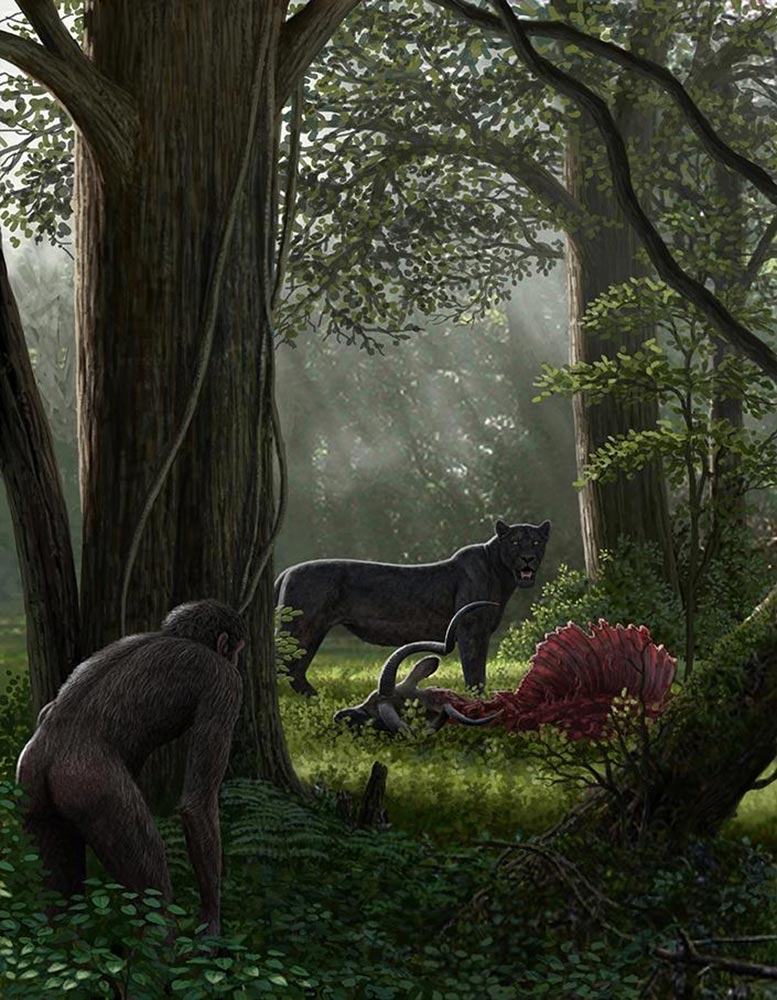
    (Click image for full view.) Dinofelis, painting by Mauricio Antón. The picture shows a saber-toothed cat Dinofelis eating while one of our ancestors is watching. Dinofelis has been considered a predator that our ancestors were greatly fearing. But new research suggests that it was human ancestors that may have caused the eventual extinction of the species along with other major predators. Credit: University of Gothenburg

    The human-caused biodiversity decline started much earlier than researchers used to believe. According to a new study published in the scientific journal Ecology Letters the process was not started by our own species but by some of our ancestors.

    The work was done by an international team of scientists from Sweden, Switzerland and the United Kingdom.

    The researchers point out in the study that the ongoing biological diversity crisis is not a new phenomenon, but represents an acceleration of a process that human ancestors began millions of years ago.
    Elephant
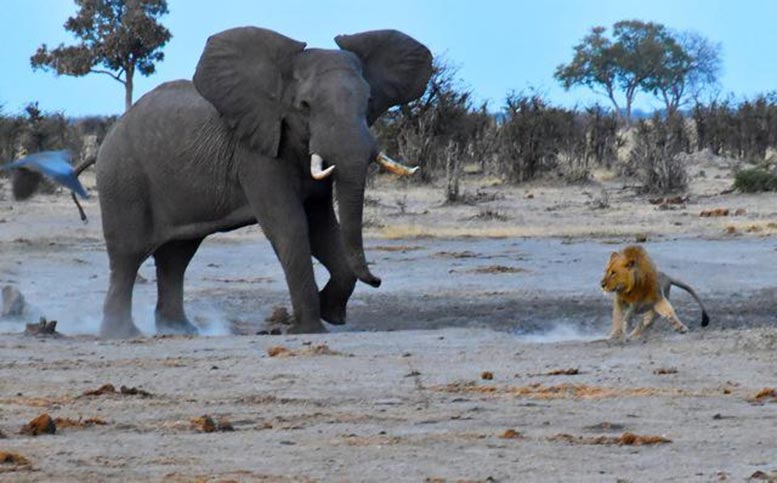
    Lions work together to defend their prey. Credit: Hans Ring, Naturfotograferna

    The extinctions that we see in the fossils are often explained as the results of climatic changes but the changes in Africa within the last few million years were relative minor and our analyses show that climatic changes were not the main cause of the observed extinctions, explains Søren Faurby, researcher at Gothenburg University and the main author of the study

    Our analyses show that the best explanation for the extinction of carnivores in East Africa is instead that they are caused by direct competition for food with our extinct ancestors, adds Daniele Silvestro, a computational biologist and co-author of the study.

    Carnivores disappeared

    Our ancestors have been common throughout eastern Africa for several million years and during this time there were multiple extinctions according to Lars Werdelin, co-author and expert on African fossils.

    By investigating the African fossils, we can see a drastic reduction in the number of large carnivores, a decrease that started about 4 million years ago. About the same time, our ancestors may have started using a new technology to get food called kleptoparasitism, he explains.
    Leopard
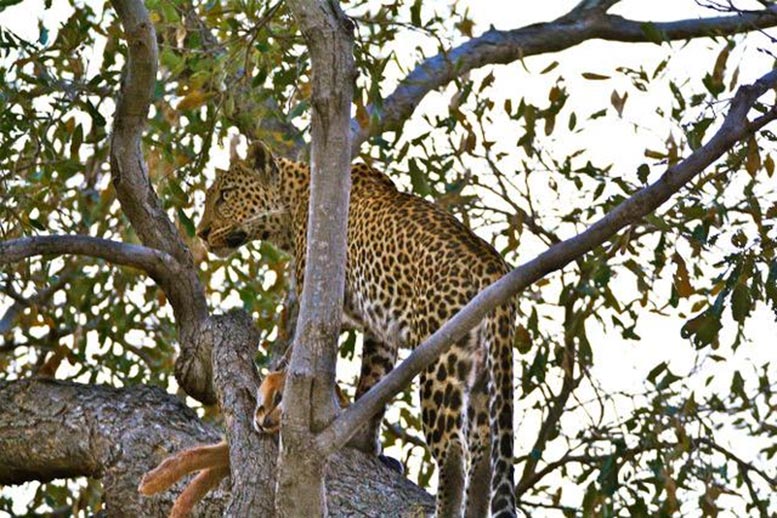
    Leopard picking up the prey in a tree. Credit: Hans Ring, Naturfotograferna

    Kleptoparasitism means stealing recently killed animals from other predators. For example, when a lion steals a dead antelope from a cheetah.

    The researchers are now proposing, based on fossil evidence, that human ancestors stole recently killed animals from other predators. This would lead to starvation of the individual animals and over time to extinction of their entire species.

    This may be the reason why most large carnivores in Africa have developed strategies to defend their prey. For example, by picking up the prey in a tree that we see leopards doing. Other carnivores have instead evolved social behavior as we see in lions, who among other things work together to defend their prey, explains Søren Faurby

    Humans today affect the world and the species that live in it more than ever before.

    But this does not mean that we previously lived in harmony with nature. Monopolization of resources is a skill we and our ancestors have had for millions of years, but only now are we able to understand and change our behavior and strive for a sustainable future. “If you are very strong, you must also be very kind” concludes Søren Faurby and quotes Astrid Lindgrens book about Pippi Longstocking.

    Reference: “Brain expansion in early hominins predicts carnivore extinctions in East Africa” by Søren Faurby, Daniele Silvestro, Lars Werdelin and Alexandre Antonelli, 13 January 2020, Ecology Letters.
    DOI: 10.1111/ele.13451

    Never miss a breakthrough: Join the SciTechDaily newsletter.
    Follow us on Google and Google News.

    Biodiversity Ecology Hominin University of Gothenburg
    Share. Facebook Twitter Pinterest LinkedIn Email Reddit

    Related Articles

    More Biodiversity Loss Outside of Cities Due to Urban Growth

    Scientists Reveal Homo Sapiens’ Secret of Success

    New Research Reveals Scale is a Key Ingredient When Tracking Biodiversity

    Ants Help Researchers Understand Why Biodiversity is Higher in Tropical Regions

    Why Expressive Eyebrows Mattered in Human Evolution

    New Study Links Expanding Human Population to Threats of Animal Extinction

    The Effects of Ice Retreat and Biodiversity in the Arctic Deep Sea

    Biodiversity on Earth Increases With Global Warming

    Extinctions Due to Habitat Loss are Proportional to the Area Destroyed

    Leave A Reply Cancel Reply

    • Facebook
    • Twitter
    • Pinterest
    • YouTube

    Don't Miss a Discovery

    Subscribe for the Latest in Science & Tech!

    Trending News

    The Universe Is Expanding Too Fast and Scientists Can’t Explain Why

    “Like Liquid Metal”: Scientists Create Strange Shape-Shifting Material

    Early Warning Signals of Esophageal Cancer May Be Hiding in Plain Sight

    Common Blood Pressure Drug Shows Surprising Power Against Deadly Antibiotic-Resistant Superbug

    Scientists Uncover Dangerous Connection Between Serotonin and Heart Valve Disease

    Scientists Discover a “Protector” Protein That Could Help Reverse Hair Loss

    Bone-Strengthening Discovery Could Reverse Osteoporosis

    Scientists Uncover Hidden Trigger Behind Stem Cell Aging

    Follow SciTechDaily
    • Facebook
    • Twitter
    • YouTube
    • Pinterest
    • Newsletter
    • RSS
    SciTech News
    • Biology News
    • Chemistry News
    • Earth News
    • Health News
    • Physics News
    • Science News
    • Space News
    • Technology News
    Recent Posts
    • Scientists Create Improved Insulin Cells That Reverse Diabetes in Mice
    • Scientists Stunned After Finding Plant Thought Extinct for 60 Years
    • A Common Diabetes Drug May Hold the Key to Stopping HIV From Coming Back
    • Ancient “Syphilis-Like” Disease in Vietnam Challenges Key Scientific Assumptions
    • Drinking Alcohol To Cope in Your 20s Could Damage Your Brain for Life
    Copyright © 1998 - 2026 SciTechDaily. All Rights Reserved.
    • Science News
    • About
    • Contact
    • Editorial Board
    • Privacy Policy
    • Terms of Use

    Type above and press Enter to search. Press Esc to cancel.