
In many parts of the world, there is an imbalance in the food chain.
Without top predators such as wolves and grizzly bears, smaller meat-eating animals like coyotes and foxes or grazers such as deer and elk can balloon in population, unchecked. This can initiate more deer-vehicle collisions, scavenging by urban coyotes and other unnatural human-animal interactions.
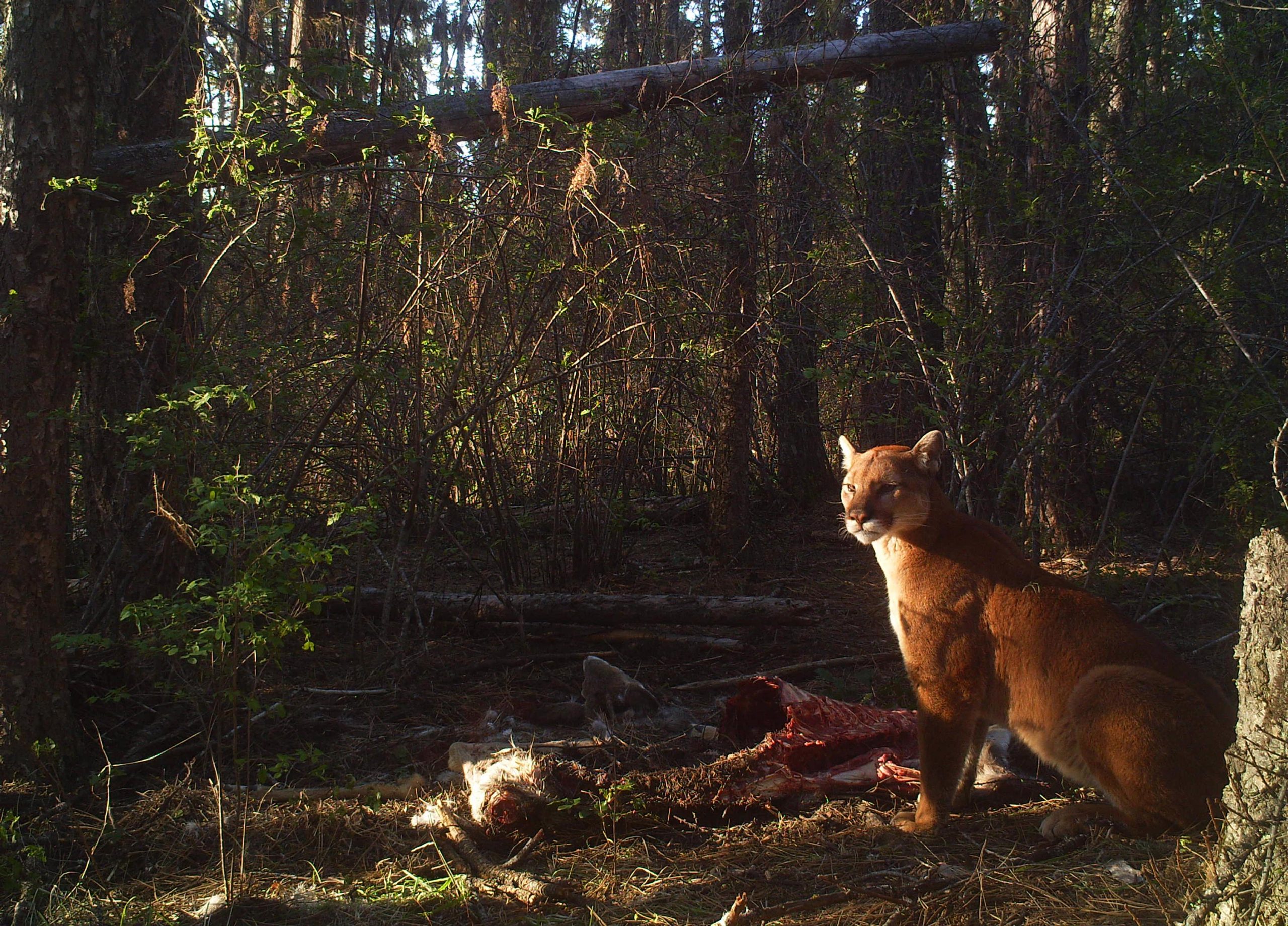
University of Washington researchers have discovered that large predators play a key yet unexpected role in keeping smaller predators and deer in check. Their “fatal attraction” theory finds that smaller predators are drawn to the kill sites of large predators by the promise of leftover scraps, but the scavengers may be killed themselves if their larger kin returns for seconds.
The study, published March 18, 2020, in the journal Ecology Letters, is the first to examine carnivore killing and scavenging activities in relation to each other across dozens of landscapes around the world. Patterns that emerged from their analysis could be used to make important management decisions about large carnivores worldwide, the authors said.
“I hope this paper will spur researchers to think more holistically about these killing and scavenging interactions, because currently we’re not really getting a full understanding of how carnivore communities function by examining them separately,” said senior author Laura Prugh, a wildlife ecologist and associate professor in the UW School of Environmental and Forest Sciences.
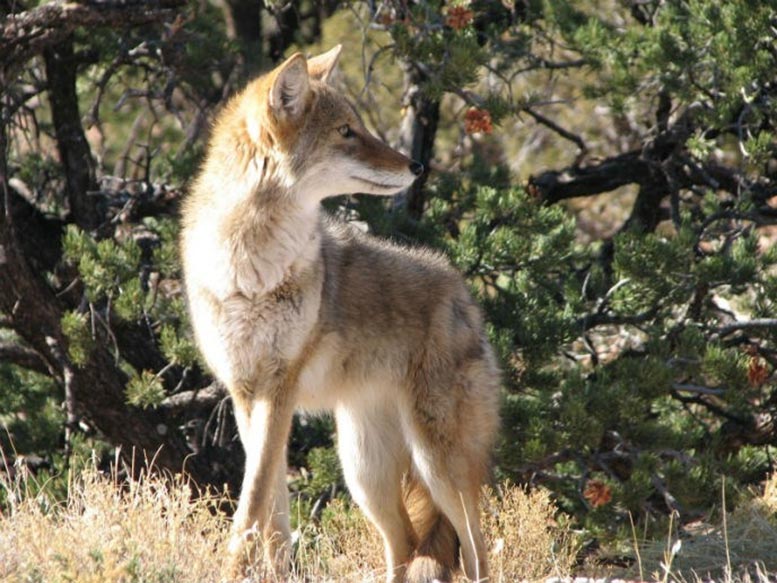
Large carnivores such as cougars, wolves, and grizzly bears have disappeared from many regions, allowing some smaller carnivores — coyotes, foxes, and bobcats, for example — to increase in population. The absence of large carnivores, especially on the East Coast, also has ignited populations of deer and other prey, creating an imbalance in many areas.
But in regions where top carnivores are present, such as the western U.S., their relationship with smaller predators is complex. When they kill deer and other prey, they often leave scraps for smaller predators to scavenge. But larger predators also are known to kill smaller carnivores.
With these dynamics in mind, the researchers wanted to test whether large carnivores serve as an overall net benefit to smaller predators by providing more food supply, especially when other food is scarce due to drought, wildfires, or particularly harsh winters.
The team analyzed more than 250 earlier papers, looking globally at patterns of killing and scavenging to quantify the positive and negative interactions among top and smaller predators. Overall, they found that large predators generally suppress smaller predators, even though they provide a significant amount of food in the form of leftover prey.
“We initially thought maybe smaller carnivores are scavenging the wolf kills and benefiting,” explained Prugh, referencing one of the top predators, wolves, examined in the study. “But then we realized that at these scavenging sites, they might be running into the wolves and getting killed. The scavenging, instead of providing a benefit, could actually be functioning as a trap that’s drawing in the smaller carnivores.”
The researchers thus developed their fatal attraction theory, which proposes that even though large predators are helpful providers of food, their kill sites ultimately are dangerous for smaller predators, which can then become prey themselves when the top predator returns.
As populations of deer and small carnivores like coyotes have surged in areas without top predators, research has posited that humans might be able to take over the role of large carnivores through hunting activities. But though hunters sometimes leave gut piles after they kill a deer, they certainly don’t return to the kill site to hunt smaller predators. The research shows this behavior, not replicated by human hunters, could be an important way that smaller carnivores’ populations are kept in check.
“If scavenging increases the risk of mortality of smaller carnivores, that might explain why it appears to be very hard for humans to replace the role of large carnivores in a landscape,” Prugh explained. “This link between scavenging and mortality might be one of the mechanisms that make large carnivores so effective in controlling smaller carnivores.”
From their analysis, the researchers noted these additional findings:
* In areas where there were at least three larger predators, smaller predators had more than twice the mortality rates as their counterparts in areas with only two larger predators. This shows that each predator leverages its unique hunting strategy — such as outrunning or stalking prey — and that more predators with different ways of hunting made it much harder for their target, smaller prey, to survive. Having a diversity of larger predators is a good strategy for keeping smaller carnivore populations in check, the authors said.
* Large cats such as cougars were “equal opportunity killers,” meaning they were just as likely to kill smaller animals in the cat, dog or mustelid families. But large animals in the dog family such as wolves were five times more likely to kill smaller dogs than animals in other families. Big picture, this means that large cats might have a more widespread impact on smaller carnivores, compared with large dogs that mostly target smaller dogs.
“This finding shows that it really is a dog-eat-dog world out there,” Prugh said.
Reference: “Enemies with benefits: Integrating positive and negative interactions among terrestrial carnivores” by Laura R. Prugh and Kelly J. Sivy, 18 March 2020, Ecology Letters.
DOI: 10.1111/ele.13489
The study’s other co-author is Kelly Sivy, who completed the work as a UW research scientist.
This work was funded by the National Science Foundation.
Never miss a breakthrough: Join the SciTechDaily newsletter.
Follow us on Google and Google News.
1 Comment
As a person whom has had an extensive opportunity to live in the wild with most North American wildlife(no bears) my observations we’re that any scraps left were bait. I’ve seen symbiotic relationships with all the animals including herbivores and carnivores that’s still ongoing after 10 years.