
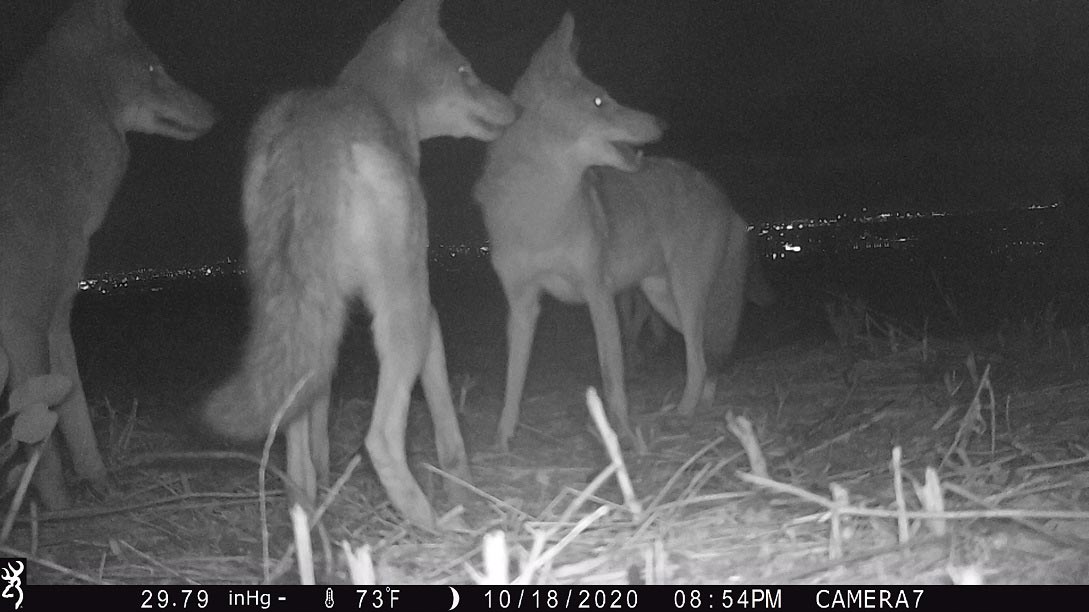
New research finds that cats and coyotes both use green spaces in a Los Angeles suburb.
Human-wildlife conflict tends to increase as urban areas continue to encroach on natural ecosystems. While some animals actively shun human contact at all costs, other species thrive in metropolitan environments. In particular, coyotes have become frequent visitors near human settlements, and are generally considered a significant source of human-wildlife conflict. These urban predators have adapted to consume a range of human food sources, such as trash, ornamental fruits, and domestic pets. Because of this, city dwellers often worry about the safety of their pets, particularly outdoor cats. Is it possible to minimize conflict between these two species in an urban setting?
According to numerous studies throughout the United States, from Seattle to New York, cats comprise less than 5% of coyote diet. So, why do diet studies in Los Angeles reveal that cats comprise nearly 20% of coyote diet? Residents in Culver City, a suburb of Los Angeles, reported that 72 cats were killed in 18 months, thought to be the victims of coyote attacks. The first glimpse into this anomaly may be offered by a recent study conducted by Rebecca Davenport and colleagues from the Center for Urban Resistance (CURes) at Loyola Marymount University. The study, “Spatiotemporal relationships of coyotes and free-ranging domestic cats as indicators of conflict in Culver City, California,” was published this month in the peer-reviewed, scientific journal PeerJ – Life and Environment.
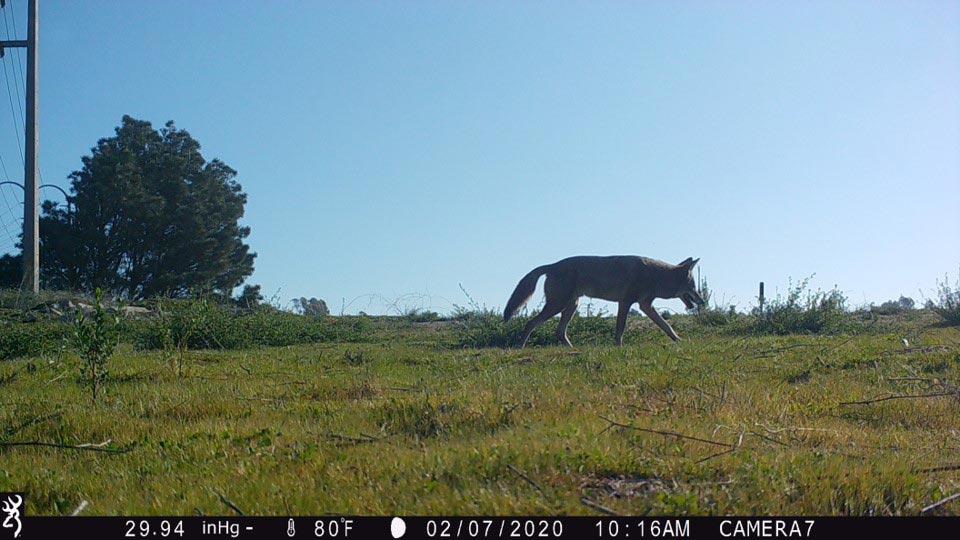
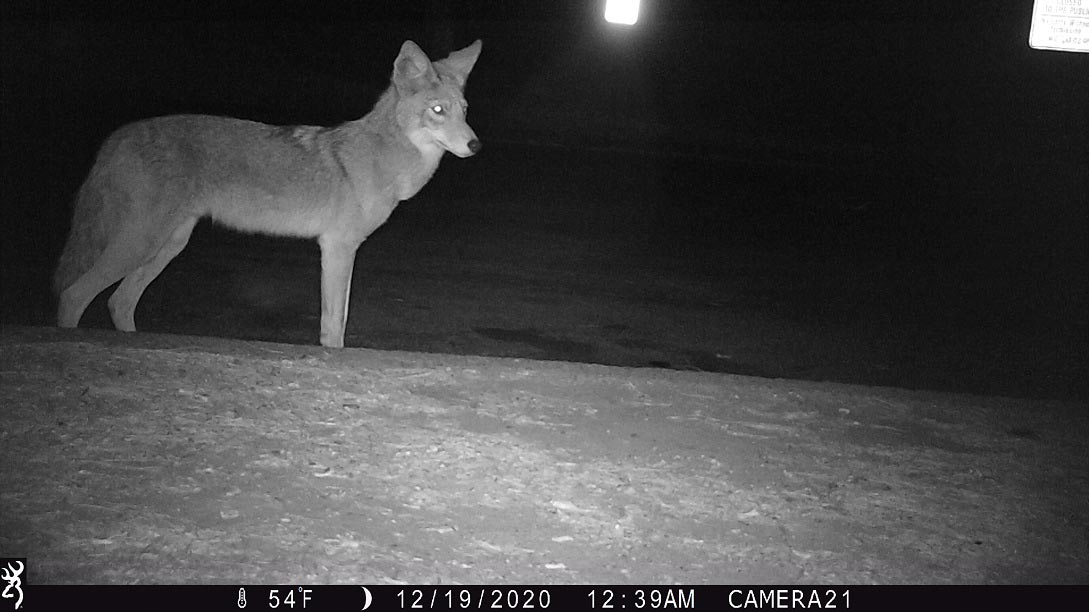
For the study, the researchers installed 20 motion-sensor cameras in Culver City parks, neighborhoods, and green spaces to monitor the presence of cats and coyotes for six months. Similar to other studies, the scientists found that coyotes prefer green spaces to urbanized and/or residential areas. However, cats did not display a preference for a particular habitat type. This result is quite surprising, as studies in Chicago and North Carolina found that cats prefer urban areas and directly avoid areas where coyotes are prevalent. Instead, cats in Culver City were present in the same green space fragments as coyotes. Additionally, cats in this Los Angeles suburb displayed more nocturnal behavior than is typical for urban cats. These unexpected findings may explain why there have been such frequent cases of cat mortality in Culver City.
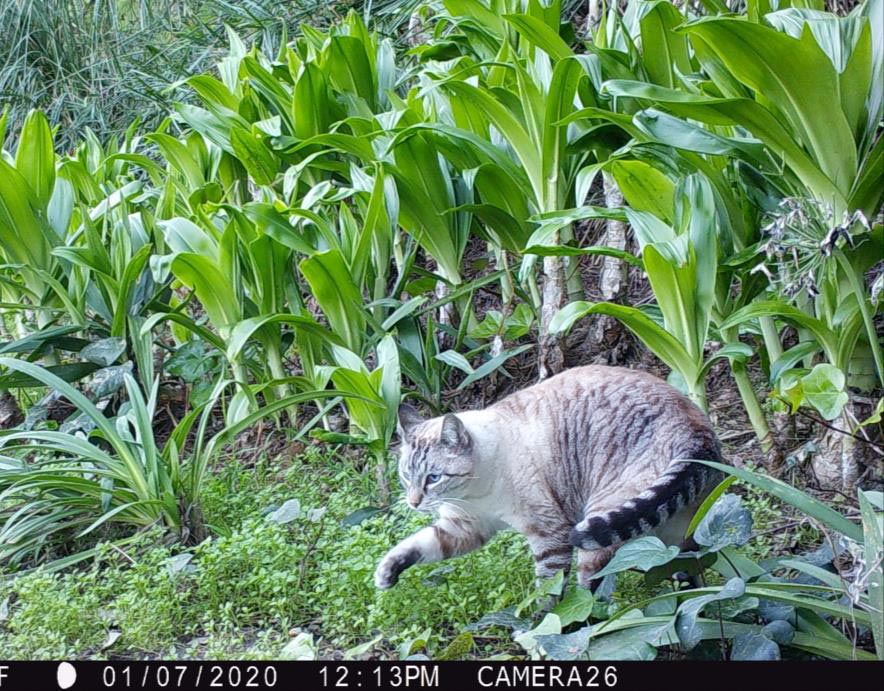
Residents commonly believe that coyotes intentionally hunt down pets within their neighborhoods. On the contrary, as this study suggests coyotes tend to stick to natural areas around the city. Urban green spaces contain plenty of alternative prey sources for coyotes, such as cottontail rabbits. Therefore, it is unlikely that coyotes choose to leave their preferred green space habitat in order to seek out domestic pets. Instead, high rates of cat mortality in Culver City may be a result of cats roaming freely through urban green spaces and displaying increased nocturnality compared to cats in other cities.
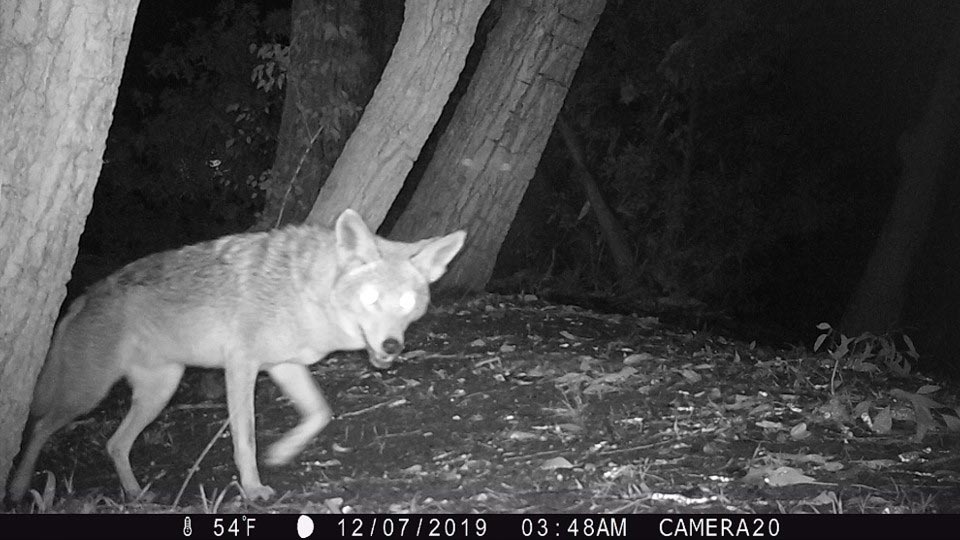
Given that coyotes are perceived as a source of conflict in urban areas, countless management efforts focus on the control or eradication of “problem” coyotes. However, the authors recognize that coyotes are native to these environments, while domestic cats have been widely introduced to urban and rural areas across the United States. Unfortunately, cats have been shown to devastate populations of native species, such as songbirds and small mammals. Given these ecological consequences, the researchers recommend that management efforts consider restrictions or control measures for outdoor cats, rather than solely focusing on the role of coyotes in urban human-wildlife conflict.
Reference: “Spatiotemporal relationships of coyotes and free-ranging domestic cats as indicators of conflict in Culver City, California” by Rebecca N. Davenport, Melinda Weaver, Katherine C. B. Weiss and Eric G. Strauss, 7 October 2022, PeerJ – Life and Environment.
DOI: 10.7717/peerj.14169
The CURes team has been studying urban coyotes in Culver City for three years and is currently preparing further analyses.
Never miss a breakthrough: Join the SciTechDaily newsletter.
Follow us on Google and Google News.
11 Comments
“… while domestic cats have been widely introduced to urban and rural areas …”
At the same time, competing predators such as bobcats, members of the weasel family, foxes, and raptors have been reduced in population by trapping, hunting, and land-use changes. Predators are strongly limited by available food and serve useful functions in keeping prey populations under control, and fit, regardless of the predator species. Without adequate food, predators will move or die out. The concern about the impact feral cats have on the ecosystem is probably overstated because, in their absence, the populations of other predators would increase to take advantage of additional food. One should probably only be concerned if a predator species specializes in eating prey that are in danger of becoming extinct for other reasons.
We have a marvelous public park in Oakland, CA – Tilden. People frequently drop off unwanted cats resulting in a gigantic feral cat population that is wiping out all sorts of critters besides the usual holocaust of birds. Calling on all coyotes.
In my immediate suburban area, the neighborhood has lost more than twenty cats to a single coyote in a couple of months. She simply ambushed them when they went to the front door of an elderly woman who put out cans of cat food.
Living in suburban LA, the OC next to the Santa Ana River. My security camera have capture coyotes going down both sides of the street, stopping at each side gate to the houses looking for fluffy or dogs. And when hunting in packs have no problem taking down the biggest dogs. They walk down the sidewalks like they own the neighborhood.
Coyote took my puppy. I just got my hunting license and waiting on the thermal scope in the mail. I will seek vengeance on every coyote I see. You research is flawed.
I have become an apex predator. And I will de population them one at a time.
Coyotes are native here and have the right to live. Guard your pets and always keep your dogs on a leash.
Still keep your cats inside. It is comforting to know there is a natural mechanism for controlling feral cat numbers. I love cats, but only humans have brought more species to extinction than cats. We have emotional hangups with euthanizing the surplus of cats in shelters yet prefer to get cats from breeders that don’t have the emotional baggage of being unwanted or feral and of course everyone wants a kitten. Let them enjoy their dinner.
Coyotes eat outdoor cats, then rats multiply unchecked. They’ve eaten 4 of my brothers cats in 4 years in West Hills where we have huge packs of Coyotes, they cross the entire valley and can leap fe ces and walls no problem.
They also eat lil dogs in their backyards.
Habitat loss is the greatest threat to birds, not cats. Most if not all cats live near humans in urban and suburban areas. They’re not out there hunting birds or wild animals. Cats primarily hunt rodents, small mammals such as rabbits and squirrels that are on the ground. Wild animals are scared and typically avoid humans. They come to your home because they smell food. People put up bird feeders and leave leftover food in garbage bins that only attract wild animals. Other carnivores such as crows and raptors, mustelids, and even raccoons are also known for eating songbird eggs. So sad cats are blamed. I feel more sorry for outdoor cats. They don’t belong on the streets.
https://www.rspb.org.uk/birds-and-wildlife/advice/gardening-for-wildlife/animal-deterrents/cats-and-garden-birds/are-cats-causing-bird-declines/
We have lived in a suburban L. A. area for 47 years 4 miles from the foothills so you can’t say we took over their area. Last year there was a coyote in our backyard. The coyote population should be caught & sterilized so they can’t roam streets in packsNot they should be culled like other animals. What makes them so special that they need to be protected from humans?