
Close Menu
    Facebook X (Twitter) Instagram
    SciTechDaily
    • Biology
    • Chemistry
    • Earth
    • Health
    • Physics
    • Science
    • Space
    • Technology
    Facebook X (Twitter) Pinterest YouTube RSS
    SciTechDaily
    Home»Earth»HydroGNSS: Second Scout Satellite Mission Gets the Go-Ahead
    Earth

    HydroGNSS: Second Scout Satellite Mission Gets the Go-Ahead

    By European Space Agency (ESA)April 19, 2021No Comments3 Mins Read
    Facebook Twitter Pinterest Telegram LinkedIn WhatsApp Email Reddit
    Share
    Facebook Twitter LinkedIn Pinterest Telegram Email Reddit
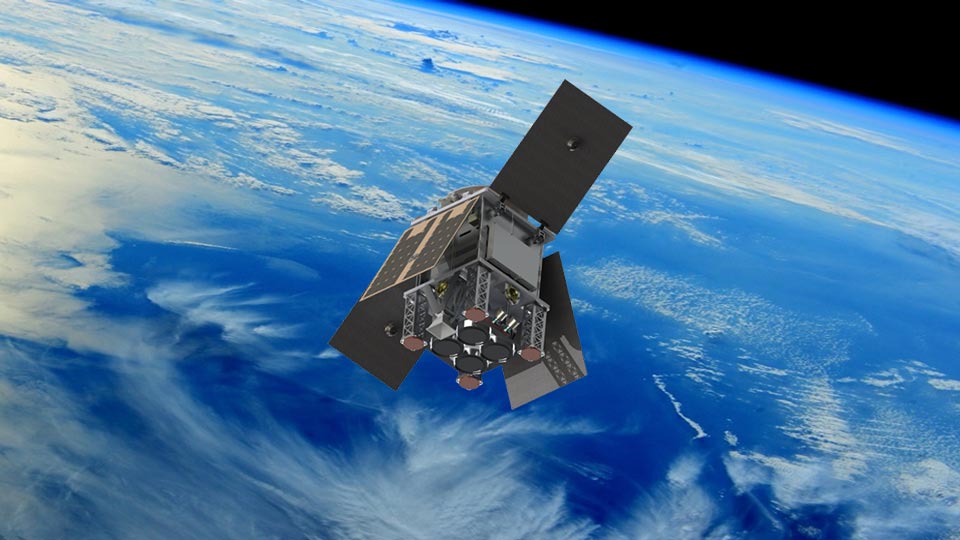
    HydroGNSS
    The second Earth observation Scout mission, HydroGNSS, will provide measurements of key hydrological climate variables, including soil moisture, freeze–thaw state over permafrost, inundation and wetlands, and above-ground biomass, using a technique called Global Navigation Satellite System (GNSS) reflectometry. In doing so it will complement missions such as ESA’s SMOS and Biomass, Copernicus Sentinel-1, and NASA’s SMAP. Credit: SSTL

    ESA’s HydroGNSS will track climate variables using satellite signal reflections, marking a major step for agile Earth observation.

    Following the selection of the first Scout satellite mission last December, ESA has also given the greenlight to start negotiations with Surrey Satellite Technology Ltd in the UK to lead the development of the second Scout mission – HydroGNSS.

    Complementing ESA’s series of Earth Explorer research missions, Scout missions are a new element in ESA’s Earth Observation FutureEO Programme. The idea is to demonstrate the capability of small satellites to deliver value-added science, either by the miniaturization of existing technologies or by demonstrating new sensing techniques. Adopting an agile development process, the aim is to implement a Scout mission, from kick-off to launch, within three years, and for a maximum of €30 million. This budget includes the development of the space and ground segments, launch, and in-orbit commissioning.

    The first Scout mission, ESP-MACCS, focuses on understanding and quantifying processes in the upper atmosphere over the Tropics – these processes play an important role in the overall evolution of the atmosphere. This second Scout mission, HydroGNSS, will provide measurements of key hydrological climate variables, including soil moisture, freeze–thaw state over permafrost, inundation, and wetlands, and above-ground biomass, using a technique called Global Navigation Satellite System (GNSS) reflectometry. In doing so it will complement missions such as ESA’s SMOS and Biomass, Copernicus Sentinel-1 and NASA’s SMAP.
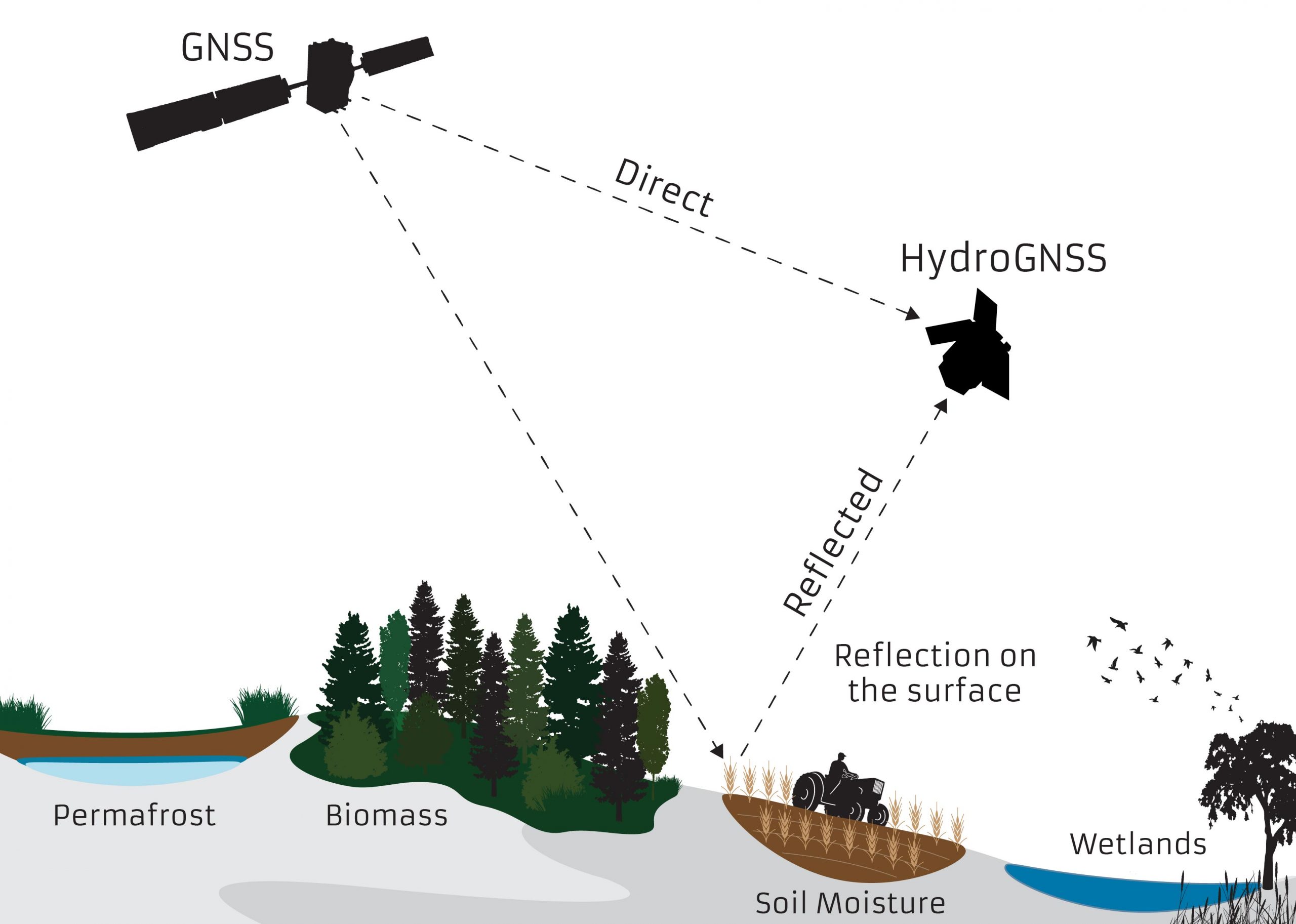
    HydroGNSS Reflectometry
    HydroGNSS will provide measurements of key hydrological climate variables, including soil moisture, freeze–thaw state over permafrost, inundation and wetlands, and above-ground biomass, using a technique called Global Navigation Satellite System (GNSS) reflectometry. In doing so it will complement missions such as ESA’s SMOS and Biomass, Copernicus Sentinel-1 and NASA’s SMAP. The satellite measures the signal reflected off the land, ice, and ocean from existing GNSS missions such as Galileo and GPS. Credit: SSTL

    The satellite measures the signal reflected off the land, ice, and ocean from existing GNSS missions such as Galileo and GPS. Although these signals are faint, they can be collected by a low power receiver that can be accommodated on a small satellite in low Earth orbit making it compatible with a Scout mission.

    The industrial consortium consists of Surrey Satellite Technology Ltd (UK) in charge of the development of the complete system, and a consortium of scientific institutes that will develop the retrieval techniques to access these key hydrological climate variable from the reflected signal: the National Oceanography Centre (UK), the Nottingham Geospatial Institute (UK), the University of Rome La Sapienza (IT), the Institute of Space Studies Catalonia (ES), and the Finnish Meteorological Institute (FI).

    ESA’s Acting Director of Earth Observation Programmes, Toni Tolker-Nielsen, said, “The decision to implement HydroGNSS after ESP-MACCS demonstrates that the Earth observation community is very interested in the concept of Scout missions. We are confident that this interest will further flourish when we see the first data in 2024.”

    Never miss a breakthrough: Join the SciTechDaily newsletter.
    Follow us on Google and Google News.

    Environment European Space Agency
    Share. Facebook Twitter Pinterest LinkedIn Email Reddit

    Related Articles

    Methane Plumes Detected Over Poland’s Coal Mines

    European Space Agency Moves Forward With Destination Earth

    Air Pollution Over China Returning to Pre-COVID Levels

    Using Space Technology to Help Build a Green Post-pandemic Economy

    Mauritius Oil Spill Spotted From Space – Island Has Declared a “State of Environmental Emergency”

    COVID-19’s Remarkable Changes to the Environment Seen From Space [Video]

    Mapping Methane Emissions on a Global Scale

    Aerosol Spread From Ferocious Australian Fires [Video]

    Australia: Like a Furnace – Incredible Satellite Images Reveal Ferocious Bushfires

    Leave A Reply Cancel Reply

    • Facebook
    • Twitter
    • Pinterest
    • YouTube

    Don't Miss a Discovery

    Subscribe for the Latest in Science & Tech!

    Trending News

    The Universe Is Expanding Too Fast and Scientists Can’t Explain Why

    “Like Liquid Metal”: Scientists Create Strange Shape-Shifting Material

    Early Warning Signals of Esophageal Cancer May Be Hiding in Plain Sight

    Common Blood Pressure Drug Shows Surprising Power Against Deadly Antibiotic-Resistant Superbug

    Scientists Uncover Dangerous Connection Between Serotonin and Heart Valve Disease

    Scientists Discover a “Protector” Protein That Could Help Reverse Hair Loss

    Bone-Strengthening Discovery Could Reverse Osteoporosis

    Scientists Uncover Hidden Trigger Behind Stem Cell Aging

    Follow SciTechDaily
    • Facebook
    • Twitter
    • YouTube
    • Pinterest
    • Newsletter
    • RSS
    SciTech News
    • Biology News
    • Chemistry News
    • Earth News
    • Health News
    • Physics News
    • Science News
    • Space News
    • Technology News
    Recent Posts
    • Scientists Overcome Major Quantum Bottleneck, Potentially Transforming Teleportation and Computing
    • Quantum Physics’ Strangest Problem May Hold the Key to Time Itself
    • Scientists Create “Liquid Gears” That Spin Without Touching
    • The Simple Habit That Could Help Prevent Cancer
    • Forgotten Medicinal Plant Shows Promise in Fighting Dangerous Superbugs
    Copyright © 1998 - 2026 SciTechDaily. All Rights Reserved.
    • Science News
    • About
    • Contact
    • Editorial Board
    • Privacy Policy
    • Terms of Use

    Type above and press Enter to search. Press Esc to cancel.