
The decline of sea ice in the Arctic has made the passage increasingly viable for ships, but it’s still not always smooth sailing.
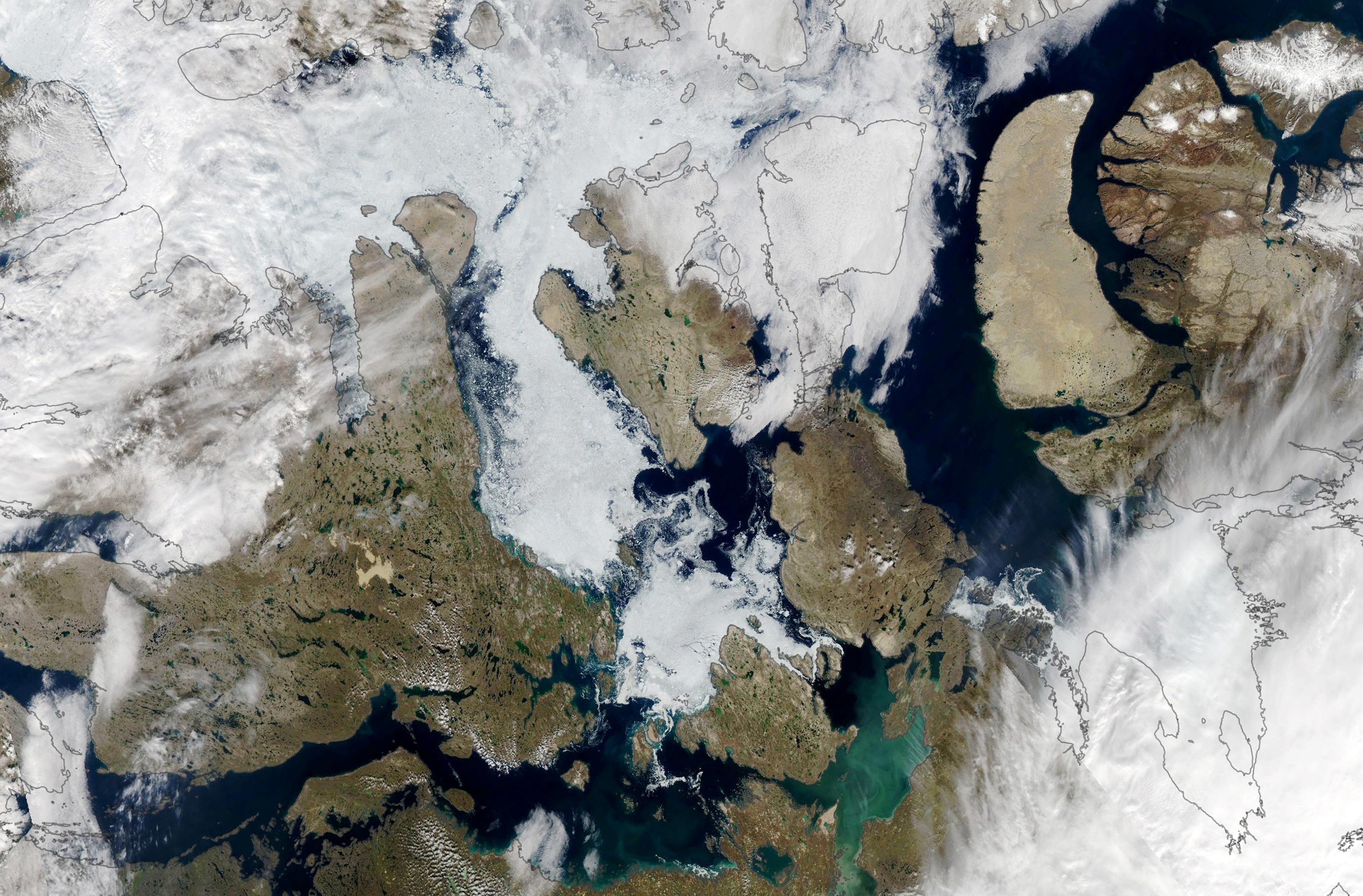
For centuries, explorers have tested the icy waters of the Arctic, looking for sea routes through the cluster of islands north of mainland Canada. Such a route, known as the Northwest Passage, can dramatically shorten the journey between the Pacific and Atlantic Oceans. The decline of sea ice in the Arctic Ocean has made this passage increasingly viable. But as this image shows, it’s still not always smooth sailing.
The Moderate Resolution Imaging Spectroradiometer (MODIS) on NASA’s Aqua satellite acquired this image on August 22, 2021. It shows part of the “southern route”—one of two main routes most feasible for the passage of large ships. Since about 2006, the Northwest Passage has become navigable for a short period late in most summers. So far this year, that hasn’t quite happened.
“The southern route still has ice,” said Walt Meier, a sea ice researcher at the National Snow and Ice Data Center. “But it’s possible a channel could open up in the next couple of weeks before freeze-up starts in earnest.”
Persistent Ice in Critical Straits
In this scene, the southern route appears mostly open except for ice that still floats in the straits around Victoria Island and King William Island. Meier notes that these are common places for ice to collect. Sea ice drifts south from the open Arctic Ocean through channels on both sides of Prince of Whales Island; it then hits King William Island, where it piles up.
“It was this ice that doomed the Franklin Expedition in the 1840s,” Meier said. “They tried to go north of King William, but the ice closed in and crushed their ships. Amundsen, the first to make it through the Northwest Passage in 1903-1906, went south of King William Island, through the narrow channel between the island and the mainland. The island protected them from the ice while they wintered over in Gjoa Haven.”
Today, an increasing number of ships transit the passage, including a large cruise ship that made the journey in 2016. But such voyages are subject to the variable conditions from year to year. In contrast, the U.S. Coast Guard Cutter Healy—a combined icebreaker and science lab—is equipped to break through sea ice should it encounter any during its transit through the passage this month.
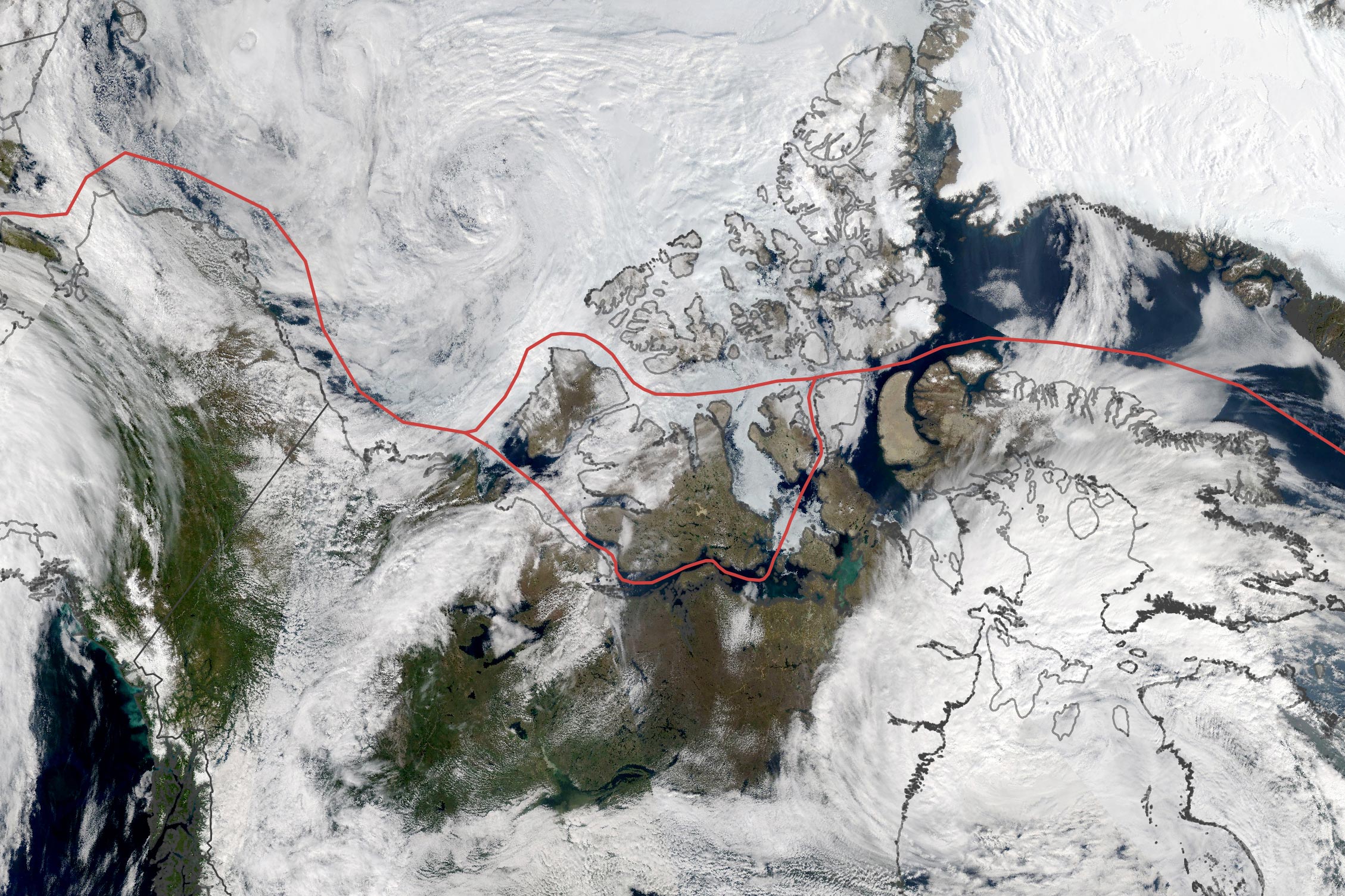
The northern route is locked up with ice this year and won’t likely clear before the seasonal re-freeze begins. This route is less sheltered and more susceptible to the influx of ice from the north pushing into the channels. It opened, notably, in 2007 and a handful of years afterward.
Air temperatures also play a role. Meier thinks that average, not-too-warm temperatures in the region during spring and summer may have been a larger factor driving the icy conditions this year. As temperatures continue to increase with global warming, however, the Northwest Passage is likely to be open more often in future summers.
NASA Earth Observatory images by Lauren Dauphin, using MODIS data from NASA EOSDIS LANCE and GIBS/Worldview.
Never miss a breakthrough: Join the SciTechDaily newsletter.
Follow us on Google and Google News.
1 Comment
The question is, if CO2 inexorably drives warming, why is the Arctic cooling? CO2 detains the same amount of heat now as in prior years of this century (more actually since it has increased over that period), so where is the heat going if not into the melting of ice? Point being, the dynamics of atmospheric heat flow have not been fully characterized, contrary to the claims of the doomsayers. Who, by the way, once predicted the Arctic would be ice-free by 2020!