
Will climate change lead to more iron fertilization in the ocean?
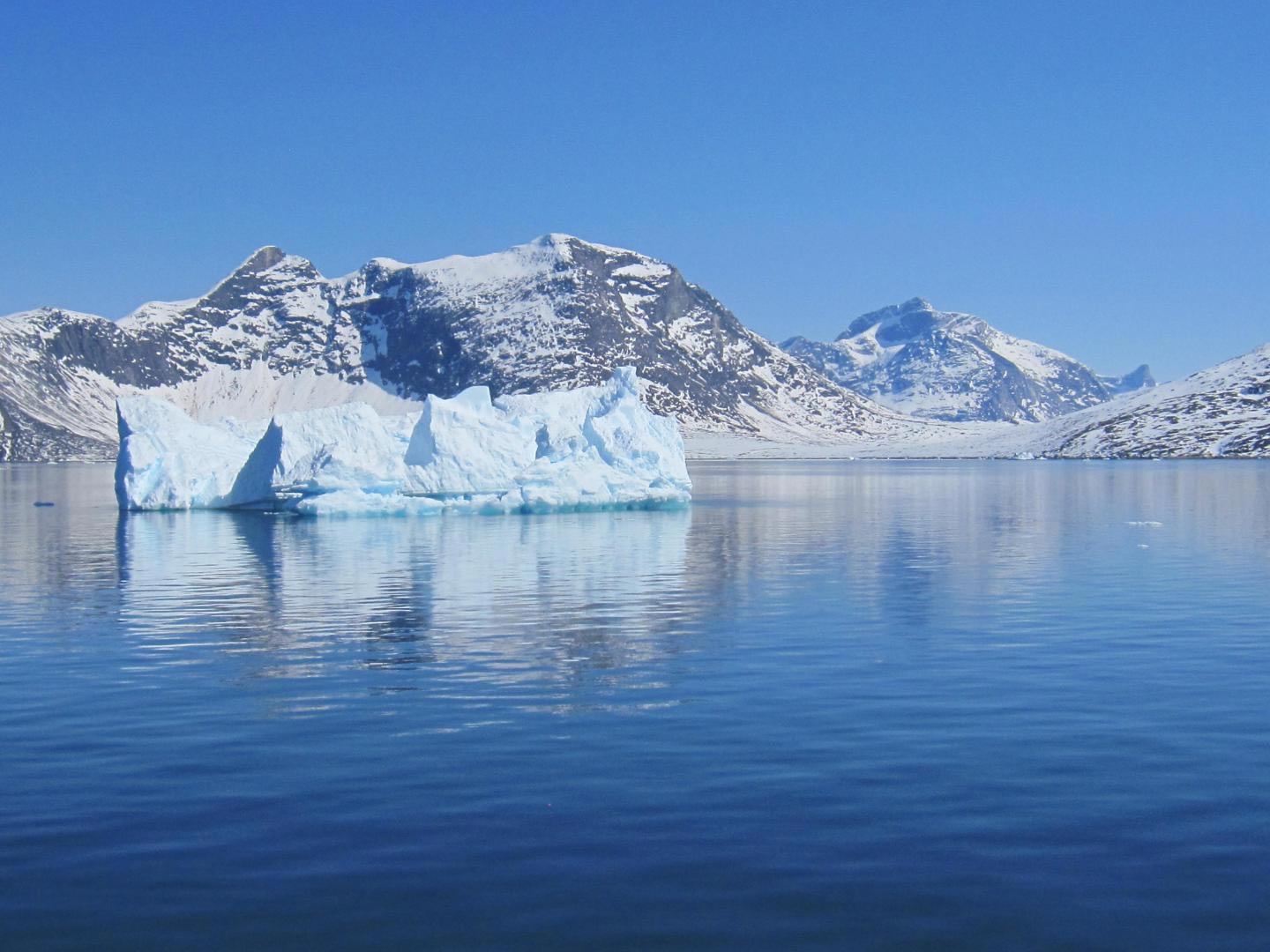
Sea creatures, whether large or small, need nutrients. The supply mechanism delivering these nutrients is very different in different parts of the ocean. There are nutrient-rich coastal areas, but also very nutrient-poor regions in the open ocean. In some areas, the lack of iron in seawater limits plankton growth. These include much of the polar oceans. Here, icebergs appear to be an important source of iron input, which could increase due to increased iceberg production as a result of climate change. So far, however, only a limited amount of data has been available to estimate this process. An international team of researchers led by GEOMAR Helmholtz Center for Ocean Research Kiel has now examined ice samples worldwide for their iron content. The results show that an increase in icebergs, for example, due to global warming, does not necessarily lead to an increase in iron input into the oceans. The results of their study were published on November 20, 2019, in the international journal Nature Communications.
“In cooperation with partners at the IDEAL Center for Oceanography in Chile, Greenland, Iceland and Spitsbergen, we have collected a large collection of ice samples from a large number of large maritime glaciers around the world,” explains lead author Dr. Mark Hopwood from GEOMAR. These samples were then analyzed for trace substances in clean room laboratories. The sampling itself poses a particular challenge. Not only because the samples come from regions that are difficult to access. “Approaching an iceberg floating in the water with a small boat is not safe and requires a lot of experience,” says Mark Hopwood. “While we were collecting samples in the coastal waters around Spitsbergen, we saw a relatively small iceberg suddenly break into two halves and turn around in the water. If this happens to a large iceberg that is being sampled from a boat, it can be very dangerous,” continues Dr. Hopwood.
The analyses initially showed, to a certain extent surprisingly, in most samples no major differences in the composition of the ice from different locations, i.e. the iron content in ice from Greenland is not significantly different from that in Patagonia. However, the ice of a single iceberg can be very different. The pure ice contains very little iron, but ice that is heavily loaded with sediment, much more than one would find in a river, for example. These differences in iron concentration are enormous and can be in the order of a millionfold. About 4% of the ice samples collected contained more than 90% of the total iron.
What does this mean for biology? “Well, the general hypothesis was that increasing the number of icebergs swimming in the sea would increase the fertilizing effect. But our work shows that things are a little more complicated, because most ice has no strong fertilizing effect, the 4% of the ice with most of the iron will probably have a much stronger fertilizing effect than the rest of the ‘clean’ ice,” Mark Hopwood sums up. So the origin and dynamics of the “dirty” ice play a really important role in how much the ice in a region, or from a glacier, can (or cannot) change primary production in the ocean.
“Unfortunately, many questions remain unanswered. For example, where this sediment-rich ice comes from, how it varies globally and in what spatial and temporal dimensions it releases iron through melting processes in the ocean,” Hopwood concludes.
Reference: “Highly variable iron content modulates iceberg-ocean fertilization and potential carbon export” by Mark J. Hopwood, Dustin Carroll, Juan Höfer, Eric P. Achterberg, Lorenz Meire, Frédéric A. C. Le Moigne, Lennart T. Bach, Charlotte Eich, David A. Sutherland and Humberto E. González, 20 November 2019, Nature Communications.
DOI: 10.1038/s41467-019-13231-0
Never miss a breakthrough: Join the SciTechDaily newsletter.
Follow us on Google and Google News.