
Close Menu
    Facebook X (Twitter) Instagram
    SciTechDaily
    • Biology
    • Chemistry
    • Earth
    • Health
    • Physics
    • Science
    • Space
    • Technology
    Facebook X (Twitter) Pinterest YouTube RSS
    SciTechDaily
    Home»Technology»Identify Unknown Substances Instantly: Pocket-Sized Invention Revolutionizes Ability To Detect Harmful Materials
    Technology

    Identify Unknown Substances Instantly: Pocket-Sized Invention Revolutionizes Ability To Detect Harmful Materials

    By Katie Satterlee, Texas A&M UniversityJuly 20, 2024No Comments3 Mins Read
    Facebook Twitter Pinterest Telegram LinkedIn WhatsApp Email Reddit
    Share
    Facebook Twitter LinkedIn Pinterest Telegram Email Reddit
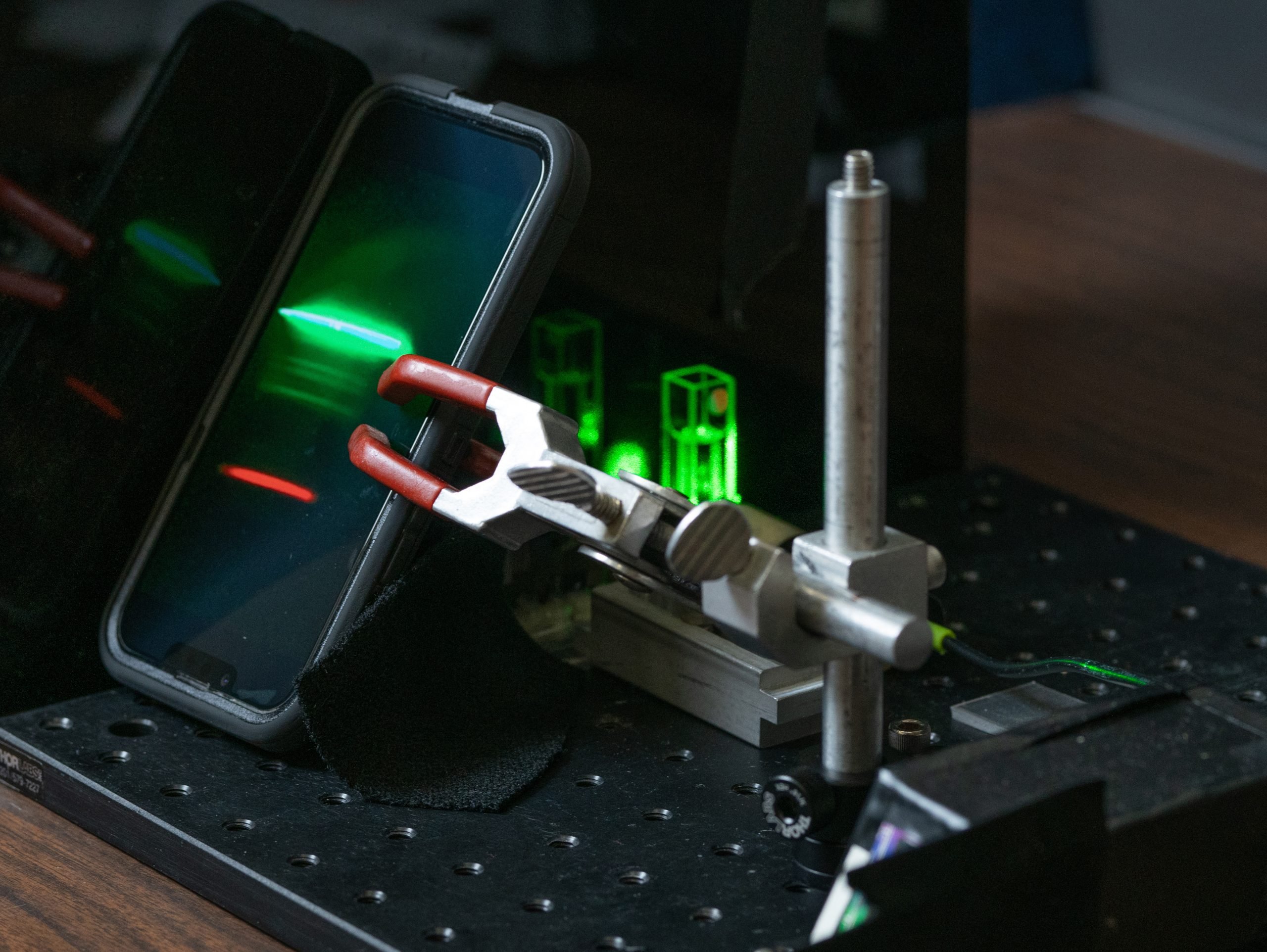
    Portable Spectrometer
    A smartphone records the Raman spectrum of an unknown material (an ethanol solution, in this case) for further analysis. Credit: Texas A&M University Engineering

    The affordable, cellphone-based Raman spectrometer system can identify unknown biological molecules in just minutes.

    A new handheld Raman spectrometer system, patented by Dr. Peter Rentzepis at Texas A&M University, allows for the non-invasive identification of harmful chemicals and materials using a combination of a cellphone camera and laser technology. This device, which is significantly cheaper and faster than traditional spectrometers, can be used in remote areas for rapid on-site analysis.

    Imagine being able to identify safe berries or mushrooms while hiking, or swiftly detecting pathogens in a hospital setting that would usually take days to diagnose.

    Identification and detection of drugs, chemicals, and biological molecules invisible to the human eye can be made possible through the combined technology of a cellphone camera and a Raman spectrometer — a powerful laser chemical analysis method.

    Dr. Peter Rentzepis, a professor in the Department of Electrical and Computer Engineering at Texas A&M University, holds a patent for a hand-held cellphone-based Raman spectrometer system. Rentzepis’ invention allows the user to make non-invasive identifications of potentially harmful chemicals or materials in the field, especially in remote areas where laboratory spectrometers cannot be used due to their size and power needs.

    This new Raman spectrometer system integrates lenses, a diode laser, and a diffraction grating — a small thin square-shaped surface that scatters light for analysis — in combination with a camera from a cellphone to record the Raman spectrum. Peaks in the spectrum provide detailed data about the chemical composition and molecular structure of a substance, depending on their intensities and positions.

    How the Device Works

    To use the device, a cellphone is placed behind the transmission grating with the camera facing the grating, ready to record the Raman spectrum. A laser shoots a beam into a sample of unknown material, such as a bacterium, on a slide. The camera records the spectrum, and when paired with an appropriate cellphone application/database, this handheld instrument can enable rapid materials identification on site.

    Previously, the process of identifying unknown substances involved extensive sampling of biological material and laboratory analysis, which could take several hours or even days. While traditional Raman spectrometers cost up to thousands of dollars, Rentzepis’ invention can be made at a significantly lower cost and can identify materials at a significantly quicker speed.

    Cost and Practicality

    “It’s a small device that can tell you the composition of a particular system, material, or sample,” Rentzepis said. “You can even have it in your pocket.”

    Fellow inventors are former Texas A&M graduate students Dr. Dinesh Dhankhar, a system engineer at Thermo Fisher Scientific, and Anushka Nagpal, a process engineer at Intel Corporation.

    Funding for this research is administered by the Texas A&M Engineering Experiment Station (TEES), the official research agency for Texas A&M Engineering.

    Never miss a breakthrough: Join the SciTechDaily newsletter.
    Follow us on Google and Google News.

    Chemical Engineering Electrical Engineering Spectroscopy Texas A&M University
    Share. Facebook Twitter Pinterest LinkedIn Email Reddit

    Related Articles

    Mind-Blowing Tech: Brain-Inspired Materials Revolutionize Computing

    The Next Frontier: DNA Emerges as a Powerhouse for Data Storage and Computing

    A Simple Chemical Addition: Researchers Discover Key to Longer-Lasting Solar Cells

    Thought To Be Impossible – Novel Spectroscopy Technique Breaks Through 50 Years of Frustration

    MIT’s AI and Laser Duo Is Shaking Up How We Make Medicine

    Chemical Reactions Spark Life Into Self-Folding Micro Origami Machines

    1,000% Difference: Major Storage Capacity in Water-Based Batteries Found

    Researchers Discover New Circuit Element – The Meminductor

    New Molecular Computing Device Has Unprecedented Reconfigurability Reminiscent of Brain Plasticity

    Leave A Reply Cancel Reply

    • Facebook
    • Twitter
    • Pinterest
    • YouTube

    Don't Miss a Discovery

    Subscribe for the Latest in Science & Tech!

    Trending News

    Popular Supplement Ingredient Linked to Shorter Lifespan in Men

    Scientists May Have Found a Way To Repair Nerve Damage in Multiple Sclerosis

    “Totally Unexpected” – Scientists Discover Pancreatic Cancer’s Fatal Addiction

    A Strange Quantum Effect May Explain One of Biology’s Greatest Mysteries

    James Webb Telescope Reveals the Universe’s Hidden Cosmic Web in Stunning Detail

    Scientists Identify Simple Supplement That Greatly Reduces Alzheimer’s Damage

    You May Have a Dangerous Type of Cholesterol Even if Your Tests Look Normal

    Your Blood Pressure Reading Could Be Wrong Because of One Simple Mistake

    Follow SciTechDaily
    • Facebook
    • Twitter
    • YouTube
    • Pinterest
    • Newsletter
    • RSS
    SciTech News
    • Biology News
    • Chemistry News
    • Earth News
    • Health News
    • Physics News
    • Science News
    • Space News
    • Technology News
    Recent Posts
    • Cancer Mystery Solved: Scientists Discover How Melanoma Becomes “Immortal”
    • Scientists Uncover Cancer-Fighting Power of Popular Fatty Liver Drug
    • Beyond Pain Relief: Scientists Discover a Protein That Could Stop Osteoarthritis in Its Tracks
    • NASA’s New AI Processor Is 500x Faster Than Current Space Computers
    • Scientists Find Evidence Earth Is Drifting Through the Ashes of an Exploded Star
    Copyright © 1998 - 2026 SciTechDaily. All Rights Reserved.
    • Science News
    • About
    • Contact
    • Editorial Board
    • Privacy Policy
    • Terms of Use

    Type above and press Enter to search. Press Esc to cancel.