
Close Menu
    Facebook X (Twitter) Instagram
    SciTechDaily
    • Biology
    • Chemistry
    • Earth
    • Health
    • Physics
    • Science
    • Space
    • Technology
    Facebook X (Twitter) Pinterest YouTube RSS
    SciTechDaily
    Home»Health»How the Immune System Combats Superinfection
    Health

    How the Immune System Combats Superinfection

    By Bill Hathaway, Yale UniversityAugust 29, 2014No Comments2 Mins Read
    Facebook Twitter Pinterest Telegram LinkedIn WhatsApp Email Reddit
    Share
    Facebook Twitter LinkedIn Pinterest Telegram Email Reddit
    How the Immune System Combats Superinfection
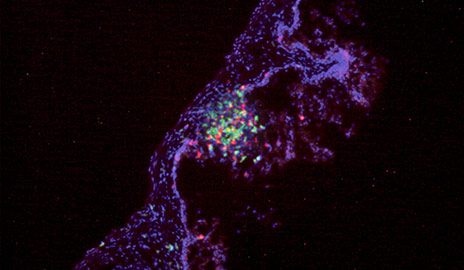
    New research reveals how the immune system tackles superinfections, offering insights for potential vaccines against sexually transmitted diseases, including HIV. Credit: Yale University

    New research from Yale University shows how the immune system combats superinfections, revealing a biological basis for new vaccines against sexually transmitted diseases and possibly HIV.

    The immune system is great at making sure infections such as the herpes virus do not repeatedly infect a person, a condition known as a superinfection. Yet how the immune system combats superinfection is not well understood.

    In the August 28 issue of the journal Science Express, Yale University researchers help explain the mystery. They found that a lymphocyte network helps retain a specific type of T cell in the tissue of the vaginas of mice that have previously encountered herpes infection; this, in turn, prevents infection by the herpes simplex virus.

    The findings suggest a biological basis for new vaccines against sexually transmitted diseases, and possibly HIV, say the researchers, who note a similar approach might be applied to cancer vaccines as well.

    “Now that we understand their behavior and structure, our goal is to enable these T cells to provide immediate protection against mucosal viral challenges,” said Akiko Iwasaki, professor of immunobiology and investigator for the Yale Cancer Center and Howard Hughes Medical Institute, who with Yale’s Norifumi Iijima co-authored the paper.

    Existing vaccines against herpes boost circulating T cells throughout the body but have shown limited efficacy. Iwasaki has proposed that introducing topical treatments that “pull” T cells to into vulnerable tissue in addition to giving vaccines that “prime” the immune system might be a better way of combating viral infections.

    The results of the new paper provide new information about how to “pull” specific T cell populations to these sites, she said.

    Reference: “A local macrophage chemokine network sustains protective tissue-resident memory CD4 T cells” by Norifumi Iijima and Akiko Iwasaki, 28 Aug 2014, Science.
    DOI: 10.1126/science.1257530


    Never miss a breakthrough: Join the SciTechDaily newsletter.
    Follow us on Google and Google News.

    Disease Immunobiology Infection Yale University
    Share. Facebook Twitter Pinterest LinkedIn Email Reddit

    Related Articles

    New Nasal Swab Test Reveals Can Accurately Identify Viral Infection

    Yale Study Shows Surprising Link Between Constipation and Herpes Infection

    Yale Researchers Reveal How Antibodies Access Neurons to Fight Infection

    Yale Examines How Bacteria Might Trigger and Treat Autoimmune Disease

    New Strategy to Better Protect Cancer Patients from the Flu

    Researchers May Have Pinpointed a Strategy for Eliminating Latent HIV

    Tick-Borne Infection Borrelia Miyamotoi Discovered in the United States

    New Model for Vaccination Against Genital Herpes

    New Antibody Drug Boosts the Immune System’s Capacity to Fight Cancer

    Leave A Reply Cancel Reply

    • Facebook
    • Twitter
    • Pinterest
    • YouTube

    Don't Miss a Discovery

    Subscribe for the Latest in Science & Tech!

    Trending News

    Millions Take These IBS Drugs, But a New Study Finds Serious Risks

    Scientists Unlock Hidden Secrets of 2,300-Year-Old Mummies Using Cutting-Edge CT Scanner

    Bread Might Be Making You Gain Weight Even Without Eating More Calories

    Scientists Discover Massive Magma Reservoir Beneath Tuscany

    Europe’s Most Active Volcano Just Got Stranger – Here’s Why Scientists Are Rethinking It

    Alzheimer’s Symptoms May Start Outside the Brain, Study Finds

    Millions Take This Popular Supplement – Scientists Discover a Concerning Link to Heart Failure

    The Universe Is Expanding Too Fast and Scientists Can’t Explain Why

    Follow SciTechDaily
    • Facebook
    • Twitter
    • YouTube
    • Pinterest
    • Newsletter
    • RSS
    SciTech News
    • Biology News
    • Chemistry News
    • Earth News
    • Health News
    • Physics News
    • Science News
    • Space News
    • Technology News
    Recent Posts
    • Doctors Surprised by the Power of a Simple Drug Against Colon Cancer
    • Why Popular Diabetes Drugs Like Ozempic Don’t Work for Everyone: The “Genetic Glitch”
    • Scientists Create Improved Insulin Cells That Reverse Diabetes in Mice
    • Scientists Stunned After Finding Plant Thought Extinct for 60 Years
    • A Common Diabetes Drug May Hold the Key to Stopping HIV From Coming Back
    Copyright © 1998 - 2026 SciTechDaily. All Rights Reserved.
    • Science News
    • About
    • Contact
    • Editorial Board
    • Privacy Policy
    • Terms of Use

    Type above and press Enter to search. Press Esc to cancel.