
Close Menu
    Facebook X (Twitter) Instagram
    SciTechDaily
    • Biology
    • Chemistry
    • Earth
    • Health
    • Physics
    • Science
    • Space
    • Technology
    Facebook X (Twitter) Pinterest YouTube RSS
    SciTechDaily
    Home»Science»The Fungus Among Us: Defying Nature’s Anti-Fungal Arsenal
    Science

    The Fungus Among Us: Defying Nature’s Anti-Fungal Arsenal

    By RIKENJuly 21, 2023No Comments4 Mins Read
    Facebook Twitter Pinterest Telegram LinkedIn WhatsApp Email Reddit
    Share
    Facebook Twitter LinkedIn Pinterest Telegram Email Reddit
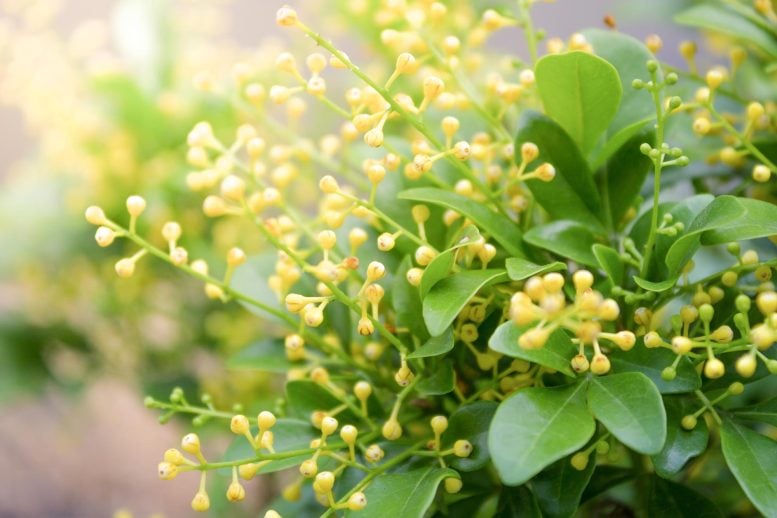
    Aglaia Flower
    RIKEN researchers found a parasitic fungus immune to plant-produced anti-fungal compounds called rocaglates due to a gene mutation. This discovery could impact the potential use of rocaglates in treatments for diseases like COVID-19 and cancer.

    An anti-fungal compound produced by plants doesn’t work on at least one fungus.

    RIKEN scientists have discovered how a parasitic fungus renders harmless a powerful anti-fungal compound produced by some plants. As well as providing a fascinating glimpse into the ongoing arms race between plants and parasites, the finding could be useful for developing new therapies for people.

    Parasitic fungi that infect plants are a major economic burden as they cause significant loss of crops. This provides a big incentive for scientists to understand the interactions between plants and fungi.

    Many plants ward off fungi by producing small molecules that kill fungi. Rocaglates are one such family of antifungals that work by binding to a molecule called elF4A, which fungi, in common with plants and animals, need to make essential proteins.
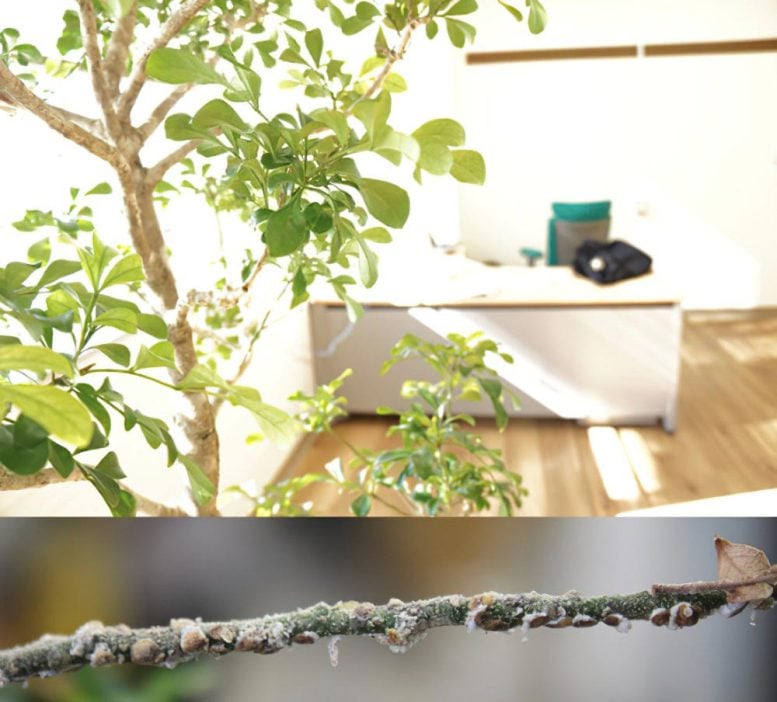
    Shintaro Iwasaki Aglaia Plant
    The Aglaia plant in Shintaro Iwasaki’s former office in the United States became infected with a fungus (bottom) despite producing rocaglate, an antifungal compound. Iwasaki’s team has discovered how the fungus is able to evade the effects of rocaglate and infect Aglaia. Credit: © 2023 RNA Systems Biochemistry Laboratory

    Now, Shintaro Iwasaki of the RIKEN RNA Systems Biochemistry Laboratory and co-workers have discovered a fungal species that can avoid the lethal effects of rocaglates.

    How Overwatering Led to a Breakthrough

    The discovery owed a lot to serendipity. “It was a fortuitous accident,” Iwasaki comments. At the time, he had been in the United States researching a common house plant called Aglaia (also known as the Chinese perfume plant). Iwasaki subsequently moved to Japan to start working at RIKEN but was unable to take the plant with him due to import restrictions on foreign plants.

    “So I asked a student in the lab to water the plant and keep it healthy, since it might be needed for further experiments,” says Iwasaki. “But the student overwatered it.”

    As a consequence, the plant became infected by a fungus. But that took Iwasaki by surprise since Aglaia produces rocaglates and so should have been protected from fungal infection.

    Shintaro Iwasaki RIKEN RNA Systems Biochemistry Laboratory Team
    Shintaro Iwasaki (far left) of the RIKEN RNA Systems Biochemistry Laboratory and his team have shown that a mutated form of eIF4A allows a fungus to evade the toxic effects of rocaglates produced by plants. Credit: © 2023 RIKEN

    The Mutation That Shields the Fungus from Rocaglates

    Curious as to how the fungus could survive, Iwasaki and his team started to analyse it. They discovered that its gene for encoding elF4A differed in just one place from that of the usual gene for elF4A. This point mutation produced a slightly modified form of elF4A that rocaglates cannot bind to, thus protecting them from the fungus.

    To demonstrate that this was the case, Iwasaki transferred the gene to a cucumber-infecting fungus and found that the fungus thrived on cucumber even when treated with a chemical derived from rocaglates.

    Interestingly, it is the same strategy that rocaglate-producing plants employ to prevent themselves from being poisoned by rocaglates.

    Since rocaglates are attracting interest for treating diseases such as COVID-19 and cancer, the finding may be relevant to future therapies. “Some people may have a similar mutation as the fungus and thus not benefit from treatments based on rocaglates,” says Iwasaki.

    Reference: “A parasitic fungus employs mutated eIF4A to survive on rocaglate-synthesizing Aglaia plants” by Mingming Chen, Naoyoshi Kumakura, Hironori Saito, Ryan Muller, Madoka Nishimoto, Mari Mito, Pamela Gan, Nicholas T Ingolia, Ken Shirasu, Takuhiro Ito, Yuichi Shichino and Shintaro Iwasaki, 28 February 2023, eLife.
    DOI: 10.7554/eLife.81302

    Never miss a breakthrough: Join the SciTechDaily newsletter.
    Follow us on Google and Google News.

    Fungus Plant Science RIKEN
    Share. Facebook Twitter Pinterest LinkedIn Email Reddit

    Related Articles

    Unlocking the Genetic Secrets Behind Plant Immunity and Growth

    Fungal-Plant Symbiosis: Boosting Crop Resilience and Paving the Way for Sustainable Agriculture

    Scientists Discover Protein in Fungus That Allows It To Bypass Plant Defenses

    Bioactive Nanocarrier Spray: Better Crops Without Genetic Modification

    Complicated Tradeoffs With Alfalfa and Potassium – Yield, Quality & Nutrition

    Supercomputer Simulations Open the Door for Numerical Modeling of Nuclear Interactions

    Researchers Demonstrate the Scalability of Quantum Dot Architectures

    African Fruit Gets Iridescent Hue From Cell Structure, Stays Intense for Years

    Boxwood Fungus Blight Invades North America After Taking Europe and New Zealand by Storm

    Leave A Reply Cancel Reply

    • Facebook
    • Twitter
    • Pinterest
    • YouTube

    Don't Miss a Discovery

    Subscribe for the Latest in Science & Tech!

    Trending News

    Scientists Discover How Coffee Impacts Memory, Mood, and Gut Health

    Why Did the Neanderthals Disappear? Scientists Reveal Humans Had a Hidden Advantage

    Physicists Propose Strange Experiment Where Time Goes Quantum

    Magnesium Magic: New Drug Melts Fat Even on a High-Fat, High-Sugar Diet

    Weight-Loss Drugs Like Ozempic May Come With an Unexpected Cost

    Mezcal “Worm” in a Bottle Mystery: DNA Testing Reveals a Surprise

    New Research Reveals That Your Morning Coffee Activates an Ancient Longevity Switch

    This Is What Makes You Irresistible to Mosquitoes

    Follow SciTechDaily
    • Facebook
    • Twitter
    • YouTube
    • Pinterest
    • Newsletter
    • RSS
    SciTech News
    • Biology News
    • Chemistry News
    • Earth News
    • Health News
    • Physics News
    • Science News
    • Space News
    • Technology News
    Recent Posts
    • Harvard Scientists Reveal Secret Structure Behind How You Smell
    • Scientists Just Discovered the Hidden Trick That Keeps Your Cells Alive
    • This Simple Movement Could Be Secretly Cleaning Your Brain
    • Male Birth Control Breakthrough: Scientists Find Way To Turn Sperm Production Off and Back On
    • A Common Vitamin Could Hold the Key to Treating Fatty Liver Disease
    Copyright © 1998 - 2026 SciTechDaily. All Rights Reserved.
    • Science News
    • About
    • Contact
    • Editorial Board
    • Privacy Policy
    • Terms of Use

    Type above and press Enter to search. Press Esc to cancel.