
Close Menu
    Facebook X (Twitter) Instagram
    SciTechDaily
    • Biology
    • Chemistry
    • Earth
    • Health
    • Physics
    • Science
    • Space
    • Technology
    Facebook X (Twitter) Pinterest YouTube RSS
    SciTechDaily
    Home»Biology»“Incredible Hulk” Lizard Unveils Secrets of Evolutionary Adaptation
    Biology

    “Incredible Hulk” Lizard Unveils Secrets of Evolutionary Adaptation

    By Lund UniversityMay 2, 2024No Comments3 Mins Read
    Facebook Twitter Pinterest Telegram LinkedIn WhatsApp Email Reddit
    Share
    Facebook Twitter LinkedIn Pinterest Telegram Email Reddit
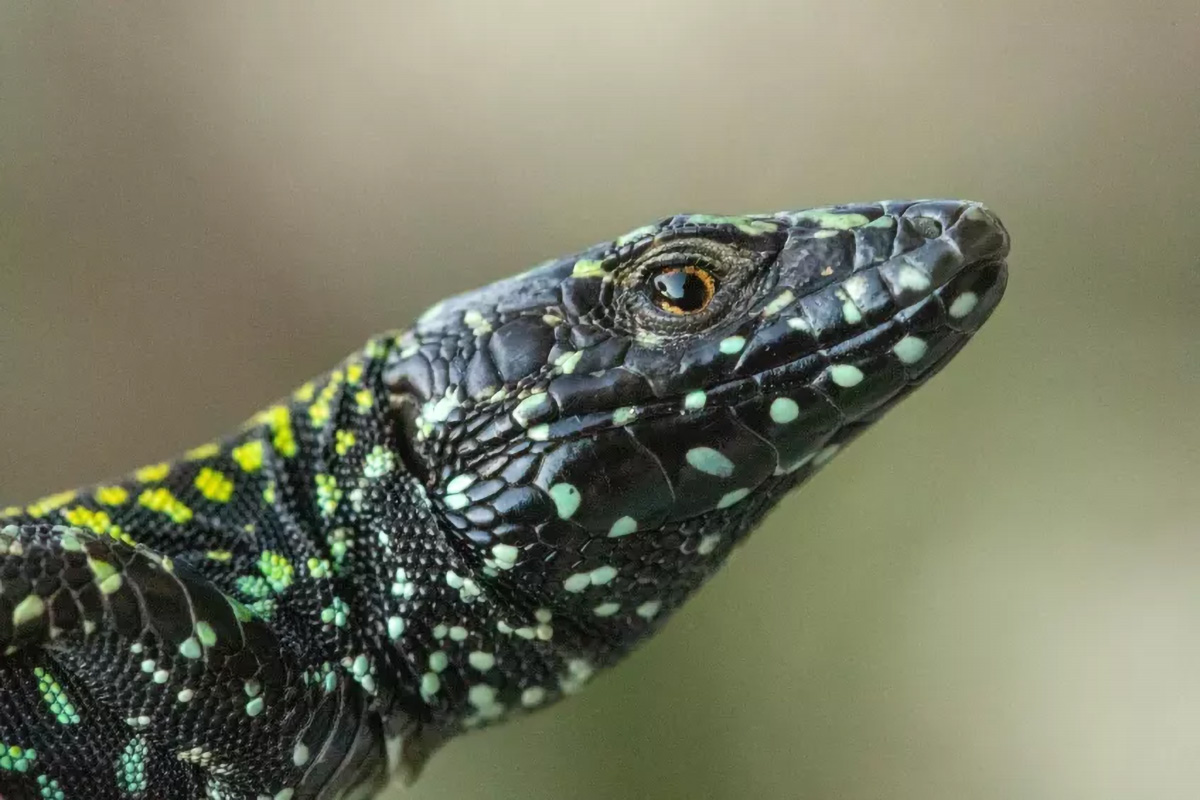
    Hulk Lizard Close Up
    Researchers at Lund University are investigating the evolution of body shape, color, and behavior in Mediterranean wall lizards, focusing on the role of neural crest cells. Their study combines field observations with genetic analysis, identifying genes that contribute to the lizards’ unique traits. This research not only enhances our understanding of genetic adaptation mechanisms but also sets the stage for further evolutionary studies in other vertebrate species. Credit: Javier Abalos

    Body shape, color, and behavior often evolve together as species adapt to their environment. Researchers from Lund University in Sweden have studied this phenomenon in a specific type of large, bright green, and aggressive common wall lizard found near the Mediterranean. They discovered that a unique cell type might have played a key role in this joint evolution.

    Adaptation is a genetic change that results in increased viability in the surrounding environment. It may affect color, shape, and behavior. However, the basis for how this works genetically has remained shrouded in mystery.

    In a new study, evolutionary biologists have combined fieldwork and DNA analysis to study large, green, aggressive, and sexually prominent wall lizards in the Mediterranean region. They discovered a number of genes responsible for the lizard’s Hulk-like appearance.

    Research on Neural Crest Cells

    “All tissues and organs that are behind the Hulk-like appearance develop from cells called neural crest cells that form in the early embryo. We believe that the cells that underlie changes in shape, color, and behavior are regulated together, and that the traits therefore evolve together,” says Nathalie Feiner, evolutionary biologist at Lund University.

    The research group investigated a common wall lizard with green and black coloring, impressive body size, and aggressive behavior. Males with this appearance emerged many thousands of years ago, close to present-day Rome, and have shown themselves to be dominant over males with other color combinations. This has resulted in the Hulk lizards spreading throughout Italy.
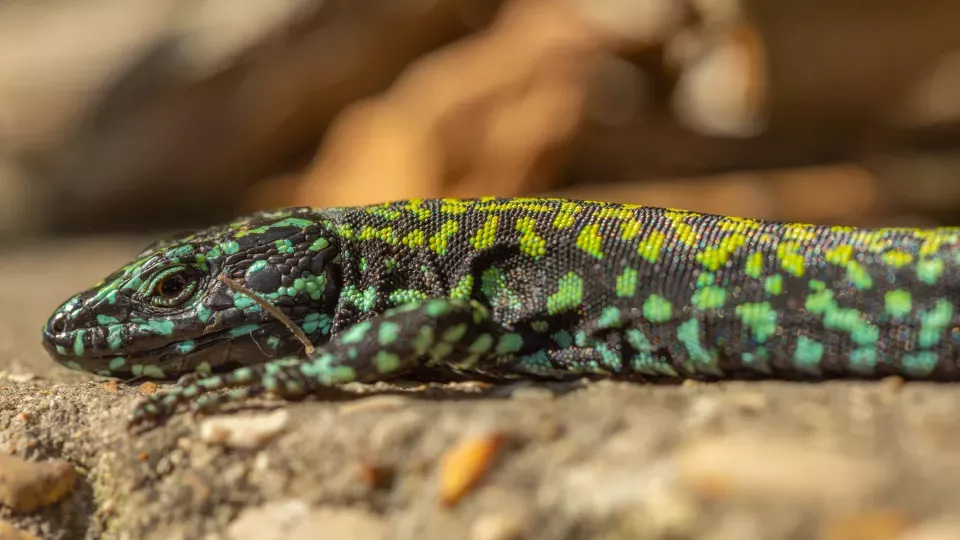
    Hulk Lizard
    The Hulk-like lizard. Credit: Javier Abalos

    “Our knowledge of neural crest cells comes almost entirely from a few model organisms, such as mice. We are now charting this type of cell in lizard embryos in order to understand how phenomena such as the Hulk lizard can evolve,” says Nathalie Feiner.

    Over the next few years, Feiner and her team will conduct more field studies, set up breeding groups, and undertake advanced genetic analyses, including using the CrispR-Cas9 gene-editing technique. All with the aim of establishing what role neural crest cells play in the intertwined evolution of color, shape, and behavior.

    “Our focus is on lizards, but our discoveries can probably be applied to all animals with neural crest cells, which would cover around 70,000 species of vertebrate. Although our work provides a possible explanation to how evolution works, it is also the beginning of many new areas of research,” she says.

    Reference: “Adaptive introgression reveals the genetic basis of a sexually selected syndrome in wall lizards” by Nathalie Feiner, Weizhao Yang, Ignas Bunikis, Geoffrey M. While and Tobias Uller, 3 April 2024, Science Advances.
    DOI: 10.1126/sciadv.adk9315

    Never miss a breakthrough: Join the SciTechDaily newsletter.
    Follow us on Google and Google News.

    Evolutionary Biology Genetics Lizard Lund University Popular
    Share. Facebook Twitter Pinterest LinkedIn Email Reddit

    Related Articles

    Mankind’s Missing Puzzle Pieces: The “Deleted” Genes That Made Us Human

    Mammalian Mysteries: How 240 Species Unravel the Secrets of Human Genes

    How Ants Took Over the World

    Scientists Crack Egg Forging Evolutionary Scandal Two Million Years in the Making

    What Makes Us Human? The Answer May Be Found in Overlooked “Junk” DNA

    New DNA Analysis Provides Critical Information on Conserving Rainforest Lizards

    Scientists Discover a Gene for Brain Size

    Study Provides Picture of Human Expansion From Africa

    Researchers Complete Genome Sequence of a Denisovan Human Finger Bone

    Leave A Reply Cancel Reply

    • Facebook
    • Twitter
    • Pinterest
    • YouTube

    Don't Miss a Discovery

    Subscribe for the Latest in Science & Tech!

    Trending News

    Giant Crocodylians Ruled South America’s Ancient Food Chain

    Breakthrough in a Bizarre Galaxy Could Help Unlock the Mystery of Dark Matter

    Just 4 Minutes of Daily Strength Training Can Quadruple Fitness in Older Adults

    Almost All Plant-Based Meat Alternatives Contain Mycotoxins, Study Finds

    Astronomers Detect a Record-Breaking “Cosmic Laser” From 8 Billion Light-Years Away

    A 47-Year-Old Scientist Tracked Himself for Months – His Biological Age Fell to 32

    Construction Crew Uncovers Giant 20-Meter Dinosaur in Brazil

    30 Years of Hurricane Data Reveal 4 Warning Signs Before Storms Strengthen

    Follow SciTechDaily
    • Facebook
    • Twitter
    • YouTube
    • Pinterest
    • Newsletter
    • RSS
    SciTech News
    • Biology News
    • Chemistry News
    • Earth News
    • Health News
    • Physics News
    • Science News
    • Space News
    • Technology News
    Recent Posts
    • Scientists Reveal How Cells Tame One of Biology’s Most Dangerous Metals
    • Hurricane Forecast Maps Are Getting Better – but One Big Problem Remains
    • Blackbirds Somehow Know When a Snake Is Too Dangerous To Attack
    • Scientists Find a Clue to Making Brain Stimulation More Reliable
    • A Hidden Gut Reaction May Explain Why Vegetables Are So Good for You
    Copyright © 1998 - 2026 SciTechDaily. All Rights Reserved.
    • Science News
    • About
    • Contact
    • Editorial Board
    • Privacy Policy
    • Terms of Use

    Type above and press Enter to search. Press Esc to cancel.