
Close Menu
    Facebook X (Twitter) Instagram
    SciTechDaily
    • Biology
    • Chemistry
    • Earth
    • Health
    • Physics
    • Science
    • Space
    • Technology
    Facebook X (Twitter) Pinterest YouTube RSS
    SciTechDaily
    Home»Earth»Incredible Satellite View of the Moon’s Shadow Crossing the Surface of Earth During the Total Solar Eclipse
    Earth

    Incredible Satellite View of the Moon’s Shadow Crossing the Surface of Earth During the Total Solar Eclipse

    By SciTechDailyDecember 15, 20203 Comments2 Mins Read
    Facebook Twitter Pinterest Telegram LinkedIn WhatsApp Email Reddit
    Share
    Facebook Twitter LinkedIn Pinterest Telegram Email Reddit
    Moon Shadow on Earth Total Solar Eclipse
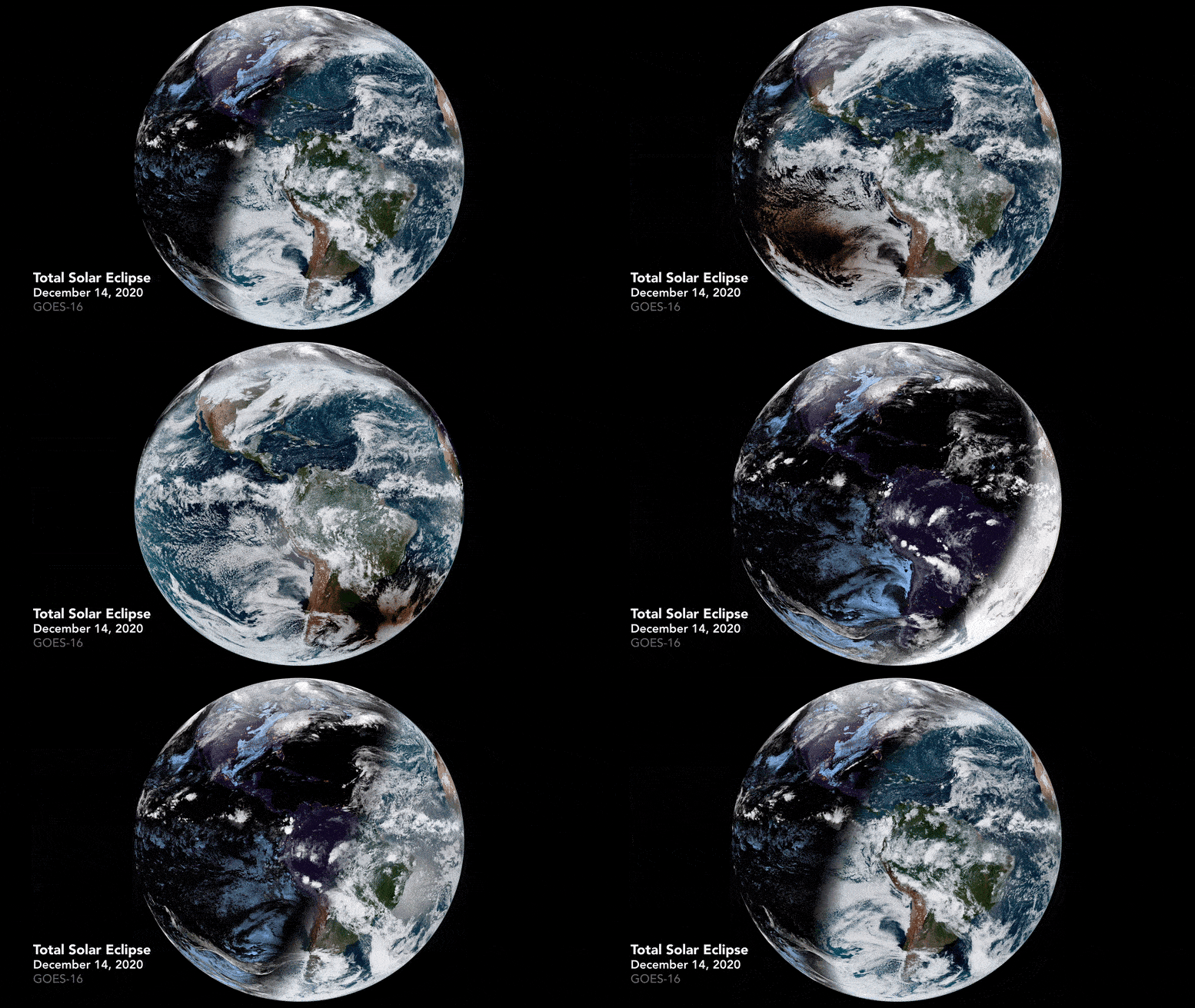
    Satellite captures the moon’s shadow moving across the Earth’s surface during the total solar eclipse.

    The first and only total solar eclipse of 2020 occurred on December 14, with the path of totality stretching from the equatorial Pacific to the South Atlantic and passing through southern Argentina and Chile.
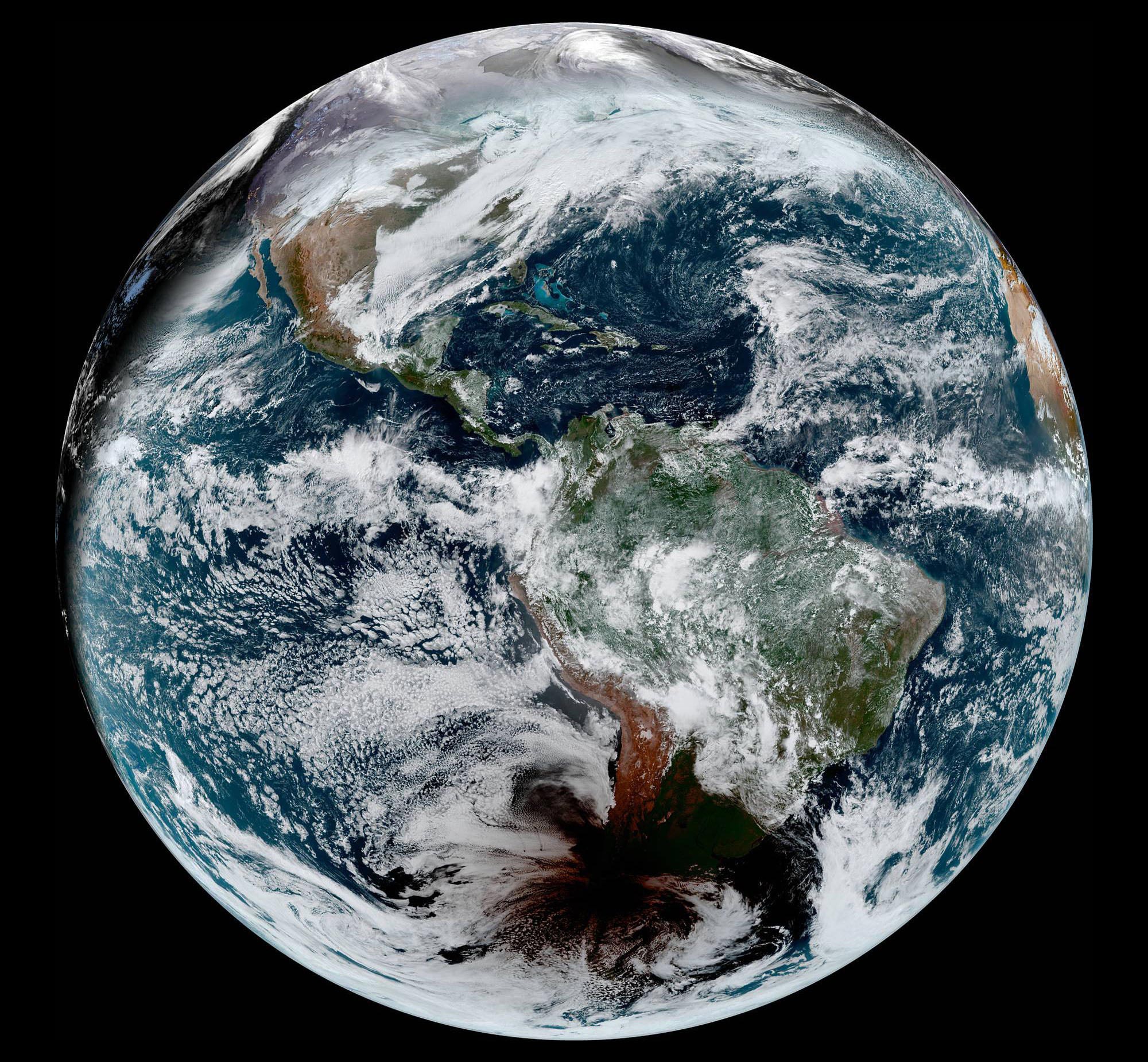
    Moon's Shadow Total Solar Eclipse 2020
    December 14, 2020


    The Advanced Baseline Imager (ABI) on Geostationary Operational Environmental Satellite 16 (GOES-16) captured images of the shadow of the Moon crossing the surface of Earth. GOES-16 is operated by the National Oceanic and Atmospheric Administration (NOAA); NASA helps develop and launch the GOES series of satellites.

    Total Solar Eclipse Path 2020 Annotated
    December 14, 2020

    A solar eclipse occurs when the Moon passes between Earth and the Sun, thereby totally or partly obscuring the image of the Sun for a viewer on Earth. A total solar eclipse occurs when the Moon’s apparent diameter is larger than the Sun’s, blocking all direct sunlight, turning day into darkness. Totality occurs in a narrow path across Earth’s surface, with the partial solar eclipse visible over a surrounding region thousands of kilometers wide.

    The time-lapse video above includes 72 images acquired every 10 minutes between 0600 and 1800 Universal Time (3 a.m. and 3 p.m. in southern Chile) on December 14.

    NASA Earth Observatory video and images by Joshua Stevens, using GOES 16 imagery courtesy of NOAA and the National Environmental Satellite, Data, and Information Service (NESDIS) and umbral shadow calculations from NASA/GSFC.

    Never miss a breakthrough: Join the SciTechDaily newsletter.
    Follow us on Google and Google News.

    NASA NASA Earth Observatory NOAA Popular Solar Eclipse
    Share. Facebook Twitter Pinterest LinkedIn Email Reddit

    Related Articles

    La Niña’s Return Cools the Pacific and Shakes Up Global Weather

    Total Solar Eclipse: The Moon’s Shadow Races Across North America in Stunning Satellite View

    When Day Turns to Night: The Best Places to View the Total Solar Eclipse

    Breathtaking View of Moon’s Shadow Over the U.S. During the Annular Solar Eclipse

    Antarctica Eclipsed: Moon Blots Out the Sun in Stunning Space Photo of the Total Solar Eclipse

    Unusual “Volcano Track” Clouds Investigated

    NASA Scientists Collect Moon-Like Rocks From Site in Montana

    NASA Satellites Spot Several Wildfires Near Chernobyl Exclusion Zone

    Shocking Disappearance of Ecuador’s Tallest Waterfall

    3 Comments

    1. Katheriene Choon on December 15, 2020 6:11 am

      How to unsubscribe?

      Reply
    2. Al Scot on December 15, 2020 8:15 am

      Why does it appear to stretch vertically ( along the earth’s edge) at the end ?

      Reply
      • Edd on December 15, 2020 8:55 am

        It approaches the edge as the night time starts to come in. The moons shadow keeps going right and night shade moves left.

        Reply
    Leave A Reply Cancel Reply

    • Facebook
    • Twitter
    • Pinterest
    • YouTube

    Don't Miss a Discovery

    Subscribe for the Latest in Science & Tech!

    Trending News

    Scientists Built a Programmable Chip That Can Slow Light on Command

    The Backyard “Silly Sprinkler” That Cracked One of Physics’ Biggest Puzzles

    This Common Sleep Habit Could Be Making You Gain Weight

    Mathematician Offers New Solution to a Fundamental Cosmic Paradox

    Scientists Turn Plastic Waste Into Clean Hydrogen Fuel

    Long COVID Brain Scans Reveal Damage to Dopamine Neurons

    Scientists Warn a Silent Oxygen Crisis Is Spreading Through Earth’s Waters

    James Webb Telescope Discovers Hidden Giant Planet in Famous Star System

    Follow SciTechDaily
    • Facebook
    • Twitter
    • YouTube
    • Pinterest
    • Newsletter
    • RSS
    SciTech News
    • Biology News
    • Chemistry News
    • Earth News
    • Health News
    • Physics News
    • Science News
    • Space News
    • Technology News
    Recent Posts
    • Plant Compounds in Berries, Tea, and Cocoa May Support Healthy Brain Aging
    • Scientists Find a Way To Keep Cancer-Fighting T Cells From Burning Out
    • Scientists Turn an Old Antibiotic Back Into a Superbug Killer
    • Scientists Discover Two Competing Memories in Matter
    • Quantum Heat Waves Spotted at Room Temperature for the First Time
    Copyright © 1998 - 2026 SciTechDaily. All Rights Reserved.
    • Science News
    • About
    • Contact
    • Editorial Board
    • Privacy Policy
    • Terms of Use

    Type above and press Enter to search. Press Esc to cancel.