
Close Menu
    Facebook X (Twitter) Instagram
    SciTechDaily
    • Biology
    • Chemistry
    • Earth
    • Health
    • Physics
    • Science
    • Space
    • Technology
    Facebook X (Twitter) Pinterest YouTube RSS
    SciTechDaily
    Home»Earth»Antarctica Eclipsed: Moon Blots Out the Sun in Stunning Space Photo of the Total Solar Eclipse
    Earth

    Antarctica Eclipsed: Moon Blots Out the Sun in Stunning Space Photo of the Total Solar Eclipse

    By Sara E. Pratt, NASA Earth ObservatoryDecember 7, 20211 Comment3 Mins Read
    Facebook Twitter Pinterest Telegram LinkedIn WhatsApp Email Reddit
    Share
    Facebook Twitter LinkedIn Pinterest Telegram Email Reddit
    Antarctica Eclipsed 2021
    December 4, 2021

    The only total solar eclipse of 2021 was visible from Antarctica, where the Moon blotted out the Sun for nearly two minutes.

    On December 4, 2021, a handful of people in Antarctica were treated to clear views of a total solar eclipse, the only one to occur in 2021. A partial eclipse was visible in other parts of the Southern Hemisphere. The eclipse reached totality at 07:44 Universal Time (UTC) and lasted just under 2 minutes, darkening the Antarctic summer skies at a time when the Sun is above the horizon for several months.
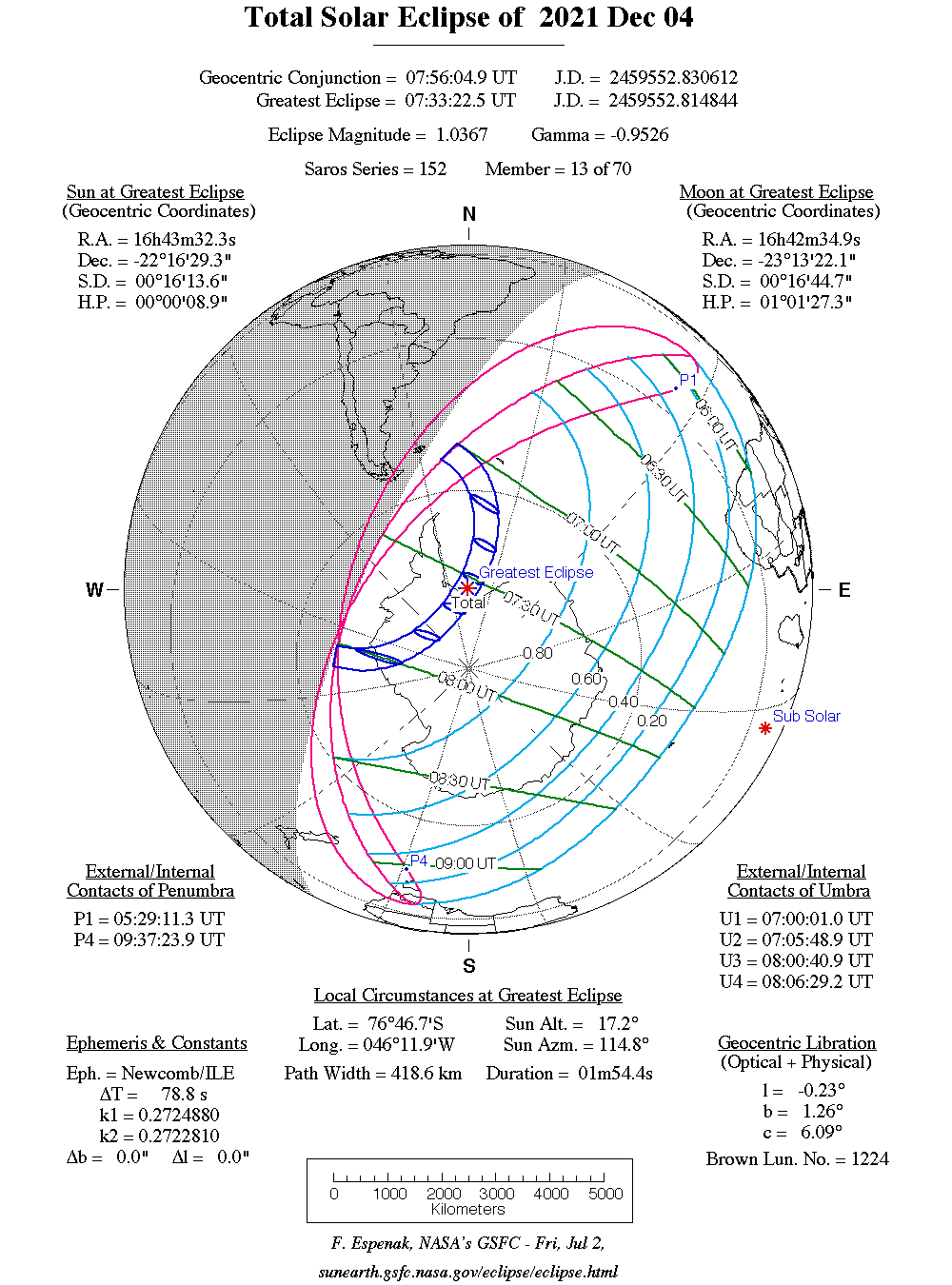
    Total Solar Eclipse 2021

    During a total solar eclipse, the Sun, Moon, and Earth line up in that order, with the Moon between the Sun and Earth. The Moon casts a shadow on part of Earth’s surface. For those people located in the center of the Moon’s shadow, the Sun is either fully or partially blocked from view and the sky becomes very dark. Viewers with clear skies and the right equipment or eyewear can often observe the Sun’s outer atmosphere, or corona. Normally, it is obscured by the brightness of the Sun’s surface.

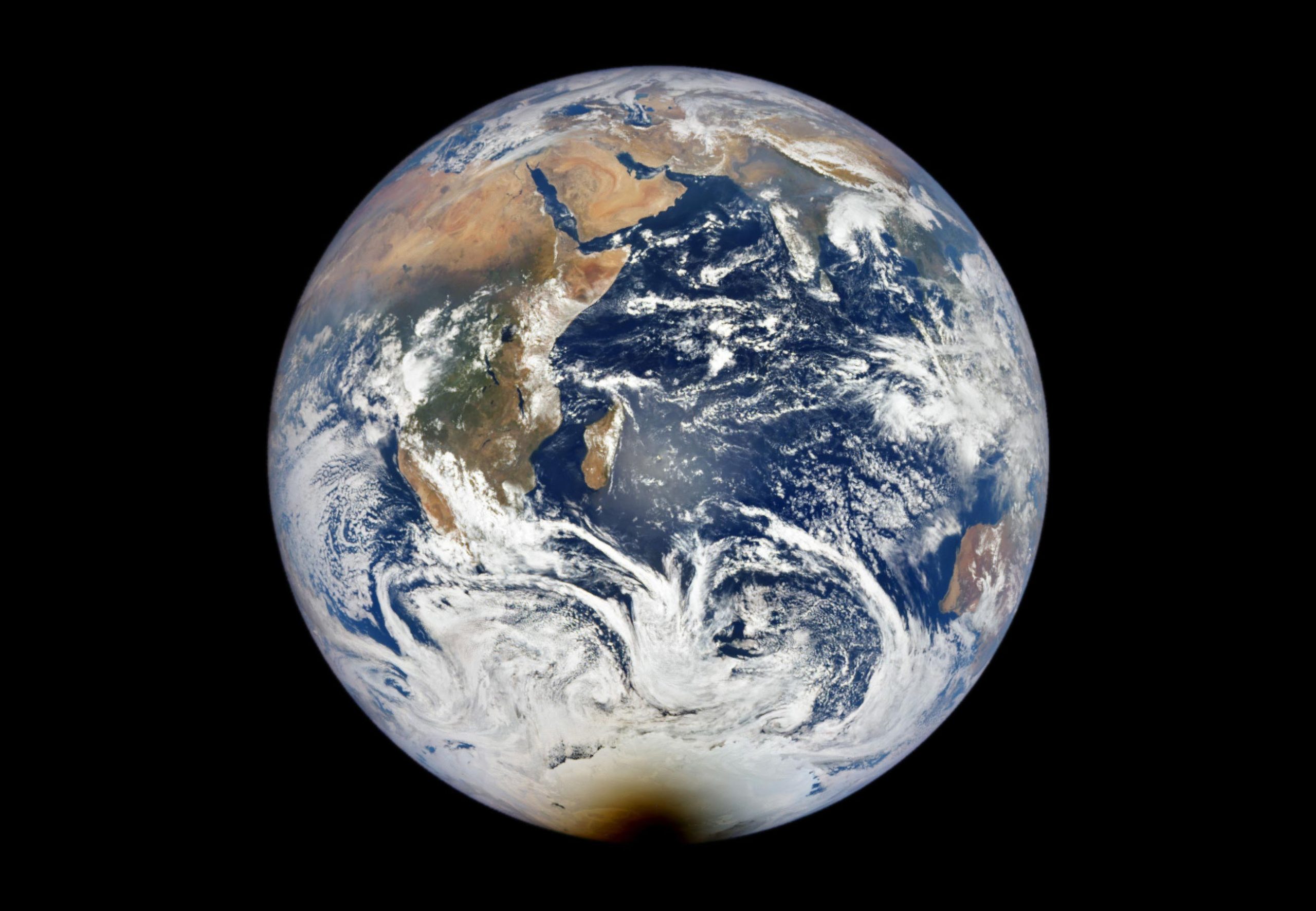
    The above image was acquired during the eclipse by the Earth Polychromatic Imaging Camera (EPIC) aboard the Deep Space Climate Observatory (DSCVR). The satellite has a constant global view of Earth from its position at Lagrange Point 1, a gravitationally stable point between the Sun and Earth about 1.5 million kilometers from Earth. In this view, acquired at 07:58 UTC, the Moon’s shadow can be seen falling on Antarctica.

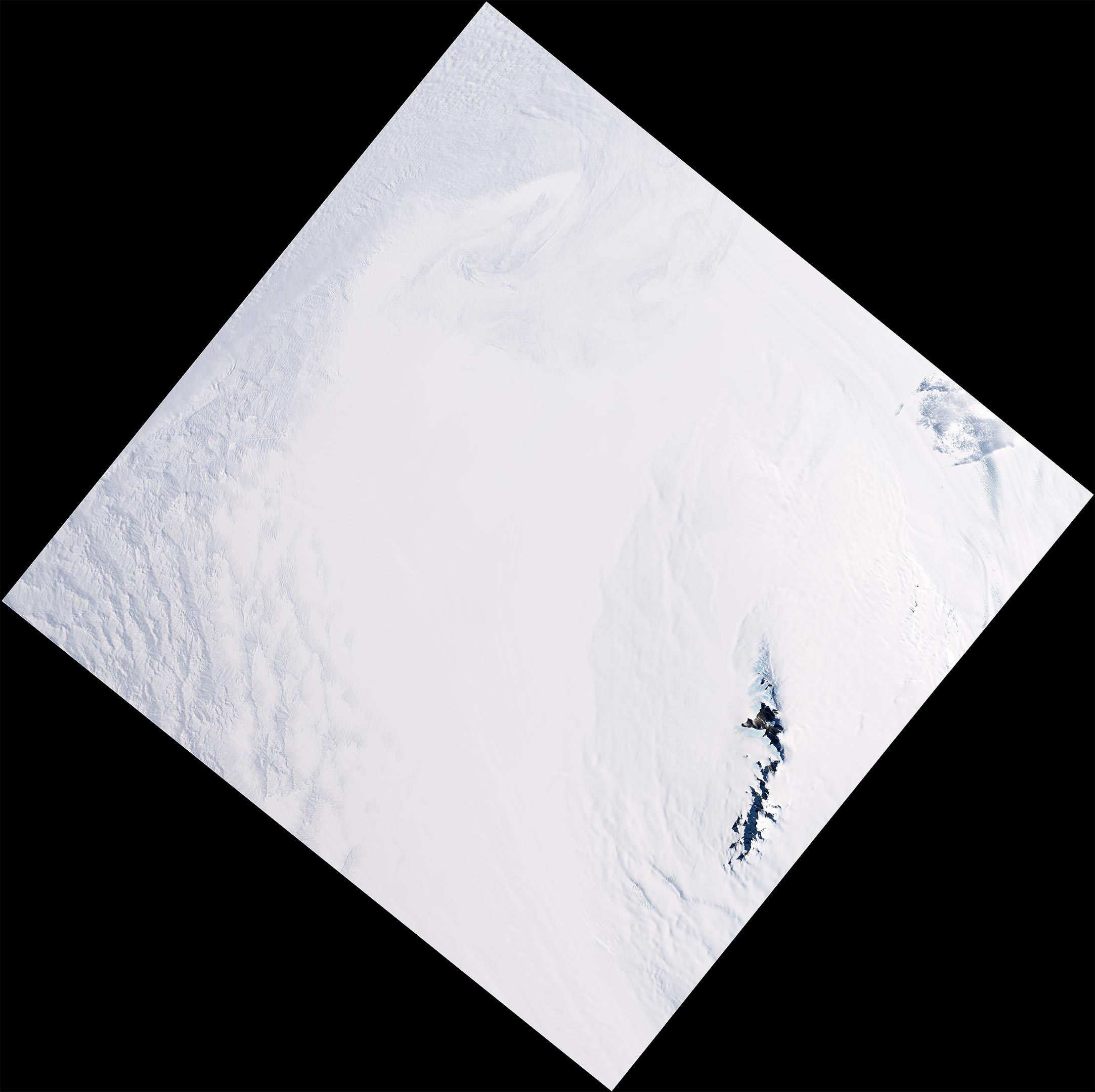
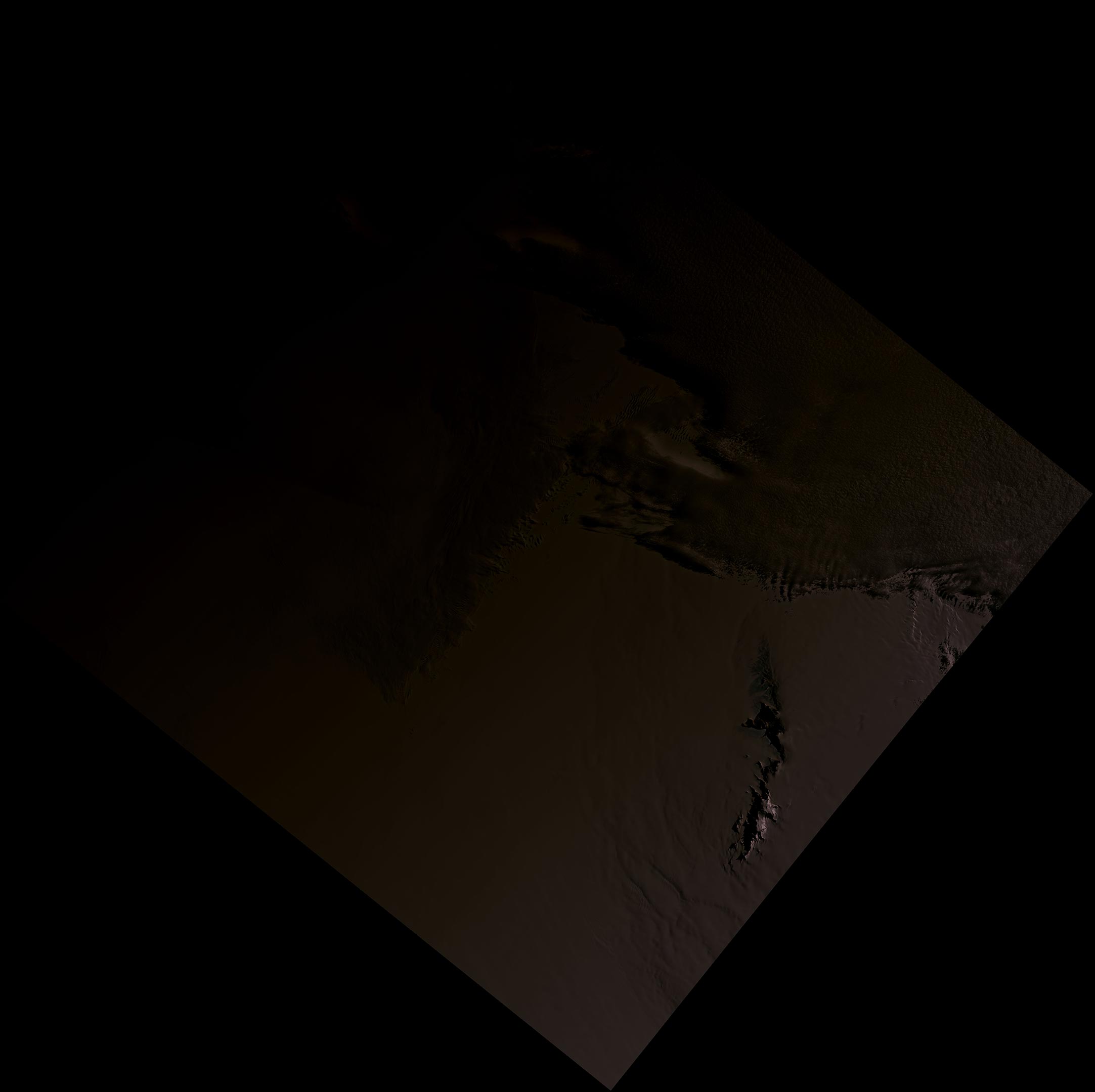
    The natural-color images below were acquired by the Operational Land Imager (OLI) on the Landsat 8 satellite on December 15, 2019, and December 4, 2021, respectively. Both images show the Pensacola Mountains, south of the Ronne Ice Shelf. The December 2021 image was acquired at 07:37 UTC, a few minutes before the eclipse reached totality. Note the slight difference in the amount of darkness from south to north, as the south-facing slopes received some faint sunlight from the horizon.
    Pensacola Mountains 2019 2021
    December 15, 2019 – December 4, 2021

    Total solar eclipses in the polar regions are rare because they comprise less of Earth’s land area and because the Sun only lights each pole for part of the year. The last total solar eclipse in Antarctica occurred in November 2003. The next will occur in December 2039.

    A two-hour video of the total solar eclipse—as seen from Union Glacier, Antarctica—was streamed on NASA TV. It was filmed by members of the J.M. Pasachoff Antarctic Expedition, who also collected data on electrical activity in the ionosphere during the eclipse.

    NASA image courtesy of the DSCOVR EPIC team. NASA Earth Observatory images by Joshua Stevens, using Landsat data from the U.S. Geological Survey.

    Never miss a breakthrough: Join the SciTechDaily newsletter.
    Follow us on Google and Google News.

    Moon NASA NASA Earth Observatory Popular Solar Eclipse Sun
    Share. Facebook Twitter Pinterest LinkedIn Email Reddit

    Related Articles

    Beyond Earthrise: Blue Ghost’s Chilling New Perspective From the Moon

    Total Solar Eclipse: The Moon’s Shadow Races Across North America in Stunning Satellite View

    When Day Turns to Night: The Best Places to View the Total Solar Eclipse

    Breathtaking View of Moon’s Shadow Over the U.S. During the Annular Solar Eclipse

    Don’t Miss Eclipses: NASA Releases New Map of Upcoming Solar Eclipses

    Incredible Satellite View of the Moon’s Shadow Crossing the Surface of Earth During the Total Solar Eclipse

    NASA Scientists Collect Moon-Like Rocks From Site in Montana

    NASA Satellites Spot Several Wildfires Near Chernobyl Exclusion Zone

    Shocking Disappearance of Ecuador’s Tallest Waterfall

    1 Comment

    1. Steve Presser on December 8, 2021 3:45 am

      Good job obscuring the very point of the article in the picture with the enlargement tab…

      Reply
    Leave A Reply Cancel Reply

    • Facebook
    • Twitter
    • Pinterest
    • YouTube

    Don't Miss a Discovery

    Subscribe for the Latest in Science & Tech!

    Trending News

    New Study Reveals Why Ozempic Works Better for Some People Than Others

    Climate Change Is Altering a Key Greenhouse Gas in a Way Scientists Didn’t Expect

    New Study Suggests Gravitational Waves May Have Created Dark Matter

    Scientists Discover Why the Brain Gets Stuck in Schizophrenia

    Scientists Engineer “Tumor-Eating” Bacteria That Devour Cancer From Within

    Even “Failed” Diets May Deliver Long-Term Health Gains, Study Finds

    NIH Scientists Discover Powerful New Opioid That Relieves Pain Without Dangerous Side Effects

    Collapsing Plasma May Hold the Key to Cosmic Magnetism

    Follow SciTechDaily
    • Facebook
    • Twitter
    • YouTube
    • Pinterest
    • Newsletter
    • RSS
    SciTech News
    • Biology News
    • Chemistry News
    • Earth News
    • Health News
    • Physics News
    • Science News
    • Space News
    • Technology News
    Recent Posts
    • Why Some People Reach 100: New Study Reveals Key Biological Differences
    • This Is How Ovarian Cancer Spreads Before Doctors Can Detect
    • Scientists Discover Hidden Virus Linked to Colorectal Cancer
    • Hidden Danger: Widely Used Pesticides Linked to 150% Higher Cancer Risk
    • The Mystery of the Notes: Why No One Knows How This 120-Year-Old Song Should Sound
    Copyright © 1998 - 2026 SciTechDaily. All Rights Reserved.
    • Science News
    • About
    • Contact
    • Editorial Board
    • Privacy Policy
    • Terms of Use

    Type above and press Enter to search. Press Esc to cancel.