
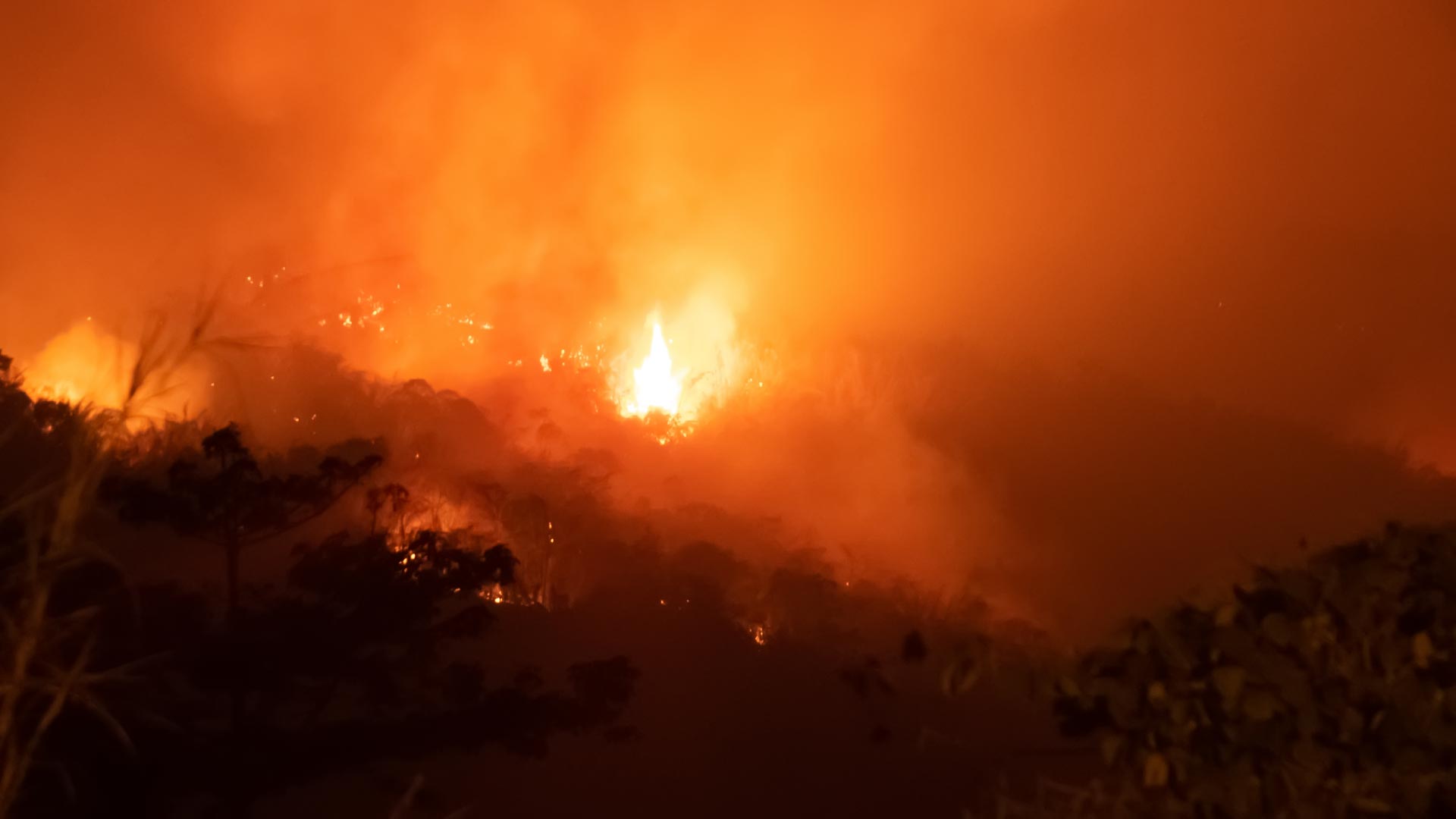
Indigenous people in the Amazon Basin are twice as likely to die prematurely from wildfire smoke exposure than the broader South American population. Approximately 12,000 premature deaths occur annually due to smoke from wildfires, with about 230 in Indigenous territories.
A new study, published in IOP Publishing’s journal Environmental Research: Health, reveals that Indigenous people in the Amazon Basin are twice as likely to die prematurely from smoke exposure due to wildfires than the broader South American population. Regions in Peru, Bolivia, and Brazil are identified as particular hotspots for smoke exposure, with mortality rates rising to as high as 6 times that of the general population.
The results show that smoke from wildfires in South America accounts for approximately 12,000 premature deaths every year from 2014 to 2019, with approximately 230 of these deaths occurring in Indigenous territories. Exposure to harmful smoke particles is found to be much higher during the Amazonian dry season, from July to November each year, when wildfires more than double the increase in PM2.5 concentrations.
Dr. Eimy Bonilla, lead author of the study, says: “While Indigenous territories account for relatively few fires in the Amazon Basin, our research shows that the people living in these territories experience significantly greater health risks from smoke particles, compared to the general population.”
Previous research in the field focuses on the health impacts of countries on larger scales or is heavily reliant on hospital admission data. This does not accurately highlight the impact on people living in indigenous territories as they are often located much closer to the fires, are exposed to smoke particles for longer periods of time, and lack access to appropriate medical care, hygiene materials, and clean water. The new study, led by researchers at Harvard University, uses a combination of atmospheric chemical transport models and an updated concentration response function to estimate the rate of premature mortality for Indigenous populations exposed to high concentrations of PM2.5.
Drivers of Increased Biomass Burning
In recent years, the rate of biomass burning in South America has surged. This surge is driven by forest degradation due to human activity (such as mining, logging, and agricultural land use) as well as variations in climate conditions. Wildfires release tiny smoke particles called PM2.5, which are known to significantly contribute to aerosol concentrations and negatively impact human health. Exposure to these particles can result in cardiovascular and respiratory diseases, cancer, premature births, metabolic dysfunction, and other physiological symptoms. Smoke particles from biomass burning in the Amazon Basin travel great distances, affecting air quality across several countries in South America.
“These fires are having a disproportionate impact on people living in Indigenous territories. With longer exposure times, and limited access to medical attention, Indigenous populations are at much greater risk of death from fires,” says Bonilla. “We recommend that governments provide financial assistance to monitor air quality in these regions, supplying low-cost sensors to study the impact of short- and long-term exposure to the smoke.”
Reference: “Health impacts of smoke exposure in South America: increased risk for populations in the Amazonian Indigenous territories” by E X Bonilla, L J Mickley, G Raheja, S D Eastham, J J Buonocore, A Alencar, L Verchot, D M Westervelt and M C Castro, 4 May 2023, Environmental Research: Health.
DOI: 10.1088/2752-5309/acb22b
Never miss a breakthrough: Join the SciTechDaily newsletter.
Follow us on Google and Google News.