

Researchers at NTNU have developed a new elastomer with unprecedented stiffness and toughness, inspired by spider silk.
Inspired by extremely strong spider silk, researchers at Norwegian University of Science and Technology (NTNU) have developed a new material that defies previously seen trade-offs between toughness and stiffness.
The material is a type of polymer known as an elastomer because it has a rubber-like elasticity. The newly developed elastomer features molecules that have eight hydrogen bonds in one repeat unit, and it is these bonds that help to evenly distribute stress put on the material and make it so durable.
“The eight hydrogen bonds are the origin of the extraordinary mechanical properties,” says Zhiliang Zhang, professor of mechanics and materials at NTNU’s Department of Structural Engineering. The material was developed at NTNU NanoLab and partially funded by the Research Council of Norway.
Substance That Is Stiff and Tough
The idea to introduce a higher than usual number of hydrogen bonds came from nature. “Spider silk contains the same kind of structure,” says Yizhi Zhuo, who developed the new material as part of his PhD and postdoc work. “We knew it could result in very special properties.”
Scientists have previously noted that spider silk – specifically dragline silk, which provides the spokes and outer rim of a spider’s web – is both exceptionally stiff and tough.
Stiffness and toughness are distinct properties in engineering, and are often in opposition. Stiff materials can withstand a lot of stress before deforming, whereas tough materials can absorb a lot of energy before they break. Glass, for example, is stiff but not tough.
Greater Toughness
Until now, replicating the dual stiffness and toughness of spider silk in synthetic elastomers has not been possible. “With commercial materials, if you want to have higher stiffness, you have lower toughness. It’s a trade off. You cannot have both,” says Zhang.
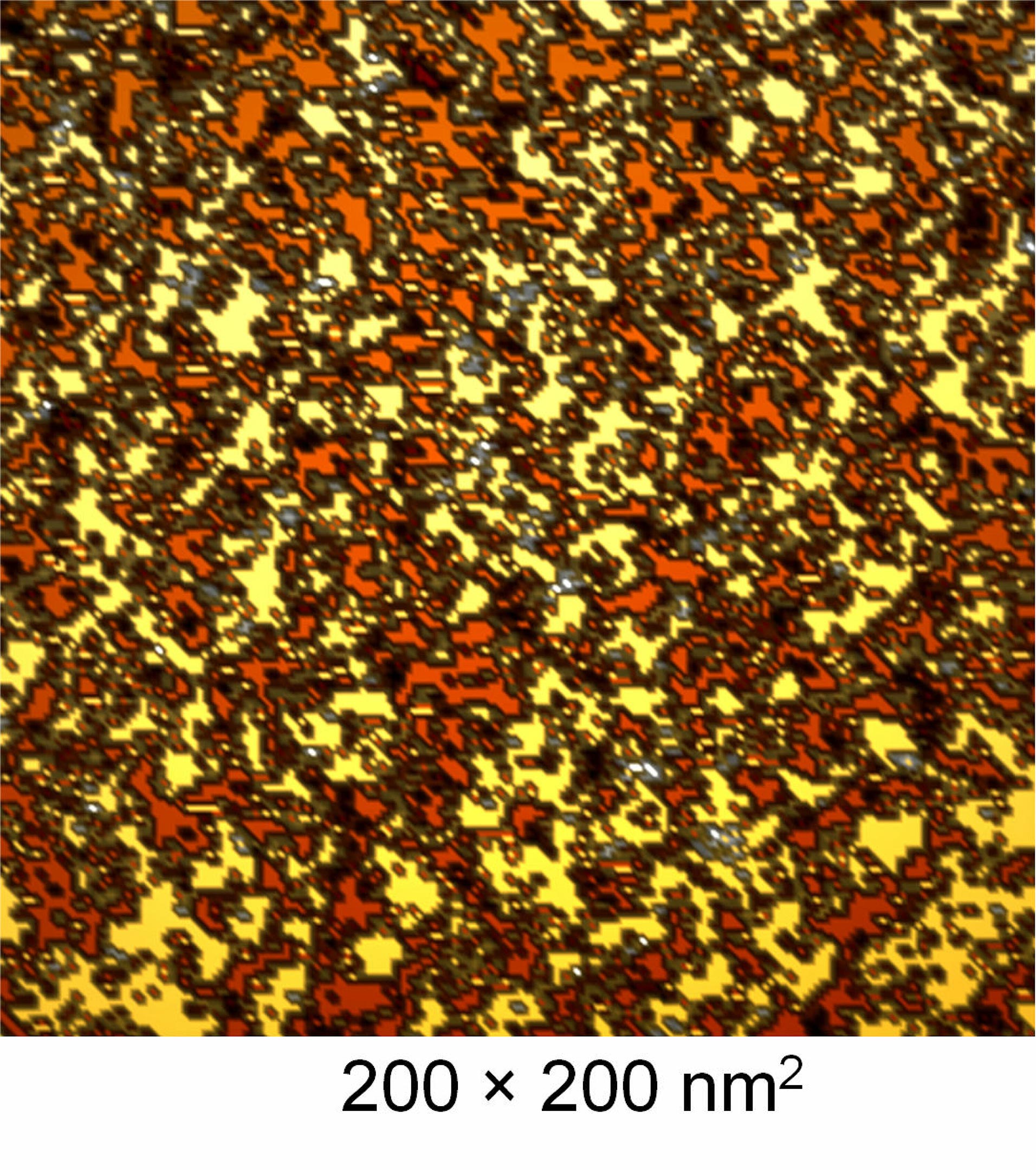
The team’s new elastomer features distinct hard and soft domains. After devising and making it, the team used an atomic force microscope – with a resolution of fractions of a nanometer – to look at the underlying structure of the material, and observe the interface between the hard and soft regions.
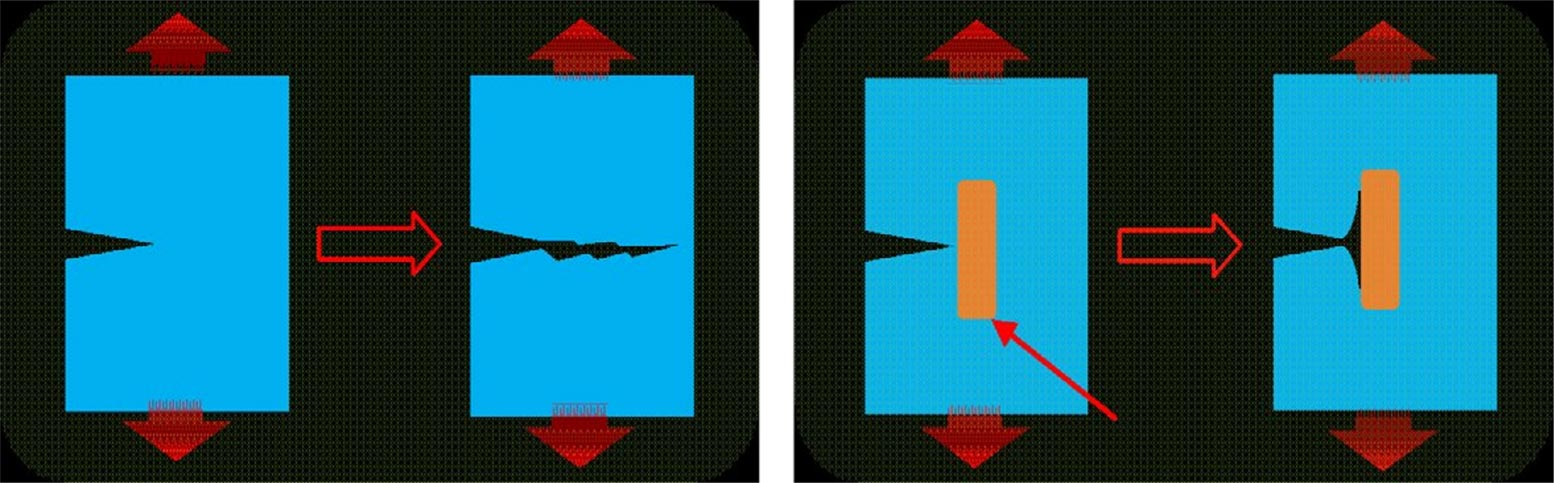
They saw that as well as the eight hydrogen bonds distributing stress, the mismatch in stiffness between the hard and soft domains helped to dissipate energy further by encouraging any cracks to branch off instead of continuing along a straight path. “If you have a zig-zag, you create a large fracture surface and dissipate more energy, so you have higher toughness,” says Zhang.

A Future in Flexible Electronics?
Alongside its mechanical properties, the material is optically transparent and research suggests it could even self-heal at temperatures higher than 80 °C. If production can be scaled up, the new material could one day be used in flexible electronics – particularly wearable devices that are more prone to damage and breakages.
Zhang and his colleagues filed a patent for their material in March, but they continue to work on introducing other desirable properties to it. The soft domains in their material are made up of a silicon-based polymer known as PDMS, but the researchers suspect they could improve the mechanical properties even further by experimenting with other substances.
They would also like to extend the material’s properties to include anti-icing – stopping ice from sticking to it at low temperatures – and anti-fouling – preventing aquatic organisms like mussels and algae attaching to it – so it could be used in extreme conditions, such as the Arctic. “This material is a good starting point, but we want to add some other functionality,” says Zhang.
Reference: “Simultaneously Toughening and Stiffening Elastomers with Octuple Hydrogen Bonding” by Yizhi Zhuo, Zhijie Xia, Yuan Qi, Takashi Sumigawa, Jianyang Wu, Petr Šesták, Yinan Lu, Verner Håkonsen, Tong Li, Feng Wang, Wei Chen, Senbo Xiao, Rong Long, Takayuki Kitamura, Liangbin Li, Jianying He and Zhiliang Zhang, 3 May 2021, Advanced Materials.
DOI: 10.1002/adma.202008523
The research was funded by Research Council of Norway grant numbers 255507 and 245963.
Never miss a breakthrough: Join the SciTechDaily newsletter.
Follow us on Google and Google News.