
Close Menu
    Facebook X (Twitter) Instagram
    SciTechDaily
    • Biology
    • Chemistry
    • Earth
    • Health
    • Physics
    • Science
    • Space
    • Technology
    Facebook X (Twitter) Pinterest YouTube RSS
    SciTechDaily
    Home»Space»Intense Solar Flare Captured by NASA’s Solar Dynamics Observatory
    Space

    Intense Solar Flare Captured by NASA’s Solar Dynamics Observatory

    By NASAMay 5, 2024No Comments3 Mins Read
    Facebook Twitter Pinterest Telegram LinkedIn WhatsApp Email Reddit
    Share
    Facebook Twitter LinkedIn Pinterest Telegram Email Reddit
    SDO Solar Flare May 2024
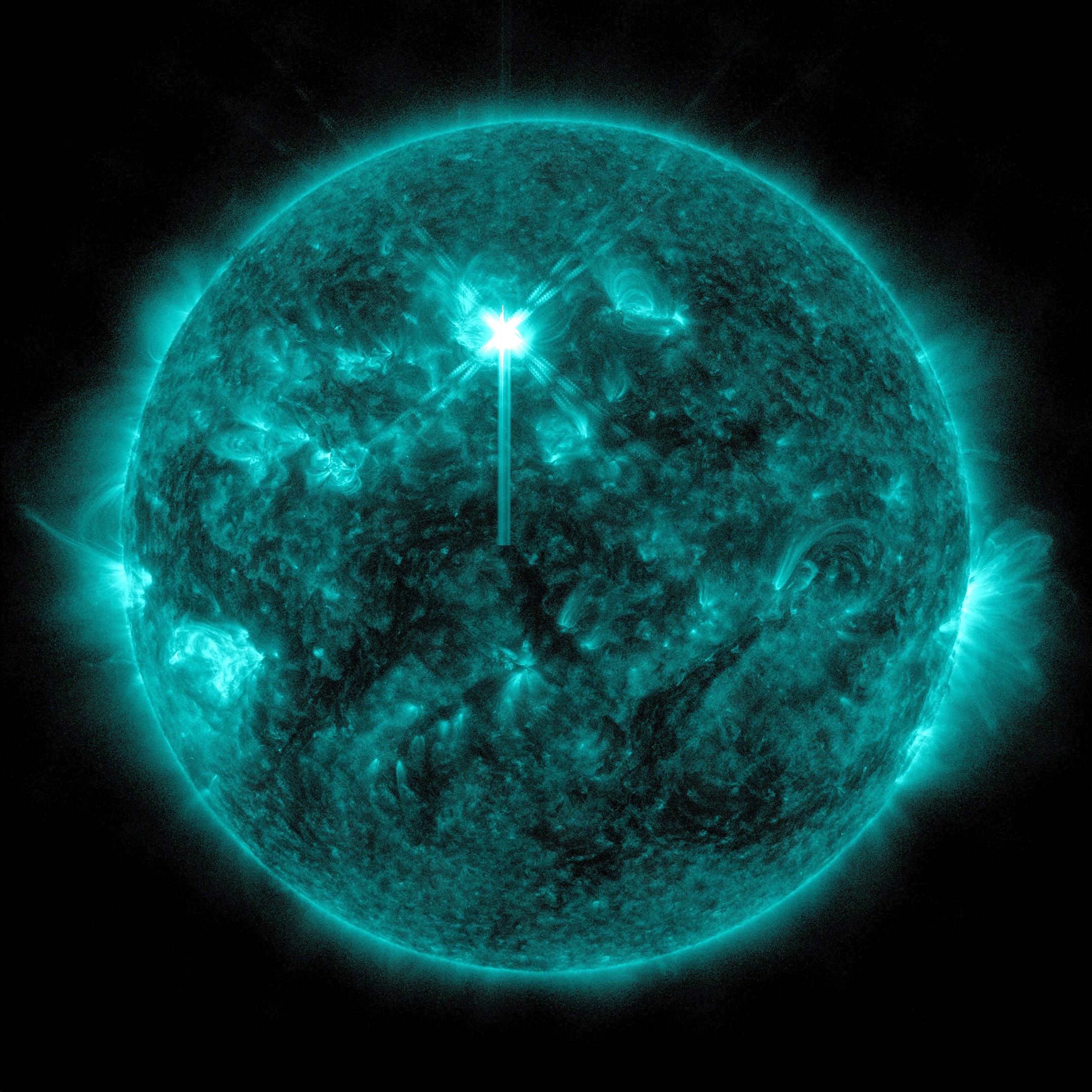
    NASA’s Solar Dynamics Observatory captured this image of a solar flare — as seen in the bright flash toward the upper middle area of the Sun — on May 2, 2024. The image shows a subset of extreme ultraviolet light that highlights the extremely hot material in flares and which is colorized in teal. Credit: NASA/SDO

    The Sun emitted a strong solar flare, peaking at 10:22 p.m. ET on May 2, 2024. NASA’s Solar Dynamics Observatory, which watches the Sun constantly, captured an image of the event.

    Solar flares are intense bursts of radiation emanating from the release of magnetic energy associated with sunspots. These flares are among the biggest explosive events in our solar system, visible primarily in the ultraviolet range.

    Flares impact Earth in a variety of ways: they can disrupt the ionosphere and interfere with GPS navigation and radio communications. They are also responsible for auroras, the beautiful natural light displays often seen in high-latitude skies.

    This flare is classified as an X1.6 flare. X-class denotes the most intense flares, while the number provides more information about its strength.

    Solar flares are rated based on their intensity and potential impact on Earth. The classification system consists of five categories: A, B, C, M, and X. Each category has a tenfold increase in energy output compared to the previous one, with A being the weakest and X the strongest. Within each letter class, there is a finer scale from 1 to 9. For example, an X1 flare is weaker than an X2 flare, but significantly stronger than an M5 flare. This classification helps scientists and relevant agencies predict potential impacts and prepare for space weather-related disruptions.
    NASA Solar Dynamics Observatory Orbiting Earth
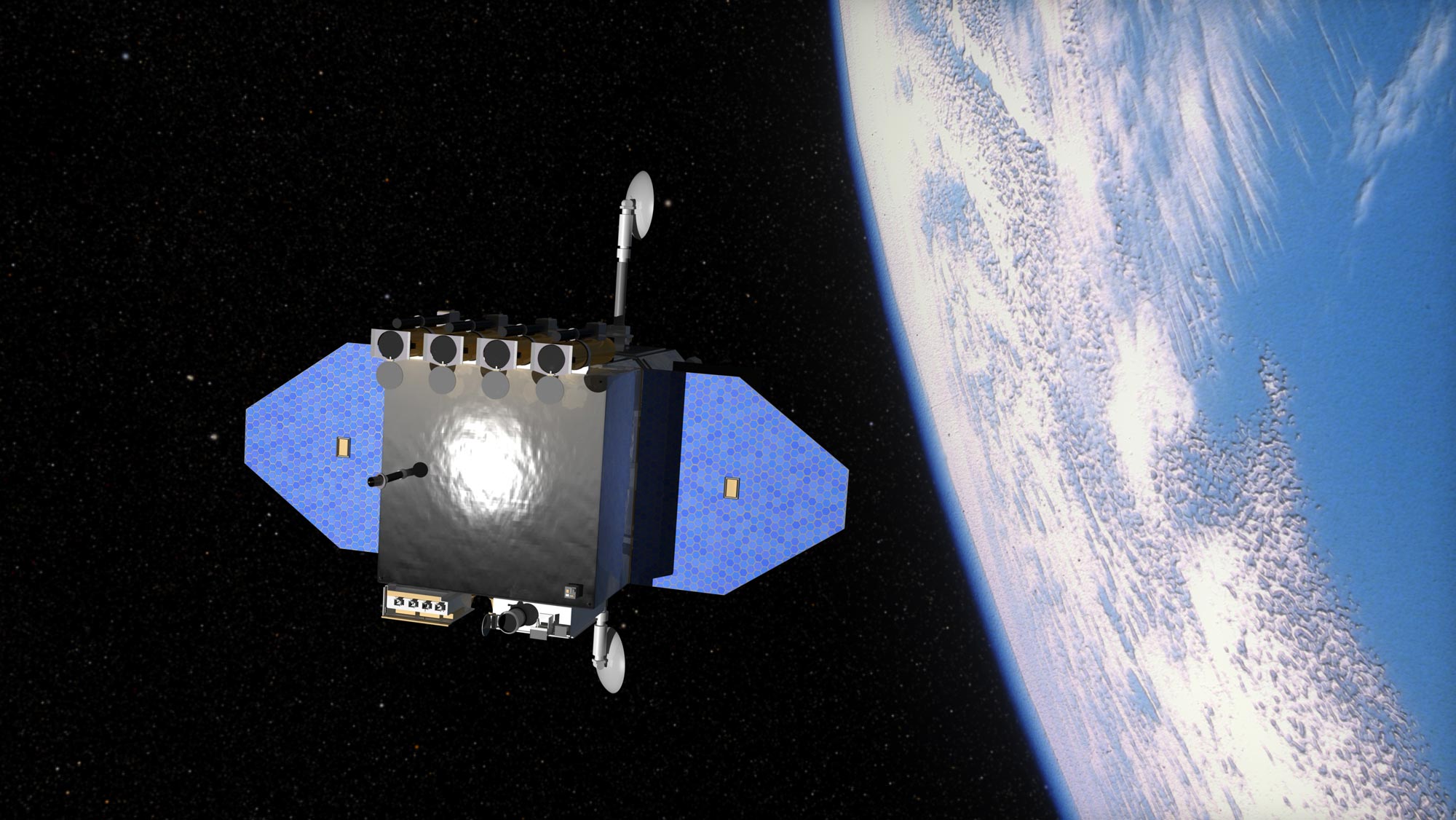
    Artist’s concept image of the SDO satellite orbiting Earth. Credit: NASA

    NASA’s Solar Dynamics Observatory

    NASA’s Solar Dynamics Observatory (SDO) is a mission dedicated to understanding the origins of solar activity and its impacts on Earth. Launched in February 2010, the SDO is a critical part of NASA’s Living With a Star (LWS) program, which aims to develop the scientific understanding necessary to effectively address those aspects of the connected Sun-Earth system that directly affect life and society.

    The observatory is equipped with a suite of instruments that provide observations leading to a deeper understanding of the solar atmosphere’s dynamics. These instruments are capable of capturing ultra-high-definition images of the Sun in 13 different wavelengths every few seconds. The key instruments include the Atmospheric Imaging Assembly (AIA), which produces images of the solar corona and chromosphere; the Helioseismic and Magnetic Imager (HMI), which studies the solar surface and magnetic activity; and the Extreme Ultraviolet Variability Experiment (EVE), which measures the Sun’s ultraviolet output.

    The data collected by the SDO has been instrumental in improving our ability to forecast space weather events, such as solar flares and coronal mass ejections, which can affect satellite operations, communications, power grids, and navigation systems on Earth. Through continuous monitoring, the SDO plays a pivotal role in our ongoing efforts to understand the complex solar processes that influence our daily lives and technological infrastructure.

    Never miss a breakthrough: Join the SciTechDaily newsletter.
    Follow us on Google and Google News.

    Astronomy NASA Solar Dynamics Observatory Solar Flares Sun
    Share. Facebook Twitter Pinterest LinkedIn Email Reddit

    Related Articles

    Solar Fury Erupts: Sun Rings In the New Year With X1.8 Flare

    X1.8 Flare Unleashed: NASA Captures Powerful Solar Eruption

    Sun Unleashes Monumental X9.0 Solar Flare – Most Intense in 7 Years – Captured by NASA Observatory

    Monster X7.1 Solar Flare Unleashed: Intense Blast Captured by NASA’s Solar Dynamics Observatory

    Sun Ignites: Unleashing a Powerful X4.5 Solar Flare

    NASA’s Solar Dynamics Observatory Spots Burst of Light and Energy on the Sun: A B-Class Flare

    NASA’s Solar Dynamics Observatory Views M-Class Solar Flare

    NASA’s SDO Reveals Images of X4.9-Class Solar Flare

    NASA’s Solar Dynamics Observatory Views Two New Solar Flares

    Leave A Reply Cancel Reply

    • Facebook
    • Twitter
    • Pinterest
    • YouTube

    Don't Miss a Discovery

    Subscribe for the Latest in Science & Tech!

    Trending News

    AI Could Detect Early Signs of Alzheimer’s in Under a Minute – Far Before Traditional Tests

    What if Dark Matter Has Two Forms? Bold New Hypothesis Could Explain a Cosmic Mystery

    This Metal Melts in Your Hand – and Scientists Just Discovered Something Strange

    Beef vs. Chicken: Surprising Results From New Prediabetes Study

    Alzheimer’s Breakthrough: Scientists Discover Key Protein May Prevent Toxic Protein Clumps in the Brain

    Quantum Reality Gets Stranger: Physicists Put a Lump of Metal in Two Places at Once

    Scientists May Have Found the Key to Jupiter and Saturn’s Moon Mystery

    Scientists Uncover Brain Changes That Link Pain to Depression

    Follow SciTechDaily
    • Facebook
    • Twitter
    • YouTube
    • Pinterest
    • Newsletter
    • RSS
    SciTech News
    • Biology News
    • Chemistry News
    • Earth News
    • Health News
    • Physics News
    • Science News
    • Space News
    • Technology News
    Recent Posts
    • Ancient “Rock” Microbes May Reveal How Complex Life Began
    • Hidden “Trade Winds” Inside Cells Could Explain Cancer Spread
    • Humans Owe Their Eyes to a Tiny One-Eyed “Cyclops”
    • Researchers Capture Quantum Interference in One of Nature’s Rarest Atoms
    • Ancient DNA Reveals Irish Goats Have a 3,000-Year-Old Lineage Still Alive Today
    Copyright © 1998 - 2026 SciTechDaily. All Rights Reserved.
    • Science News
    • About
    • Contact
    • Editorial Board
    • Privacy Policy
    • Terms of Use

    Type above and press Enter to search. Press Esc to cancel.