
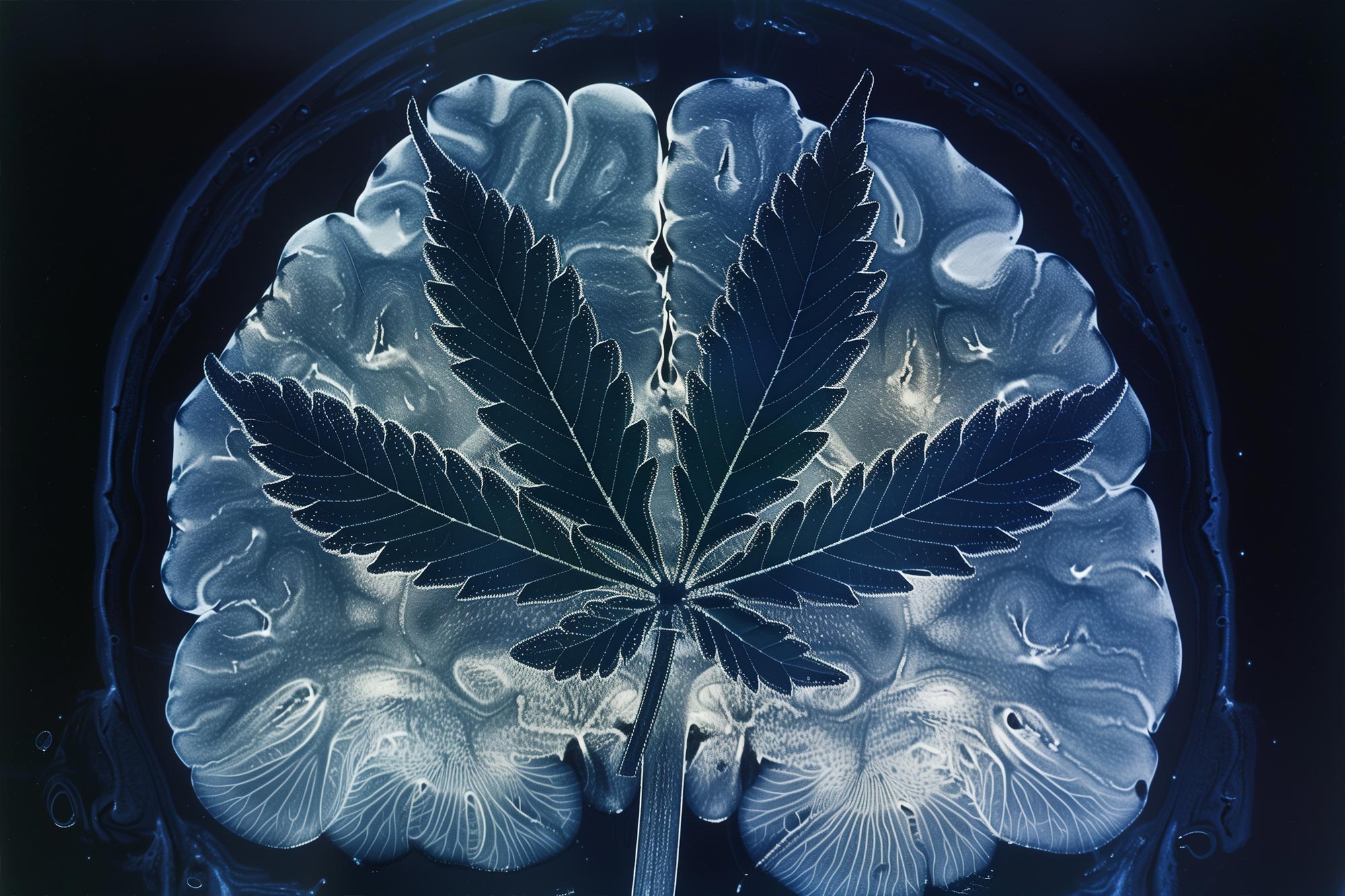
A new study reveals that long-term cannabis use may lead to poorer sleep and memory issues.
Analyzing 141 cannabis users and 87 non-users, the research found that frequent cannabis users experience more sleep problems, which correlate with worse visuospatial memory, challenging the idea of cannabis as a beneficial sleep aid.
Exploring Cannabis Use and Its Side Effects
The growing legal use of recreational and medical cannabis has generated an increased concern for potential side effects from long-term use, particularly regarding problems with memory and sleep. Until now, the effect of cannabis use on sleep and on memory have only been studied separately. Research led by Francesca Filbey, PhD, from the Laboratory of Neuroimaging of Reward Dynamics at The University of Texas at Dallas’ Center for BrainHealth, in collaboration with a team from the University of Amsterdam, aimed to fill this gap by testing how sleep impacts memory among cannabis users.
New Study Fills a Research Gap
The study, “The role of sleep in the link between cannabis use and memory function: evidence from a cross-sectional study” was recently published in The American Journal of Drug and Alcohol Abuse.
A total of 141 adults with cannabis use disorder (CUD, defined as using cannabis regularly, more than 5 days per week during the past year) and 87 non-current users participated in this study.
Participants self-reported their frequency of sleep problems within the past week and completed a variety of cognitive assessments that tested their verbal memory, visuospatial learning and memory performance.
Sleep Problems and Memory Decline
Results revealed that the CUD group reported more sleep problems than the non-CUD group, and that this contributed to visuospatial memory problems as well. There was no difference between the two groups in verbal memory performance.
Lead author Tracy Brown, a UT Dallas psychology PhD student in Dr. Filbey’s lab, stated, “Although sleep is one of the primary reasons people use cannabis, our findings suggest that long-term cannabis use actually results in poorer sleep, which is associated with poorer memory. These findings are useful to inform the consumers, clinicians and policymakers about the therapeutic considerations for cannabis, particularly regarding its use as a sleep aid.”
Cannabis, Sleep, and Brain Health: The Study’s Implications
He added, “For researchers, this study points to the importance of analyzing sleep when evaluating the effects of cannabis on brain health.”
Reference: “The role of sleep in the link between cannabis use and memory function: evidence from a cross-sectional study” by T. Brown, R. A. Ackerman, E. Kroon, L. Kuhns, J. Cousijn and F. M. Filbey, 25 June 2024, The American Journal of Drug and Alcohol Abuse.
DOI: 10.1080/00952990.2024.2362832
This research was supported by grant 1R01 DA042490 from the National Institute on Drug Abuse/National Institute of Health.
Never miss a breakthrough: Join the SciTechDaily newsletter.
Follow us on Google and Google News.
9 Comments
If you look at the actual study, it is really weak. Alcohol and nicotine were allowed and not considered in the analysis, even though these can affect sleep quality. Subjects also self-reported sleep issues, which is also subjective and unreliable. Lots more problems with this study, too. Pretty useless.
The same size is inadequate too. This as not a study, but a puff piece. (hee hee)
What if cannabis users just happen to be the sort of folks who get “less quality” sleep? Might it be that they’d tend to be self-medicating some mental health symptom which tends to impact sleep hygiene? Maybe the cannabis usage is correlative but not causative?
Visuospatial refers to the executive function part of the brain. It’s located in the frontal lobes of the brain and it refers to the higher executive functions that a person performs, i.e., finance management, driving a car, etc. It’s the boss of the brain essentially. There is no such term as spatioverbal. Cannabis users are found to have executive dysfunction more frequently and finding they are not able to take care of themselves independently in the community and end up losing their driver’s licenses and in SNF. It’s just the trajectory of where chronic cannabis users are ending up. If you enjoy using and are prepared to accept your destiny who am I to judge? It’s just job security for me.
They’re taking it for a reason whatever it may be. Most users feel it’s a safer or healthier choice from narcotics, alcohol etc. But at the end of the day, they’re still unhappy, miserable, dysfunctional people making everyone around them the same.
You can tell this is bogus, because it starts by defining “cannabis use” 5 or more days a week as a “disorder.” Would having a beer 5 days a week be “beer use disorder”? The deeper problem from a scientific point of view: current neuroscience recognizes that visual capability and spatial capability are as distinct from each other as both are from verbal capability. To say “visuospatial” makes only as much sense as “visuoverbal” or “spatioverbal.” That is, not much sense at all. If this is to pass as current research, it would help if it were done by folks who keep up with developments in the fiend they profess to be professional in.
I can’t sleep without it
I really don’t know who wrote this article but I can tell they have never even smoked 1 blunt. I’ve been smoking for about 40 plus years and I know this article is trash
It’s a diuretic. As long as your bladder is big enough I suppose it may help sleep.