
Close Menu
    Facebook X (Twitter) Instagram
    SciTechDaily
    • Biology
    • Chemistry
    • Earth
    • Health
    • Physics
    • Science
    • Space
    • Technology
    Facebook X (Twitter) Pinterest YouTube RSS
    SciTechDaily
    Home»Science»Isotopes Reveal the Incredible Lifetime Journey of an Arctic Woolly Mammoth
    Science

    Isotopes Reveal the Incredible Lifetime Journey of an Arctic Woolly Mammoth

    By American Association for the Advancement of ScienceAugust 21, 2021No Comments3 Mins Read
    Facebook Twitter Pinterest Telegram LinkedIn WhatsApp Email Reddit
    Share
    Facebook Twitter LinkedIn Pinterest Telegram Email Reddit
    Adult Male Woolly Mammoth Illustration
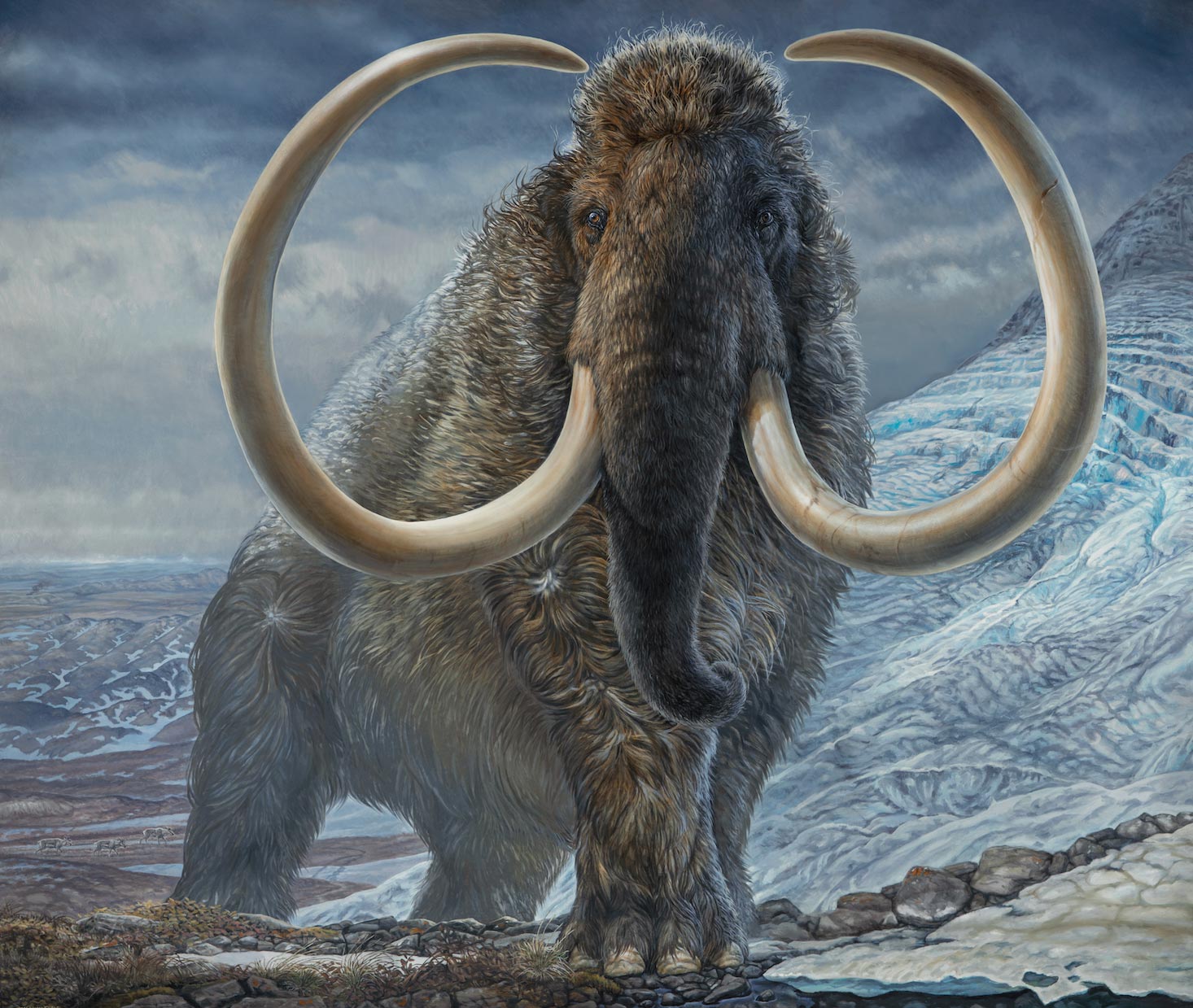
    An illustration of an adult male woolly mammoth navigates a mountain pass in Arctic Alaska, 17,100 years ago. The image is produced from an original, life-size painting by paleo artist James Havens, which is housed at the University of Alaska Museum of the North. Credit: Painting by paleo artist James Havens

    A tusk’s isotopes reveal a woolly mammoth’s vast, lifelong travels across prehistoric Alaska—offering new clues into how these giants lived and died.

    From the isotopes inside a 1.7-meter-long (5.6-foot-long) tusk, researchers recreated the life history of one Arctic woolly mammoth that lived more than 17,000 years ago, offering some of the first evidence that woolly mammoths traveled vast distances. Their findings provide a window into the lives of these now-extinct creatures, including their preferred habitats and extensive lifetime range.

    Despite being one of the most widely studied and iconic ice-age creatures, very little is known about the natural life history of the woolly mammoth, as fossils alone provide only static and often singular glimpses into their lives. Thus, the home range and mobility of mammoths – where and how far the large creatures roamed throughout their lives – remains largely a mystery. However, since regular migrations across great distances characterize the mobility patterns of their living elephant relatives and other Arctic animals, it is assumed that woolly mammoths exhibited similar behaviors.
    Split Mammoth Tusk Alaska Stable Isotope Facility

    Unlocking Mobility Through Isotope Analysis

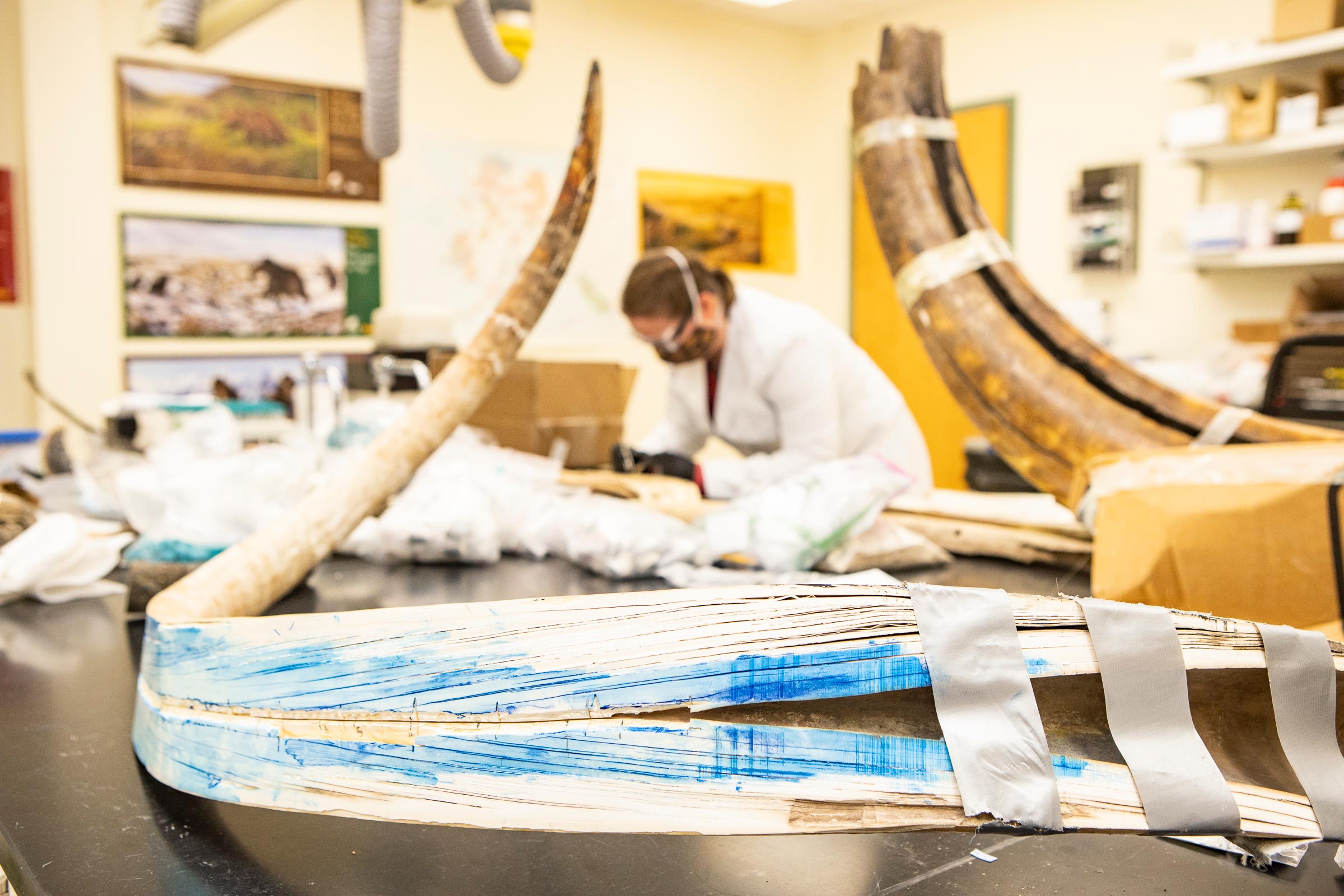
    One method of potentially reconstructing the mobility patterns of long-dead mammoths is through the analysis of oxygen and strontium (Sr) isotopes that become incorporated into the animals’ teeth and tusks during life. Strontium isotope ratios (87Sr/86Sr) in soils and plants reflect the underlying bedrock geology, which vary across landscapes. As animals eat these plants, 87Sr/86Sr patterns from the region become incorporated into tissues. Thus, the 87Sr/86Sr ratios contained in tissues that continually grow throughout life, like mammoth tusks, for example, can provide a record that can be used to trace an animal’s movement over time.

    Using the tusk from a male woolly mammoth that lived in what is now mainland Alaska more than 17,100 years ago, Matthew Wooller and colleagues assembled a high temporal resolution isotopic record that reveals – in great detail – the mammoth’s movements during its ~28-year lifespan.

    The record shows repeatedly traveled routes across a geographically extensive range, with the animal covering enough of the Alaska landscape during its 28 years to almost circle the Earth twice.

    The results also illustrate the regions the animal frequented during different life stages, including as an infant and juvenile when part of a herd, as a more broadly traveling prime-aged adult, and during its final years, where, in a small region in northern Alaska, it likely succumbed to starvation.

    For more on this research, read Retracing the Astonishing Lifetime Journey of an 17,000-Year-Old Arctic Woolly Mammoth.

    Reference: “Lifetime mobility of an Arctic woolly mammoth” by Matthew J. Wooller, Clement Bataille, Patrick Druckenmiller, Gregory M. Erickson, Pamela Groves, Norma Haubenstock, Timothy Howe, Johanna Irrgeher, Daniel Mann, Katherine Moon, Ben A. Potter, Thomas Prohaska, Jeffrey Rasic, Joshua Reuther, Beth Shapiro, Karen J. Spaleta and Amy D. Willis, 12 August 2021, Science.
    DOI: 10.1126/science.abg1134

    Never miss a breakthrough: Join the SciTechDaily newsletter.
    Follow us on Google and Google News.

    American Association for the Advancement of Science Mammoth Paleontology
    Share. Facebook Twitter Pinterest LinkedIn Email Reddit

    Related Articles

    Stone Age Molecules Resurrected From Ancient Dental Plaque

    Deadly Teeth of T. rex Were Hidden Behind Scaly Lips, Shattering Prehistoric Perceptions

    Retracing the Astonishing Lifetime Journey of an 17,000-Year-Old Arctic Woolly Mammoth

    Modern Human-Like Brains Evolved Long After Earliest Humans First Dispersed From Africa

    Paleontologists Believe 2.5 Billion T. rex Roamed the Earth Over the Cretaceous Period

    Bizarre Manta-Like Sharks Once Soared Through Late Cretaceous Oceans

    First Humans in New England May Have Shared the Landscape With Woolly Mammoths

    New Research: Abrupt Climate Warming Killed Mammoths

    Preserved Mammoth With Blood Discovered in Siberia

    Leave A Reply Cancel Reply

    • Facebook
    • Twitter
    • Pinterest
    • YouTube

    Don't Miss a Discovery

    Subscribe for the Latest in Science & Tech!

    Trending News

    Mezcal “Worm” in a Bottle Mystery: DNA Testing Reveals a Surprise

    New Research Reveals That Your Morning Coffee Activates an Ancient Longevity Switch

    This Is What Makes You Irresistible to Mosquitoes

    Shockingly Powerful Giant Octopuses Ruled the Seas 100 Million Years Ago

    Scientists Stunned by New Organic Molecules Found on Mars

    Rewriting Dinosaur Evolution: Scientists Unearth Remarkable 150-Million-Year-Old Stegosaur Skull

    Omega-3 Supplements Linked to Cognitive Decline in Surprising New Study

    First-of-Its-Kind Discovery: Homer’s Iliad Found Embedded in a 1,600-Year-Old Egyptian Mummy

    Follow SciTechDaily
    • Facebook
    • Twitter
    • YouTube
    • Pinterest
    • Newsletter
    • RSS
    SciTech News
    • Biology News
    • Chemistry News
    • Earth News
    • Health News
    • Physics News
    • Science News
    • Space News
    • Technology News
    Recent Posts
    • Male Birth Control Breakthrough: Scientists Find Way To Turn Sperm Production Off and Back On
    • A Common Vitamin Could Hold the Key to Treating Fatty Liver Disease
    • New Research Shows Vitamin B12 May Hold the Key to Healthy Aging
    • Scientists Map Thousands of Brain Connections With RNA Barcodes
    • This Gene Tweak Turns Strawberries Into Healthier, Tastier Superfruit
    Copyright © 1998 - 2026 SciTechDaily. All Rights Reserved.
    • Science News
    • About
    • Contact
    • Editorial Board
    • Privacy Policy
    • Terms of Use

    Type above and press Enter to search. Press Esc to cancel.