
Scientists Explore How the Scent of Food Can Enable “Time Travel”
Older adults who were exposed to childhood food flavors had an improved memory of the event, allowing them to “time travel” back in time.
Professor Corina Sas of Lancaster University, Dr. Tom Gayler, and Vaiva Kalnikaité of Dovetailed Ltd. conducted the research, which was recently published in the journal Human Computer Interaction. Their research investigated the viability of using 3D printed flavor-based cues to help the elderly recall memories.
Working with 12 older adults, they collected 72 memories, half of which included food and half of which did not, each of which was remembered twice. This included eating strawberries in the hospital after giving birth and grilling mackerel at a golden wedding.
The researchers collaborated with the participants to develop unique flavor-based cues for each person’s food memory. The 3D printed flavor-based cues are little, gel-like, edible balls that mimic the original food and are simpler to swallow with more intense flavors without the need for all of the ingredients and preparation.
Impact of Flavor Cues on Detailed Recollection
Professor Sas said: “Our outcomes indicated that personalized 3D printed flavour-based cues have rich sensorial and emotional qualities supporting strong recollective retrieval, especially when they distinctively match the food in the original experience and prompt emotionally positive self-defining memories.”
When prompted by flavor-based cues, all of the individuals were able to provide detailed sensory accounts, with the majority of the details missing from the earlier free recall.
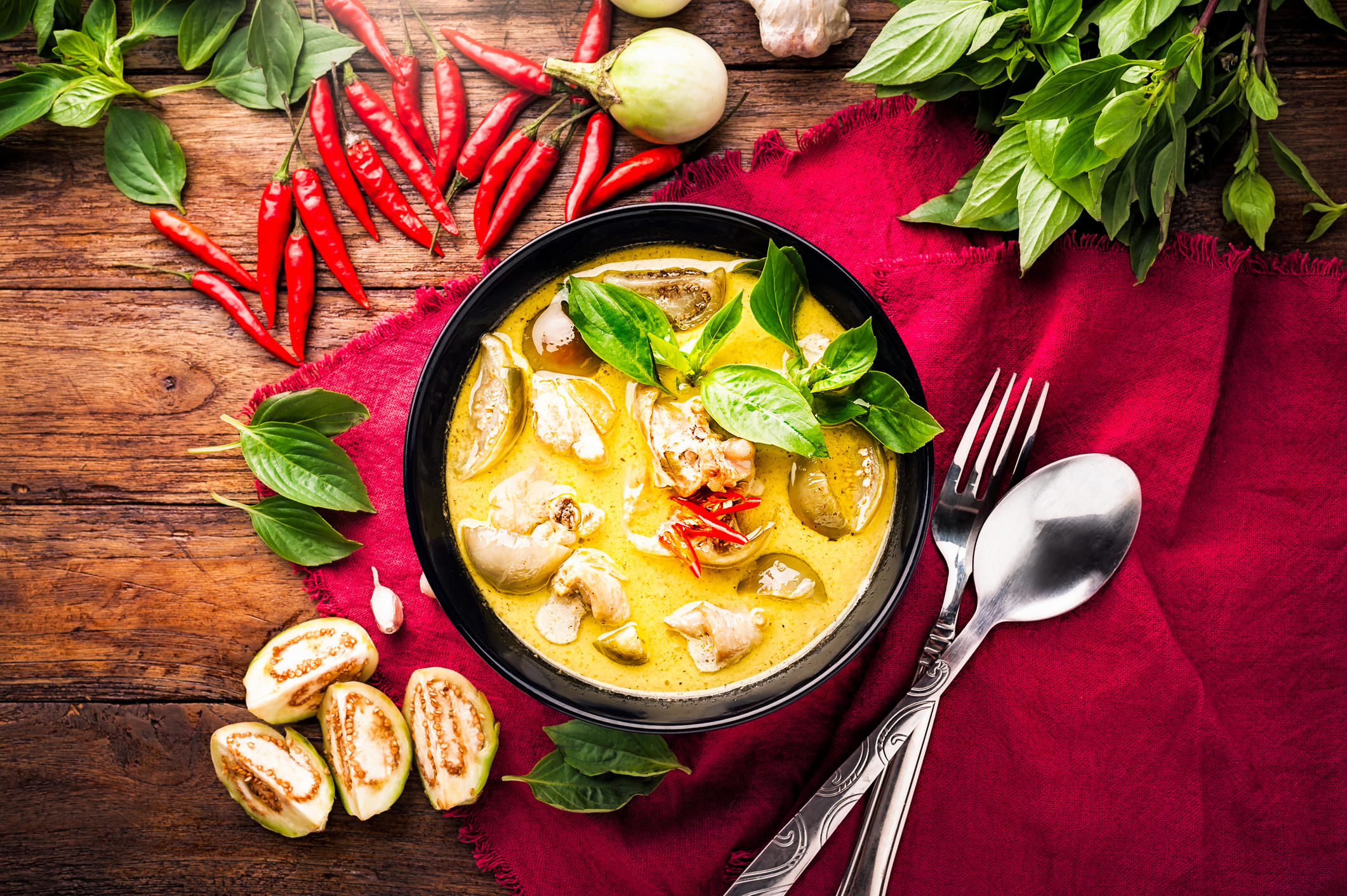
Remembering a Green Thai curry dinner in Cambodia, one participant remembered: We went into the kitchen area, which was very basic and preparing all sorts of types of green vegetables, which I have no idea what they were, sitting on the floor. And then we would help cook them, stir fry them, and then we would help dish them up…”
But after being exposed to the 3D printed flavour-based cue of the Green Thai curry, the participant gave a more detailed memory of “the chopping noises of cutting up the vegetables, me sitting on the floor cross-legged with my friend, chatting together. And then when we went out, put stuff on the tables, the rest of the group coming out and we sit on long tables outside, the front of the school, so it’s outside in the open air to eat.”
A striking outcome was the large number of memories cued by flavors that were recalled with strong feelings of being brought back in time.
Participants said: “The roast beef and horseradish cue took me back 25 years in one bound . . .I could place myself at the table in the room . . .I ate that, and that actually provoked out of all the memories, quite a strong reaction actually. Just suddenly I was back.”
Interestingly, the mere act of eating the cue was seen as a bodily re-enactment of the original event: “It just kind of triggers a few more sensations. Perhaps when you’re tasting it, you imagine yourself there”.
Potential Applications for Dementia Care
The researchers say their research has particular relevance for dementia. Participants talked about the importance of food memories based on their own experiences of caring for the loved ones.
One participant whose mother has Alzheimer’s said: “As soon as she smelled and tasted the food, she would say something like, ‘Oh, this is like old fashioned food. This takes me back’. She felt that it was something that she had had a long time ago.”
Another participant suggested a scrapbook of food memories to trigger recollections of past events in people with dementia.
Professor Sas said: “The 3D printed flavors cued recollective retrieval, eliciting sensorially rich and strong positive emotional experiences that participants deeply enjoyed.”
Dr Gayler said: “Working alongside people to create flavour-based cues highlighted how powerful but under used this connection is. Our design approach helped bridge this gap and showed the potential for future applications to create rich, multi-sensory memory aides.”
Dr. Vaiva Kalnikaitė said: “We finally have technology that can help re-construct memories using the flavor and scent of different foods in very compact shapes. These are the strongest cues to help us remember.”
Reference: “‘It took me back 25 years in one bound’: self-generated flavor-based cues for self-defining memories in later life” by Tom Gayler, Corina Sas and Vaiva Kalnikaite, 9 September 2022, Human-Computer Interaction.
DOI: 10.1080/07370024.2022.2107518
Never miss a breakthrough: Join the SciTechDaily newsletter.
Follow us on Google and Google News.
1 Comment
Wondering what advantages this technique has over using instead the real-life childhood food which is easier to make?