
Close Menu
    Facebook X (Twitter) Instagram
    SciTechDaily
    • Biology
    • Chemistry
    • Earth
    • Health
    • Physics
    • Science
    • Space
    • Technology
    Facebook X (Twitter) Pinterest YouTube RSS
    SciTechDaily
    Home»Biology»Jaw-Some Wombats: Flexible Jaws May Help Wombats Survive Change
    Biology

    Jaw-Some Wombats: Flexible Jaws May Help Wombats Survive Change

    By University of QueenslandNovember 5, 2019No Comments3 Mins Read
    Facebook Twitter Pinterest Telegram LinkedIn WhatsApp Email Reddit
    Share
    Facebook Twitter LinkedIn Pinterest Telegram Email Reddit
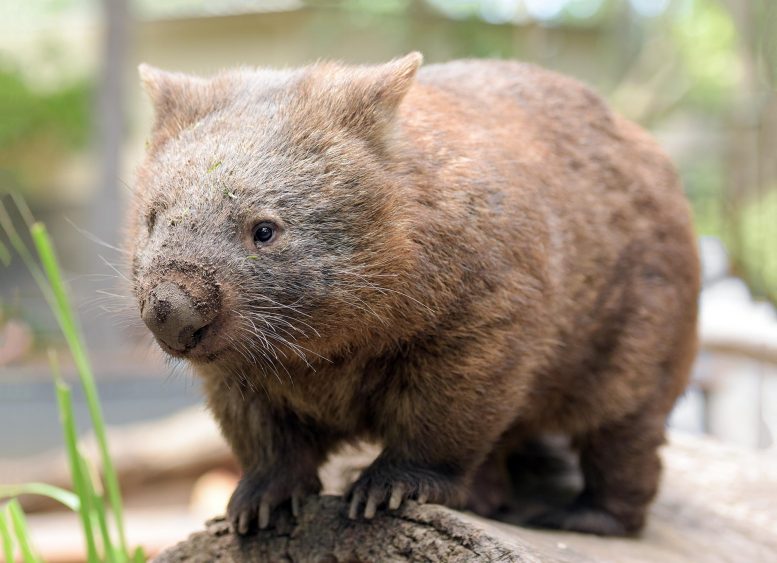
    Common Wombat
    Wombat skulls seem to be changing to match their diets.

    Flexible jaws may help wombats better survive in a changing world by adapting to climate change’s effect on vegetation and new diets in conservation sanctuaries.

    An international study, co-led by The University of Queensland’s Dr. Vera Weisbecker, has revealed that wombat jaws appear to change in relation to their diets.

    “The survival of wombats depends on their ability to chew large amounts of tough plants such as grasses, roots, and even bark,” Dr. Weisbecker said. “Climate change and drought are thought to make these plants even tougher, which might require further short-term adaptations of the skull.

    “Scientists had long suspected that native Australian marsupial mammals were limited in being able to adapt their skull in this way. But in good news, our research has contradicted this idea.”
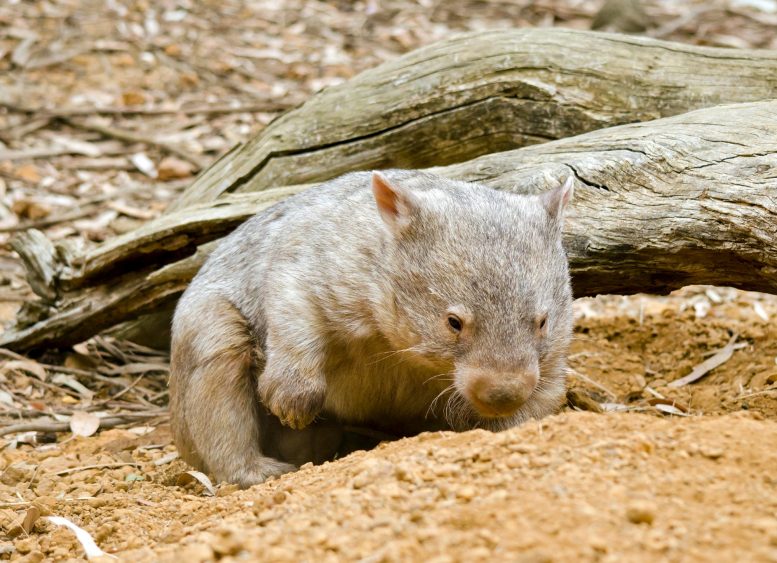
    Wombat

    The team used a technique known as geometric morphometrics – the study of how shapes vary – to characterize skull shape variation within three different species of wombat, with each species having a slightly different diet.

    The data were collected with computed tomography – known to most as CT scanning – and analyzed with new computation techniques developed by UQ’s Dr. Thomas Guillerme.

    Dr. Olga Panagiotopoulou, who co-led the research project from the Monash Biomedicine Discovery Institute, said the study suggested that short-term jaw and skull adaptation was occurring.

    “It seems that individuals within each wombat species differ most where their chewing muscles attach, or where biting is hardest,” Dr. Panagiotopoulou said. This means that individual shapes are related to an individual’s diet and feeding preferences. Their skulls seem to be changing to match their diets.

    “There are a number of factors that can influence skull shape, but it seems that wombats are able to remodel their jaws as the animals grow to become stronger and protect themselves from harm.”

    Dr. Weisbecker said the team was particularly excited that the critically endangered northern hairy-nosed wombat, with around 250 individuals left, seemed to be able to adapt to new diets.

    “In order to protect endangered animals, it’s sometimes necessary to translocate them to new sanctuary locations where threats are less, but diets may be quite different,” she said. “Our findings suggest that future generations of these northern hairy-nosed wombats will adapt well to a different diet in a new home.”

    The researchers are planning to use a similar analysis on koala skull shapes.

    The team is comprised of researchers from UQ, Monash University, The University of Liverpool, The University of Adelaide, and The University of Arkansas.

    Funding was provided by The Wombat Foundation and the Australian Research Council.

    The study was published in Frontiers in Zoology on November 1, 2019.

    ###

    Reference: “Individual variation of the masticatory system dominates 3D skull shape in the herbivory-adapted marsupial wombats” by Vera Weisbecker, Thomas Guillerme, Cruise Speck, Emma Sherratt, Hyab Mehari Abraha, Alana C. Sharp, Claire E. Terhune, Simon Collins, Stephen Johnston and Olga Panagiotopoulou, 1 November 2019, Frontiers in Zoology.
    DOI: 10.1186/s12983-019-0338-5

    Never miss a breakthrough: Join the SciTechDaily newsletter.
    Follow us on Google and Google News.

    Biomechanics Climate Change Evolution University of Queensland Zoology
    Share. Facebook Twitter Pinterest LinkedIn Email Reddit

    Related Articles

    Strange Biology: The Very Venomous Caterpillar

    57,000 Year-Old Wolf Pup Mummy Uncovered in Canadian Permafrost

    Today’s Large Crocodiles Were Created by Climate Change

    Finding Nemo’s Cousins: Meet the Little Fish That Can See UV Light

    “Forbidden Phenotype” – Why Are There No Animals With Three Legs?

    March of the Multiple Penguin Genomes – Extensive Study Provides Unparalleled Information

    Princeton Study Finds That New Species Can Develop in as Little as 2 Generations

    Fossils Reveal Dogs Evolved as the Climate Changed

    Temperature Variability Across the World Alters the Ecological Impacts of Seasons

    Leave A Reply Cancel Reply

    • Facebook
    • Twitter
    • Pinterest
    • YouTube

    Don't Miss a Discovery

    Subscribe for the Latest in Science & Tech!

    Trending News

    Mezcal “Worm” in a Bottle Mystery: DNA Testing Reveals a Surprise

    New Research Reveals That Your Morning Coffee Activates an Ancient Longevity Switch

    This Is What Makes You Irresistible to Mosquitoes

    Shockingly Powerful Giant Octopuses Ruled the Seas 100 Million Years Ago

    Scientists Stunned by New Organic Molecules Found on Mars

    Rewriting Dinosaur Evolution: Scientists Unearth Remarkable 150-Million-Year-Old Stegosaur Skull

    Omega-3 Supplements Linked to Cognitive Decline in Surprising New Study

    First-of-Its-Kind Discovery: Homer’s Iliad Found Embedded in a 1,600-Year-Old Egyptian Mummy

    Follow SciTechDaily
    • Facebook
    • Twitter
    • YouTube
    • Pinterest
    • Newsletter
    • RSS
    SciTech News
    • Biology News
    • Chemistry News
    • Earth News
    • Health News
    • Physics News
    • Science News
    • Space News
    • Technology News
    Recent Posts
    • New Research Challenges Long-Held Beliefs About How the Brain Makes Decisions
    • Breakthrough Technology Reveals New Treatment Targets for Cancer
    • Scientists Discover New Way To Make Drug-Resistant Cancer Treatable Again
    • This Simple Exercise Trick Builds Muscle With Less Effort, Study Finds
    • Middle Age Is Becoming a Breaking Point in America, Study Reveals
    Copyright © 1998 - 2026 SciTechDaily. All Rights Reserved.
    • Science News
    • About
    • Contact
    • Editorial Board
    • Privacy Policy
    • Terms of Use

    Type above and press Enter to search. Press Esc to cancel.