
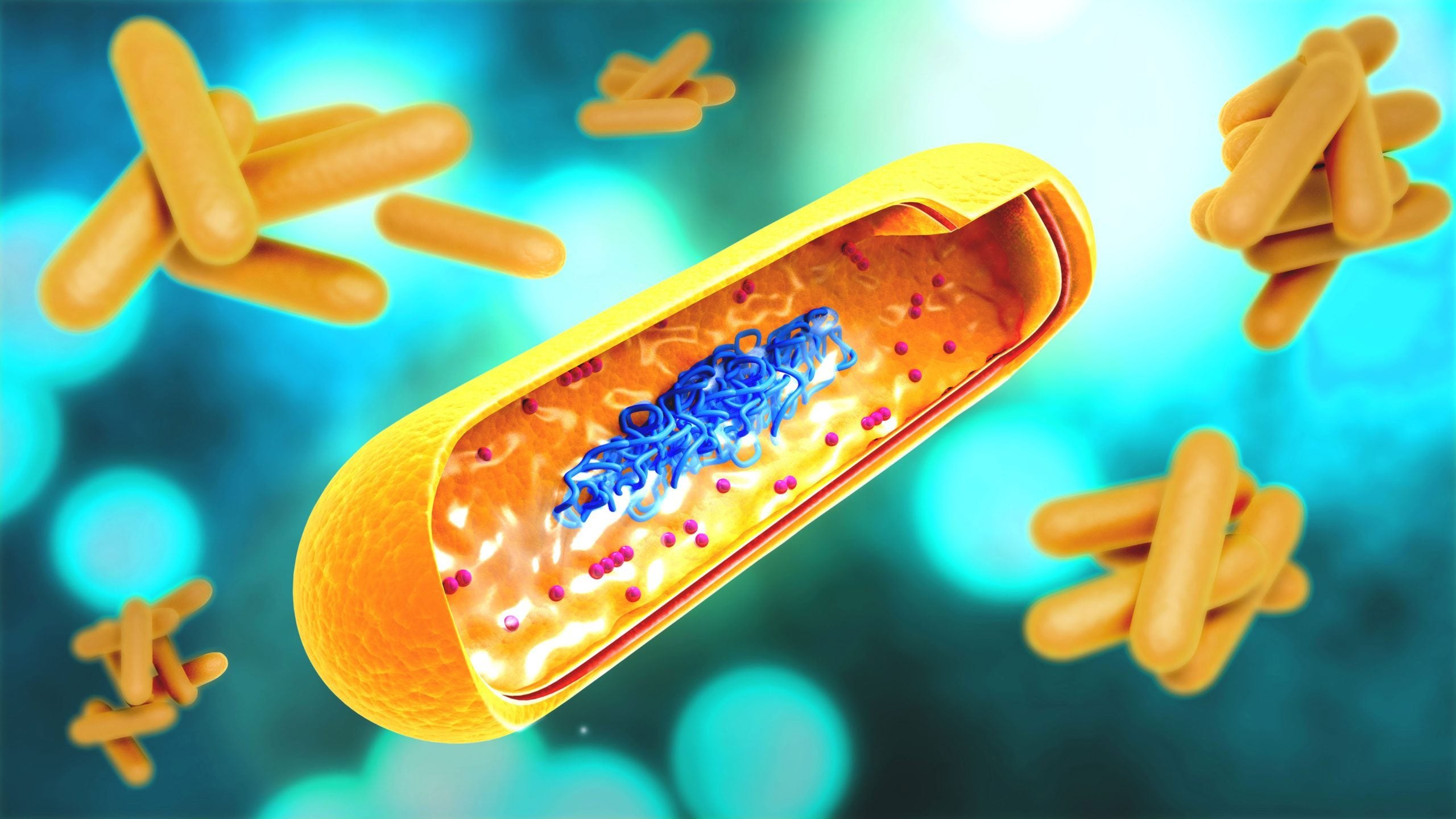
A new experimental vaccine takes aim at one of tuberculosis’s most stubborn defenses: the ability of bacteria to persist despite treatment.
In a study published in the Journal of Clinical Investigation, researchers from Johns Hopkins Medicine and the Johns Hopkins Bloomberg School of Public Health report developing a therapeutic DNA vaccine delivered through the nose for tuberculosis (TB). The vaccine combines two genes designed to train the immune system to target drug-tolerant bacterial “persisters,” which can survive long courses of antibiotics and lead to disease relapse.
TB has affected humans for at least 6,000 years. The World Health Organization (WHO) estimates that about one-quarter of the global population, roughly 2 billion people, carry a latent infection without symptoms. In 2024, more than 10 million people developed active TB, and 1.2 million died from the disease, making it the leading cause of death from a single infectious infection.
The Need for Better Treatment Strategies
WHO has emphasized the need for therapeutic vaccines that can be used alongside existing drug treatments to shorten therapy and improve outcomes. Current TB treatment often requires long multidrug regimens that are difficult to complete, and drug-resistant strains continue to spread. The new vaccine from Johns Hopkins may help address these challenges.
“Administered together with first-line TB drug therapy, our intranasal DNA fusion vaccine helped infected mice clear the disease bacteria faster, reduced lung inflammation, and prevented relapse after treatment ended,” says study lead author Styliani Karanika, M.D., a faculty member of the Johns Hopkins Center for Tuberculosis Research and assistant professor of medicine at the Johns Hopkins University School of Medicine. “The vaccine also helped the powerful TB drug combination of bedaquiline, pretomanid, and linezolid work better, suggesting it could be used with treatments against drug-resistant TB to help the body fight the disease, even hard-to-treat cases.”
How the Vaccine Works
According to Karanika, the vaccine merges two genes, relMtb and Mip3α, and is administered through the nose to take advantage of several biological effects.
“First, TB bacteria possess a gene, relMtb, that produces a protein, RelMtb, to help the microbes survive hostile conditions such as antibiotic exposure, low oxygen and nutrient limitation by entering a drug-tolerant persistent state,” she says. “Fusing relMtb with the Mip3α gene produces a signal that attracts immature dendritic cells — key cells that pick up TB proteins and ‘present’ them to T cells, the immune cells that help coordinate a targeted attack on the TB bacteria.”
“Finally, intranasal delivery focuses vaccination on the respiratory mucosa in the lungs where TB infection occurs, helping generate long-lasting localized T-cell immunity in the airways and lungs, along with systemic immune responses,” says Karanika.
By combining these mechanisms, the researchers aimed to boost immune activity directly in the respiratory tract. In mouse studies, the vaccine increased the recruitment and activation of dendritic cells and improved how these cells interacted with T cells in the lungs. It also produced strong, long-lasting immune responses both in the lungs and throughout the body, involving CD4 (helper T cells) and CD8 (killer T-cells).
Findings From Primate Studies
In rhesus macaques, the intranasal DNA vaccine triggered measurable TB-specific immune responses in both the bloodstream and the airways. These responses were similar to those associated with reduced bacterial levels in mice. The immune activity lasted at least six months, suggesting the vaccine’s effects may be durable. However, Karanika notes that these studies measured immune responses only and did not test protection against actual TB infection.
She says additional research is needed before the vaccine can move into human clinical trials.
“These nonhuman primate data are encouraging because they show that the Mip3α/relMtb vaccine can generate durable, antigen-stimulated immune responses in an animal model whose immune system more closely resembles that of humans,” says Karanika. “That gives us an important translational bridge between the mouse efficacy studies and the additional preclinical work needed before human trials.”
The researchers say their results support a broader approach that targets TB persisters with immunotherapy instead of relying only on antibiotics to kill actively growing bacteria. DNA vaccines are relatively stable and can be produced efficiently, which could make them practical if this strategy proves successful in humans.
Reference: “Immunotherapy targeting drug-tolerant Mycobacterium tuberculosis persisters accelerates tuberculosis cure in preclinical models” by Styliani Karanika, Tianyin Wang, Addis Yilma, Jennie Ruelas Castillo, James T. Gordy, Hannah Bailey, Darla Quijada, Kaitlyn Fessler, Rokeya Tasneen, Elisa M. Rouse Salcido, Farah Shamma, Harley T. Harris, Fengyixin Chen, Rowan E. Bates, Heemee Ton, Jacob Meza, Yangchen Li, Alannah D. Taylor, Jean J. Zheng, Jiaqi Zhang, Theodoros Karantanos, Amanda R. Maxwell, Eric Nuermberger, J David Peske, Richard B. Markham and Petros C. Karakousis, 1 April 2026, The Journal of Clinical Investigation.
DOI: 10.1172/JCI196648
Federal funding for the study came from National Institutes of Health grants R01AI148710, K24AI143447, P30AI18436, K08AI174959, and P30CA006973.
Additional funding was provided by a Gilead HIV Research Scholar Award, a Johns Hopkins University Tuberculosis Research Advancement Center Developmental Award, a Center for HIV/AIDS Developmental Award from the Johns Hopkins University Center for AIDS Research, a Willowcraft Foundation Award, a Johns Hopkins University Clinician Scientist Award, and the Potts Memorial Foundation.
Karanika, Gordy, Markham, and Karakousis are inventors on patent PCT/US2023/065584 for the Mip3α/relMtb vaccine.
Never miss a breakthrough: Join the SciTechDaily newsletter.
Follow us on Google and Google News.