
Close Menu
    Facebook X (Twitter) Instagram
    SciTechDaily
    • Biology
    • Chemistry
    • Earth
    • Health
    • Physics
    • Science
    • Space
    • Technology
    Facebook X (Twitter) Pinterest YouTube RSS
    SciTechDaily
    Home»Space»JPL and the Space Age: Explorer 1 (NASA Documentary)
    Space

    JPL and the Space Age: Explorer 1 (NASA Documentary)

    By NASA’s Jet Propulsion LaboratoryJanuary 14, 20231 Comment2 Mins Read
    Facebook Twitter Pinterest Telegram LinkedIn WhatsApp Email Reddit
    Share
    Facebook Twitter LinkedIn Pinterest Telegram Email Reddit
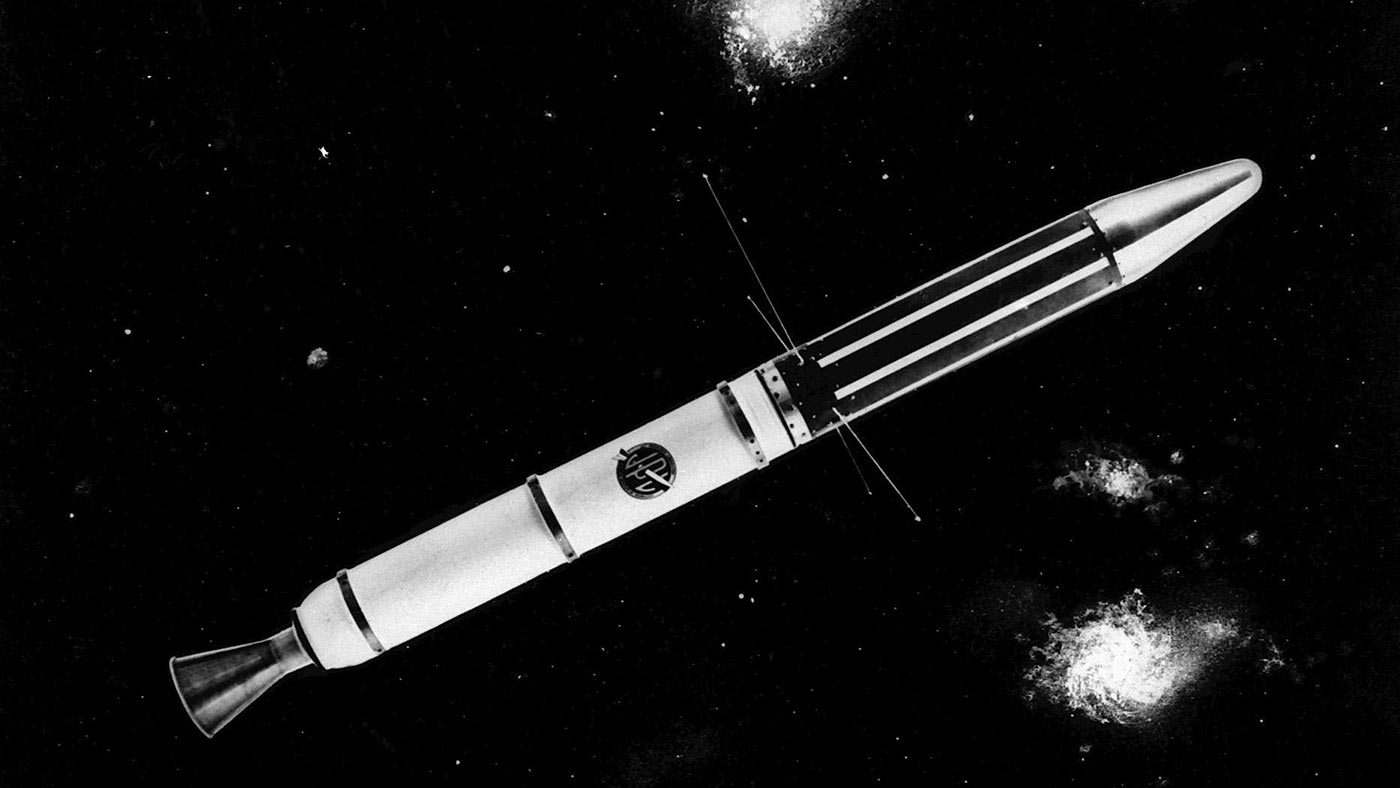
    Explorer 1 Satellite
    A vintage JPL graphic celebrating the Explorer 1 satellite. America joined the space race with the launch of this small, but important spacecraft. Credit NASA/JPL-Caltech

    Many of the strategies surrounding the Cold War revolved around two things: nuclear weapons and rockets. And in the United States, the Jet Propulsion Laboratory, under the supervision of Caltech, was charged with building America’s first tactical nuclear rockets: the Corporal and Sergeant missiles.

    At this same time the United States and the Soviet Union were nearing the ability to launch a satellite into Earth orbit. JPL, working in collaboration with Wernher von Braun’s rocket efforts for the U.S. Army, believed they were fully capable of the feat, if only given the chance. That opportunity vanished in October 1957 when the Soviet Union shocked the world with the launch of Sputnik, the world’s first satellite. The Space Age was underway. The first U.S. response exploded on the launch pad. Only after that embarrassment were JPL and von Braun’s group given the green light. The success of Explorer 1, a satellite built by JPL, provided the world with the first space science discovery.

    Explorer 1 traces the story of the role JPL played before the creation of NASA and how the lab was given a vital role as part of this new organization: to explore the cosmos.


    “Explorer One” is Episode 2 in the documentary series “JPL and the Space Age.”

    Explorer 1 was the first American satellite. It was launched on January 31, 1958 by the Jet Propulsion Laboratory (JPL). The satellite was part of the United States’ efforts during the Cold War to match the Soviet Union’s early successes in space exploration. The satellite’s mission was to measure radiation levels in Earth’s upper atmosphere, and it discovered the Van Allen radiation belts. JPL was the laboratory that built and operated the spacecraft.

    JPL and the Space Age Video Series

    • Episode 1: The American Rocketeer
    • Episode 2: Explorer 1
    • Episode 3: Destination Moon
    • Episode 4: The Changing Face of Mars
    • Episode 5: The Stuff of Dreams
    • Episode 6: The Footsteps of Voyager
    • Episode 7: To the Rescue
    • Episode 8: The Pathfinders
    • Episode 9: The Breaking Point
    • Episode 10: Saving Galileo
    • Episode 11: Mission to Mars
    • Episode 12: Landing on Mars
    • Episode 13: Triumph at Saturn – Part I
    • Episode 14: Triumph at Saturn – Part II

    Never miss a breakthrough: Join the SciTechDaily newsletter.
    Follow us on Google and Google News.

    JPL NASA Rocket
    Share. Facebook Twitter Pinterest LinkedIn Email Reddit

    Related Articles

    JPL and the Space Age: The American Rocketeer (NASA Documentary)

    Scientists Believe Water Ice May Exist on the Giant Asteroid Vesta

    NASA’s NuSTAR is One Step Closer to Launching

    NASA’s Opportunity Rover Continues Research at Greeley Haven

    Extrasolar Planetary System Suggests Our Own Isn’t That Special

    Milky Way Galaxy Mosaic of Images from WISE

    New Herschel Space Observatory Image Shows Magellanic Cloud Galaxy

    NASA Plans Trajectory Maneuver for Mars Science Laboratory Spacecraft

    NASA Confiscates Stolen Rocket Engine

    1 Comment

    1. William Adama on January 14, 2023 9:07 am

      In March 2003 I was in the audience in the Christchurch Town Hall when William Pickering delivered an address on his years at the JPL. He was 93 and had all his physical and mental faculties up and running.

      Years after his work at the JPL, his pride in what he called “my laboratory” was still evident and when I visited the JPL in early 2002, conversations with some of the personnel there showed that his pride in them is reciprocated.

      Many of us in the audience that night learned little that was new to us. The difference was that we were, at last, hearing it from the man who made it happen.

      Reply
    Leave A Reply Cancel Reply

    • Facebook
    • Twitter
    • Pinterest
    • YouTube

    Don't Miss a Discovery

    Subscribe for the Latest in Science & Tech!

    Trending News

    Black Hole Collisions May Follow a Surprisingly Simple Rule

    The Eye Has a Hidden Cleanup System and Scientists Just Discovered It

    The Truth About Vikings Is More Complicated Than Museums Admit

    New Catalyst Turns Stubborn Plant Waste Into Valuable Chemicals

    Quantum Gravity May Be Far Less Quantum Than Physicists Expected

    New Tool Supercharges Immunotherapy Against Prostate Cancer

    The Hidden Cancer Risk of Ketogenic Diets

    One Asteroid Collision May Have Rocked Earth, Mars, and the Moon

    Follow SciTechDaily
    • Facebook
    • Twitter
    • YouTube
    • Pinterest
    • Newsletter
    • RSS
    SciTech News
    • Biology News
    • Chemistry News
    • Earth News
    • Health News
    • Physics News
    • Science News
    • Space News
    • Technology News
    Recent Posts
    • Scientists Crack the Code for Making “Impossible” Nanocrystals
    • Earth’s Hidden Thermostat Has Regulated Climate for 60 Million Years
    • This 518-Million-Year-Old Creature Reveals How Spiders Got Their Bite
    • Forgotten for 20 Years, This 240-Million-Year-Old Fossil Reveals a New Reptile Species
    • 190-Year-Old Museum Specimen Solves a Pangolin Mystery
    Copyright © 1998 - 2026 SciTechDaily. All Rights Reserved.
    • Science News
    • About
    • Contact
    • Editorial Board
    • Privacy Policy
    • Terms of Use

    Type above and press Enter to search. Press Esc to cancel.