
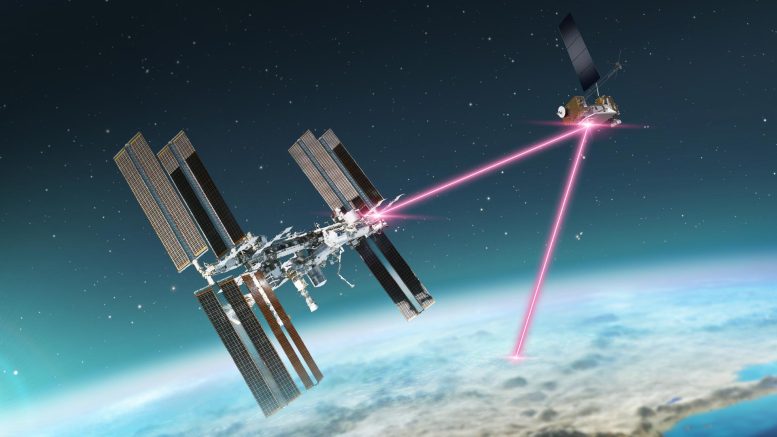
NASA’s ILLUMA-T payload is set to launch to the ISS, aiming to demonstrate the potential of laser communications for faster data transmission. This collaboration with LCRD could revolutionize how data is relayed from space, offering rapid transfer rates.
NASA is demonstrating laser communications on multiple missions – showcasing the benefits infrared light can have for science and exploration missions transmitting terabytes of important data.
The International Space Station (ISS) is getting a “flashy” technology demonstration this November. The ILLUMA-T (Integrated Laser Communications Relay Demonstration Low Earth Orbit User Modem and Amplifier Terminal) payload is launching to the International Space Station to demonstrate how missions in low Earth orbit can benefit from laser communications.
Laser communications uses invisible infrared light to send and receive information at higher data rates, providing spacecraft with the capability to send more data back to Earth in a single transmission and expediting discoveries for researchers.
Partnership and Demonstrations
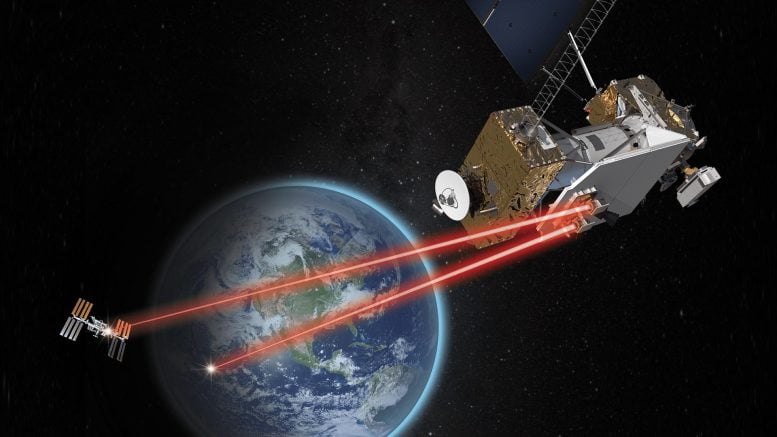
Managed by NASA’s Space Communications and Navigation (SCaN) program, ILLUMA-T is completing NASA’s first bi-directional, end-to-end laser communications relay by working with the agency’s LCRD (Laser Communications Relay Demonstration). LCRD launched in December 2021 and is currently demonstrating the benefits of laser communications from geosynchronous orbit by transmitting data between two ground stations on Earth in a series of experiments.
Some of LCRD’s experiments include studying atmospheric impact on laser signals, confirming LCRD’s ability to work with multiple users, testing network capabilities like delay/disruption tolerant networking (DTN) over laser links, and investigating improved navigation capabilities.
Once ILLUMA-T is installed on the space station’s exterior, the payload will complete NASA’s first in-space demonstration of two-way laser relay capabilities.
How It Works
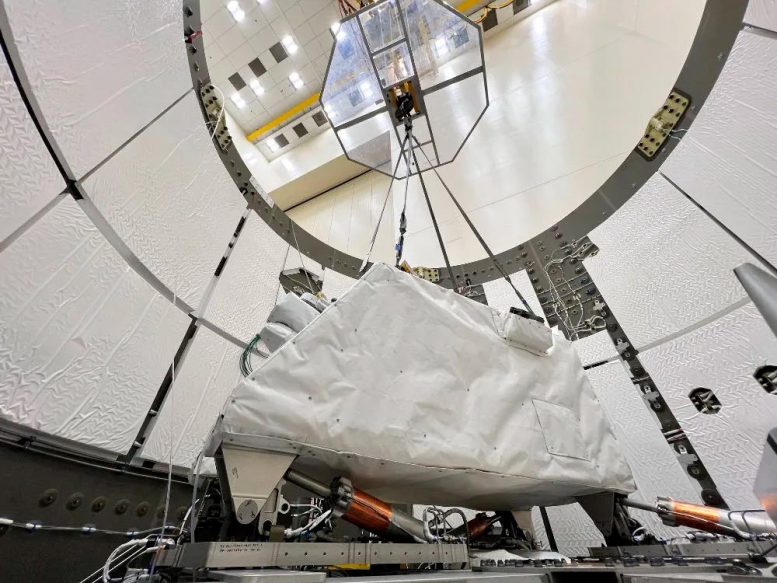
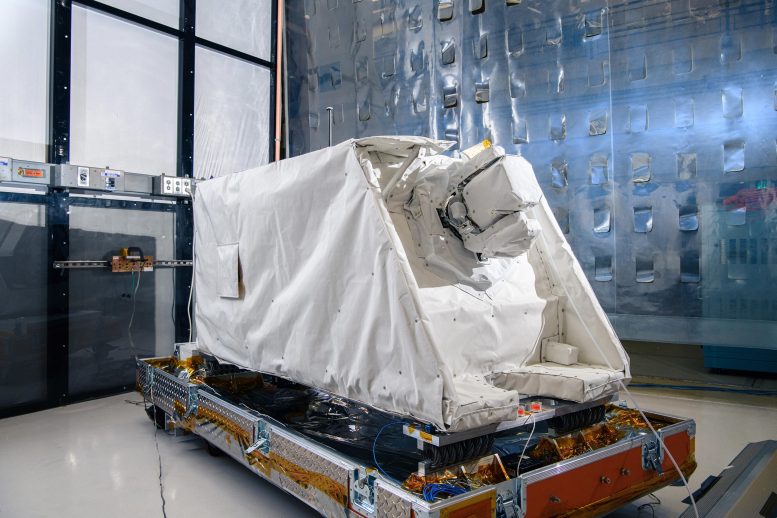
ILLUMA-T’s optical module is comprised of a telescope and two-axis gimbal which allows pointing and tracking of LCRD in geosynchronous orbit. The optical module is about the size of a microwave and the payload itself is comparable to a standard refrigerator.
ILLUMA-T will relay data from the space station to LCRD at 1.2 gigabits-per-second, then LCRD will send the data down to optical ground stations in California or Hawaii. Once the data reaches these ground stations, it will be sent to the LCRD Mission Operations Center located at NASA’s White Sands Complex in Las Cruces, New Mexico. After this, the data will be sent to the ILLUMA-T ground operations teams at the agency’s Goddard Space Flight Center in Greenbelt, Maryland. There, engineers will determine if the data sent through this end-to-end relay process is accurate and of high-quality.
Collaborative Efforts and Impact
“NASA Goddard’s primary role is to ensure successful laser communications and payload operations with LCRD and the space station,” said ILLUMA-T Deputy Project Manager Matt Magsamen. “With LCRD actively conducting experiments that test and refine laser systems, we are looking forward to taking space communications capabilities to the next step and watching the success of this collaboration between the two payloads unfold.”
Once ILLUMA-T transmits its first beam of laser light through its optical telescope to LCRD, the end-to-end laser communications experiment begins. After its experimental phase with LCRD, ILLUMA-T could become an operational part of the space station and substantially increase the amount of data NASA can send to and from the orbiting laboratory.
Transmitting data to relay satellites is no new feat for the space station. Since its completion in 1998 the orbiting laboratory has relied on the fleet of radio frequency relay satellites known as NASA’s Tracking and Data Relay Satellites, which are part of the agency’s Near Space Network. Relay satellites provide missions with constant contact with Earth because they can see the spacecraft and a ground antenna at the same time.
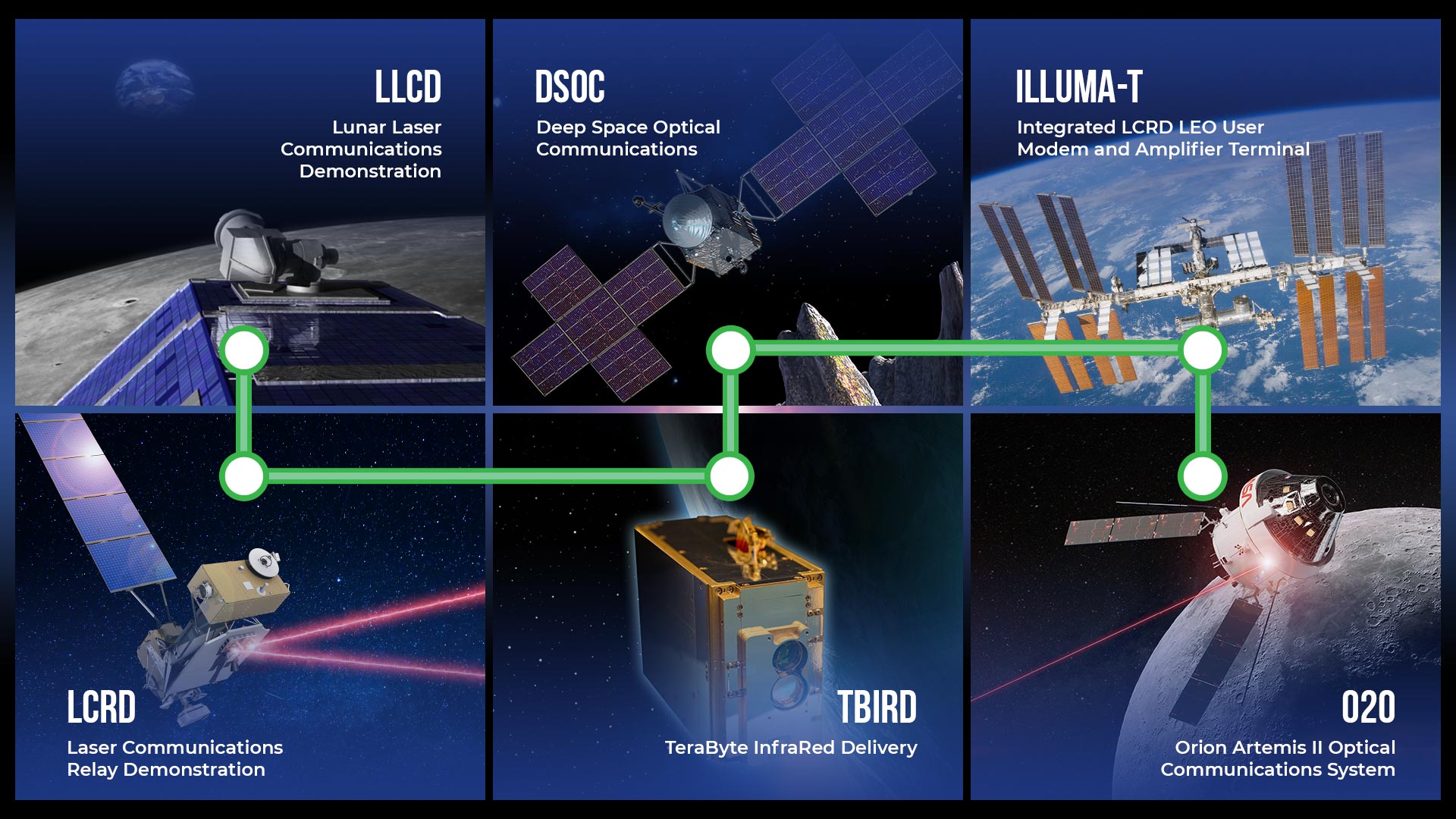
Laser communications could be a game-changer for researchers on Earth with science and technology investigations aboard the space station. Astronauts conduct research in areas like biological and physical sciences, technology, Earth observations, and more in the orbiting laboratory for the benefit of humanity. ILLUMA-T could provide enhanced data rates for these experiments and send more data back to Earth at once. In fact, at 1.2 Gbps, ILLUMA-T can transfer the amount of data equivalent to an average movie in under a minute.
The ILLUMA-T / LCRD end-to-end laser communications relay system is one small step for NASA, but one giant leap for space communications capabilities. Together with previous and future demonstrations, NASA is showcasing the benefits laser communications systems can have for both near-Earth and deep space exploration.
About ILLUMA-T and LCRD
The ILLUMA-T payload is funded by the Space Communications and Navigation (SCaN) program at NASA Headquarters in Washington. ILLUMA-T is managed by NASA’s Goddard Space Flight Center in Greenbelt, Maryland. Partners include the International Space Station program office at NASA’s Johnson Space Center in Houston and the Massachusetts Institute of Technology (MIT) Lincoln Laboratory in Lexington, Massachusetts.
LCRD is led by Goddard and in partnership with NASA’s Jet Propulsion Laboratory in Southern California and the MIT Lincoln Laboratory. LCRD is funded through NASA’s Technology Demonstration Missions program, part of the Space Technology Mission Directorate, and the Space Communications and Navigation (SCaN) program at NASA Headquarters in Washington.
Never miss a breakthrough: Join the SciTechDaily newsletter.
Follow us on Google and Google News.