
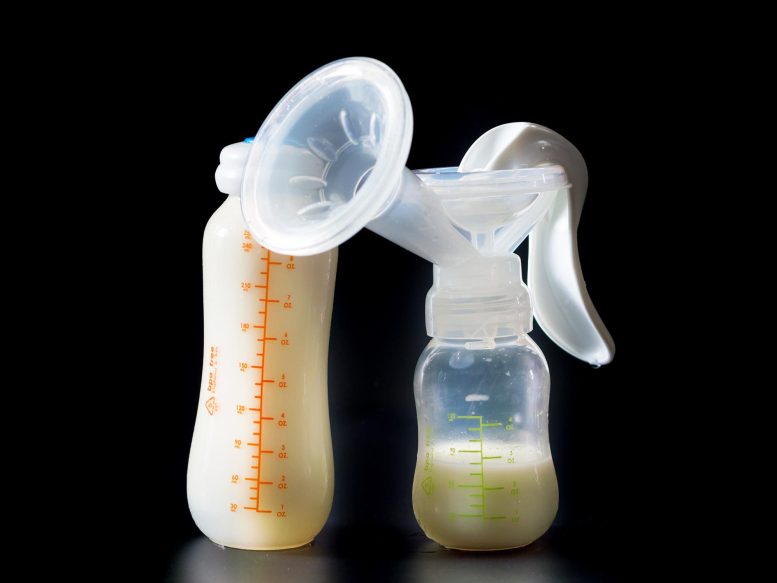
Researchers found living cells in breast milk, providing new insights into lactation and breast cancer, potentially transforming women’s health studies.
The study was led by researchers from the Wellcome-MRC Cambridge Stem Cell Institute (CSCI) and the Department of Pharmacology at the University of Cambridge.
Breast tissue is dynamic, changing over time during puberty, pregnancy, breastfeeding, and aging. The paper, published today (January 28, 2022) in the journal Nature Communications, focuses on the changes that take place during lactation by investigating cells found in human milk.
Living Cells in Human Milk
This research, led by Dr. Alecia-Jane Twigger of CSCI, found that the cells in milk, once thought to be dead or dying, are in fact very much alive. These living cells provide researchers with the chance to study not only the changes that occur in mammary tissues during lactation, but also insight into a potential early indicator of future breast cancer development.
“I believe that by studying human milk cells, we will be able to answer some of the most fundamental questions around mammary gland function such as: how is milk produced? Why do some women struggle to make milk? and what strategies can be employed to improve breastfeeding outcomes for women?” said Dr. Alecia-Jane Twigger at the Wellcome-MRC Cambridge Stem Cell Institute who led the study.
The researchers collected voluntary breast milk samples from lactating women, as well as samples of non-lactating breast tissue donated from women who elected to have aesthetic breast reduction surgery. Using single-cell RNA sequencing analysis, the team conducted a novel comparison of the composition of the mammary cells taken using these two methods, identifying the distinctions between lactating and non-lactating human mammary glands.
While accessing breast tissue for study relies on donors already undergoing surgery, breast milk samples are much simpler to acquire. Breast milk donors are engaged via midwives or women’s networks (an undertaking made more challenging by the pandemic) and agree to share their samples over time. Typical daily production for lactating women is between 750-800ml (25-27oz), and the sample size for Twigger’s research is on average a mere 50ml (1.7oz), an amount which can contain hundreds of thousands of cells for study.
Implications for Women’s Health and Breast Cancer Research
By collecting these samples donated by breastfeeding women – samples now known to contain living and viable cells – researchers have the opportunity to capture dynamic cells in a non-invasive way. This greater ease of access to breast cells can open the door to more studies on women’s health in the future.
“The first time Alecia told me that she found live cells in milk I was surprised and excited about the possibilities. We hope this finding will enable future studies into the early steps of breast cancer,” said Dr. Walid Khaled, at the Wellcome-MRC Cambridge Stem Cell Institute and University of Cambridge’s Department of Pharmacology, who was also involved in the study.
Reference: “Transcriptional changes in the mammary gland during lactation revealed by single cell sequencing of cells from human milk” by Alecia-Jane Twigger, Lisa K. Engelbrecht, Karsten Bach, Isabel Schultz-Pernice, Sara Pensa, Jack Stenning, Stefania Petricca, Christina H. Scheel and Walid T. Khaled 28 January 2022, Nature Communications.
DOI: 10.1038/s41467-021-27895-0
This paper and its findings are part of the Human Breast Cell Atlas project funded by the MRC.
Never miss a breakthrough: Join the SciTechDaily newsletter.
Follow us on Google and Google News.