
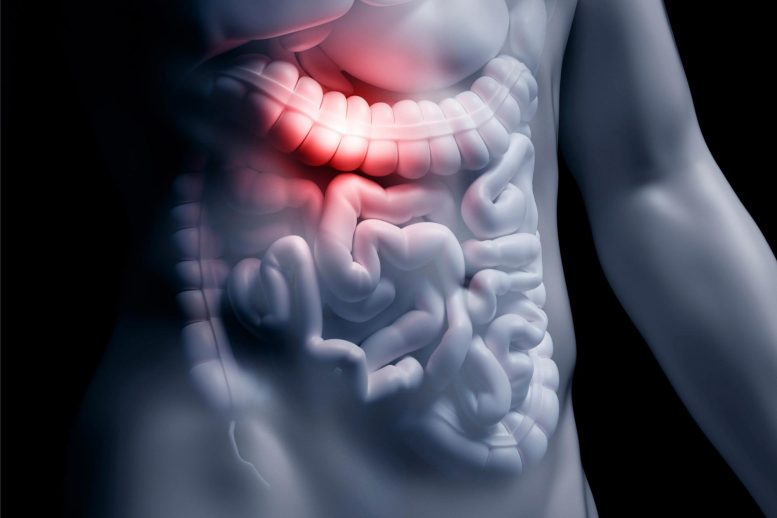
Addressing Lingering GI Issues Critical Part of Post–Infection Care
People who have had COVID-19 are at increased risk of developing gastrointestinal (GI) disorders within a year after infection compared with people who haven’t been infected. This is according to an analysis of federal health data by researchers at Washington University School of Medicine in St. Louis and the Veterans Affairs St. Louis Health Care system.
According to the researchers’ calculations, SARS-CoV-2 infections have resulted in over 6 million new cases of gastrointestinal disorders in the United States and 42 million new cases globally. Gastrointestinal conditions vary from minor stomach problems to severe ailments such as acute pancreatitis and liver failure that can be life-threatening.
Such conditions include liver problems, acute pancreatitis, irritable bowel syndrome, acid reflux, and ulcers in the lining of the stomach or upper intestine. The post-COVID-19 GI tract also is associated with an increased likelihood of constipation, diarrhea, abdominal pain, bloating, and vomiting.
“Gastrointestinal problems were among the first that were reported by the patient community,” said senior author Ziyad Al-Aly, MD, a clinical epidemiologist at Washington University who has studied extensively the long-term effects of COVID-19 infection. “It is increasingly clear that the GI tract serves as a reservoir for the virus.”
The study was published on March 7 in the journal Nature Communications.

The new findings build upon Al-Aly’s prior research detailing COVID-19’s lingering effects on the brain, heart, kidneys and other organs. Since the pandemic, Al-Aly and his research team have published numerous, often-cited studies on SARS-CoV-2’s extended health risks, altogether noting about 80 adverse health outcomes associated with long COVID-19.
“At this point in our research, the findings on the GI tract and long COVID did not surprise us,” Al-Aly said. “The virus can be destructive, even among those considered healthy or who have had mild infections. We’re seeing COVID-19’s ability to attack any organ system in the body, sometimes with serious long-term consequences, including death.”
The gastrointestinal system includes the mouth, throat, esophagus, stomach, small and large intestines, rectum, and anus, as well as organs, such as the liver and pancreas, that produce enzymes to aid in the digestion of food and liquids.
GI conditions range from mild stomach issues to life-threatening conditions such as liver failure and acute pancreatitis.
The researchers estimate that, so far, infections caused by SARS-CoV-2 have contributed to more than 6 million new cases of GI disorders in the U.S. and 42 million new cases worldwide.
Post-COVID GI Care
“This is no small number,” said Al-Aly, who treats patients within the VA St. Louis Health Care System and is its chief of research and development service. “It is crucial to include GI health as an integral part of post-acute COVID care.”
For the study, researchers analyzed about 14 million de-identified medical records in a database maintained by the U.S. Department of Veterans Affairs, the nation’s largest integrated healthcare system.
They created a controlled data set of 154,068 people who had tested positive for COVID-19 sometime from March 1, 2020, through January 15, 2021, and who had survived the first 30 days after infection. Statistical modeling was used to compare gastrointestinal outcomes in the COVID-19 data set with two other groups of people not infected with the virus: a control group of more than 5.6 million people who did not have COVID-19 during the same time frame; and a control group of more than 5.8 million people from March 1, 2018, to December 31, 2019, well before the virus had infected and killed millions across the globe.
Statistical Insights into Increased GI Risks
Overall, GI disorders were 36% more likely in people with COVID-19 compared with those who had not been infected with the virus. This includes people who were and were not hospitalized because of the virus.
“A lot of people draw comparisons between COVID-19 and the flu,” Al-Aly said. “We compared health outcomes in those hospitalized with the flu versus those hospitalized with COVID, and we still saw an increased risk of GI disorders among people hospitalized with COVID-19. Even this far into the pandemic, COVID-19 remains more serious than the flu.”
People in the study were mostly older white men; however, the researchers also analyzed data that included more than 1.1 million women and adults of all ages and races. “Those who acquired long-term GI problems after infection included people of all ages, sexes, and racial backgrounds,” Al-Aly said.
Additionally, few people in the study had been vaccinated for COVID-19 because the vaccines were not yet widely available during the time span of the study, from March 2020 through early January 2021. The data also predates the delta, omicron, and other COVID-19 variants, and newer data indicate the COVID-19 vaccines provide at least some protection against long COVID-19.
“While the vaccines may help to reduce the risks of long COVID, they do not offer complete protection against long-term symptoms of COVID-19 that can affect the heart, lungs, brain, and now, we know, the GI tract,” Al-Aly said.
Compared with patients in the control groups, people who had had COVID-19 were at a 62% increased risk of developing ulcers in the lining of the stomach or small intestine; a 35% heightened risk of suffering from acid reflux disease; and a 46% increased risk of experiencing acute pancreatitis.
Also compared to control groups, patients who had had the virus were 54% more likely to suffer from irritable bowel syndrome, 47% more likely to experience inflammation of the stomach lining, and 36% more likely to have an upset stomach without an obvious cause.
Similarly, those who had had COVID-19 were 54% more likely to experience digestive symptoms such as constipation, diarrhea, bloating, vomiting, and abdominal pain.
“Taken with all the evidence that has accumulated thus far, the findings in this report call for the urgent need to double down and accelerate our effort to develop strategies to prevent and treat the long-term health effects after COVID-19 infection,” Al-Aly said.
Reference: “Long-term gastrointestinal outcomes of COVID-19” by Evan Xu, Yan Xie and Ziyad Al-Aly, 7 March 2023, Nature Communications.
DOI: 10.1038/s41467-023-36223-7
Never miss a breakthrough: Join the SciTechDaily newsletter.
Follow us on Google and Google News.
2 Comments
I’m impressed by the surnames of serious, scientific (vs. political) researchers in the field. Faucistas take note! This is a beautiful, informing report scitechdaily. Thank you.
Well, the whole article is missing a crucial fact, without which, it is meaningless. Don’t just tell me the “percentage increase”. They need to tell us what percentage of the control group suffers from these maladies WITHOUT COVID. For example:
“patients who had had the virus were 54% more likely to suffer from irritable bowel syndrome”. Okay, so if 1 person out of 10,000 has IBS without Covid, this means that
1.54 people per 10,000 get IBS if they had Covid. Sure, that’s a “54% increase”, but it also doesn’t matter a whit. If it’s 1 out of 10,000 or 2 out of 10,000, who cares?” But if 100 people per 10,000 have IBS, and Covid increases that to 154, now you have a serious problem.