
Close Menu
    Facebook X (Twitter) Instagram
    SciTechDaily
    • Biology
    • Chemistry
    • Earth
    • Health
    • Physics
    • Science
    • Space
    • Technology
    Facebook X (Twitter) Pinterest YouTube RSS
    SciTechDaily
    Home»Health»Antibiotic Resistance Is Making This Dangerous Gut Bacterium Even Harder To Kill
    Health

    Antibiotic Resistance Is Making This Dangerous Gut Bacterium Even Harder To Kill

    By Monash UniversityOctober 14, 2026No Comments4 Mins Read
    Facebook Twitter Pinterest Telegram LinkedIn WhatsApp Email Reddit
    Share
    Facebook Twitter LinkedIn Pinterest Telegram Email Reddit
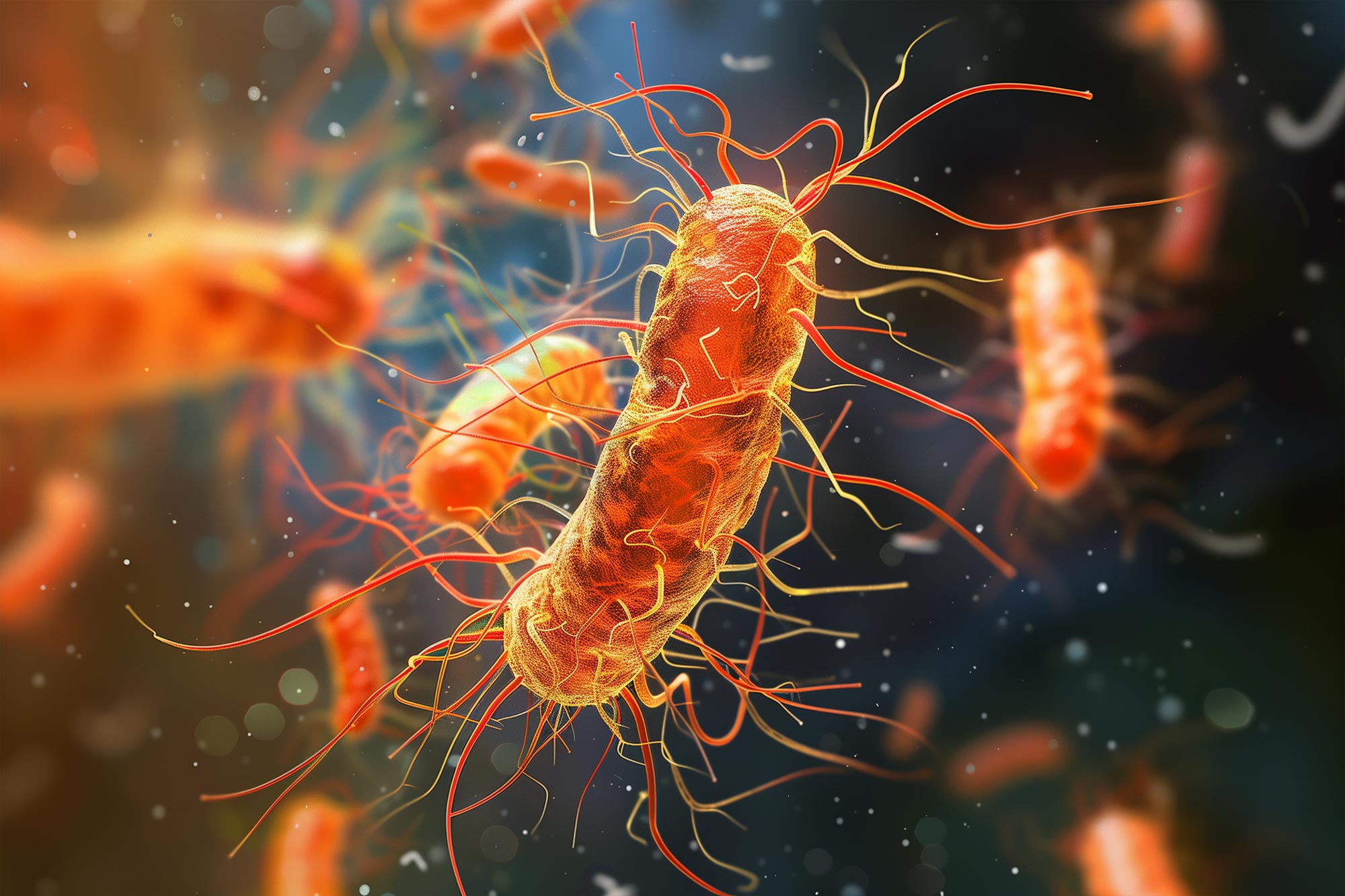
    E coli Superbug Bacteria Art Illustration
    Clostridioides difficile (C. difficile) is a bacterium that can cause severe diarrhea and inflammation of the colon, particularly after antibiotic treatment disrupts the normal gut microbiome. It spreads through hardy spores that can persist on surfaces, making it a persistent challenge in hospitals and other healthcare settings. Credit: SciTechDaily.com

    An antibiotic resistance gene helps a dangerous gut bacterium build tougher spores that can survive hospital disinfectants.

    A hospital surface can be disinfected and still harbor dormant spores of Clostridioides difficile, a bacterium that causes diarrhea that can be deadly for already sick patients. Researchers have now found that an antibiotic resistance gene can help the bacterium produce tougher spores, allowing them to survive hospital-grade cleaning products and high laundry temperatures.

    Monash University researchers traced this added resilience to a change in how the bacterium builds its spores. Their study, published in Nature Communications, reveals how acquiring a gene that protects against an antibiotic can also strengthen the form the bacterium uses to spread.

    A protein swap builds tougher spores

    C. difficile spores behave much like plant seeds, waiting for suitable conditions to become active again. The human gut provides one such opportunity, making survival outside the body a crucial part of the bacterium’s journey between patients.

    “Spore survival matters because spores are the main way these pathogens spread between people and through hospitals, homes, and the environment,” said first author Dr. Yogitha Srikhanta, a postdoctoral research fellow at Monash Biomedicine Discovery Institute.


    Antibiotic resistance is supercharging dangerous gut bacteria to withstand even hospital-grade disinfectants intended to kill them. Credit: Desirel Ng/Monash University

    The resistance gene produces a protein that takes the place of a key protein used to build spores. With that replacement in place, the bacterium can continue making spores despite an antibiotic that would otherwise block the process. The resulting spores are also tougher, extending the gene’s effects beyond resistance to the drug itself.

    “Antibiotics are helping bacteria evolve in ways we hadn’t anticipated,” said lead researcher Professor Dena Lyras, director of Monash Biomedicine Discovery Institute and interim dean of Monash’s Sub-Faculty of Biomedical and Psychological Sciences.

    Spore survival could help resistance spread

    Bacteria that stop responding to antibiotics can leave infections difficult or impossible to treat. The World Health Organization identifies antimicrobial resistance as a major global health threat and estimates that it contributes to millions of deaths each year. The Monash team describes its study as the first to uncover a link between antibiotic resistance and bacterial spores, connecting treatment resistance with the ability to survive outside a patient.
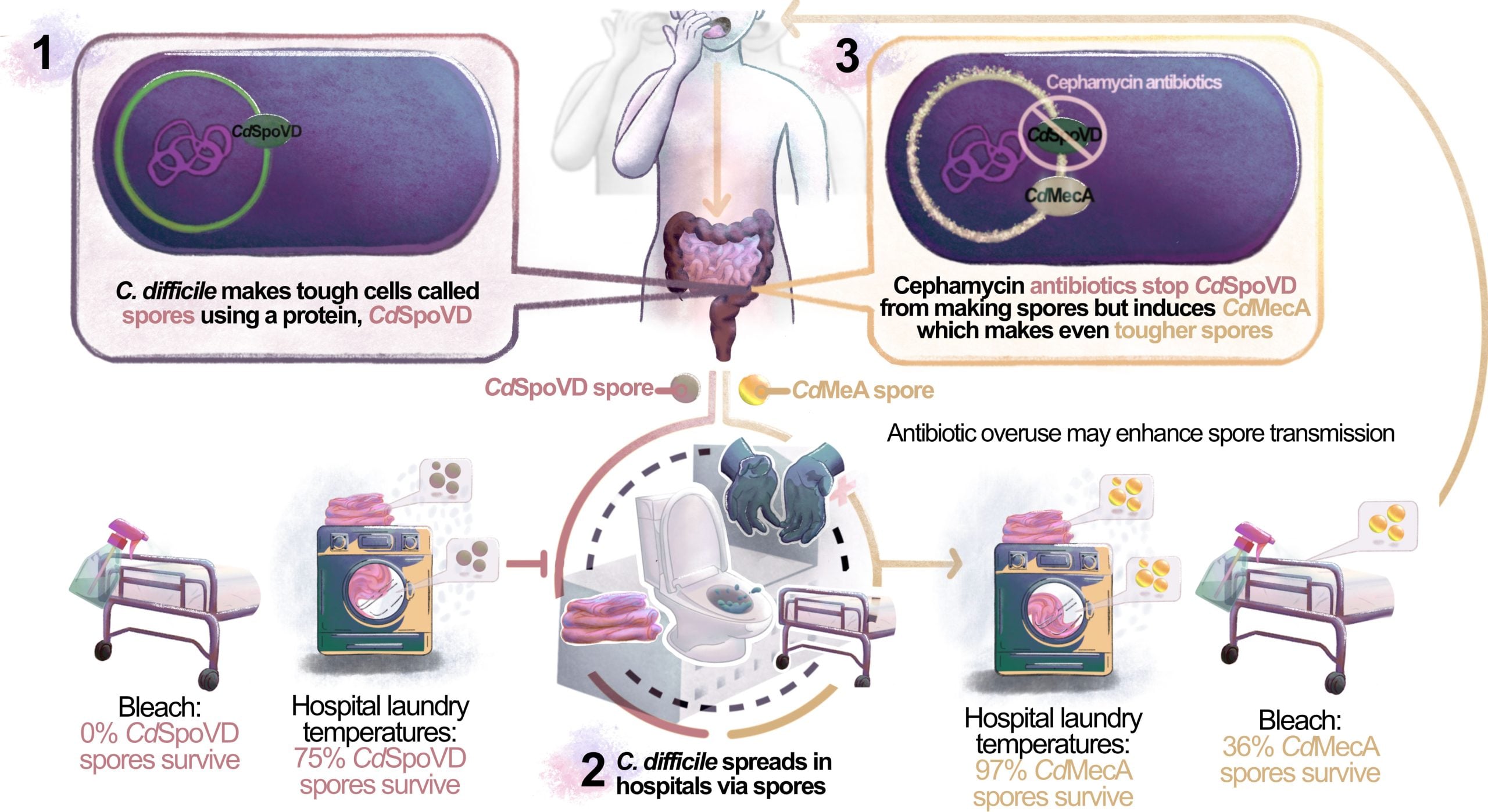
    Diagram of Antibiotic Resistant C. difficile Spore Transmission
    Antibiotic resistance is supercharging dangerous gut bacteria to withstand even hospital-grade disinfectants intended to kill them. Credit: Desirel Ng/Monash University

    Srikhanta cautioned, “A resistance gene that changes how spores are built could make infections harder to control and help resistant strains spread more easily.

    “We are now investigating ways to deal with this new type of antibiotic resistance.”

    Targeting the spores could offer a way to interrupt that spread, although the researchers have yet to establish a solution. Lyras said, “Our new research shows just how sophisticated their evolution is, with the potential to have disastrous impacts on humans.

    “They are not only better at building tolerance to drugs we develop, but making new versions of themselves that can survive better in particular environments, like surfaces where cleaning products are commonly applied.”

    Reference: “Uncovering an alternate pathway of antibiotic resistance in spore-forming bacteria” by Yogitha N. Srikhanta, Clara E. Bate, Desirel Ng, Sarah A. Revitt-Mills, Georgia-Rose Gilmore, Galain C. Williams, Sophie L. Day, Stéphane Mesnage, Kamila Kochan, Shailab Shrestha, Aimee Shen, Daniel R. Knight, Korakrit Imwattana, Thomas V. Riley, Irene Alevizos, Kimberley Bourke, Milena M. Awad, Caroline A. Evans, Ghizal Siddiqui, Joel R. Steele, David L. Steer, Joshua P. Morrow, Darren J. Creek, Chaille Webb, Sheena McGowan and Dena Lyras, 15 July 2026, Nature Communications.
    DOI: 10.1038/s41467-026-75594-5

    Never miss a breakthrough: Join the SciTechDaily newsletter.
    Follow us on Google and Google News.

    Infectious Diseases Microbiology Monash University Pathogens Public Health
    Share. Facebook Twitter Pinterest LinkedIn Email Reddit

    Related Articles

    Replication Cycle of SARS-CoV-2 in 3D – “We Can Expect the Coronavirus to Become Seasonal”

    Infectious Diseases Experts: Superbugs on Track to Kill More People Than COVID-19

    Stanford Engineers Develop Genetic Microlab That Can Detect COVID-19 in Minutes

    Supercharged Bacterial “Clones” Spark Scarlet Fever’s Global Re-emergence

    Strong Evidence of Zoonotic COVID-19 Transmission: Study Shows SARS-CoV-2 Jumped Between People and Mink

    Details Revealed About the First Cat Infected With SARS-CoV-2 Coronavirus in Spain – Including Necropsy Findings

    New Scientific Analysis of Hydroxychloroquine and Azithromycin for COVID-19 Patients

    Scientists Warn That More Bat Research Is Critical to Preventing Next Pandemic

    Coronavirus Fight: Scientists Identify COVID-19 Drug That “Kills” the Virus Within 48 Hours

    Leave A Reply Cancel Reply

    • Facebook
    • Twitter
    • Pinterest
    • YouTube

    Don't Miss a Discovery

    Subscribe for the Latest in Science & Tech!

    Trending News

    Beyond Ozempic? New Weight Loss Drug Shows Stunning Results in Major Clinical Trial

    Scientists Create a Nuclear Clock So Precise It Barely Loses a Second in 30 Million Years

    Scientists Discover Groundbreaking Clues to Tissue Regrowth and “Immortality” in the Ocean

    A New Test Upends a Long-Held Assumption About Dark Matter

    Scientists Discover an Unexpected New Way To Fight Alzheimer’s Before It Starts

    Sleeping Less Than 5 Hours Was Linked to Higher Risk of 37 Diseases

    This 345-Million-Year-Old Fossil Fooled Scientists for Decades

    Scientists Restore Limited Vision in Blind Patients Using Gene Therapy and Special Goggles

    Follow SciTechDaily
    • Facebook
    • Twitter
    • YouTube
    • Pinterest
    • Newsletter
    • RSS
    SciTech News
    • Biology News
    • Chemistry News
    • Earth News
    • Health News
    • Physics News
    • Science News
    • Space News
    • Technology News
    Recent Posts
    • Antibiotic Resistance Is Making This Dangerous Gut Bacterium Even Harder To Kill
    • Scientists Discover a Hidden Trigger That Keeps Inflammation Alive
    • Scientists Tested Diet Drinks for 2 Years. The Results May Surprise You
    • Scientists Unlock 700,000-Year-Old Secrets Hidden Inside a Giant Elephant Tooth
    • They Almost Vanished. Now 183,000 Giant Tortoises Rule This Remote Paradise
    Copyright © 1998 - 2026 SciTechDaily. All Rights Reserved.
    • Science News
    • About
    • Contact
    • Editorial Board
    • Privacy Policy
    • Terms of Use

    Type above and press Enter to search. Press Esc to cancel.