
Close Menu
    Facebook X (Twitter) Instagram
    SciTechDaily
    • Biology
    • Chemistry
    • Earth
    • Health
    • Physics
    • Science
    • Space
    • Technology
    Facebook X (Twitter) Pinterest YouTube RSS
    SciTechDaily
    Home»Space»Loud Fireball: A Fiery Meteor Streaked Across the Mississippi Skies at 55,000 MPH
    Space

    Loud Fireball: A Fiery Meteor Streaked Across the Mississippi Skies at 55,000 MPH

    By Lance D. Davis, NASAApril 28, 20221 Comment2 Mins Read
    Facebook Twitter Pinterest Telegram LinkedIn WhatsApp Email Reddit
    Share
    Facebook Twitter LinkedIn Pinterest Telegram Email Reddit
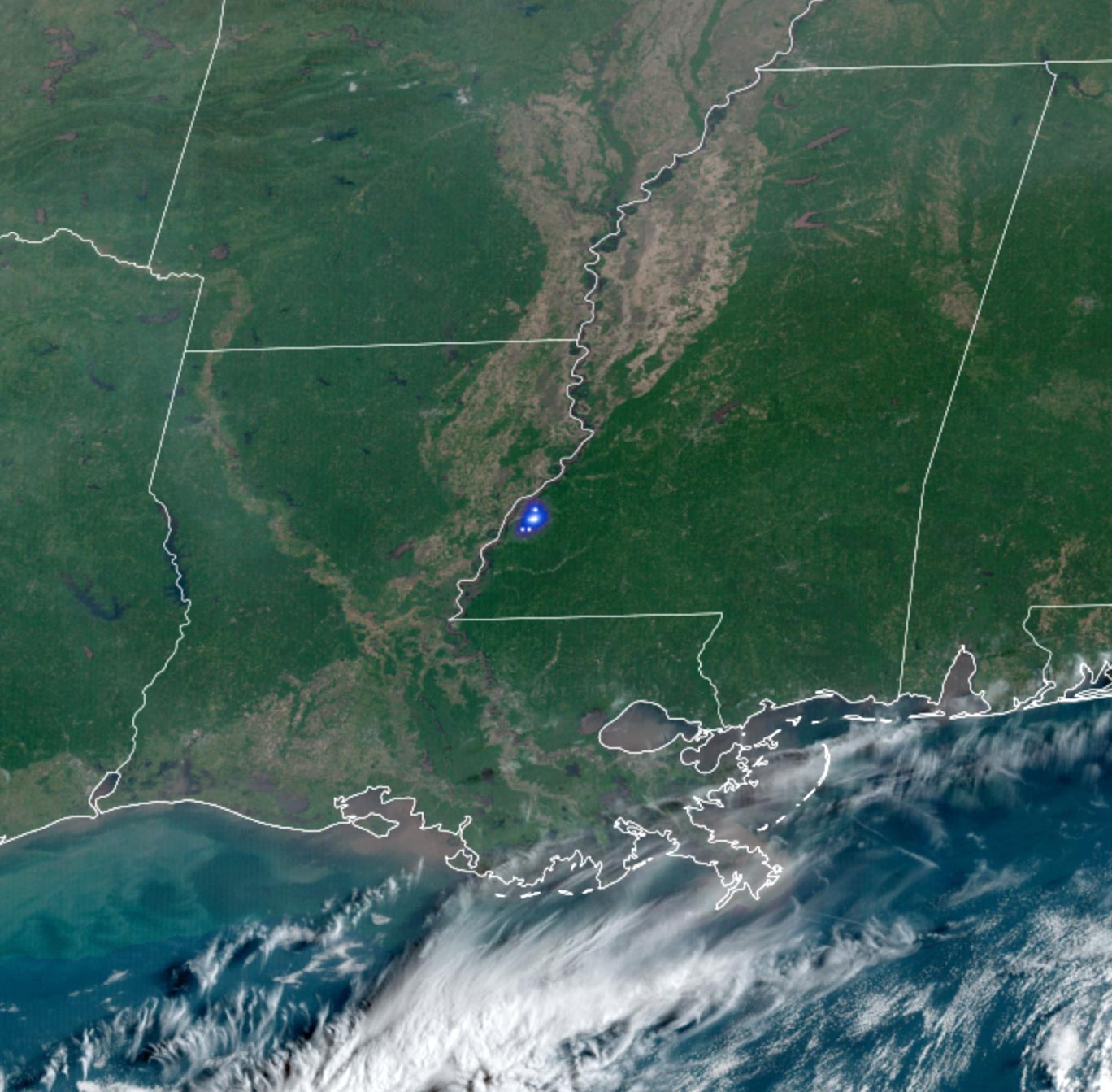
    GLM Image From GOES 16 Satellite
    Geostationary Lightning Mappers (GLM) image from the GOES 16 satellite. Credit: NOAA

    Loud Fireball Spotted Over Southern Mississippi Mostly Heard, Hardly Seen

    A fiery meteor streaked across the morning skies in southern Mississippi yesterday, April 27, 2022.

    More than 30 eyewitnesses in the states of Arkansas, Louisiana, and Mississippi reported seeing a bright fireball at 8:03 a.m. CDT. The sighting was soon followed by numerous reports of loud booms heard in Claiborne County, Mississippi, and surrounding counties.

    Approximately 22,000 miles (35,400 kilometers) out in space, NOAA’s Geostationary Lightning Mappers (GLM) onboard the Geostationary Operational Environmental Satellites (GOES) 16 and 17 detected several bright flashes associated with the fragmentation of this bolide, or exceptionally bright meteor, which was first spotted 54 miles (87 kilometers) above the Mississippi River near the town of Alcorn, Mississippi.

    “This is one of the nicer events I have seen in the GLM data,” said Bill Cooke, lead of NASA’s Meteoroid Environments Office at Marshall Space Flight Center in Huntsville, Alabama.
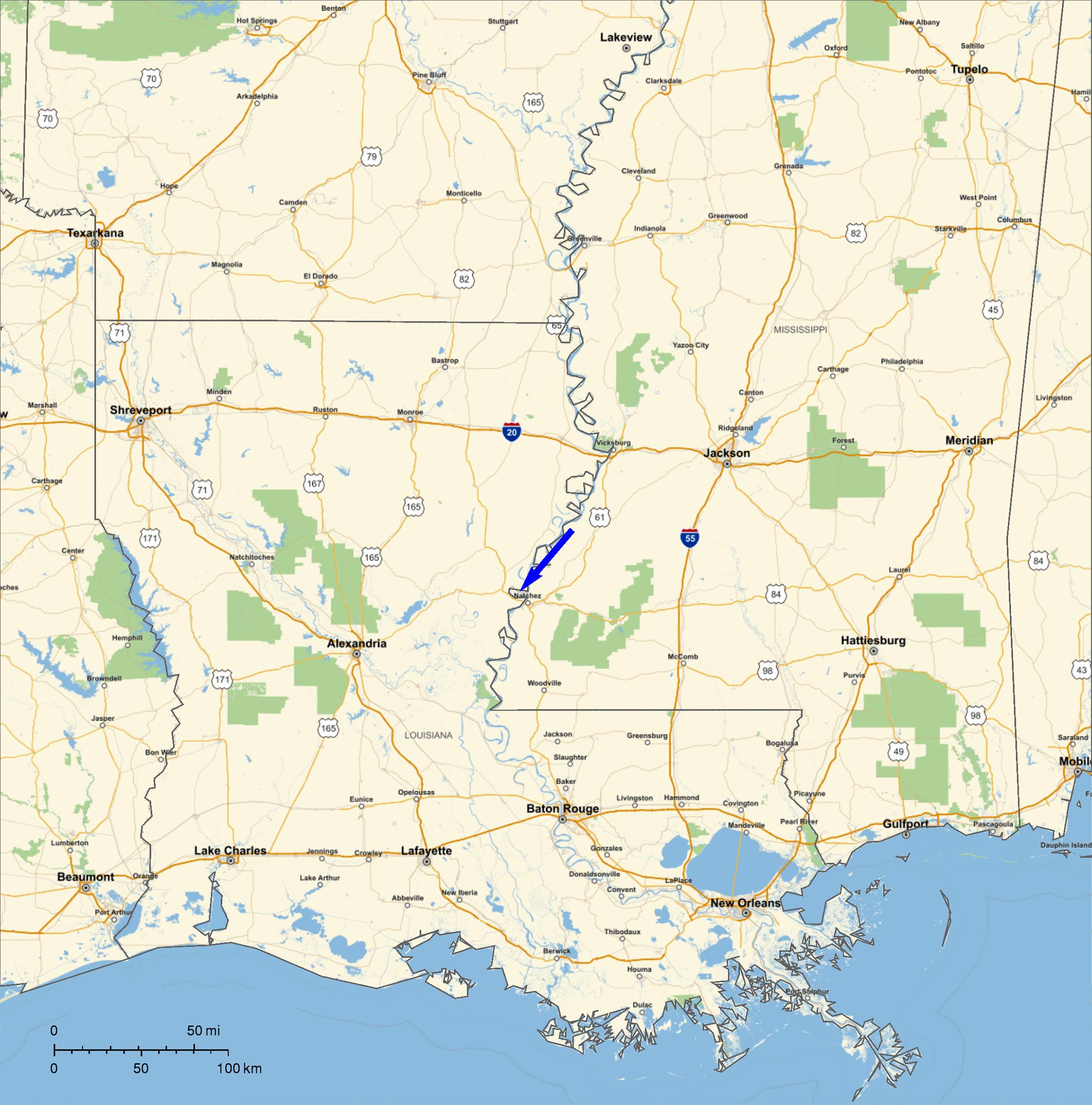
    Fireball Ground Track
    Fireball ground track from eyewitness accounts. Credit: NASA/American Meteor Society

    The object – thought to be a piece of an asteroid about a foot (~30 centimeters) in diameter with a weight of 90 pounds (~40 kg) – moved southwest at a speed of 55,000 miles per hour (~90,000 kilometers per hour), breaking into pieces as it descended deeper into Earth’s atmosphere. It disintegrated about 34 miles (55 kilometers) above the swampy area north of Minorca in Louisiana.

    The fragmentation of this fireball generated an energy equivalent of 3 tons of TNT (trinitrotoluene), which created shock waves that propagated to the ground, producing the booms and vibrations felt by people in the area.

    At its peak, the fireball was over 10 times brighter than the Full Moon.

    “What struck me as unusual was how few eyewitness reports we had given the skies were so clear,” said Cooke. “More people heard it than saw it.”

    Never miss a breakthrough: Join the SciTechDaily newsletter.
    Follow us on Google and Google News.

    Meteors NASA Popular
    Share. Facebook Twitter Pinterest LinkedIn Email Reddit

    Related Articles

    NASA’s Parker Solar Probe Sheds Light on Unusual, Violent Origin of Geminid Meteor Shower

    Don’t Miss: Eta Aquariid Meteor Shower Outburst Peak – Up to 160 Meteors per Hour

    Catch a Falling Star: Don’t Miss Lyrid Meteor Shower Peak

    Experts on the Future of Planetary Defense 10 Years After the Chelyabinsk Asteroid Impact’s 440 Kiloton Explosion

    Don’t Miss: Total Lunar Eclipse and Leonid Meteor Shower

    Fireball Lights Up the Sky Over Salt Lake City – 16 Times Brighter Than the Full Moon

    Perseids Meteor Shower on the Way – But There’s a Big Problem

    NASA’s $10 Billion Webb Space Telescope Struck by Micrometeoroid

    Spectacular New Tau Herculids Meteor Shower May Light Up the Skies Over North America

    1 Comment

    1. Edward Keller on April 30, 2022 8:57 am

      1 TON of TNT sounds like it would make a mess of a neighborhood.

      Reply
    Leave A Reply Cancel Reply

    • Facebook
    • Twitter
    • Pinterest
    • YouTube

    Don't Miss a Discovery

    Subscribe for the Latest in Science & Tech!

    Trending News

    Millions Take These IBS Drugs, But a New Study Finds Serious Risks

    Scientists Unlock Hidden Secrets of 2,300-Year-Old Mummies Using Cutting-Edge CT Scanner

    Bread Might Be Making You Gain Weight Even Without Eating More Calories

    Scientists Discover Massive Magma Reservoir Beneath Tuscany

    Europe’s Most Active Volcano Just Got Stranger – Here’s Why Scientists Are Rethinking It

    Alzheimer’s Symptoms May Start Outside the Brain, Study Finds

    Millions Take This Popular Supplement – Scientists Discover a Concerning Link to Heart Failure

    The Universe Is Expanding Too Fast and Scientists Can’t Explain Why

    Follow SciTechDaily
    • Facebook
    • Twitter
    • YouTube
    • Pinterest
    • Newsletter
    • RSS
    SciTech News
    • Biology News
    • Chemistry News
    • Earth News
    • Health News
    • Physics News
    • Science News
    • Space News
    • Technology News
    Recent Posts
    • Scientists Say a Hidden Structure May Exist Inside Earth’s Core
    • Doctors Surprised by the Power of a Simple Drug Against Colon Cancer
    • Why Popular Diabetes Drugs Like Ozempic Don’t Work for Everyone: The “Genetic Glitch”
    • Scientists Create Improved Insulin Cells That Reverse Diabetes in Mice
    • Scientists Stunned After Finding Plant Thought Extinct for 60 Years
    Copyright © 1998 - 2026 SciTechDaily. All Rights Reserved.
    • Science News
    • About
    • Contact
    • Editorial Board
    • Privacy Policy
    • Terms of Use

    Type above and press Enter to search. Press Esc to cancel.