
Close Menu
    Facebook X (Twitter) Instagram
    SciTechDaily
    • Biology
    • Chemistry
    • Earth
    • Health
    • Physics
    • Science
    • Space
    • Technology
    Facebook X (Twitter) Pinterest YouTube RSS
    SciTechDaily
    Home»Health»Low-Cost Technology Developed for Finding New COVID Variants
    Health

    Low-Cost Technology Developed for Finding New COVID Variants

    By Karolinska InstitutetJune 23, 2021No Comments3 Mins Read
    Facebook Twitter Pinterest Telegram LinkedIn WhatsApp Email Reddit
    Share
    Facebook Twitter LinkedIn Pinterest Telegram Email Reddit
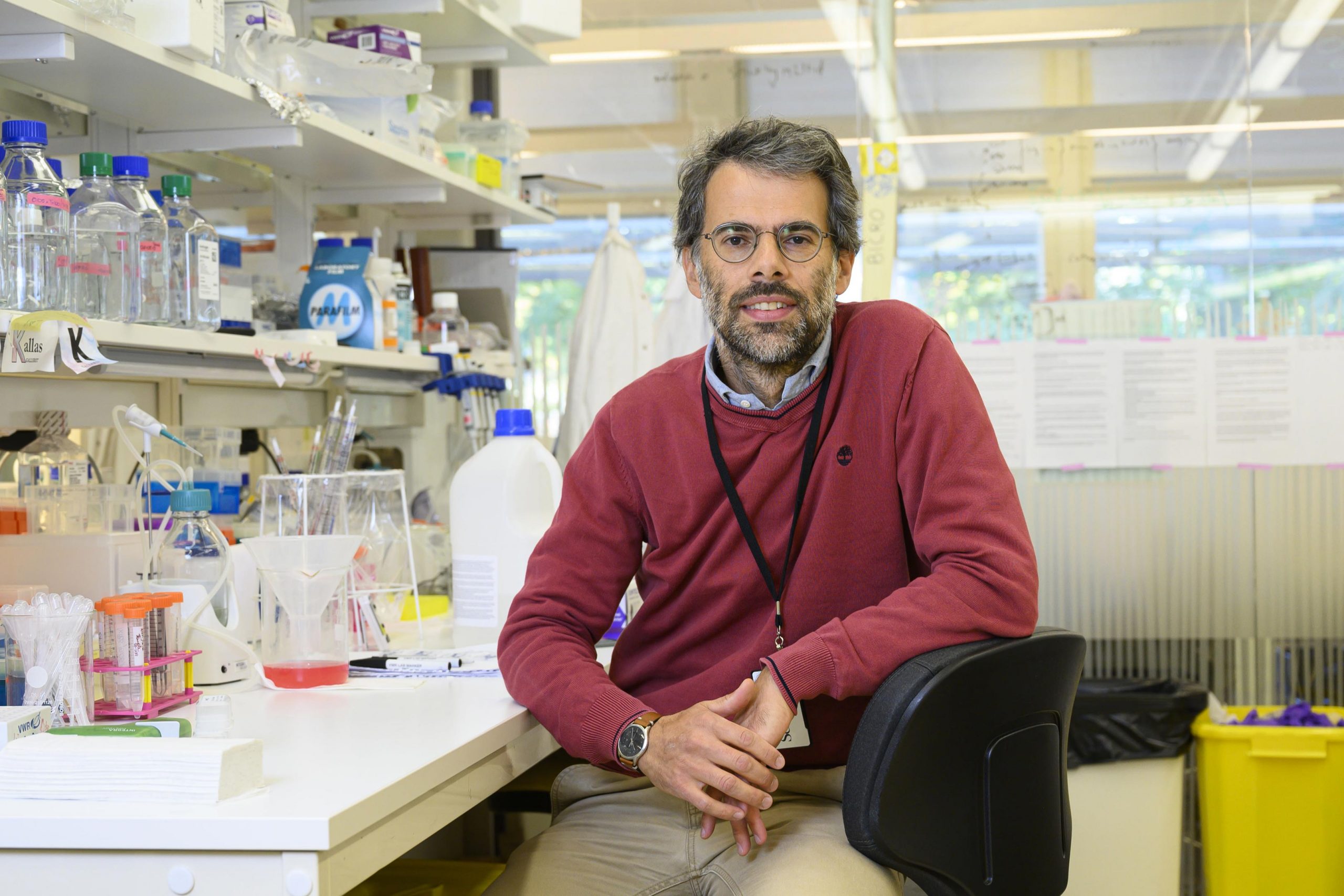
    Nicola Crosetto
    Nicola Crosetto, senior researcher at the Department of Medical Biochemistry and Biophysics, Karolinska Institutet, Sweden. Credit: Stefan Zimmerman

    Scientists have developed a technology for cost-effective surveillance of the global spread of new SARS-CoV-2 variants. (SARS-CoV-2 is the virus that causes COVID-19.) The researchers, from Karolinska Institutet in Sweden, presented the technique in the scientific journal Nature Communications.

    Since the onset of the COVID-19 pandemic, thousands of viral genomes have been sequenced to reconstruct the evolution and global spread of the coronavirus. This is important for the identification of particularly concerning variants that are more contagious, pathogenic, or resistant to the existing vaccines.

    For global surveillance of the SARS-CoV-2 genome, it is crucial to sequence and analyze many samples in a cost-effective way. Therefore, researchers in the Bienko-Crosetto laboratory at Karolinska Institutet and Science for Life Laboratory (SciLifeLab) in Sweden have developed a new method, named COVseq, that can be used for surveillance of the viral genome on a massive scale at a low cost.

    First, many copies of the viral genome are created using so-called multiplex PCR (polymerase chain reaction). The samples are then labeled and pooled together in the same sequencing library, using a previous method developed in the Bienko-Crosetto laboratory and now adapted for SARS-CoV-2 analysis.

    “By performing reactions in very small volumes and pooling together hundreds of samples into the same sequencing library, we can sequence potentially thousands of viral genomes per week at a cost of less than 15 dollars per sample,” says Ning Zhang, postdoctoral researcher at the Department of Medical Biochemistry and Biophysics, Karolinska Institutet and co-first author together with PhD students Michele Simonetti and Luuk Harbers at the same department.

    Comparative analyses of 29 SARS-CoV-2 positive samples revealed that COVseq had a similar ability as the standard method to identify small changes in the genome. Analyses of 245 additional samples showed that COVseq also had a high ability to detect emergent coronavirus variants of potential concern. The key advantage of COVseq over existing methods is cost-effectiveness.

    “Our inexpensive method could immediately be used for SARS-CoV-2 genomic surveillance by public health agencies and could also be easily adapted to other RNA viruses, such as influenza and dengue viruses,” says Nicola Crosetto, senior researcher at the Department of Medical Biochemistry and Biophysics, Karolinska Institutet, and last author of the paper.

    Reference: “COVseq is a cost-effective workflow for mass-scale SARS-CoV-2 genomic surveillance” by Michele Simonetti, Ning Zhang, Luuk Harbers, Maria Grazia Milia, Silvia Brossa, Thi Thu Huong Nguyen, Francesco Cerutti, Enrico Berrino, Anna Sapino, Magda Bienko, Antonino Sottile, Valeria Ghisetti and Nicola Crosetto, 23 June 2021, Nature Communications.
    DOI: 10.1038/s41467-021-24078-9

    The study was done in collaboration with researchers at the ‘Amedeo di Savoia’ Hospital and the Candiolo Cancer Institute in Turin, Italy. The research was supported by grants from the SciLifeLab National COVID-19 Research Program, financed by the Knut and Alice Wallenberg Foundation, and grants from the Swedish Foundation for Strategic Research, as well as private donations from Chiesi Pharma AB and Tetra Pak AB. The authors declare no competing interests.

    Never miss a breakthrough: Join the SciTechDaily newsletter.
    Follow us on Google and Google News.

    Biotechnology COVID-19 Infectious Diseases Karolinska Institutet Public Health
    Share. Facebook Twitter Pinterest LinkedIn Email Reddit

    Related Articles

    New Sensor Detects COVID-19 and Variants on People’s Breath – Even When They Are Asymptomatic

    COVID-19: Sneeze Cam Reveals Best Fabric Combos for Cloth Masks

    MIT and Harvard Engineers Create New Face Mask That Can Detect COVID-19 Infection

    Electronic Nose Might “Sniff Out” COVID-19-Infected People at Mass Scale [Video]

    Tracing COVID Back to Origin: Many Variant Strains Were Already Present Before the First Known Cases Identified in China

    One in Ten People Still Have Long-Term Effects 8 Months Following Mild COVID-19

    New COVID-19 Vaccine: Nanoparticle Immunization Technology Could Protect Against Many Strains of Coronaviruses

    Stanford Engineers Develop Genetic Microlab That Can Detect COVID-19 in Minutes

    Small Neutralizing Antibody Identified That May Prevent COVID-19 Infection

    Leave A Reply Cancel Reply

    • Facebook
    • Twitter
    • Pinterest
    • YouTube

    Don't Miss a Discovery

    Subscribe for the Latest in Science & Tech!

    Trending News

    Scientists Recreate a Nuclear Fireball and Uncover Fallout’s Hidden Chemistry

    These Tiny Gut Particles Could Be Accelerating Aging Throughout the Body

    Doctors Changed One Thing and Weight Gain Stopped

    Magnetic Fields May Solve a Longstanding Binary Star Mystery

    The Probiotic Breakthrough for Natural Anxiety Relief and Better Mental Health

    Animal vs. Plant Protein: Scientists Found a Surprising Nutritional Difference

    According to Scientists, This Simple Dietary Change Is Linked to Lower Depression Scores

    Researchers Discover a Hidden Vitamin D Problem That Persists Year-Round

    Follow SciTechDaily
    • Facebook
    • Twitter
    • YouTube
    • Pinterest
    • Newsletter
    • RSS
    SciTech News
    • Biology News
    • Chemistry News
    • Earth News
    • Health News
    • Physics News
    • Science News
    • Space News
    • Technology News
    Recent Posts
    • Scientists Tracked 4,500 Animals During COVID – What They Discovered Was Surprising
    • Hidden Phase of Matter Finally Captured After Decades of Predictions
    • The Strange “Spacetime Crystal” That Can Suddenly Turn Into a Black Hole
    • A Hidden Gut Signal May Be Driving Sleep Apnea’s Deadly Heart Risks
    • This AI-Designed “Universal Vaccine” Could Stop Future Pandemics Before They Start
    Copyright © 1998 - 2026 SciTechDaily. All Rights Reserved.
    • Science News
    • About
    • Contact
    • Editorial Board
    • Privacy Policy
    • Terms of Use

    Type above and press Enter to search. Press Esc to cancel.