
Research Highlights:
- Eating fruits with lunch, vegetables at dinner, and a dairy snack in the evening was associated with a reduced risk of death by cardiovascular disease (CVD) and all-cause mortality, according to a study of U.S. adults.
- Eating a Western lunch (typically containing a high quantity of refined grains, cheese, and cured meat) was associated with an elevated risk of CVD and all-cause mortalities in the same study.
- Consuming a snack high in starch after any meal was associated with an increased risk of all-cause and CVD-related mortality.
Starchy Snacks Tied to Higher Heart and Mortality Risk
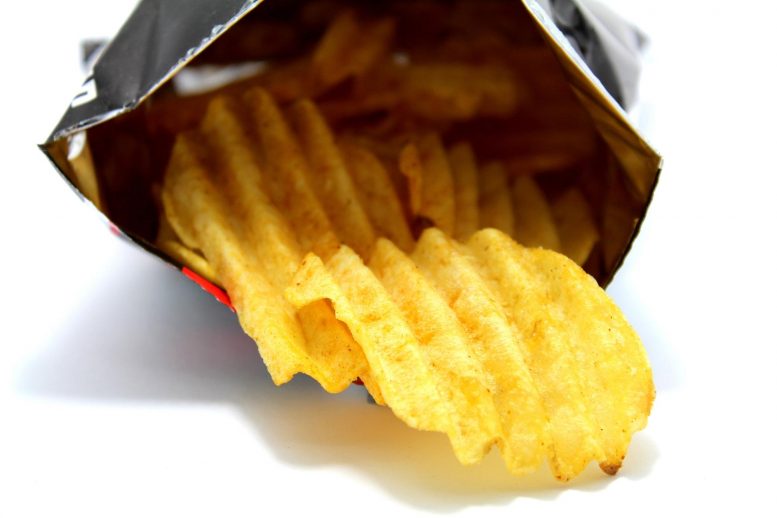
Can starchy snacks harm heart health? New research found eating starchy snacks high in white potato or other starches after any meal was associated at least a 50% increased risk of mortality and a 44-57% increased risk of CVD-related death. Conversely, eating fruits, vegetables, or dairy at specific meals is associated with a reduced risk of death from cardiovascular disease, cancer or any cause. The study was published today (June 23, 2022) in the Journal of the American Heart Association, an open access journal of the American Heart Association.
“People are increasingly concerned about what they eat as well as when they eat,” said Ying Li, Ph.D., lead study author and professor in the Department of Nutrition and Food Hygiene at Harbin Medical University School of Public Health in Harbin, China. “Our team sought to better understand the effects different foods have when consumed at certain meals.”
Li and colleagues analyzed the results of 21,503 participants in the National Health and Nutrition Examination Survey (NHANES) from 2003 to 2014 in the U.S. to assess dietary patterns across all meals. Among the study population, 51% of participants were women and all participants were ages 30 or older at the start of the study. To determine patient outcomes, researchers used the U.S. Centers for Disease Control and Prevention’s National Death Index to note participants who died through December 31, 2015, due to CVD, cancer or any cause.
Researchers categorized participants’ dietary patterns by analyzing what types of food they ate at different meals. For the main meals, three main dietary patterns were identified for the morning meal: Western breakfast, starchy breakfast, and fruit breakfast. Western lunch, vegetable lunch, and fruit lunch were identified as the main dietary patterns for the mid-day meal. Western dinner, vegetable dinner, and fruit dinner were identified as the main dietary patterns for the evening meal.
For snacks, grain snacks, starchy snacks, fruit snacks, and dairy snacks were identified as the main snack patterns in between meals. Additionally, participants who did not fit into specific meal patterns were analyzed as a reference group. The researchers noted that the Western dietary pattern has higher proportions of fat and protein, which is similar to many North American meals.
Participants in the Western lunch group consumed the most servings of refined grain, solid fats, cheese, added sugars, and cured meat. Participants in the fruit-based lunch group consumed the most servings of whole grain, fruits, yogurt, and nuts. Participants in the vegetable-based dinner group consumed the most servings of dark vegetables, red and orange vegetables, tomatoes, other vegetables and legumes. Participants who consumed starchy snacks consumed the most servings of white potatoes.
Key Associations Between Diet Timing and Mortality Risk
According to their findings:
- Eating a Western lunch (typically containing refined grains, cheese, cured meat) was associated with a 44% increased risk of CVD death;
- Eating a fruit-based lunch was associated with a 34% reduced risk of CVD death;
- Eating a vegetable-based dinner was associated with a 23% and 31% reduction in CVD and all-cause mortality, respectively; and
- Consuming a snack high in starch after any meal was associated with a 50-52% increased risk of all-cause mortality and a 44-57% increased risk in CVD-related mortality.
“Our results revealed that the amount and the intake time of various types of foods are equally critical for maintaining optimal health,” said Li. “Future nutrition guidelines and interventional strategies could integrate optimal consumption times for foods across the day.”
Limitations to this study include that dietary data was self-reported by participants, which may lead to recall bias. And, although the researchers controlled for potential confounders, other unmeasured confounding factors cannot be ruled out.
Reference: “Association of Meal and Snack Patterns With Mortality of All‐Cause, Cardiovascular Disease, and Cancer: The US National Health and Nutrition Examination Survey, 2003 to 2014” by Wei Wei, Wenbo Jiang, Jiaxin Huang, Jiaxu Xu, Xuanyang Wang, Xitao Jiang, Yu Wang, Guili Li, Changhao Sun, Ying Li and Tianshu Han, 23 June 2021, Journal of the American Heart Association.
DOI: 10.1161/JAHA.120.020254
Co-authors are Wei Wei, Ph.D.; Wenbo Jiang, Ph.D.; Jiaxin Huang, M.Med.; Jiaxu Xu, M.Med.; Xuanyang Wang, M.Med.; Xitao Jiang, Ph.D.; Yu Wang, M.Med.; Guili Li, M.Med.; Changhao Sun, Ph.D.; and Tianshu Han, Ph.D.
The study was funded by the National Key R&D Program of China, the National Natural Science Foundation and the Young Elite Scientists Sponsorship Program from the Chinese Association for Science and Technology (CAST).
Never miss a breakthrough: Join the SciTechDaily newsletter.
Follow us on Google and Google News.