
Close Menu
    Facebook X (Twitter) Instagram
    SciTechDaily
    • Biology
    • Chemistry
    • Earth
    • Health
    • Physics
    • Science
    • Space
    • Technology
    Facebook X (Twitter) Pinterest YouTube RSS
    SciTechDaily
    Home»Technology»How Environmental Satellites Are Helping Solar Power Plants on Earth
    Technology

    How Environmental Satellites Are Helping Solar Power Plants on Earth

    By American Institute of PhysicsApril 14, 2020No Comments3 Mins Read
    Facebook Twitter Pinterest Telegram LinkedIn WhatsApp Email Reddit
    Share
    Facebook Twitter LinkedIn Pinterest Telegram Email Reddit
    GOES-R Spacecraft
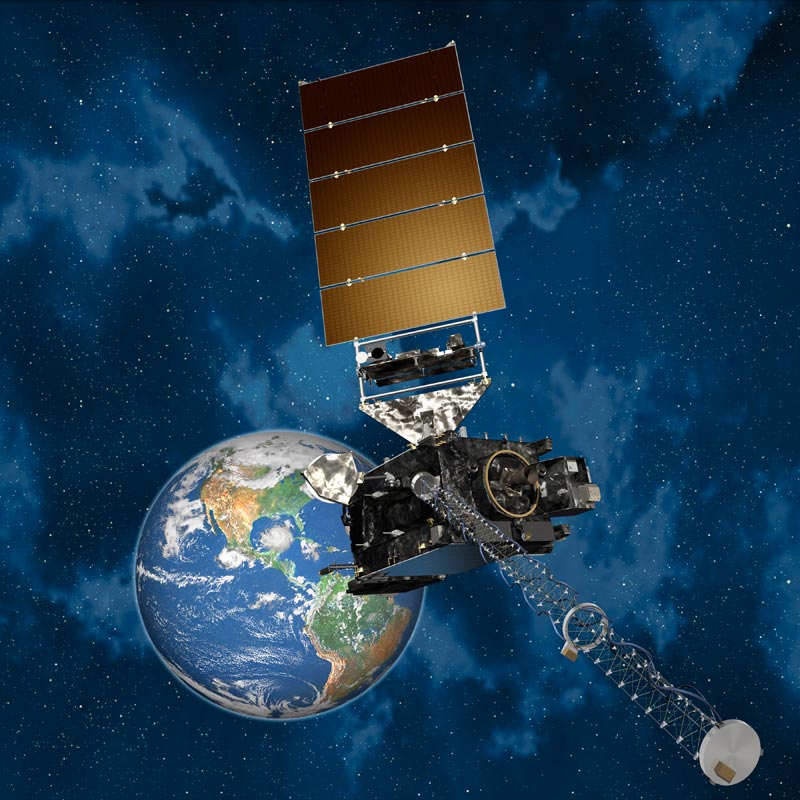
    GOES-R Spacecraft with Earth in the background. Credit: NOAA/NASA

    Scientists develop a method to convert Geostationary Operational Environmental Satellites (GOES) satellite data into detailed information about cloud cover properties, enhancing the ability to forecast available sunlight for solar power plants.

    The output of solar energy systems is highly dependent on cloud cover. While weather forecasting can be used to predict the amount of sunlight reaching ground-based solar collectors, cloud cover is often characterized in simple terms, such as cloudy, partly cloudy, or clear. This does not provide accurate information for estimating the amount of sunlight available for solar power plants.

    In this week’s Journal of Renewable and Sustainable Energy, from AIP Publishing, a new method is reported for estimating cloud optical properties using data from recently launched satellites. This new technique is known as Spectral Cloud Optical Property Estimation, or SCOPE.

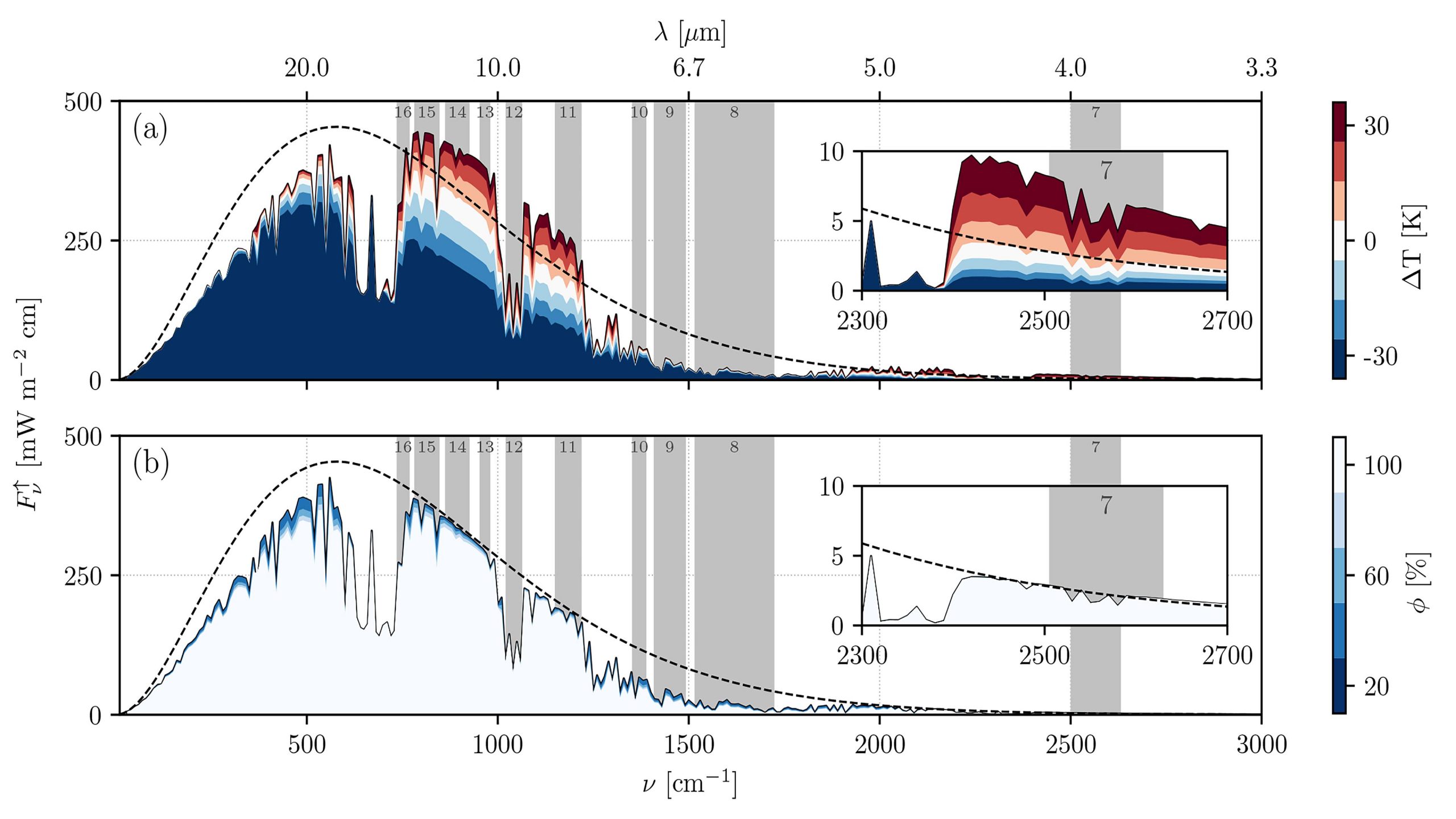
    In 2016, NASA began launching a new generation of Geostationary Operational Environmental Satellites, the GOES-R series. These satellites occupy fixed positions above the Earth’s surface. Each is equipped with several sophisticated instruments, including the Advanced Baseline Imager, or ABI, which can detect radiation upwelling from the Earth at specific wavelengths.
    Light Coming From Earth's Surface
    Light coming from the Earth’s surface and detected by the Advanced Baseline Imager (ABI) aboard the GOES-R satellite, shown as a function of wavelength. Credit: Carlos F.M. Coimbra

    The SCOPE method estimates three properties of clouds that determine the amount of sunlight reaching the Earth’s surface. The first, cloud top height, is the altitude corresponding to the top of each cloud. The second, cloud thickness, is simply the difference in altitude between a cloud’s top and bottom. The third property is the cloud’s optical depth, a measure of how a cloud modifies light passing through it.

    Clouds are, essentially, floating masses of condensed water. The water takes multiple forms as liquid droplets or ice crystals of varying sizes. These different forms of water absorb light in different amounts, affecting a cloud’s optical depth.

    The amount of light absorbed also depends on the light’s wavelength. Absorption is especially variable for light in the wider infrared range of the spectrum but not so much for light in the narrower visible range.

    The SCOPE method simultaneously estimates cloud thickness, top height, and optical depth by coupling ABI sensor data from GOES-R satellites to an atmospheric model. Two other inputs to the model come from ground-based weather stations: ambient temperature and relative humidity at the ground. These are used to adjust temperature and gas concentration vertical profiles in the model.

    The accuracy of the estimated cloud optical properties was evaluated using one year of data from 2018 for measurements taken at seven ground-based locations in the U.S. during both night and day, in all sorts of weather, and for a wide spatial coverage at 5-minute intervals.

    “SCOPE can be used during both day and night with reliable accuracy,” said co-author Carlos F.M. Coimbra. “Due to its high-frequency output during daytime, SCOPE is especially suitable for providing accurate real-time estimates of cloud optical properties for solar forecasting applications.”

    Reference: “SCOPE: Spectral cloud optical property estimation using real-time GOES-R longwave imagery” by David P. Larson, Mengying Li and Carlos F. M. Coimbra, 14 April 2020, Journal of Renewable and Sustainable Energy.
    DOI: 10.1063/1.5144350

    Never miss a breakthrough: Join the SciTechDaily newsletter.
    Follow us on Google and Google News.

    American Institute of Physics Climate Science Energy Green Energy Weather
    Share. Facebook Twitter Pinterest LinkedIn Email Reddit

    Related Articles

    Nanoparticles Self-Assemble to Create Revolutionary Solar Energy Harvesting Solution

    Cornell University to Extract Energy From Manure to Heat the Campus

    Scientists Discover a More Efficient Way to Turn Heat Into Electrical Energy

    New High-Performance Photovoltaic Solar Cells That Work Indoors

    Transformative Device Generates Energy From the Cold Night Sky, When Solar Doesn’t Work

    Low-Cost Device Generates Electricity Naturally in the Dark

    Hybrid-Solid Electrolysis Cell System – A New Strategy for Efficient Hydrogen Production

    New Aluminum Batteries Increase the Range of UUVs Tenfold

    Floating Nuclear Power Plant that is Safer and Cheaper

    Leave A Reply Cancel Reply

    • Facebook
    • Twitter
    • Pinterest
    • YouTube

    Don't Miss a Discovery

    Subscribe for the Latest in Science & Tech!

    Trending News

    Artificial Sweeteners May Harm Future Generations, Study Suggests

    Splashdown! NASA Artemis II Returns From Record-Breaking Moon Mission

    What If Consciousness Exists Beyond Your Brain

    Scientists Finally Crack the 100-Million-Year Evolutionary Mystery of Squid and Cuttlefish

    Beyond “Safe Levels”: Study Challenges What We Know About Pesticides and Cancer

    Researchers Have Found a Dietary Compound That Increases Longevity

    Scientists Baffled by Bizarre “Living Fossil” From 275 Million Years Ago

    Your IQ at 23 Could Predict Your Wealth at 27, Study Finds

    Follow SciTechDaily
    • Facebook
    • Twitter
    • YouTube
    • Pinterest
    • Newsletter
    • RSS
    SciTech News
    • Biology News
    • Chemistry News
    • Earth News
    • Health News
    • Physics News
    • Science News
    • Space News
    • Technology News
    Recent Posts
    • What if Dark Matter Has Two Forms? Bold New Hypothesis Could Explain a Cosmic Mystery
    • Researchers Expose Hidden Chemistry of “Ore-Forming” Elements in Biology
    • Geologists Reveal the Americas Collided Earlier Than We Thought
    • 20x Difference: Study Reveals True Source of Airborne Microplastics
    • Scientists Uncover Hidden Force Powering Yellowstone’s Supervolcano
    Copyright © 1998 - 2026 SciTechDaily. All Rights Reserved.
    • Science News
    • About
    • Contact
    • Editorial Board
    • Privacy Policy
    • Terms of Use

    Type above and press Enter to search. Press Esc to cancel.