
Close Menu
    Facebook X (Twitter) Instagram
    SciTechDaily
    • Biology
    • Chemistry
    • Earth
    • Health
    • Physics
    • Science
    • Space
    • Technology
    Facebook X (Twitter) Pinterest YouTube RSS
    SciTechDaily
    Home»Science»Lunar Reconnaissance Orbiter Reveals Apollo 16 Booster Rocket Impact Site
    Science

    Lunar Reconnaissance Orbiter Reveals Apollo 16 Booster Rocket Impact Site

    By SciTechDailyDecember 3, 2015No Comments2 Mins Read
    Facebook Twitter Pinterest Telegram LinkedIn WhatsApp Email Reddit
    Share
    Facebook Twitter LinkedIn Pinterest Telegram Email Reddit
    LRO Views Apollo 16 Booster Rocket Impact Site
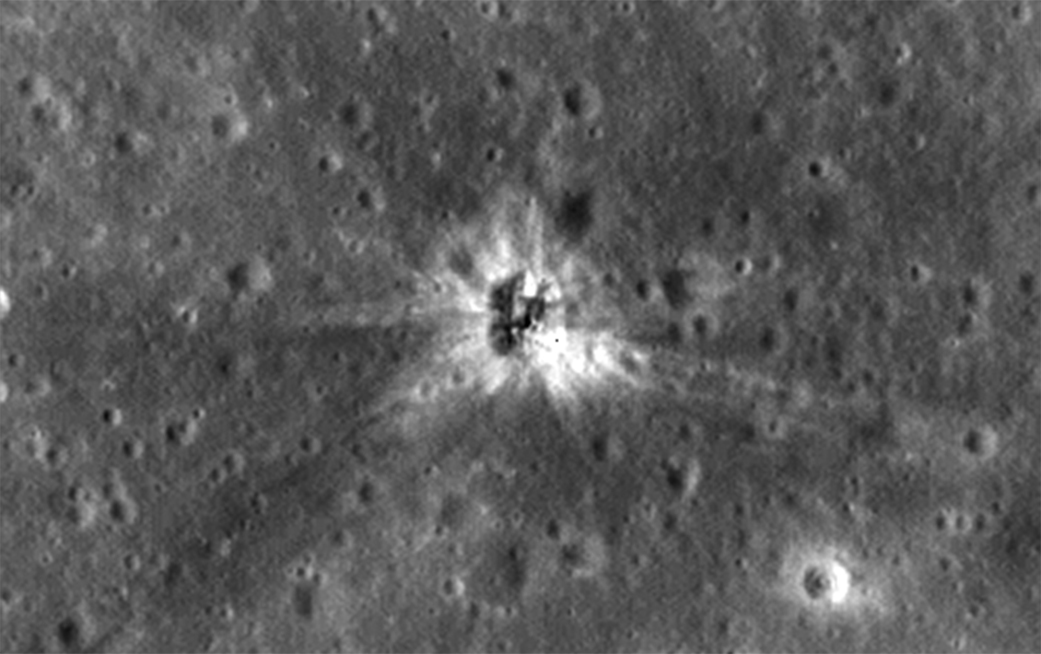
    After decades of uncertainty, the Apollo 16 S-IVB impact site on the lunar surface has been identified. S-IVBs were portions of the Saturn V rockets that brought astronauts to the moon. The site was identified in imagery from the high-resolution LROC Narrow Angle Camera aboard NASA’s Lunar Reconnaissance Orbiter. Credit: NASA/Goddard/Arizona State University

    NASA’s Lunar Reconnaissance Orbiter views the Apollo 16 S-IVB impact site on the moon.

    After decades of uncertainty, the Apollo 16 S-IVB impact site on the lunar surface has been identified. S-IVBs were portions of the Saturn V rockets that brought astronauts to the moon. The site was identified in imagery from the high-resolution LROC Narrow Angle Camera aboard NASA’s Lunar Reconnaissance Orbiter.

    Beginning with Apollo 13, the S-IVB rocket stages were deliberately impacted on the lunar surface after they were used. Seismometers placed on the moon by earlier Apollo astronauts measured the energy of these impacts to shed light on the internal lunar structure. Locations of the craters that the boosters left behind were estimated from tracking data collected just prior to the impacts.

    Earlier in the LRO mission, the Apollo 13, 14, 15, and 17 impact sites were successfully identified, but Apollo 16’s remained elusive. In the case of Apollo 16, radio contact with the booster was lost before the impact, so the location was only poorly known. Positive identification of the Apollo 16 S-IVB site took more time than the other four impact craters because the location ended up differing by about 30 km (about 19 miles) from the Apollo-era tracking estimate. (For comparison, the other four S-IVB craters were all within 7 km — about four miles — of their estimated locations.)

    Apollo 16’s S-IVB stage is on Mare Insularum, about 160 miles (260 kilometers) southwest of Copernicus Crater (more precisely: 1.921 degrees north, 335.377 degrees east, minus 1,104 meters elevation).

    Never miss a breakthrough: Join the SciTechDaily newsletter.
    Follow us on Google and Google News.

    Astronomy Moon NASA NASA's Lunar Reconnaissance Orbiter
    Share. Facebook Twitter Pinterest LinkedIn Email Reddit

    Related Articles

    LRO Spacecraft Reveals Earth’s Moon Hit by Surprising Number of Meteoroids

    NASA to Provide a Live Feed of Supermoon Eclipse

    Lunar Reconnaissance Orbiter Moves Closer to the Lunar Surface

    LRO Spacecraft Captures Image of LADEE’s Lunar Impact Crater

    LRO Reveals Lunar Pits Could Support Human Activity on the Lunar Surface

    LRO Radar Data Indicates That the Walls of Shackleton Crater on the Moon May Hold Ice

    A Closer Look at Titan’s Chemical Production

    NASA LRO Spacecraft Reveals Geological Activity on the Moon’s Surface

    NASA’s GRAIL Mission Returns Video From Far Side of the Moon

    Leave A Reply Cancel Reply

    • Facebook
    • Twitter
    • Pinterest
    • YouTube

    Don't Miss a Discovery

    Subscribe for the Latest in Science & Tech!

    Trending News

    One of the Universe’s Largest Stars May Be Getting Ready To Explode

    Scientists Discover Enzyme That Could Supercharge Ozempic-Like Weight Loss Drugs

    Popular Sweetener Linked to DNA Damage – “It’s Something You Should Not Be Eating”

    Ancient “Rock” Microbes May Reveal How Complex Life Began

    Researchers Capture Quantum Interference in One of Nature’s Rarest Atoms

    “A Plague Is Upon Us”: The Mass Death That Changed an Ancient City Forever

    Scientists Discover Game-Changing New Way To Treat High Cholesterol

    This Small Change to Your Exercise Routine Could Be the Secret to Living Longer

    Follow SciTechDaily
    • Facebook
    • Twitter
    • YouTube
    • Pinterest
    • Newsletter
    • RSS
    SciTech News
    • Biology News
    • Chemistry News
    • Earth News
    • Health News
    • Physics News
    • Science News
    • Space News
    • Technology News
    Recent Posts
    • Revolutionary Imaging Technique Unlocks Secrets of Matter at Extreme Speeds
    • Where Does Mass Come From? Scientists Find Evidence of a New Exotic Nuclear State
    • Quantum Breakthrough: Unhackable Keys Sent Over 120 km Using Quantum Dots
    • Researchers Discover Unknown Beetle Species Just Steps From Their Lab
    • Jellyfish Caught Feasting on Exploding Sea Worms for the First Time
    Copyright © 1998 - 2026 SciTechDaily. All Rights Reserved.
    • Science News
    • About
    • Contact
    • Editorial Board
    • Privacy Policy
    • Terms of Use

    Type above and press Enter to search. Press Esc to cancel.