
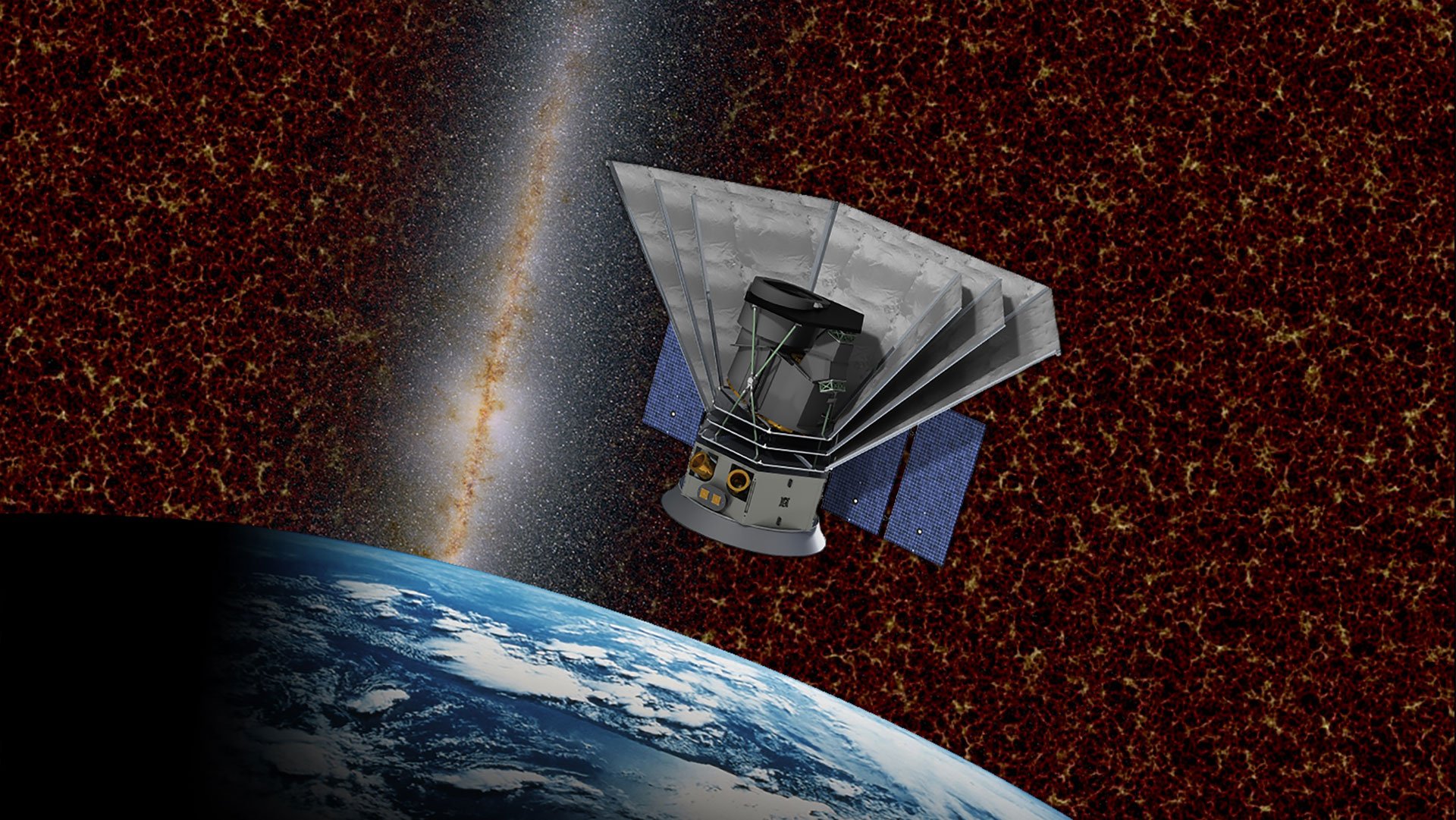
Key elements are coming together for NASA’s SPHEREx mission, a space telescope that will create a map of the universe like none before.
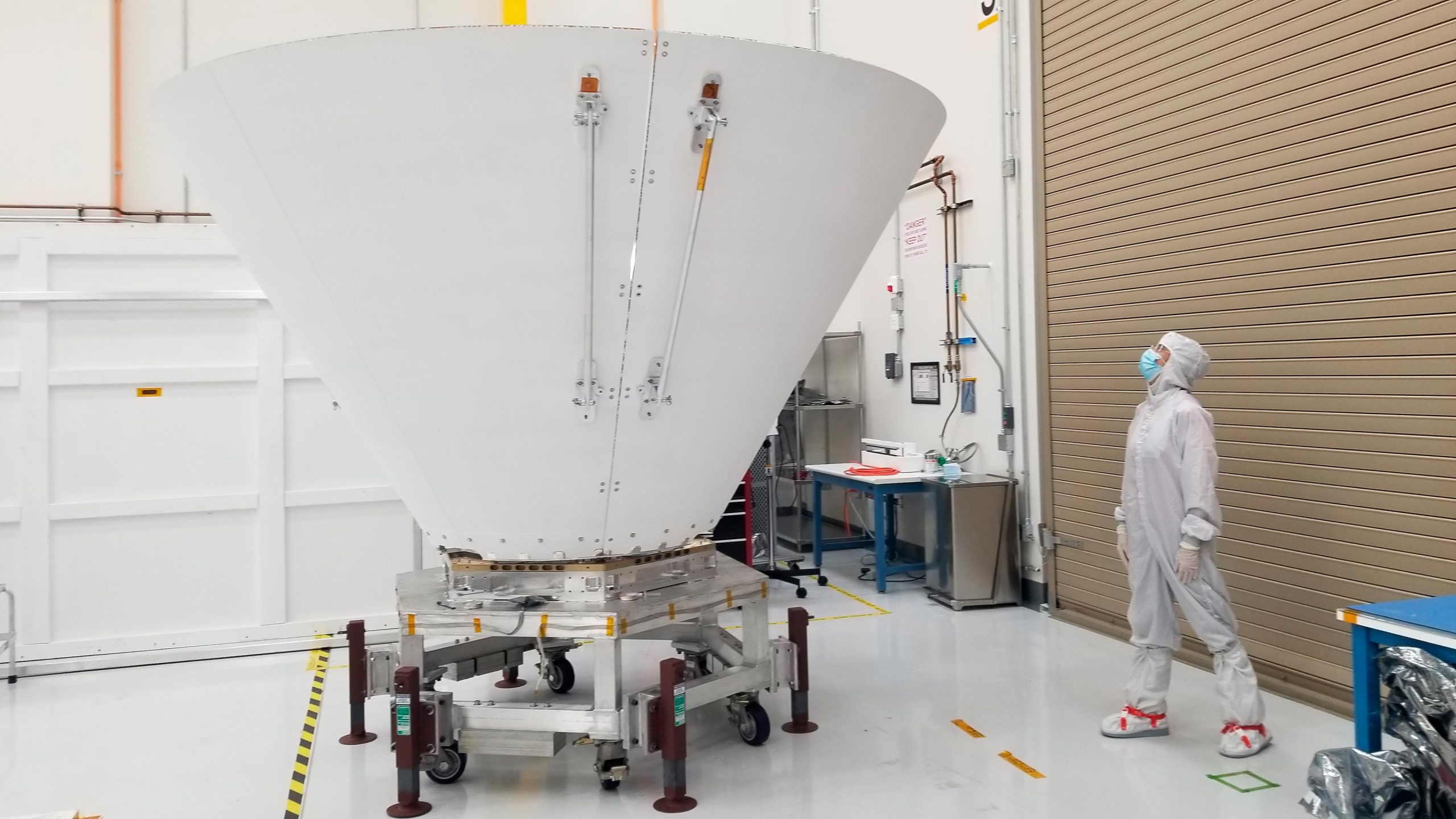
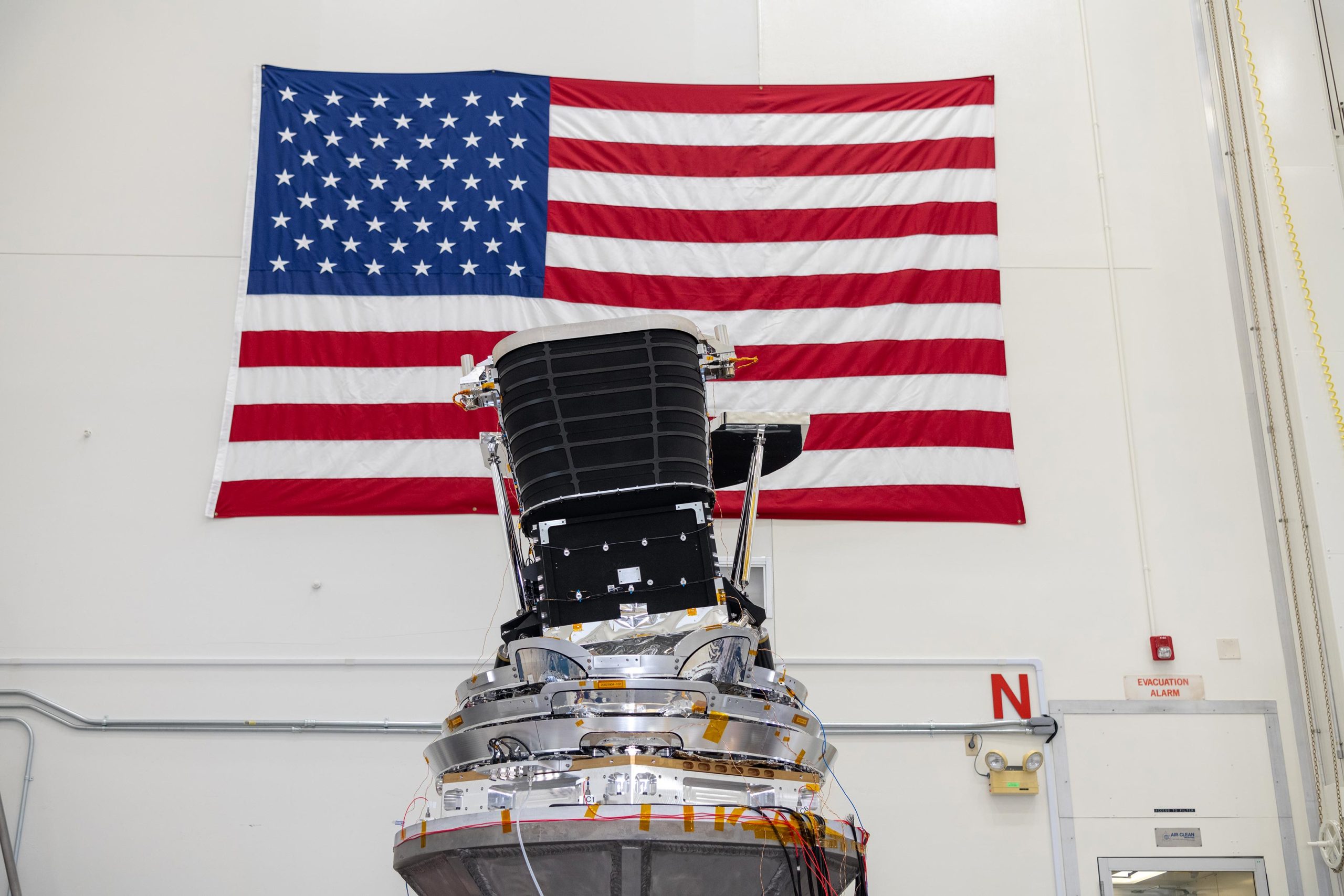
NASA’s SPHEREx space telescope is beginning to look much like it will when it arrives in Earth orbit and starts mapping the entire sky. Short for Specto-Photometer for the History of the Universe, Epoch of Reionization, and Ices Explorer, SPHEREx resembles a bullhorn, albeit one that will stand almost 8.5 feet tall (2.6 meters) and stretch nearly 10.5 feet (3.2 meters) wide. Giving the observatory its distinctive shape are its cone-shaped photon shields, which are being assembled in a clean room at NASA’s Jet Propulsion Laboratory in Southern California.
Shielding and Operation
Three cones, each nestled within the other, will surround SPHEREx’s telescope to protect it from the light and heat of the Sun and Earth. The spacecraft will sweep over every section of the sky, like scanning the inside of a globe, to complete two all-sky maps every year.
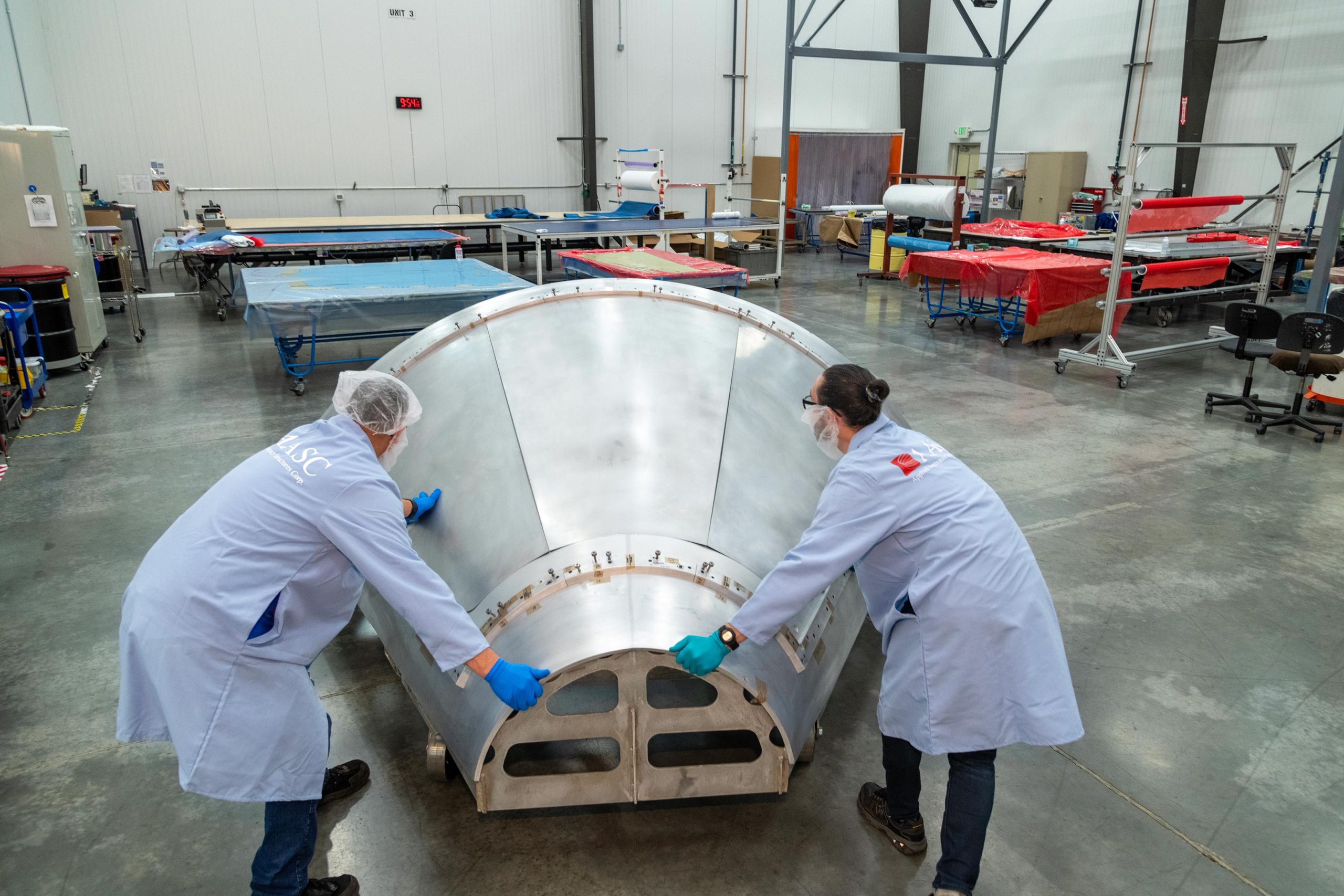
“SPHEREx has to be quite agile because the spacecraft has to move relatively quickly as it scans the sky,” said JPL’s Sara Susca, deputy payload manager and payload systems engineer for the mission. “It doesn’t look that way, but the shields are actually quite light and made with layers of material like a sandwich. The outside has aluminum sheets, and inside is an aluminum honeycomb structure that looks like cardboard – light but sturdy.”
NASA’s SPHEREx will create a map of the sky like no other. Check out some of the special hardware the mission uses to do cutting-edge science. Credit: NASA/JPL-Caltech
Mission Objectives
When it launches – no later than April 2025 – SPHEREx will help scientists better understand where water and other key ingredients necessary for life originated. To do this, the mission will measure the abundance of water ice in interstellar clouds of gas and dust, where new stars are born and from which planets eventually form. It will study the cosmic history of galaxies by measuring the collective light they produce. Those measurements will help tease out when galaxies began to form and how their formation has changed over time. Finally, by mapping the location of millions of galaxies relative to one another, SPHEREx will look for new clues about how the rapid expansion, or inflation, of the universe, took place a fraction of a second after the Big Bang.
Cool and Stable
SPHEREx will do all this by detecting infrared light, a range of wavelengths longer than the visible light human eyes can see. Infrared light is also sometimes called heat radiation because all warm objects emit it. Even the telescope can create infrared light. Because that light would interfere with its detectors, the telescope has to be kept cold – below minus 350 degrees Fahrenheit (about minus 210 degrees Celsius).
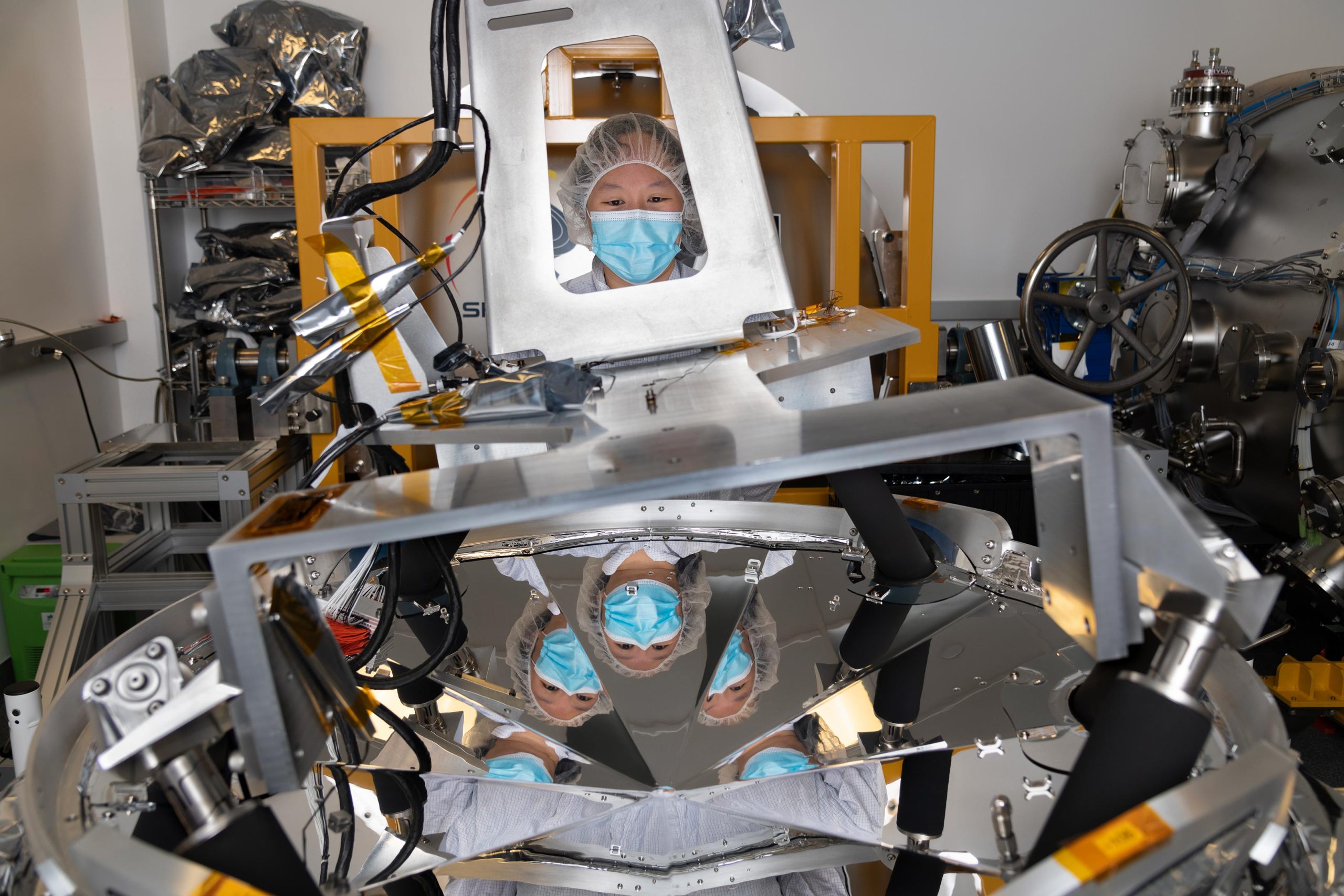
The outer photon shield will block light and heat from the Sun and Earth, and the gaps between the cones will prevent heat from making its way inward toward the telescope. But to ensure SPHEREx gets down to its frigid operating temperature, it also needs something called a V-groove radiator: three conical mirrors, each like an upside-down umbrella, stacked atop one another. Sitting below the photon shields, each is composed of a series of wedges that redirect infrared light so it bounces through the gaps between the shields and out into space. This removes heat carried through the supports from the room-temperature spacecraft bus that contains the computer and electronics.
“We’re not just concerned with how cold SPHEREx is, but also that its temperature stays the same,” said JPL’s Konstantin Penanen, payload manager for the mission. “If the temperature varies, it could change the sensitivity of the detector, which could translate as a false signal.”
Eye on the Sky
The heart of SPHEREx is, of course, its telescope, which collects infrared light from distant sources using three mirrors and six detectors. The telescope is tilted on its base so it can see as much of the sky as possible while remaining within the protection of the photon shields.
Built by Ball Aerospace in Boulder, Colorado, the telescope arrived in May at Caltech in Pasadena, California, where it was integrated with the detectors and the V-groove radiator. Then, at JPL, engineers secured it to a vibration table that simulates the shaking that the telescope will endure on the rocket ride to space. After that, it went back to Caltech, where scientists confirmed its mirrors are still in focus following the vibration testing.
SPHEREx’s Infrared ‘Vision’
The mirrors inside SPHEREx’s telescope collect light from distant objects, but it’s the detectors that can “see” the infrared wavelengths the mission is trying to observe.
A star like our Sun emits the entire range of visible wavelengths, so it is white (though Earth’s atmosphere causes it to look more yellow to our eyes). A prism can break that light into its component wavelengths – a rainbow. This is called spectroscopy.
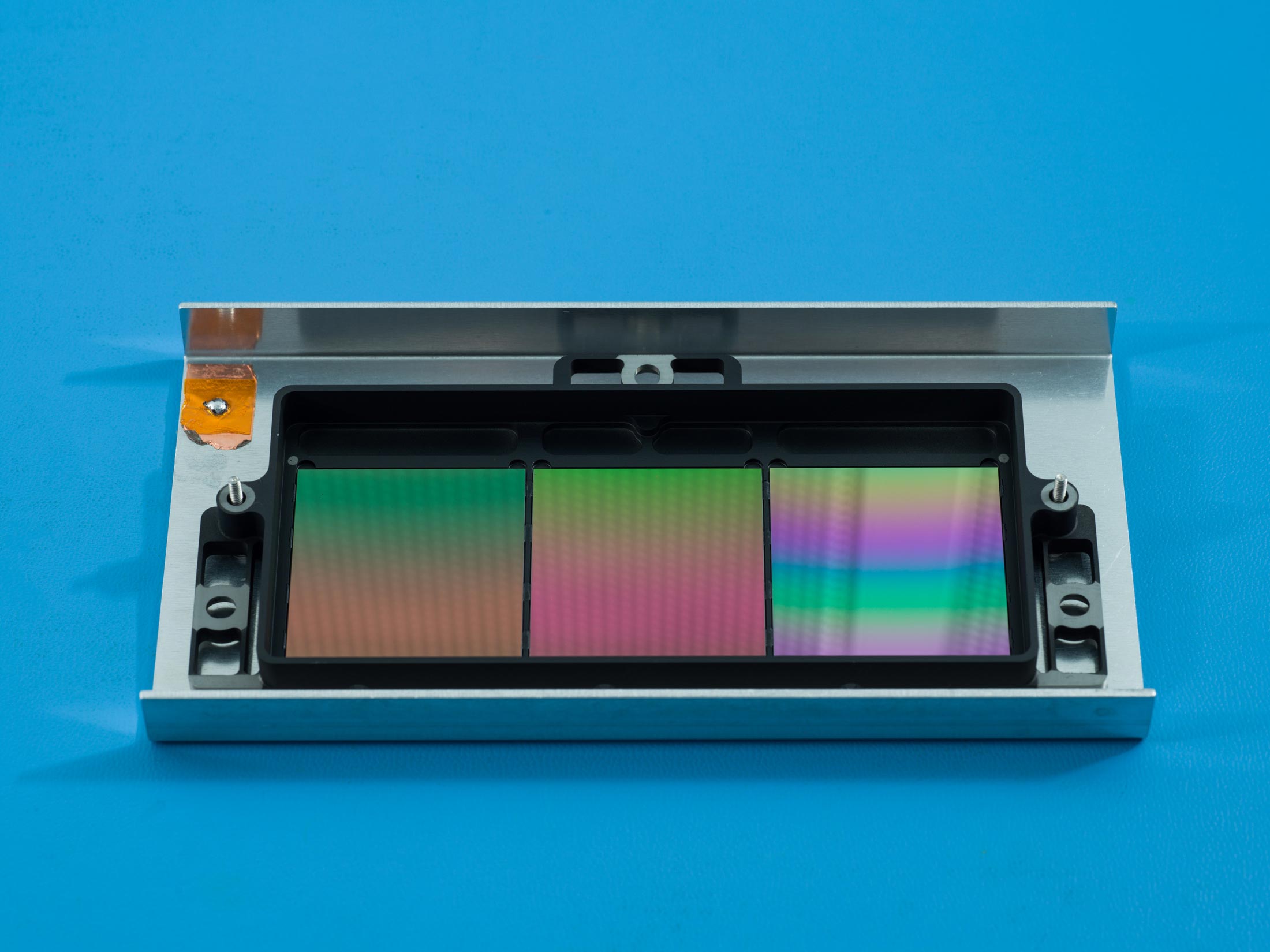
SPHEREx will use filters installed on top of its detectors to perform spectroscopy. Only about the size of a cracker, each filter appears iridescent to the naked eye and has multiple segments to block all but one specific wavelength of infrared light. Every object SPHEREx observes will be imaged by each segment, enabling scientists to see the specific infrared wavelengths emitted by that object, whether it’s a star or a galaxy. In total, the telescope can observe more than 100 distinct wavelengths.
And from that, SPHEREx will create maps of the universe unlike any that have come before.
NASA’s SPHEREx Mission
SPHEREx is managed by the Jet Propulsion Laboratory (JPL) for NASA’s Astrophysics Division within the Science Mission Directorate in Washington. Ball Aerospace built the telescope and will supply the spacecraft bus. The science analysis of the SPHEREx data will be conducted by a team of scientists located at 10 institutions across the U.S. and in South Korea. Data will be processed and archived at IPAC at Caltech. The SPHEREx data set will be publicly available.
Never miss a breakthrough: Join the SciTechDaily newsletter.
Follow us on Google and Google News.