
Close Menu
    Facebook X (Twitter) Instagram
    SciTechDaily
    • Biology
    • Chemistry
    • Earth
    • Health
    • Physics
    • Science
    • Space
    • Technology
    Facebook X (Twitter) Pinterest YouTube RSS
    SciTechDaily
    Home»Biology»Marine Biologists Discover Unexpected Biodiversity on the Ocean Floor
    Biology

    Marine Biologists Discover Unexpected Biodiversity on the Ocean Floor

    By Royal Netherlands Institute for Sea ResearchFebruary 18, 2024No Comments3 Mins Read
    Facebook Twitter Pinterest Telegram LinkedIn WhatsApp Email Reddit
    Share
    Facebook Twitter LinkedIn Pinterest Telegram Email Reddit
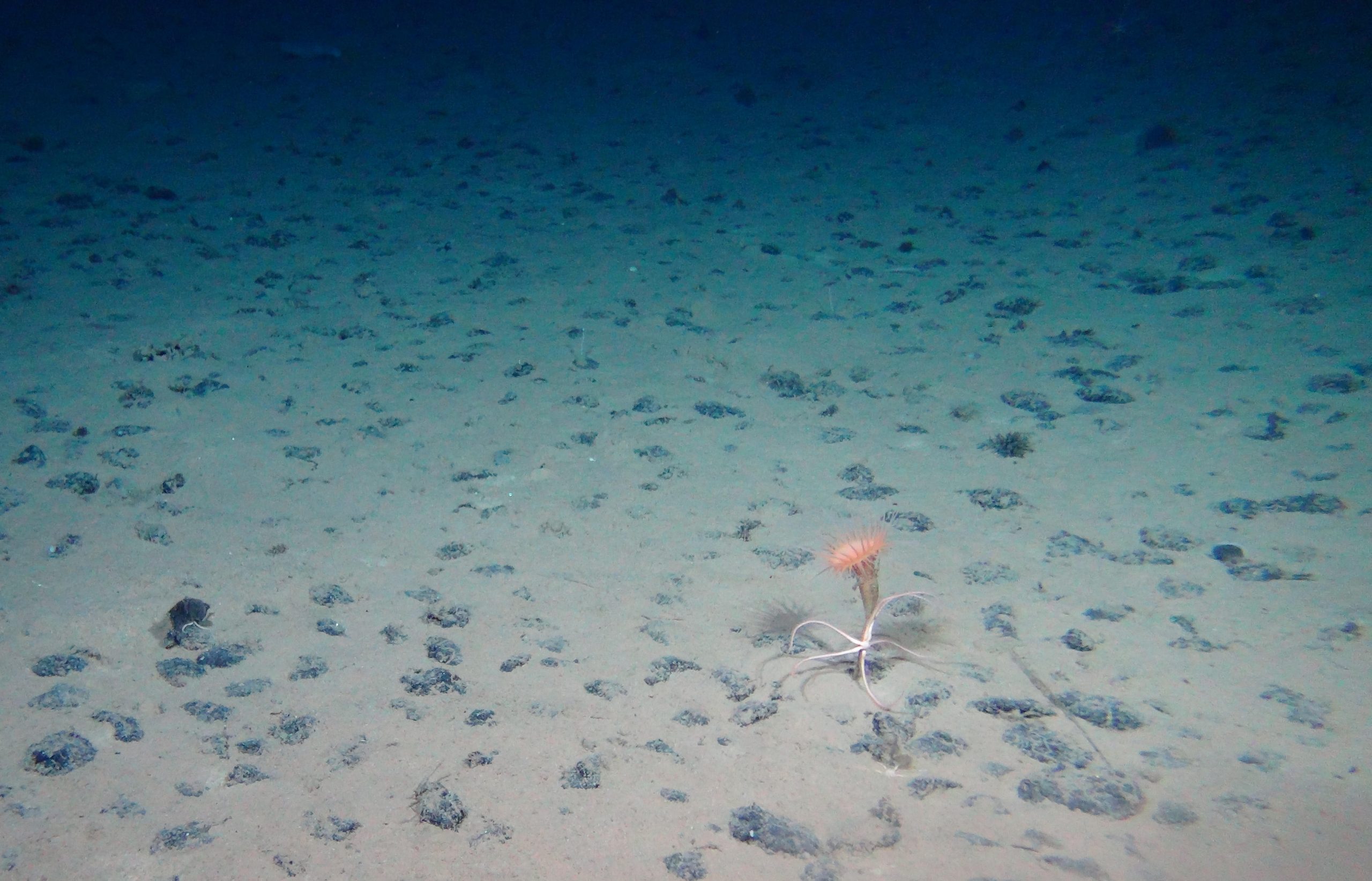
    Field of Manganese Nodules on the Sea Floor
    Scientists have uncovered unexpected biodiversity in deep-sea environments, particularly around hydrothermal vents and manganese nodules, through detailed collection and DNA analysis of marine species. The findings, indicating isolated and unique species as well as potential reproductive habitats within nodules, underscore the ecological importance of these areas. Marine ecologist Sabine Gollner stresses the need for caution in considering deep-sea mining, given the high extinction risk to these unique species. Field of manganese nodules on the sea floor. Credit: ROV KIEL6000 GEOMAR

    “We should be extremely careful with potential future deep-sea mining, as these unique species carry high extinction risk.”

    The deep oceans, with their hydrothermal vents and manganese nodule fields, are more biologically diverse than previously thought. This finding is highlighted in the dissertation of NIOZ marine biologist Coral Diaz-Recio Lorenzo, which was recently presented for defense at Utrecht University.

    “This research – again – shows that we should be extremely careful before allowing commercial deep-sea mining for minerals that are found in these habitats,” marine ecologist Sabine Gollner of NIOZ says.

    Isolated animals

    For her PhD-research, Diaz-Recio Lorenzo looked at the copepods that she collected at hydrothermal vents in the Lau-basin, on the border of the Australian and the Pacific plate, near the island of Tonga. Using large underwater robots, she collected a number of these tiny, shrimp-like animals, that dominate these habitats. The samples were collected from different locations within one basin.

    Through DNA analysis, she then showed that different populations lived rather isolated from each other, with little interactions between the populations. From basins further away, she collected specimens that looked the same, but should even be considered different species, based on the composition of their DNA.
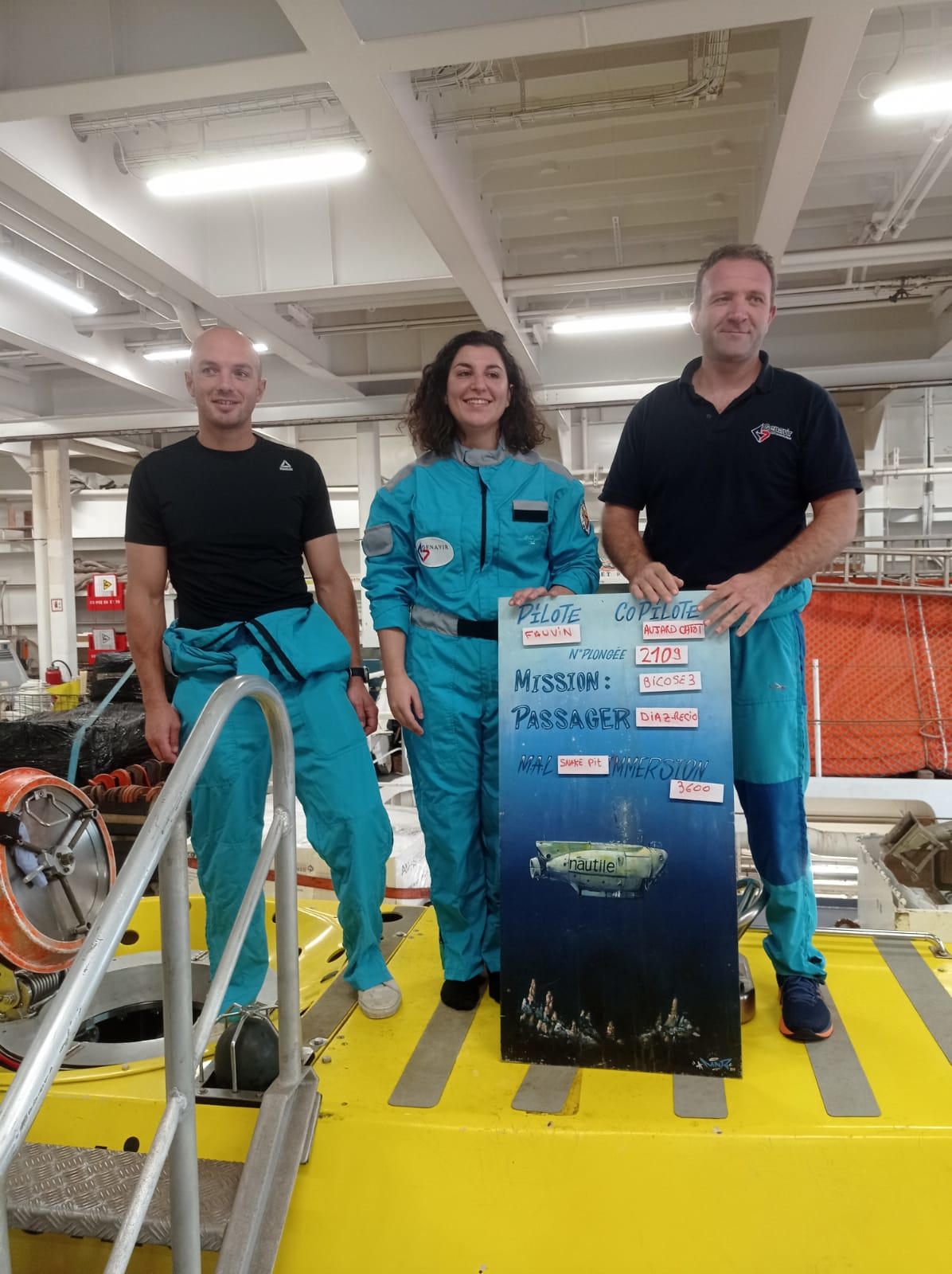
    Coral Diaz Recio Lorenzo and Team
    Coral Diaz-Recio Lorenzo (middle) diving with the French submersible Nautile to collect samples from the hydrothermal vents. Vessel: Porquois Pas? Credit: Christophe Brandily

    Living on nodules

    The second part of her research concerned samples of manganese nodules, that were collected from the Clarion Clipperton Zone, a large region at depths of four to five thousand meters in the Pacific Ocean.

    She found that in these nodules, typically 10 to 15 individuals, but sometimes even more than 200 individuals of nematodes, copepods, and other animals can be found. Many of these animals appeared specific to the nodules because they were not found in the samples of the sediments that were collected around these nodules. Some animals may even use the nodules as a habitat for reproduction, as Diaz-Recio Lorenzo found eggs inside the nodules.

    Extremely careful

    NIOZ Marine ecologist Sabine Gollner, the co-promotor of the PhD-research by Diaz-Recio Lorenzo, is highly surprised by the uniqueness and the diversity of life that is found around the hydrothermal vents and in the manganese nodules.

    “The locations that were studied are areas that are currently explored for minerals. But this research shows that we should be extremely careful with regards to potential future deep-sea mining, as these unique species carry high extinction risk.”

    Never miss a breakthrough: Join the SciTechDaily newsletter.
    Follow us on Google and Google News.

    Biodiversity Extinction Marine Biology
    Share. Facebook Twitter Pinterest LinkedIn Email Reddit

    Related Articles

    Nature’s Warning: Early Signs in Marine Life Predicting the Next Mass Extinction

    Extinction of Threatened Marine Megafauna Would Lead to Devastating Loss in Functional Diversity

    Meet the “Extinct Species” That Was Just Rediscovered After 200 Years

    Study Finds Reasons for Plant Extinction Vary Across the World and Over Time

    Presence of Cryptic and Elusive Tiny Creatures Betrayed by Facebook and Instagram

    New Deep-Water Coral Discovered in Part of Unexplored Marine Ecosystem

    At Least a Third of All Marine Species Are Still Unknown

    A Fifth of All Invertebrates on Earth Threatened by Extinction

    Extinctions Due to Habitat Loss are Proportional to the Area Destroyed

    Leave A Reply Cancel Reply

    • Facebook
    • Twitter
    • Pinterest
    • YouTube

    Don't Miss a Discovery

    Subscribe for the Latest in Science & Tech!

    Trending News

    First-of-Its-Kind Discovery: Homer’s Iliad Found Embedded in a 1,600-Year-Old Egyptian Mummy

    Beyond Inflammation: Scientists Uncover New Cause of Persistent Rheumatoid Arthritis

    A Simple Molecule Could Unlock Safer, Easier Weight Loss

    Scientists Just Built a Quantum Battery That Charges Almost Instantly

    Researchers Unveil Groundbreaking Sustainable Solution to Vitamin B12 Deficiency

    Millions of People Have Osteopenia Without Realizing It – Here’s What You Need To Know

    Researchers Discover Boosting a Single Protein Helps the Brain Fight Alzheimer’s

    World-First Study Reveals Human Hearts Can Regenerate After a Heart Attack

    Follow SciTechDaily
    • Facebook
    • Twitter
    • YouTube
    • Pinterest
    • Newsletter
    • RSS
    SciTech News
    • Biology News
    • Chemistry News
    • Earth News
    • Health News
    • Physics News
    • Science News
    • Space News
    • Technology News
    Recent Posts
    • Weight-Loss Drugs Like Ozempic May Come With an Unexpected Cost
    • After Decades, MIT Researchers Capture the First 3D Atomic View of a Mysterious Material
    • Your Favorite Fishing Spot Is Turning Brown – and the Fish Are Changing
    • 380-Million-Year-Old Fish Fossil Reveals Secrets of Life’s First Steps Onto Land
    • Mezcal “Worm” in a Bottle Mystery: DNA Testing Reveals a Surprise
    Copyright © 1998 - 2026 SciTechDaily. All Rights Reserved.
    • Science News
    • About
    • Contact
    • Editorial Board
    • Privacy Policy
    • Terms of Use

    Type above and press Enter to search. Press Esc to cancel.