
Bursts of brain rhythms with “beta” frequencies control where and when neurons in the cortex process sensory information and plan responses. Studying these bursts would improve understanding of cognition and clinical disorders, researchers write.
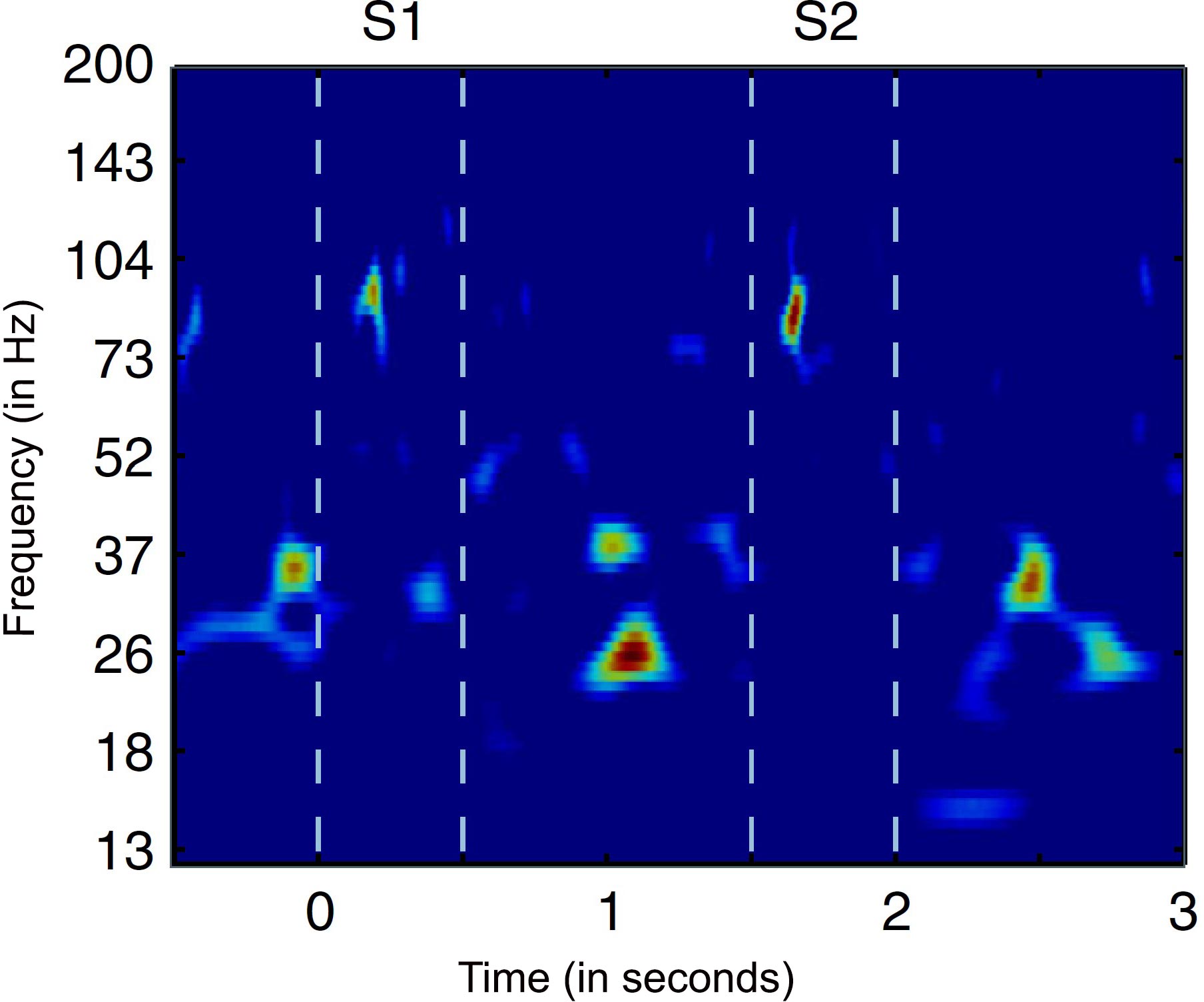
The brain processes information on many scales. Individual cells electrochemically transmit signals in circuits but at the large scale required to produce cognition, millions of cells act in concert, driven by rhythmic signals at varying frequencies. Studying one frequency range in particular, beta rhythms between about 14-30 Hz, holds the key to understanding how the brain controls cognitive processes—or loses control in some disorders—a team of neuroscientists argues in a new review article.
Beta Rhythms in Cognitive Control
Drawing on experimental data, mathematical modeling, and theory, the scientists make the case that bursts of beta rhythms control cognition in the brain by regulating where and when higher gamma frequency waves can coordinate neurons to incorporate new information from the senses or formulate plans of action. Beta bursts, they argue, quickly establish flexible but controlled patterns of neural activity for implementing intentional thought.
“Cognition depends on organizing goal-directed thought, so if you want to understand cognition, you have to understand that organization,” said co-author Earl K. Miller, Picower Professor in The Picower Institute for Learning and Memory and the Department of Brain and Cognitive Sciences at MIT. “Beta is the range of frequencies that can control neurons at the right spatial scale to produce organized thought.”
Miller and colleagues Mikael Lundqvist, Jonatan Nordmark, and Johan Liljefors at the Karolinska Institutet and Pawel Herman at the KTH Royal Institute of Technology in Sweden, write that studying bursts of beta rhythms to understand how they emerge and what they represent would not only help explain cognition, but also aid in diagnosing and treating cognitive disorders.
“Given the relevance of beta oscillations in cognition, we foresee a major change in the practice for biomarker identification, especially given the prominence of beta bursting in inhibitory control processes … and their importance in ADHD, schizophrenia and Alzheimer’s disease,” they write in the journal Trends in Cognitive Sciences.
Beta Data
Experimental studies covering several species including humans, a variety of brain regions, and numerous cognitive tasks have revealed key characteristics of beta waves in the cortex, the authors write: Beta rhythms occur in quick but powerful bursts; they inhibit the power of higher frequency gamma rhythms; and though they originate in deeper brain regions, they travel within specific locations of cortex. Considering these properties together, the authors write that they are all consistent with precise and flexible regulation, in space and time, of the gamma rhythm activity that experiments show carry signals of sensory information and motor plans.
“Beta bursts thus offer new opportunities for studying how sensory inputs are selectively processed, reshaped by inhibitory cognitive operations and ultimately result in motor actions,” the authors write.
For one example, Miller and colleagues have shown in animals that in the prefrontal cortex in working memory tasks, beta bursts direct when gamma activity can store new sensory information, read out the information when it needs to be used, and then discard it when it’s no longer relevant. For another example, other researchers have shown that beta rises when human volunteers are asked to suppress a previously learned association between word pairs, or to forget a cue because it will no longer be used in a task.
In a paper last year, Lundqvist, Herman, Miller and others cited several lines of experimental evidence to hypothesize that beta bursts implement cognitive control spatially in the brain, essentially constraining patches of the cortex to represent the general rules of a task even as individual neurons within those patches represent the specific contents of information. For example, if the working memory task is to remember a pad lock combination, beta rhythms will implement patches of cortex for the general steps “turn left,” “turn right,” “turn left again,” allowing gamma to enable neurons within each patch to store and later recall the specific numbers of the combination. The two-fold value of such an organizing principle, they noted, is that the brain can rapidly apply task rules to many neurons at a time and do so without having to re-establish the overall structure of the task if the individual numbers change (i.e. you set a new combination).
Another important phenomenon of beta bursts, the authors write, is that they propagate across long distances in the brain, spanning multiple regions. Studying the direction of their spatial travels, as well as their timing, could shed further light on how cognitive control is implemented.
New Ideas Beget New Questions
Beta rhythm bursts can differ not only in their frequency, but also their duration, amplitude, origin and other characteristics. This variety speaks to their versatility, the authors write, but also obliges neuroscientists to study and understand these many different forms of the phenomenon and what they represent to harness more information from these neural signals.
“It quickly becomes very complicated, but I think the most important aspect of beta bursts is the very simple and basic premise that they shed light on the transient nature of oscillations and neural processes associated with cognition,” Lundqvist said.“This changes our models of cognition and will impact everything we do. For a long time we implicitly or explicitly assumed oscillations are ongoing which has colored experiments and analyses. Now we see a first wave of studies based on this new thinking, with new hypothesis and ways to analyze data, and it should only pick up in years to come.”
The authors acknowledge another major issue that must be resolved by further research—How do beta bursts emerge in the first place to perform their apparent role in cognitive control?
“It is unknown how beta bursts arise as a mediator of an executive command that cascades to other regions of the brain,” the authors write.
The authors don’t claim to have all the answers. Instead, they write, because beta rhythms appear to have an integral role in controlling cognition, the as yet unanswered questions are worth asking.
“We propose that beta bursts provide both experimental and computational studies with a window through which to explore the real-time organization and execution of cognitive functions,” they conclude. “To fully leverage this potential there is a need to address the outstanding questions with new experimental paradigms, analytical methods and modeling approaches.”
Reference: “Beta: bursts of cognition” by Mikael Lundqvist, Earl K. Miller, Jonatan Nordmark, Johan Liljefors and Pawel Herman, 23 April 2024, Trends in Cognitive Sciences.
DOI: 10.1016/j.tics.2024.03.010
Never miss a breakthrough: Join the SciTechDaily newsletter.
Follow us on Google and Google News.