
Close Menu
    Facebook X (Twitter) Instagram
    SciTechDaily
    • Biology
    • Chemistry
    • Earth
    • Health
    • Physics
    • Science
    • Space
    • Technology
    Facebook X (Twitter) Pinterest YouTube RSS
    SciTechDaily
    Home»Biology»MeniFluidics: New Technique for Engineering Living Materials
    Biology

    MeniFluidics: New Technique for Engineering Living Materials

    By University of WarwickJune 17, 2020No Comments2 Mins Read
    Facebook Twitter Pinterest Telegram LinkedIn WhatsApp Email Reddit
    Share
    Facebook Twitter LinkedIn Pinterest Telegram Email Reddit
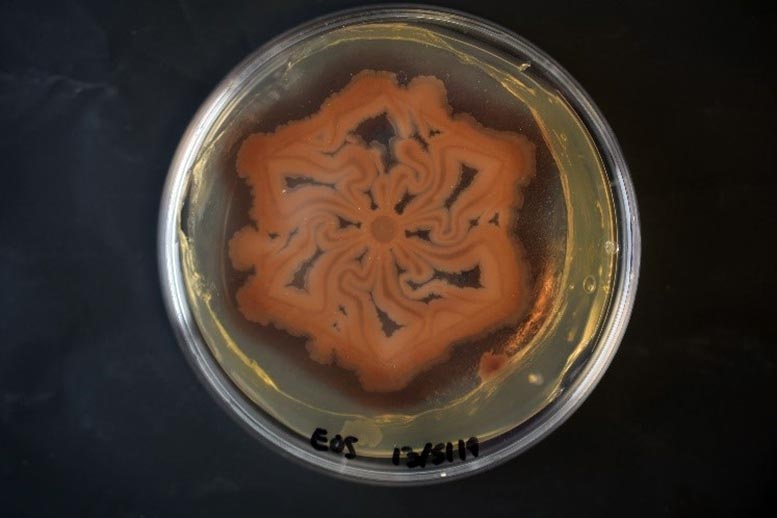
    Bacterial Biofilm Patterned Using MeniFluidics
    A bacterial biofilm patterned using MeniFluidics. Credit: University of Warwick
    • Engineered living materials (ELMs) is a new class of materials that exploit the properties of living organisms
    • While various techniques such as 3D printers have been utilized for developing ELMs, these techniques are typically limited for static patterns and suffer for technical complications
    • Researchers at the Departments of Physics and the School of Life Sciences, University of Warwick used fluidic channels to make patterns using bacterial cells
    • The method, named MeniFluidics, opens the door for further innovations and creation of arts, from ELMs, fundamental research into cellular interactions, to bio-art and tissue engineering

    A new method for engineering living materials called ‘MeniFluidics’, made by researchers at the University of Warwick could see a transformation in tissue engineering and bio-art, as well as new ways to research cellular interactions.

    Living cells have many properties that non-living materials simply don’t. The ability of controlling the emergent behaviors of cells and organizing them into arbitrary patterns is a key step forward towards utilizing living materials, for uses such as organs on a chip. This is why new technologies are being developed to obtain such an ability.

    Physicists and biologists at the University of Warwick have teamed up to develop a new method for controlling cellular patterns, published in the journal ACS Synthetic Biology, titled ‘Pattern engineering of living bacterial colonies using meniscus-driven fluidic channels’, their new technique is called MeniFluidics.

    Grounded on the physics of meniscus generation, the researchers implemented structures into gel surfaces. Evaporation of water from gel materials lead to formation of open channels which can be used for guiding the direction and speed of cellular expansion.

    Dr. Vasily Kantsler, from Department of Physics at the University of Warwick comments;

    “I believe that our catchy named (Menifluidics) technique will enable new opportunities in biophysical and biomedical research and applications such as antibiotic resistance and biofouling”

    Dr. Munehiro Asally, from School of Life Science at the University of Warwick adds;

    “We hope MeniFluidics will be used widely by biophysics, microbiologists, engineers and also artists! As it is a simple and versatile method.”

    Reference: “Pattern Engineering of Living Bacterial Colonies Using Meniscus-Driven Fluidic Channels” by Vasily Kantsler, Elena Ontañón-McDonald, Cansu Kuey, Manjari J. Ghanshyam, Maria Chiara Roffin and Munehiro Asally, 3 June 2020, ACS Synthetic Biology.
    DOI: 10.1021/acssynbio.0c00146

    Never miss a breakthrough: Join the SciTechDaily newsletter.
    Follow us on Google and Google News.

    Biochemistry Biomedical Engineering Biotechnology University of Warwick
    Share. Facebook Twitter Pinterest LinkedIn Email Reddit

    Related Articles

    Genetic Engineering 2.0: An On-Off Switch for Gene Editing

    Stanford Scientists Genetically Reprogram Cells to Build Artificial Structures

    Programmable DNA Technique ‘Prints’ Cells to Create Diverse Biological Environments

    3D-Printing Living Skin With Blood Vessels Included [Video]

    Breakthrough Technique Uses Nanoparticles to Combat Cancer Drug Resistance

    MIT Develops a Synthetic Gene Circuit to Trigger Immune System Attack on Cancer

    Researchers Decode Root Structure of Muscular Disease

    Scientists Engineer First Living Organism with an Expanded Genetic Alphabet

    Researchers Convert Human Stem Cells to Functional Lung Cells

    Leave A Reply Cancel Reply

    • Facebook
    • Twitter
    • Pinterest
    • YouTube

    Don't Miss a Discovery

    Subscribe for the Latest in Science & Tech!

    Trending News

    AI Could Detect Early Signs of Alzheimer’s in Under a Minute – Far Before Traditional Tests

    What if Dark Matter Has Two Forms? Bold New Hypothesis Could Explain a Cosmic Mystery

    This Metal Melts in Your Hand – and Scientists Just Discovered Something Strange

    Beef vs. Chicken: Surprising Results From New Prediabetes Study

    Alzheimer’s Breakthrough: Scientists Discover Key Protein May Prevent Toxic Protein Clumps in the Brain

    Quantum Reality Gets Stranger: Physicists Put a Lump of Metal in Two Places at Once

    Scientists May Have Found the Key to Jupiter and Saturn’s Moon Mystery

    Scientists Uncover Brain Changes That Link Pain to Depression

    Follow SciTechDaily
    • Facebook
    • Twitter
    • YouTube
    • Pinterest
    • Newsletter
    • RSS
    SciTech News
    • Biology News
    • Chemistry News
    • Earth News
    • Health News
    • Physics News
    • Science News
    • Space News
    • Technology News
    Recent Posts
    • Living With Roommates Might Be Changing Your Gut Microbiome Without You Knowing
    • Simple and Cheap Blood Test Could Detect Cancer and Other Diseases Before Symptoms Appear
    • Century-Old Cleaning Chemical Linked to 500% Increased Risk of Parkinson’s Disease
    • What if Your Memories Never Happened? Physicists Take a New Look at the Boltzmann Brain Paradox
    • Students Found an Ancient Star That Shouldn’t Be in the Milky Way
    Copyright © 1998 - 2026 SciTechDaily. All Rights Reserved.
    • Science News
    • About
    • Contact
    • Editorial Board
    • Privacy Policy
    • Terms of Use

    Type above and press Enter to search. Press Esc to cancel.