
Close Menu
    Facebook X (Twitter) Instagram
    SciTechDaily
    • Biology
    • Chemistry
    • Earth
    • Health
    • Physics
    • Science
    • Space
    • Technology
    Facebook X (Twitter) Pinterest YouTube RSS
    SciTechDaily
    Home»Health»Millions of People at Risk of Being Falsely Diagnosed With Brain Decline
    Health

    Millions of People at Risk of Being Falsely Diagnosed With Brain Decline

    By University of South AustraliaJune 1, 2022No Comments3 Mins Read
    Facebook Twitter Pinterest Telegram LinkedIn WhatsApp Email Reddit
    Share
    Facebook Twitter LinkedIn Pinterest Telegram Email Reddit
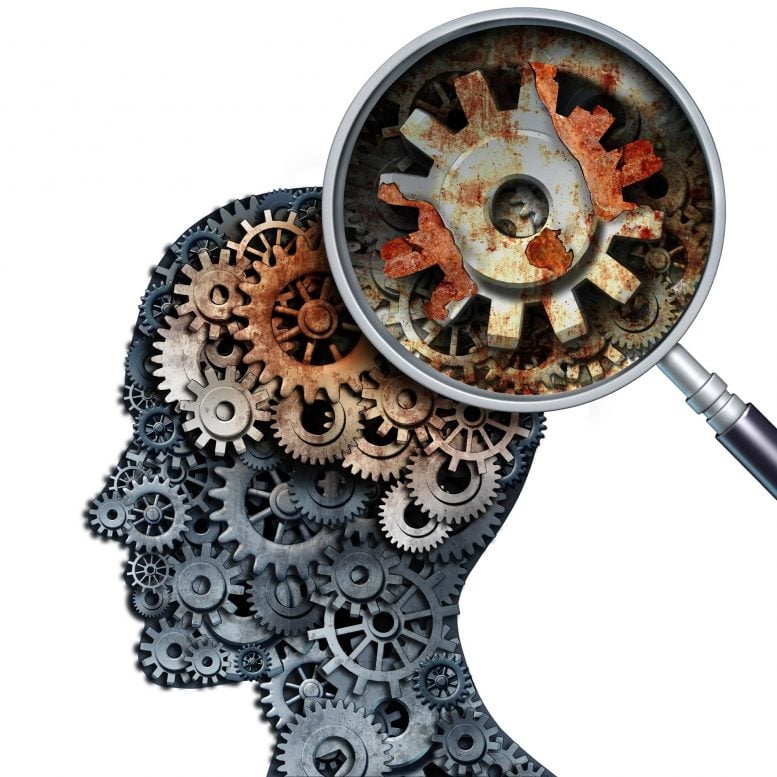
    Brain Decline Dementia Analysis Concept
    Millions of older people with poor vision are at risk of being misdiagnosed with mild cognitive impairments as cognitive tests that rely on vision-dependent tasks could be skewing results in up to a quarter of people aged over 50.

    Poor Vision Is Often Mistaken for Cognitive Impairments

    According to a recent study from the University of South Australia (UniSA), millions of elderly adults with poor eyesight are in danger of being misdiagnosed with mild cognitive impairments. Cognitive tests based on vision-dependent activities could be skewing results in up to a quarter of people over the age of 50 who have undiagnosed visual problems such as cataracts or age-related macular degeneration (AMD).

    Age-related macular degeneration (AMD) is an eye disease that can blur your central vision and is a leading cause of vision loss for older adults. It happens when aging causes damage to the macula — the part of the eye that controls sharp, straight-ahead vision. The macula is part of the retina (the light-sensitive tissue at the back of the eye). AMD doesn’t cause complete blindness, but losing your central vision can make it harder to see faces, read, drive, or do close-up work like cooking or fixing things around the house.

    Cognitive Test Bias in Visually Impaired Individuals

    Age-related macular degeneration is the most common cause of visual loss in the elderly. It does not result in total vision loss, but it has a significant influence on people’s ability to read, drive, cook, and even identify faces. It has nothing to do with intellect. The researchers at the University of South Australia chose 24 people with normal vision to take part in two cognitive tests, one involving vision-dependent reactive tasks and the other based on verbal fluency. The subjects performed much worse on the cognitive test involving reaction time tasks when they wore goggles to simulate AMD. When using the goggles, there was no statistically significant difference in verbal fluency assessments.

    The research was recently published in the journal Scientific Reports.

    UniSA Ph.D. candidate Anne Macnamara, who led the study, says the results are a stark reminder that visual impairments – which affect approximately 200 million people worldwide over the age of 50 – unfairly affect cognitive scores when tests involve visual abilities.

    “A mistaken score in cognitive tests could have devastating ramifications, leading to unnecessary changes to a person’s living, working, financial or social circumstances,” Macnamara says. “For example, if a mistaken score contributed to a diagnosis of mild cognitive impairment, it could trigger psychological problems including depression and anxiety. People with AMD are already experiencing multiple issues due to vision loss and an inaccurate cognitive assessment is an additional burden they don’t need.”

    Visual impairments are often overlooked in research and clinical settings, the UniSA researchers say, with reduced vision underestimated in up to 50 percent of older adults. And with this figure expected to increase in line with an aging population, it is critical that neuro-degenerative researchers control for vision when assessing people’s cognition.

    “Mobile apps can now be used to overlay simulated visual impairments onto test materials when piloting their stimuli,” Macnamara says. “Also, researchers can incorporate quick and simple screening tasks before getting people to do cognitive tests. Verbal tasks should always be part of the assessment, too.”

    Reference: “The effect of age-related macular degeneration on cognitive test performance” by Anne Macnamara, Victor R. Schinazi, Celia Chen, Scott Coussens and Tobias Loetscher, 8 March 2022, Scientific Reports.
    DOI: 10.1038/s41598-022-07924-8

    Never miss a breakthrough: Join the SciTechDaily newsletter.
    Follow us on Google and Google News.

    Brain Cognitive Science Memory University of South Australia Vision
    Share. Facebook Twitter Pinterest LinkedIn Email Reddit

    Related Articles

    Your Brain Might Be Older Than You Think – And It Could Explain Memory Loss

    New Harmful Side Effects of Marijuana Discovered – Developing Brain Needs Cannabinoid Receptors After Birth

    Natural Mineral May Reverse Memory Loss and Boost Learning

    Brain Benefits: Exercise Can Help Older Adults Retain Their Memories

    Bitter Brew: High Coffee Consumption Is Associated With Smaller Brain Volume

    Secondary Infections Inflame the Brain, Worsening Cognition & Memory in Alzheimer’s Disease

    Neuroscientists Discover Promising Way to Restore Cognitive Function Impaired by Alzheimer’s Disease

    Rapid Mental Rejuvenation: Experimental Drug Reverses Age-Related Cognitive Decline Within Days

    Blocking HDAC2 Enzyme May Reverse Memory Loss Caused by Alzheimer’s Disease

    Leave A Reply Cancel Reply

    • Facebook
    • Twitter
    • Pinterest
    • YouTube

    Don't Miss a Discovery

    Subscribe for the Latest in Science & Tech!

    Trending News

    Mezcal “Worm” in a Bottle Mystery: DNA Testing Reveals a Surprise

    New Research Reveals That Your Morning Coffee Activates an Ancient Longevity Switch

    This Is What Makes You Irresistible to Mosquitoes

    Shockingly Powerful Giant Octopuses Ruled the Seas 100 Million Years Ago

    Scientists Stunned by New Organic Molecules Found on Mars

    Rewriting Dinosaur Evolution: Scientists Unearth Remarkable 150-Million-Year-Old Stegosaur Skull

    Omega-3 Supplements Linked to Cognitive Decline in Surprising New Study

    First-of-Its-Kind Discovery: Homer’s Iliad Found Embedded in a 1,600-Year-Old Egyptian Mummy

    Follow SciTechDaily
    • Facebook
    • Twitter
    • YouTube
    • Pinterest
    • Newsletter
    • RSS
    SciTech News
    • Biology News
    • Chemistry News
    • Earth News
    • Health News
    • Physics News
    • Science News
    • Space News
    • Technology News
    Recent Posts
    • New Research Challenges Long-Held Beliefs About How the Brain Makes Decisions
    • Breakthrough Technology Reveals New Treatment Targets for Cancer
    • Scientists Discover New Way To Make Drug-Resistant Cancer Treatable Again
    • This Simple Exercise Trick Builds Muscle With Less Effort, Study Finds
    • Middle Age Is Becoming a Breaking Point in America, Study Reveals
    Copyright © 1998 - 2026 SciTechDaily. All Rights Reserved.
    • Science News
    • About
    • Contact
    • Editorial Board
    • Privacy Policy
    • Terms of Use

    Type above and press Enter to search. Press Esc to cancel.