
Close Menu
    Facebook X (Twitter) Instagram
    SciTechDaily
    • Biology
    • Chemistry
    • Earth
    • Health
    • Physics
    • Science
    • Space
    • Technology
    Facebook X (Twitter) Pinterest YouTube RSS
    SciTechDaily
    Home»Health»Mind Over Matter: Placebos Prove Powerful…Even When People Know They’re Taking One
    Health

    Mind Over Matter: Placebos Prove Powerful…Even When People Know They’re Taking One

    By Michigan State UniversityAugust 24, 2020No Comments3 Mins Read
    Facebook Twitter Pinterest Telegram LinkedIn WhatsApp Email Reddit
    Share
    Facebook Twitter LinkedIn Pinterest Telegram Email Reddit
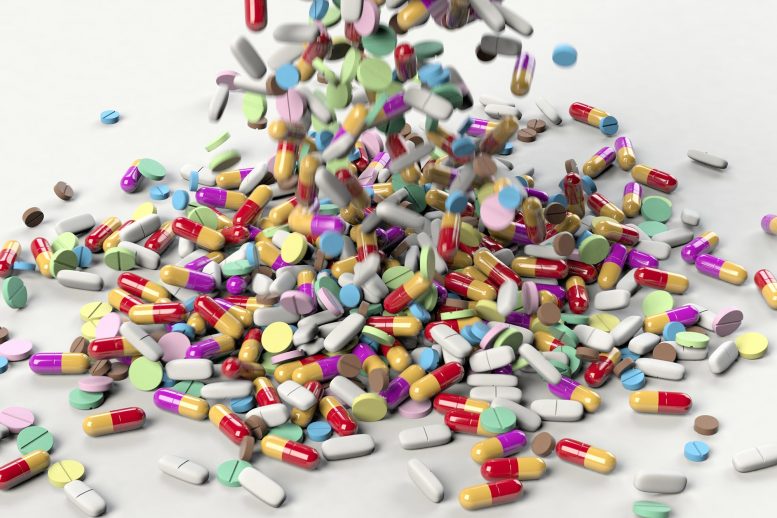
    Various Medicine Pills
    Researchers found that placebos can reduce brain markers of emotional distress, even when individuals are aware they are receiving a placebo.

    How much of a treatment is mind over matter? It is well documented that people often feel better after taking a treatment without active ingredients simply because they believe it’s real — known as the placebo effect.

    A team of researchers from Michigan State University, University of Michigan, and Dartmouth College is the first to demonstrate that placebos reduce brain markers of emotional distress even when people know they are taking one.

    Now, evidence shows that even if people are aware that their treatment is not “real” — known as nondeceptive placebos — believing that it can heal can lead to changes in how the brain reacts to emotional information.

    “Just think: What if someone took a side-effect-free sugar pill twice a day after going through a short convincing video on the power of placebos and experienced reduced stress as a result?” said Darwin Guevarra, MSU postdoctoral fellow and the study’s lead author. “These results raise that possibility.”

    The new findings, published in the most recent edition of the journal Nature Communications, tested how effective nondeceptive placebos — or, when a person knows they are receiving a placebo — are for reducing emotional brain activity.

    “Placebos are all about ‘mind over matter,” said Jason Moser, co-author of the study and professor of psychology at MSU. “Nondeceptive placebos were born so that you could possibly use them in routine practice. So rather than prescribing a host of medications to help a patient, you could give them a placebo, tell them it can help them and chances are — if they believe it can, then it will.”

    To test nondeceptive placebos, the researchers showed two separate groups of people a series of emotional images across two experiments. The nondeceptive placebo group members read about placebo effects and were asked to inhale a saline solution nasal spray. They were told that the nasal spray was a placebo that contained no active ingredients but would help reduce their negative feelings if they believed it would. The comparison control group members also inhaled the same saline solution spray, but were told that the spray improved the clarity of the physiological readings the researchers were recording.

    The first experiment found that the nondeceptive placebos reduced participants’ self-reported emotional distress. Importantly, the second study showed that nondeceptive placebos reduced electrical brain activity reflecting how much distress someone feels to emotional events, and the reduction in emotional brain activity occurred within just a couple of seconds.

    “These findings provide initial support that nondeceptive placebos are not merely a product of response bias – telling the experimenter what they want to hear — but represent genuine psychobiological effects,” said Ethan Kross, co-author of the study and a professor of psychology and management at the University of Michigan.

    The researchers are already following up on their data with a real-life nondeceptive placebo trial for COVID-19 stress.

    Reference: “Placebos without deception reduce self-report and neural measures of emotional distress” by Darwin A. Guevarra, Jason S. Moser, Tor D. Wager and Ethan Kross, 29 July 2020, Nature Communications.
    DOI: 10.1038/s41467-020-17654-y

    Never miss a breakthrough: Join the SciTechDaily newsletter.
    Follow us on Google and Google News.

    Alternative Medicine Michigan State University Neuroscience Placebo
    Share. Facebook Twitter Pinterest LinkedIn Email Reddit

    Related Articles

    Scientists Discover the Brain Switch That Keeps Cocaine Addiction Alive

    Natural Remedy Reverses Alzheimer’s Symptoms in New Study

    Harvard Neuroscientists Explore the Science of Acupuncture

    Scientists Discover New Science of the Body’s “Second Brain” – New Leads To Treat Irritable Bowel Syndrome

    Ancient Herbal Medicine From Asia May Offer Relief to Veterans With Gulf War Illness

    Scientific Study Shows Acupuncture May Be Effective for Easing Indigestion Symptoms

    Controlled Trial Shows Cannabis Reduces Some Symptoms of MS

    Nose Spray for Panic Attacks? Intranasal Neuropeptide S Lowers Anxiety

    Listening to Mozart Can Make You Smarter but No More Than Justin Bieber

    Leave A Reply Cancel Reply

    • Facebook
    • Twitter
    • Pinterest
    • YouTube

    Don't Miss a Discovery

    Subscribe for the Latest in Science & Tech!

    Trending News

    Mezcal “Worm” in a Bottle Mystery: DNA Testing Reveals a Surprise

    New Research Reveals That Your Morning Coffee Activates an Ancient Longevity Switch

    This Is What Makes You Irresistible to Mosquitoes

    Shockingly Powerful Giant Octopuses Ruled the Seas 100 Million Years Ago

    Scientists Stunned by New Organic Molecules Found on Mars

    Rewriting Dinosaur Evolution: Scientists Unearth Remarkable 150-Million-Year-Old Stegosaur Skull

    Omega-3 Supplements Linked to Cognitive Decline in Surprising New Study

    First-of-Its-Kind Discovery: Homer’s Iliad Found Embedded in a 1,600-Year-Old Egyptian Mummy

    Follow SciTechDaily
    • Facebook
    • Twitter
    • YouTube
    • Pinterest
    • Newsletter
    • RSS
    SciTech News
    • Biology News
    • Chemistry News
    • Earth News
    • Health News
    • Physics News
    • Science News
    • Space News
    • Technology News
    Recent Posts
    • Male Birth Control Breakthrough: Scientists Find Way To Turn Sperm Production Off and Back On
    • A Common Vitamin Could Hold the Key to Treating Fatty Liver Disease
    • New Research Shows Vitamin B12 May Hold the Key to Healthy Aging
    • Scientists Map Thousands of Brain Connections With RNA Barcodes
    • This Gene Tweak Turns Strawberries Into Healthier, Tastier Superfruit
    Copyright © 1998 - 2026 SciTechDaily. All Rights Reserved.
    • Science News
    • About
    • Contact
    • Editorial Board
    • Privacy Policy
    • Terms of Use

    Type above and press Enter to search. Press Esc to cancel.