
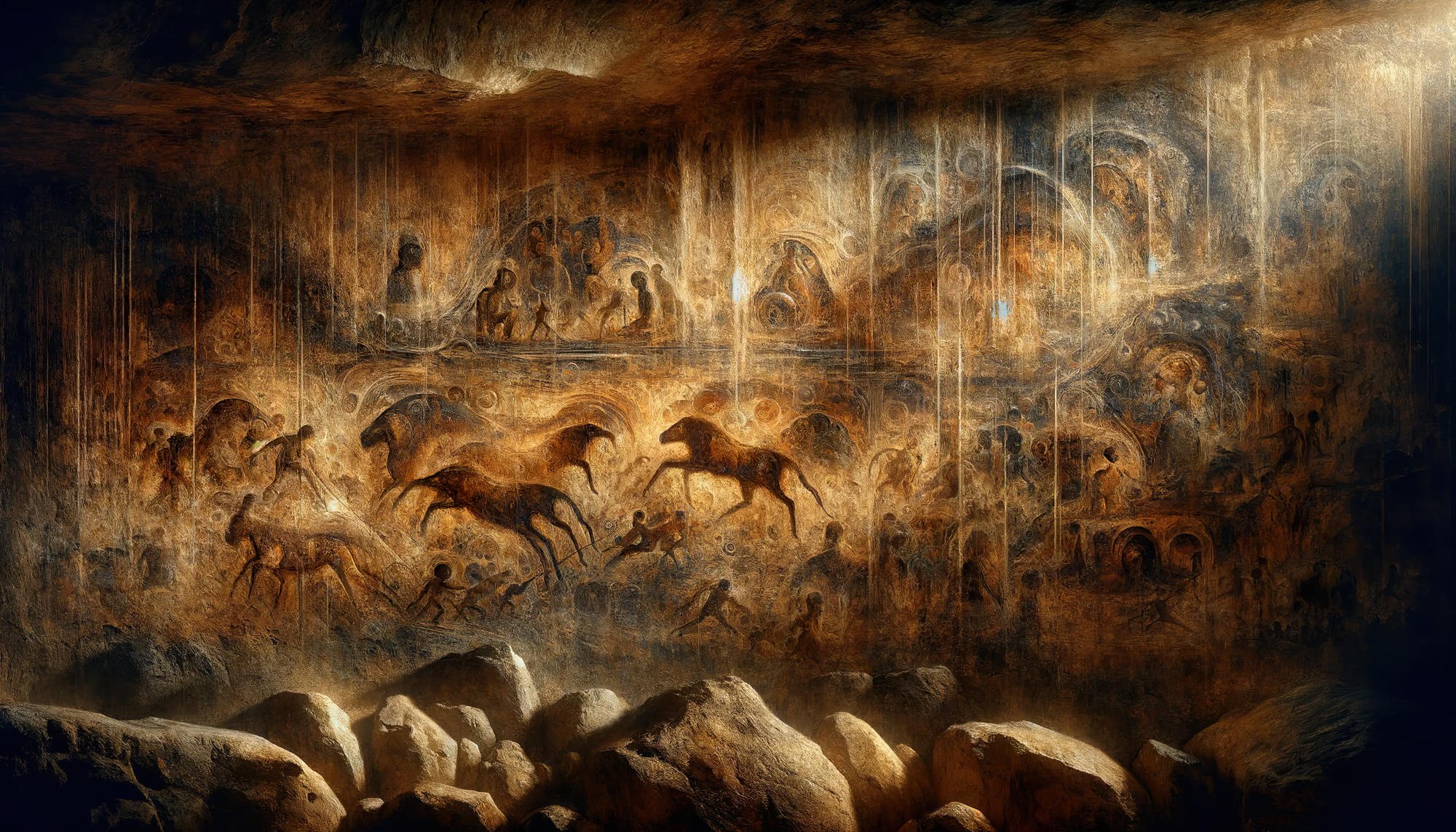
Recent research indicates that Ice Age cave art, dating back as far as 40,000 years, may have been partially influenced by a visual psychological phenomenon still experienced by humans today.
The research team, led by Dr. Izzy Wisher, then a Ph.D. student at Durham University’s Department of Archaeology, tested the theory that cave artists may have experienced pareidolia – a psychological phenomenon where people see meaningful forms in random patterns, such as seeing faces in clouds.
Investigating Pareidolia in Cave Art
They investigated whether pareidolia may have influenced the artists who painted depictions of animals in the Las Monedas and La Pasiega caves, in Northern Spain.
If so, then the majority of drawings would be expected to be depictions of animals that included features of the cave walls within them and take relatively simple forms (pareidolic images tend to be simple and lack detail).
Research Findings and Implications
Their study, published in the Cambridge Archaeological Journal, found that pareidolia could be responsible for the production of some cave images, suggesting that the cave artists were experiencing the same psychological influences on perception when viewing the natural features of cave walls that humans still experience today.
While the researchers found evidence that pareidolia played a part in the production of some cave images, their research also found the cave painters were influenced by their own experiences and creativity.
Dr Izzy Wisher, now based at Aarhus University, Denmark, said: “It is exciting to see that cave artists in the Upper Palaeolithic era were also experiencing pareidolia, just like many of us do today, and that this influenced their art.
“Much like a modern artist might take inspiration from a basic form or shape, like a crack in a material or a smudge of paint on a canvas, and build their art around this, we can see that cave artists worked in similar ways.
“However, whilst our study showed that pareidolia did have some influence on the cave artists, this was not always the case, giving us fascinating insight into the work of these early painters.
“It seems to us that their art may have been part of a ‘creative conversation’ with the cave walls, where they both took inspiration from what they saw in the cracks and shapes of the cave wall, but also used their own creativity.”
Statistical Analysis of Cave Art
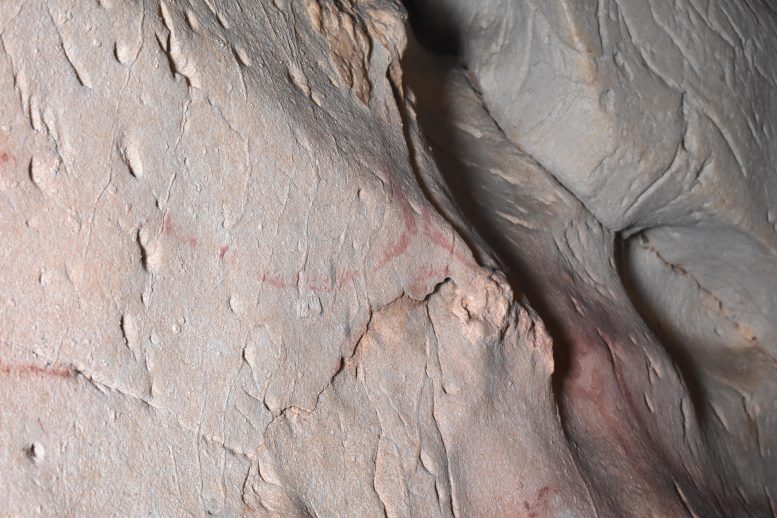
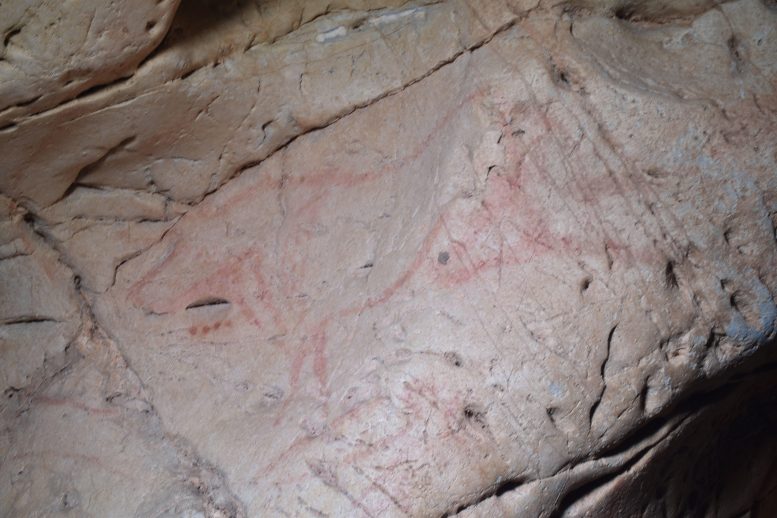
The research found that as many as 71 percent of images studied in the Las Monedas caves, and 55 percent in the La Pasiega caves, showed a strong relationship to the natural features of the cave wall, suggesting pareidolia may have been a partial influence on the artists.
Examples included where the curved edges of the cave wall were used to represent the backs of animals such as wild horses, or where natural cracks were used as bison’s horns.
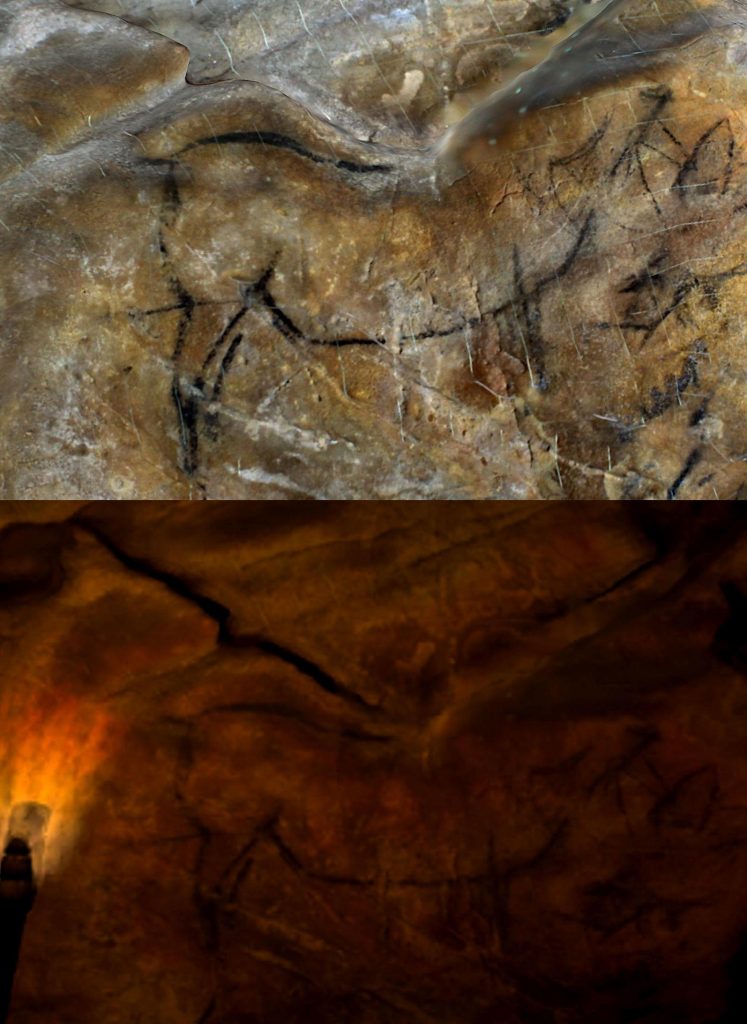
The study also found that of those drawings with a strong relationship to natural features on the cave wall, the majority (80 percent in Las Monedas and 83 percent in La Pasiega) lacked additional details such as eyes or hair, which correlates with the simplistic nature of imagery influenced by pareidolia.
Investigating the Role of Lighting Conditions
The research team, which included Professor Paul Pettitt, Department of Archaeology, and Professor Robert Kentridge, Department of Psychology, both Durham University, also investigated whether lighting conditions in the caves at the time the artwork was created might have contributed to the potential influence of pareidolia.
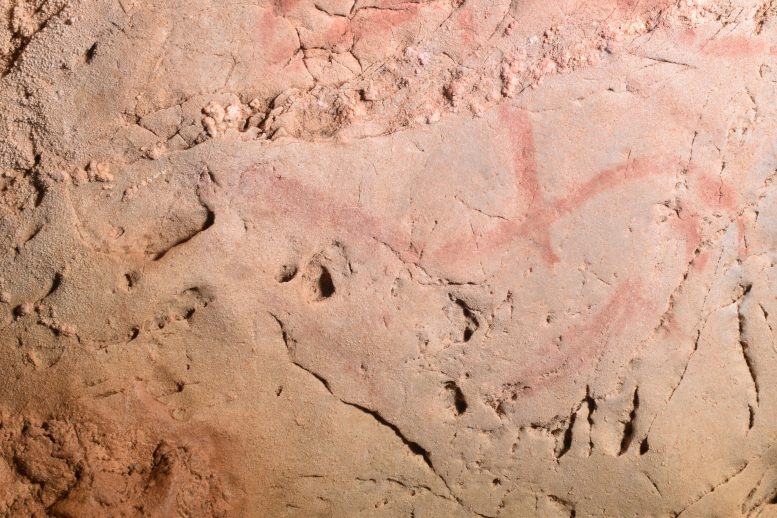
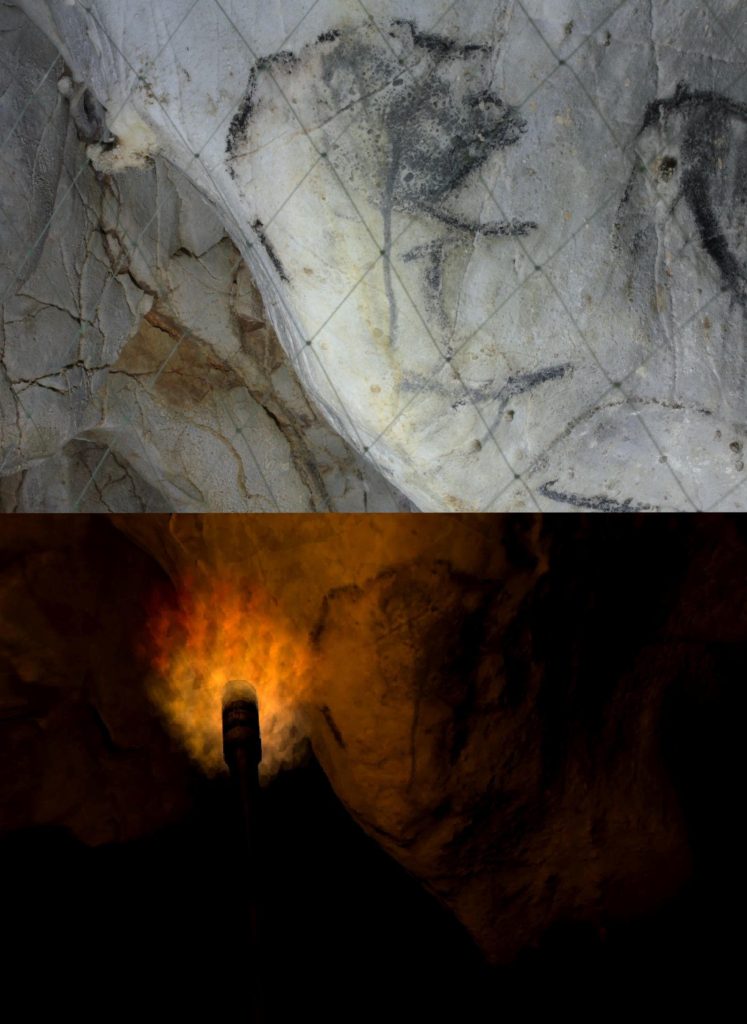
To do this Dr Wisher used a virtual reality gaming software called Unity to model the cave walls and replicate the light sources used by the cave artists, which would have consisted of flickering firelight produced by small torches or lamps, to understand the visual effects across the cave wall.
The results showed that low and unstable lighting conditions did not have a strong correlation to cave art that uses natural features.
Conclusions and Implications for Visual Paleopsychology
Dr. Wisher argues that this, coupled with the conclusion that the influence of pareidolia was evident in some, but not all, of the artwork, suggests that cave artists may also have been actively looking for shapes that reminded them of animals within the caves to incorporate into their drawings, as part of a nuanced dialogue between the artist’s personal creativity and the forms seen in the cave walls.
Whilst the theory that pareidolia may have influenced cave artists has long been discussed, the team believes their study offers the first systematic testing of this theory, and is the first to utilize simulated lighting conditions in virtual reality to achieve this.
It provides further detail in the understanding of the experiences, desires, imagination, and influences of Upper Palaeolithic cave artists and how cave art may have been made. It also advances Durham University’s research into visual palaeopsychology.
Pareidolia may have first evolved to help humans evade predators by providing a heightened sense of visual interpretation for potential risks, such as helping humans see predators hiding behind bushes. It is a fundamental part of the human visual system, and was probably triggered within dark cave environments.
Reference: “Conversations with Caves: The Role of Pareidolia in the Upper Palaeolithic Figurative Art of Las Monedas and La Pasiega (Cantabria, Spain)” by Izzy Wisher, Paul Pettitt and Robert Kentridge, 21 September 2023, Cambridge Archaeological Journal.
DOI: 10.1017/S0959774323000288
Never miss a breakthrough: Join the SciTechDaily newsletter.
Follow us on Google and Google News.
2 Comments
That’s probably the same phenomenon that inspired believers to see the shape of Viring Mary in the stains on the windows of a glass bank building in Clearwater Florida about a decade ago.
Or when somebody sees face of Elvis or Jesus on a potato chip.
“Pareidolia… is a fundamental part of the human visual system….”
First time I’ve seen this claim. Wonder which “part” it is.