
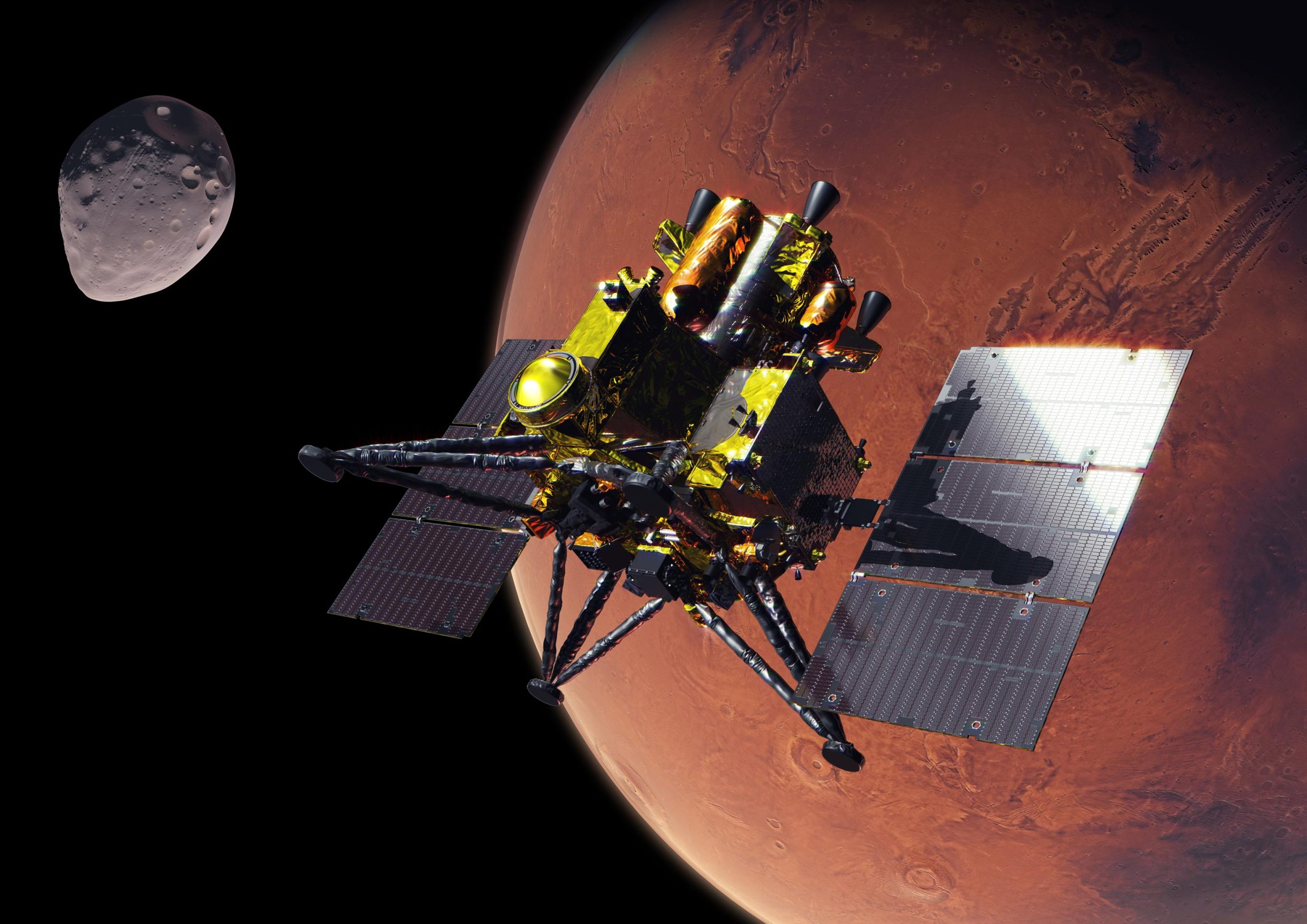
JPL’s Abigail Fraeman will help study the composition of Phobos and Deimos using instruments on the Japan Aerospace Exploration Agency’s spacecraft.
NASA has selected 10 researchers from institutions across the U.S. to join the Science Working Team of the Japan Aerospace Exploration Agency’s Martian Moons eXploration (MMX) mission as NASA-supported participating scientists.
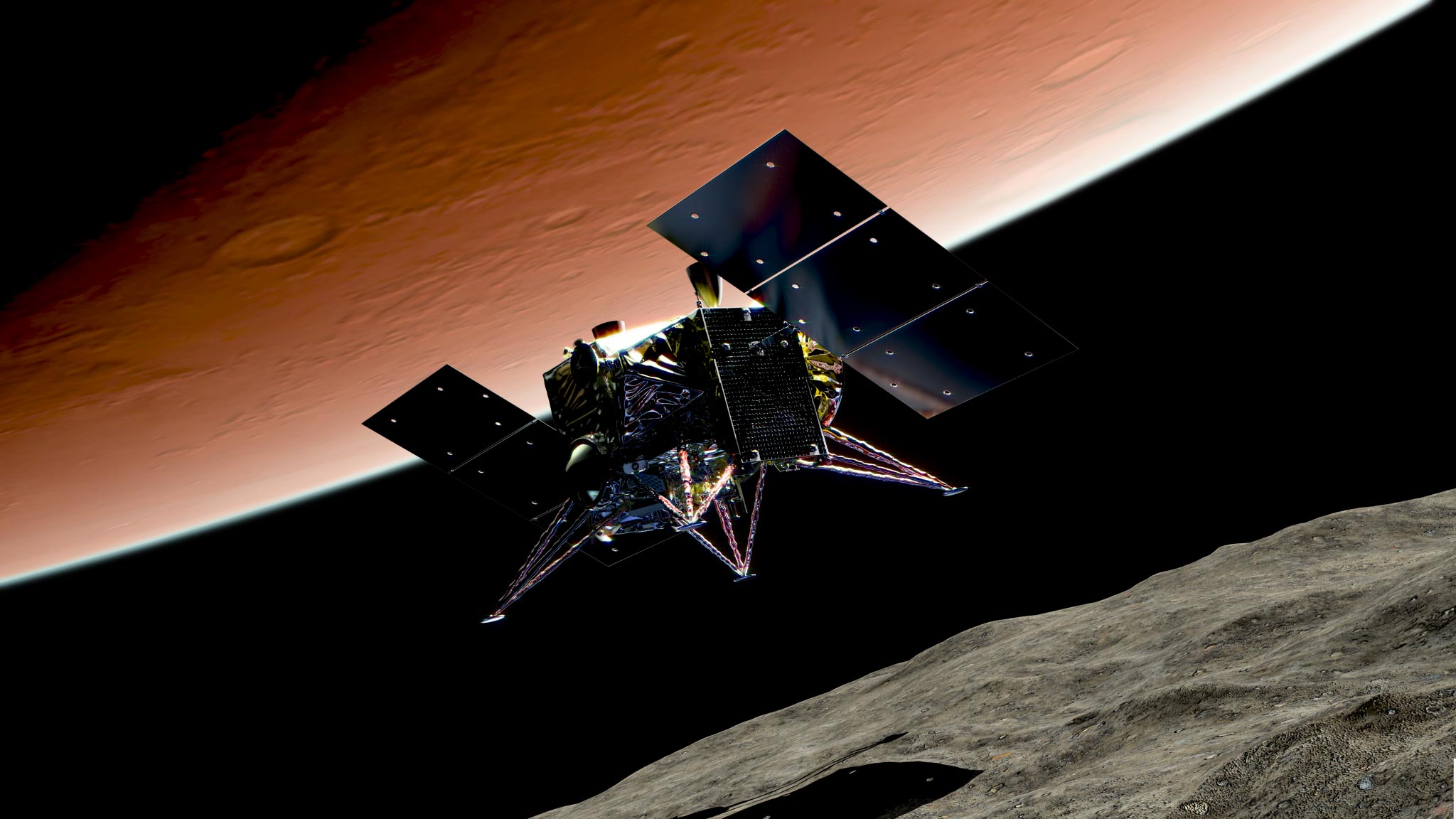
JAXA’s MMX mission, planned to launch in 2024, will visit the two Martian moons, Phobos and Deimos, land on the surface of Phobos, and collect a surface sample. Plans are for the sample to be delivered to Earth in 2029.
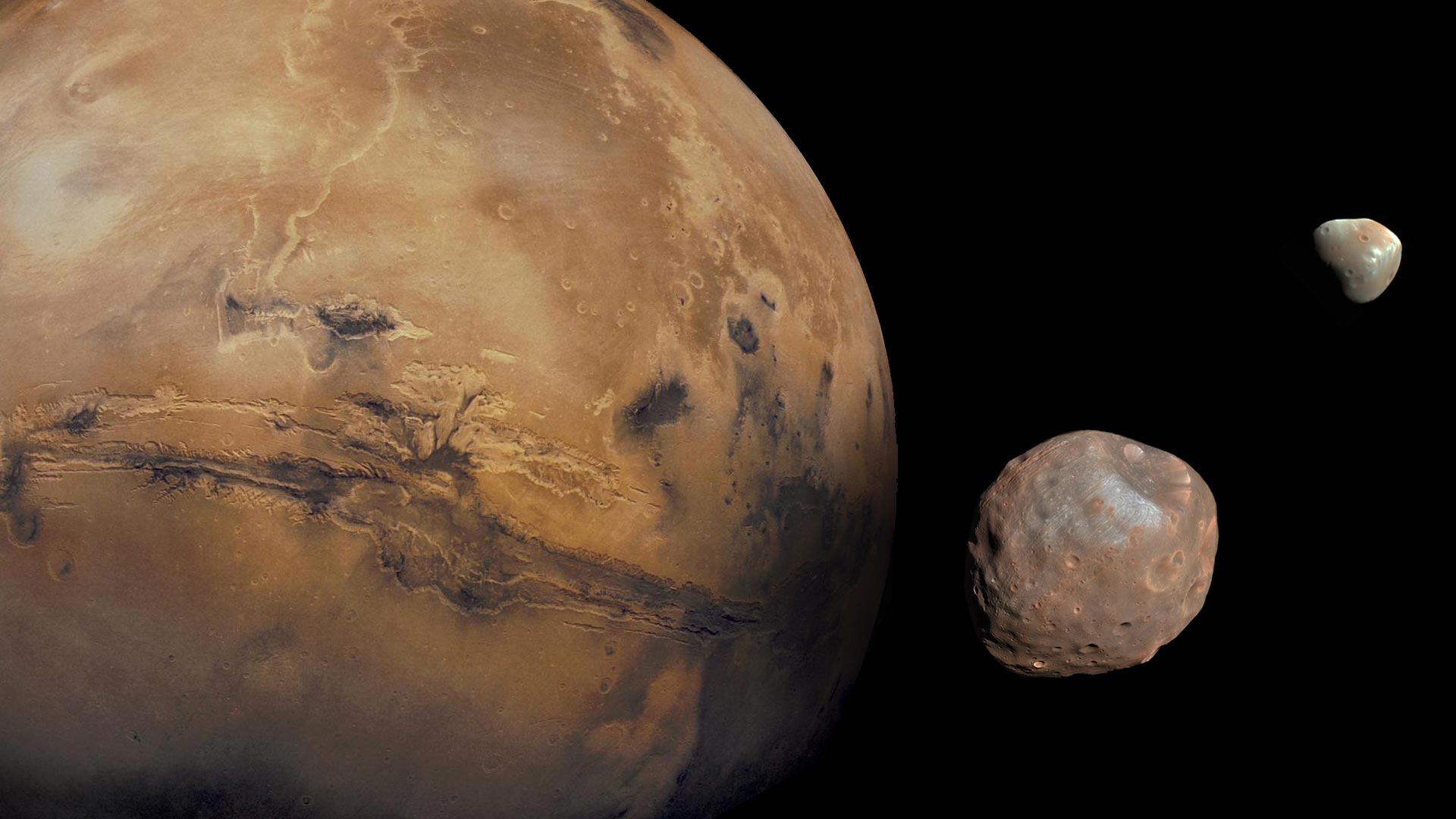
Seven of the selected scientists will conduct research using the MMX flight instruments. They are:
- Olivier Barnouin, Johns Hopkins Applied Physics Laboratory, Laurel, Maryland, will create high resolution digital terrain models of the Martian moons, measuring the properties of surface features, and studying the properties of the Phobos regolith through its interaction with the rover.
- Matteo Crismani, California State University, San Bernardino, will study the particles of interplanetary dust that strike Mars and their role in the formation of high-altitude ice clouds in the Martian atmosphere.
- R. Terik Daly, Johns Hopkins Applied Physics Laboratory, Laurel, Maryland, will search for surface changes on Phobos and Deimos by comparing MMX image data with past missions’ imagery of the two moons.
- Christopher Edwards, Northern Arizona University, Flagstaff, Arizona, will apply a thermophysical model to MMX infrared spectra in order to map the variations in spectral properties and surface roughness across Phobos and Deimos.
- Abigail Fraeman, NASA’s Jet Propulsion Laboratory, California, will combine data from different MMX instruments to learn more about the moons’ compositions and to test hypotheses about the sources of enigmatic spectral absorptions observed on Phobos.
- Sander Goossens, NASA’s Goddard Space Flight Center, Greenbelt, Maryland, will use data from the MMX instruments and navigation data from the spacecraft to constrain the moons’ gravity fields, shapes, rotational states, and internal mass distributions.
- Christine Hartzell, University of Maryland, College Park, Maryland, will explore the physical properties of Phobos’s surface regolith by using rover data to identify regolith clumps and constrain the forces needed to hold them together.
Three of the selected scientists will conduct laboratory analyses of the samples brought back from Phobos. They are:
- Nicolas Dauphas, University of Chicago, Illinois, will utilize mass spectrometer techniques to determine elemental and isotopic abundances of iron, potassium, and other elements, and to measure ages using rubidium-strontium dating.
- Jemma Davidson, Arizona State University, Tempe, Arizona, will use microscopy and mass spectrometry methods to analyze opaque minerals in the Phobos samples, to elucidate the origin of Phobos and its later alteration history.
- Daniel Glavin, NASA’s Goddard Space Flight Center, Greenbelt, Maryland, will study amino acids, cyanides, amines, aldehydes, ketones, and hydroxy and monocarboxylic acids using gas and liquid chromatography mass spectrometry.
In addition to the contributions of the participating scientists, and their teams of co-investigators, NASA is contributing the Mars-moon Exploration with Gamma rays and Neutrons (MEGANE) spectrograph instrument, the Pneumatic Sampler (P-Sampler) technology demonstration, and other support.
A team at Honeybee Robotics sponsored by NASA’s Science Mission Directorate designed and built the P-Sampler. MEGANE, built by the Johns Hopkins University Applied Physics Laboratory, was developed under NASA’s Discovery Program. Both projects are managed by NASA’s Marshall Space Flight Center in Huntsville, Alabama, for the agency’s Science Mission Directorate.
In a separate event on April 17, during the 38th Space Symposium in Colorado Springs, Colorado, NASA and JAXA signed an agreement to formalize their overall MMX cooperation, further strengthening the collaboration between the two agencies.
Never miss a breakthrough: Join the SciTechDaily newsletter.
Follow us on Google and Google News.